What Is the Skin Microbiome? A Beginner’s Guide to Barrier-First Skincare
Why the future of glowing skin isn’t another active ingredient — it’s an invisible ecosystem you’ve probably never thought about.
There’s a moment almost everyone in the wellness world eventually hits: a cabinet full of serums, a skincare routine that reads like a chemistry syllabus, and skin that somehow still feels reactive, tight, or dull. If that sounds familiar, the problem usually isn’t a missing ingredient. It’s a missing foundation.
That foundation is your skin microbiome — and once you understand it, the entire logic of skincare starts to make a lot more sense.
Your Skin Is Not Just Skin — It’s an Ecosystem
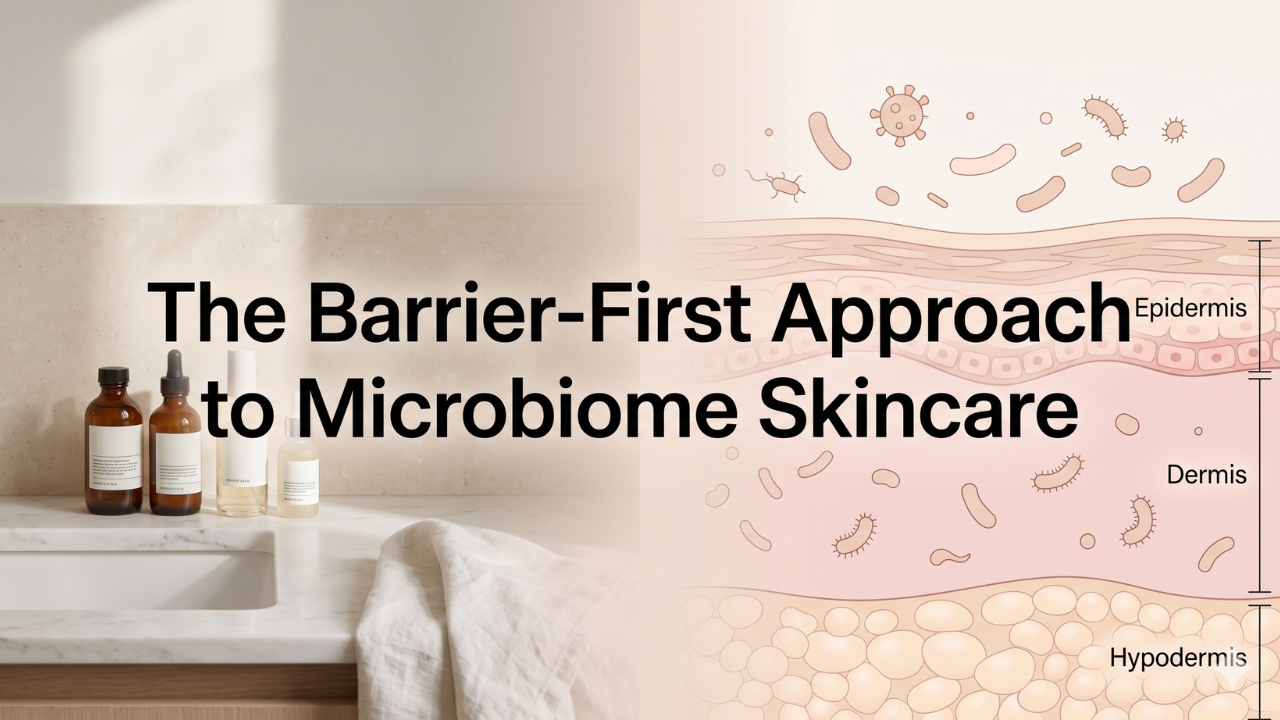
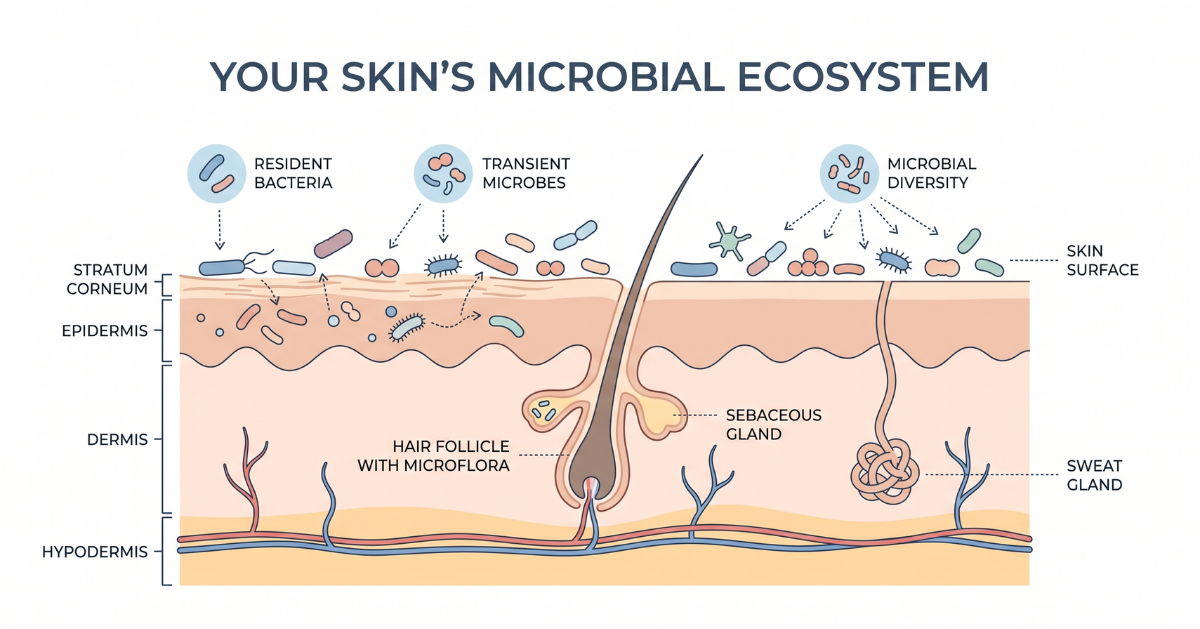
Picture your face the way an ecologist might picture a coral reef. It’s not a flat, inert surface. It’s a living, breathing habitat, home to trillions of microorganisms — bacteria, fungi, and even mites — that have co-evolved with human skin for thousands of years. Dermatologists call this collective community the skin microbiome, and it sits directly above your skin’s protective moisture barrier, acting as a first line of defense before anything else even gets the chance.
Far from being something to “clean away,” this microbial layer is doing real work: keeping pathogens in check, regulating inflammation, and helping maintain the slightly acidic pH (around 4.5–5.5) that healthy skin needs to function properly. When that ecosystem is thriving, skin tends to look calmer, more even, and more resilient — not because of what you put on it, but because of what’s already living on it.
The Two Layers Working Together
1. The Skin Barrier — the physical structure (lipids, ceramides, the stratum corneum) that keeps moisture in and irritants out.
2. The Microbiome — the living layer of microorganisms sitting on top, feeding off and interacting with that barrier in a constant feedback loop.
Why “Barrier-First” Is Replacing “Active-First” Skincare
For the last decade, skincare culture has largely revolved around actives: retinoids, acids, vitamin C, and increasingly aggressive exfoliation. These ingredients absolutely have their place — but the wellness world is now circling back to a more foundational question: what good is a powerful active ingredient if the barrier underneath it is too compromised to use it effectively?
This is the philosophy behind the barrier-first approach: instead of chasing the next potent active, you start by restoring and protecting the structure and ecosystem that everything else depends on. Once that foundation is stable, actives tend to work better, irritate less, and deliver more consistent results.
It’s a shift from “more is better” to “the right order matters” — and it’s quietly becoming one of the most research-backed movements in modern skincare.
The Science Behind the Shift
This isn’t just an aesthetic trend dressed up in scientific language. Dermatological research over the past decade has increasingly mapped the relationship between microbial diversity and skin health, and the findings consistently point in the same direction: a more diverse, balanced skin microbiome correlates with stronger barrier function, lower inflammatory markers, and fewer flare-ups of conditions like eczema and acne.
Industry surveys now show that over 40% of skincare consumers actively seek out “microbiome-friendly” formulations — a number that would have been almost unheard of five years ago. Dermatologists studying this shift point to a simple mechanism: beneficial bacteria like Staphylococcus epidermidis help regulate pH, produce antimicrobial peptides that crowd out problematic strains like Cutibacterium acnes, and even assist in producing some of the fatty acids and ceramides your barrier depends on. In other words, the microbiome and the barrier aren’t just neighbors — they’re in a constant, two-way feedback loop. Disrupt one, and you inevitably disrupt the other.
This is also why dermatologists increasingly caution against products that make “kills 99.9% of bacteria” claims for everyday facial skincare. On a kitchen counter, that’s a selling point. On your face, indiscriminately wiping out bacteria can take down the beneficial colonies right along with the problematic ones — leaving skin temporarily “cleaner” but functionally more vulnerable.
Active-First vs. Barrier-First: A Quick Comparison
It helps to see the two philosophies side by side. Neither is “wrong” — but the order and emphasis matter enormously, especially if your skin is currently reactive or compromised.
| Aspect | Active-First Approach | Barrier-First Approach |
|---|---|---|
| Starting point | Target a specific concern immediately (acne, aging, dark spots) | Stabilize the barrier and microbiome before introducing actives |
| Risk of irritation | Higher, especially on already-compromised skin | Lower; actives are layered in gradually once the foundation is stable |
| Time to see results | Can be faster initially, but often unstable | Slower at first, but typically more durable |
| Best suited for | Resilient skin with no current sensitivity or barrier issues | Sensitive, reactive, or recently over-treated skin |
Who Should Pay Extra Attention to Their Barrier and Microbiome
While barrier-first principles benefit virtually everyone, a few groups tend to see the most dramatic improvement when they prioritize this approach:
- Retinoid or acid users — strong actives are notorious for thinning and sensitizing the barrier over time, even when they’re delivering great results on the surface.
- Anyone going through a seasonal transition — cold, dry air and indoor heating are two of the fastest ways to disrupt both barrier lipids and microbial balance.
- People who recently over-exfoliated or “skincare-cycled” aggressively — a few weeks of heavy actives can undo months of microbiome stability.
- Anyone with a history of eczema, rosacea, or chronic sensitivity — these conditions are closely linked to reduced microbial diversity and barrier dysfunction.
If you recognize yourself in more than one of these categories, the barrier-first approach isn’t just a nice-to-have — it’s likely the single highest-leverage change you can make to your routine.
Signs Your Skin Barrier (and Microbiome) Might Be Out of Balance
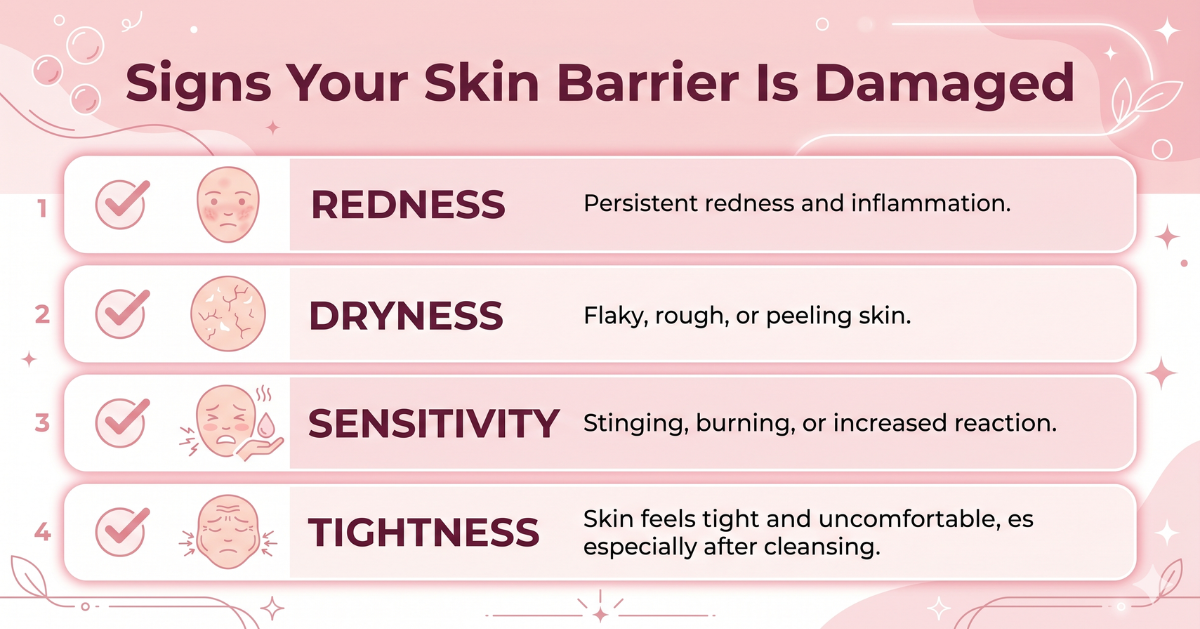
- Persistent tightness or dryness, even right after moisturizing
- Unexplained redness or sensitivity to products that used to work fine
- A dull, uneven texture that doesn’t respond to your usual routine
- Breakouts that seem to appear out of nowhere, especially after switching products
- A stinging or burning sensation when applying products that shouldn’t sting
If two or more of these sound familiar, there’s a good chance your skin’s ecosystem — not just your “routine” — needs attention.
🌿 RECOMMENDED FOR BARRIER REPAIR
Beekman 1802 Milk Drops Ceramide Face Serum
A clinically-loved postbiotic serum built around goat milk, ceramides, squalane, and hyaluronic acid — formulated at the same pH as human skin to support microbiome balance while restoring barrier strength from the inside out. If your skin has been feeling reactive, dull, or persistently dry, this is one of the most researched starting points for barrier repair.
Check Current Price on Amazon →The Three Pillars of Microbiome-Friendly Skincare
Prebiotics — Feeding the Good Bacteria
Prebiotics are ingredients (like oat extract, inulin, or beta-glucan) that act as “food” for the beneficial bacteria already living on your skin. Rather than introducing anything new, they nourish what’s already there.
Probiotics — Reintroducing Beneficial Microbes
These are formulations containing beneficial bacterial extracts or lysates (non-living fragments) that help rebalance the microbial community, especially after disruption from harsh products or environmental stress.
Postbiotics — The Byproducts That Do the Real Work
Postbiotics are metabolic byproducts of bacteria — enzymes, peptides, and acids — that calm inflammation and support barrier repair without needing live cultures at all. Many of the most effective “fermented essence” products in K-beauty are, in essence, postbiotic skincare before the term even existed.
💡 Simple rule of thumb: the first rule of microbiome skincare isn’t about adding anything — it’s about stopping the habits that strip your skin in the first place. Over-cleansing, harsh sulfates, and unnecessary antibacterial ingredients can undo more progress than any serum can fix.
Where to Start: A Gentle First Step
If you’re rebuilding from a compromised barrier, the order of operations matters more than the number of products. A pH-balanced, low-stripping cleanser comes first — not a foaming, “squeaky clean” one. Everything you layer afterward will only work as well as this first step allows.
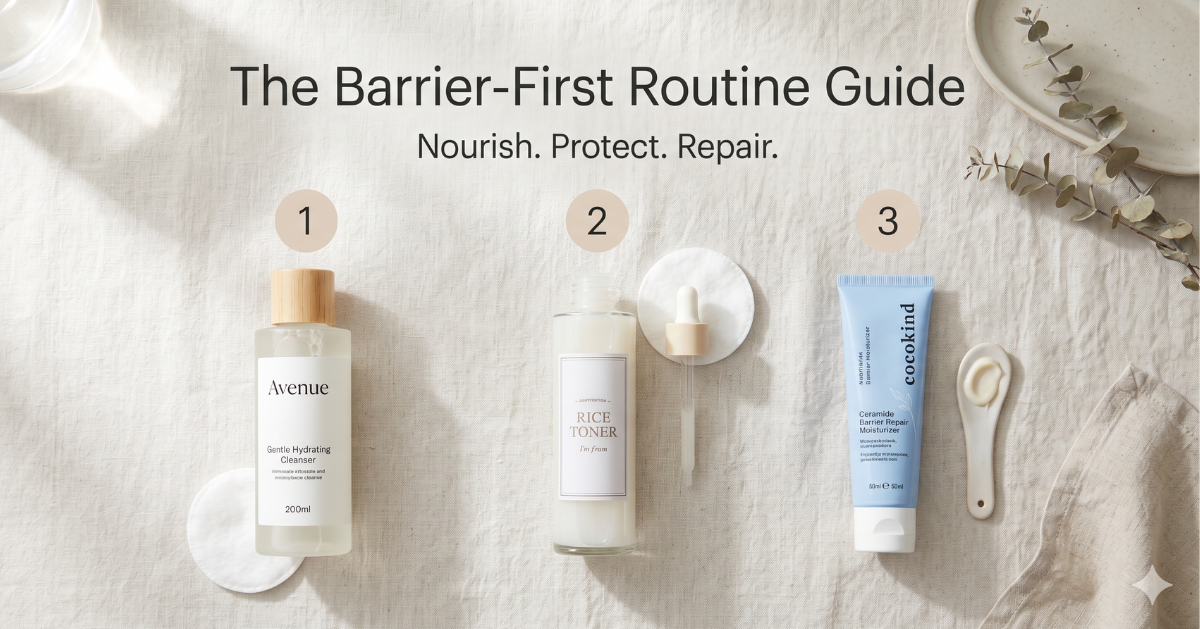
🌿 GENTLE FIRST STEP
Microbiome-Friendly Low-pH Cleanser
Formulated with prebiotic and postbiotic ingredients like Lactobacillus and beta-glucan, this cleanser removes makeup and impurities without disturbing the skin’s natural pH or stripping its protective lipid layer — exactly the kind of “first step” a barrier-repair routine depends on.
Check Current Price on Amazon →Locking It In: Why the Final Step Can’t Be Skipped
A healthy barrier needs structural support — and that’s where ceramide-rich moisturizers earn their reputation. Ceramides aren’t just hydrating; they’re literally the lipids that hold skin cells together, forming the physical “mortar” that creates a stable environment for beneficial microbes to thrive. Skip this step, and even the best serum in the world is working against a leaky foundation.
🌿 BARRIER-LOCKING ESSENTIAL
Ceramide-Based Barrier Moisturizer
A rich, fragrance-conscious cream built on ceramides, hyaluronic acid, niacinamide, and fatty acids — designed to seal in the work of every product layered before it and create the stable, hospitable environment your skin’s microbiome needs to thrive.
Check Current Price on Amazon →The Takeaway
Your skin doesn’t need more products. It needs the right ones, in the right order, supporting a foundation that’s already trying to do its job. Understanding the microbiome isn’t just a trendy talking point — it’s the missing context that makes every other skincare decision easier to make.
In the next part of this series, we’ll turn this science into a step-by-step AM and PM routine you can actually follow.
📚 Barrier-First Series
- ✅ Part 1: What is the Skin Microbiome? (you’re reading this)
- 🔜 Part 2: Building a Barrier-First Routine (AM & PM)
- 🔜 Part 3: Postbiotics vs Probiotics vs Prebiotics
- 🔜 Part 4: Common Mistakes That Damage Your Barrier
💡 Frequently Asked Questions (FAQ)
Q1. What’s the difference between the skin barrier and the skin microbiome?
The skin barrier is the physical structure — lipids and skin cells — that keeps moisture in and irritants out. The microbiome is the living community of microorganisms sitting on top of that barrier. They work together, but they’re not the same thing.
Q2. How long does it take to repair a damaged skin barrier?
Most people notice meaningful improvement within 4 to 6 weeks of consistent barrier-first care, though visible changes like reduced redness can appear sooner. Full microbiome rebalancing tends to take longer, often 8 to 12 weeks.
Q3. Can I use actives like retinol while repairing my barrier?
It’s best to pause or reduce strong actives until your barrier shows signs of recovery — less redness, less tightness, more even texture. Reintroducing actives too early can undo the progress you’re making.
This article is for educational purposes only and is not a substitute for professional dermatological advice. If you have persistent skin concerns, please consult a licensed dermatologist. This post contains affiliate links; WellbeingPrime may earn a commission from qualifying purchases at no additional cost to you.
Stay dewy! 🌿 Bookmark WellbeingPrime.com for more evidence-based wellness guides.
🌿 Weekly wellness, health & beauty insights — straight to your inbox
Free subscription · Cancel anytime