Published on WellbeingPrime.com | Evidence-Based Longevity & Wellness
The Question That’s Redefining Modern Wellness
Living to 100 sounds impressive — until you consider how those final decades feel. The wellness conversation has officially shifted. In 2026, the most forward-thinking health enthusiasts, biohackers, and clinicians alike are obsessing not over how long you live, but over how well you live. Welcome to the era of healthspan optimization — and it is changing everything from your morning routine to your supplement stack.
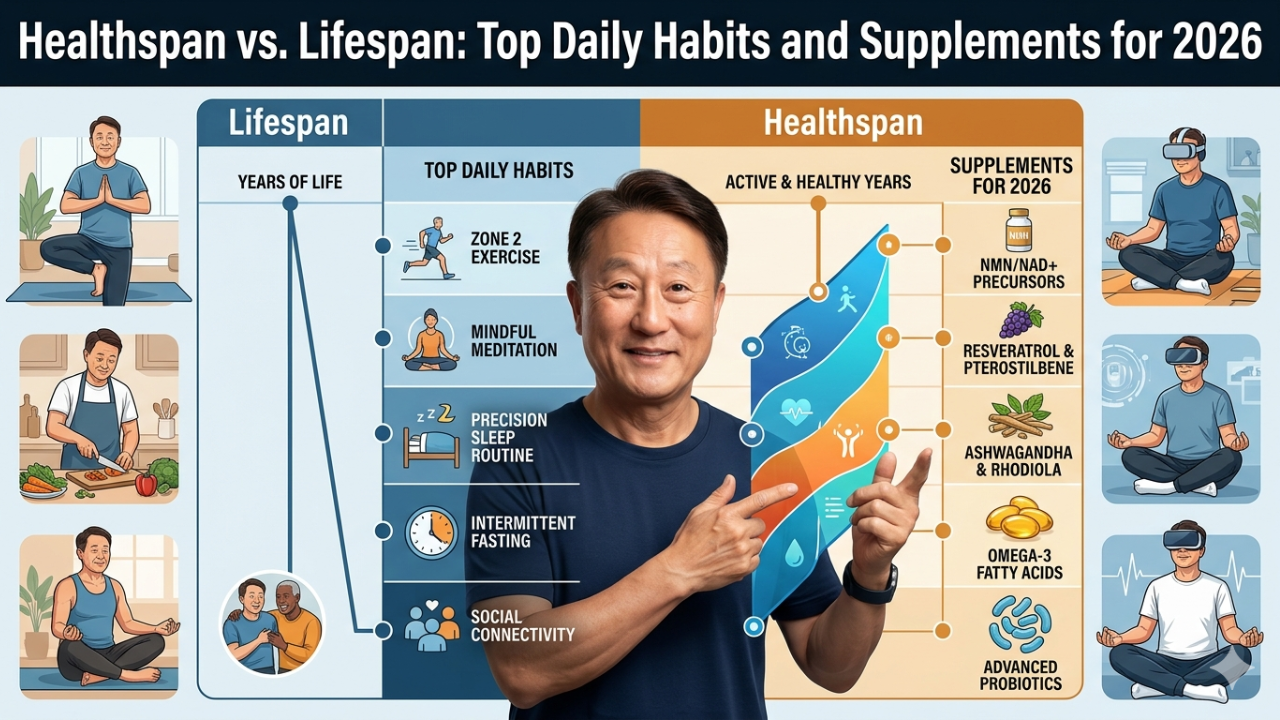
Lifespan is simply the total number of years you’re alive. Healthspan, on the other hand, is the period during which you remain in peak physical, cognitive, and metabolic health — fully functional, energetic, and disease-free. Research from institutions like the Buck Institute for Research on Aging confirms that the average person now spends roughly 16–20% of their life in a state of chronic illness or disability. That’s a gap between lifespan and healthspan that modern science is urgently working to close.
This guide breaks down the exact daily habits and evidence-backed supplements that the world’s top longevity researchers and wellness editors are endorsing in 2026 — giving you a comprehensive, actionable roadmap to living not just longer, but radically better.

What Science Actually Says: The Healthspan-Lifespan Divide
The distinction between healthspan and lifespan isn’t merely philosophical — it has profound biochemical underpinnings. Aging researchers now identify nine hallmarks of aging (Lopez-Otin et al., updated 2023), including genomic instability, telomere attrition, epigenetic alterations, and cellular senescence. Each of these biological processes contributes to the gradual compression of healthspan.
The exciting news? Many of these hallmarks are now considered modifiable through lifestyle and targeted supplementation. Studies from Harvard Medical School’s Department of Genetics, the Salk Institute, and Stanford’s Longevity Center collectively suggest that up to 70–80% of biological aging outcomes may be influenced by environmental and behavioral factors rather than genetics alone.
This means your daily choices — your morning habits, nutritional inputs, sleep architecture, and stress management practices — carry extraordinary power over your biological age.
Key Metrics to Track Your Healthspan in 2026
- VO2 Max: The single most predictive marker of long-term mortality risk
- Grip Strength: Correlated with cardiovascular and metabolic health
- Fasting Glucose & HbA1c: Metabolic aging indicators
- Resting Heart Rate Variability (HRV): Autonomic nervous system resilience
- Biological Age Tests (e.g., Dunedin PACE, Horvath Clock): Epigenetic aging assessment
The Non-Negotiable Daily Habits of Healthspan Champions
1. Zone 2 Cardio: The Longevity Workout No One Is Skipping
If there’s a single exercise modality that longevity scientists universally endorse, it is Zone 2 aerobic training — sustained, low-to-moderate intensity cardio that keeps your heart rate at approximately 60–70% of maximum. Dr. Peter Attia, physician and longevity researcher, calls it the “most potent longevity drug” available without a prescription.
Zone 2 training optimizes mitochondrial biogenesis — literally growing more mitochondria per cell — which directly translates to metabolic efficiency, reduced oxidative stress, and improved insulin sensitivity. Aim for 150–180 minutes per week, broken into sessions of 30–45 minutes. Walking briskly, cycling, or swimming at a conversational pace all qualify.
2. Resistance Training After 40: Not Optional
Sarcopenia — the age-related loss of skeletal muscle — begins as early as your mid-30s and accelerates dramatically after 60. Muscle mass is metabolically expensive tissue that acts as a glucose reservoir, a hormonal signaling organ, and a structural protector for joints and bones.
The 2026 consensus from sports medicine and gerontology communities is clear: 2–4 sessions of progressive resistance training per week are essential for healthspan. Focus on compound movements (squats, deadlifts, rows, presses) and prioritize mechanical tension over cardio-style endurance lifting.
3. Sleep Architecture Optimization
Sleep is not passive recovery — it is active biological maintenance. During deep (slow-wave) sleep, the brain’s glymphatic system flushes amyloid-beta plaques associated with Alzheimer’s disease. During REM sleep, emotional memory consolidation and neural pruning occur.
In 2026, elite wellness practitioners are no longer simply tracking hours slept, but sleep architecture quality — the ratio of deep sleep to REM to light sleep. Target:
- 7–9 hours total
- 15–20% deep sleep (90–110 minutes)
- 20–25% REM sleep
- Consistent sleep/wake times within a 30-minute window daily
Tools like the Oura Ring 4, WHOOP 5.0, and Garmin’s sleep tracking algorithms have made this data accessible to mainstream consumers.
4. Time-Restricted Eating (TRE): The Metabolic Reset
Intermittent fasting has matured into a more nuanced protocol in 2026. The most evidence-supported model is Time-Restricted Eating within a 8–10 hour window — not aggressive 18:6 fasting, but a consistent, sustainable daily eating window aligned with circadian biology.
Research from the Salk Institute demonstrates that TRE — even without caloric restriction — improves metabolic markers, reduces inflammation, enhances autophagy, and supports liver health. The critical factor is consistency: eating within the same window daily, ideally ending intake 2–3 hours before sleep.
5. Deliberate Stress Exposure (Hormesis)
Not all stress is damaging. Hormesis — the biological phenomenon where low-dose stressors trigger adaptive responses — is a cornerstone of healthspan science. Practices including cold water immersion (10–15°C for 2–4 minutes), sauna therapy (80–100°C for 15–20 minutes), and breath-work protocols (Wim Hof, box breathing) activate heat shock proteins, BDNF, and anti-inflammatory pathways that strengthen long-term cellular resilience.
A 2024 meta-analysis in Frontiers in Physiology found that regular sauna use (4–7 sessions/week) was associated with a 40% reduction in cardiovascular mortality — a staggering signal for a habit requiring no equipment beyond access to heat.
The 2026 Longevity Supplement Stack: What’s Actually Worth Taking
The supplement industry is rife with noise. Below is a curated breakdown of compounds with the strongest mechanistic evidence and clinical support as of 2026 — organized by biological target.
Tier 1: Core Cellular Health
NAD+ Precursors (NMN & NR) Nicotinamide mononucleotide (NMN) and nicotinamide riboside (NR) are the most-discussed longevity supplements of the decade. Both elevate cellular NAD+ levels, a coenzyme essential for DNA repair, sirtuin activation, and mitochondrial energy production. NAD+ declines by approximately 50% between ages 40 and 60.
- Recommended dose: NMN 500–1000mg/day or NR 300–600mg/day
- Timing: Morning with food
- Best evidence: Human trials from Washington University School of Medicine (NMN) and ChromaDex-funded NR research
Urolithin A Produced by gut bacteria from pomegranate polyphenols, Urolithin A is a mitophagy activator — it triggers the selective recycling of damaged mitochondria. A landmark 2022 clinical trial in Nature Metabolism demonstrated measurable improvements in muscle endurance in older adults. The supplement form (Mitopure® by Timeline Nutrition) bypasses the gut microbiome conversion step entirely.
- Recommended dose: 500–1000mg/day
- Timing: Any time with or without food
Tier 2: Inflammation & Metabolic Defense
Berberine Often called “nature’s metformin,” berberine activates AMPK — the master metabolic switch — and demonstrates clinically significant effects on fasting glucose, LDL-C, and visceral fat accumulation. A 2023 systematic review in Phytomedicine confirmed its efficacy comparable to metformin for glucose regulation in pre-diabetic populations.
- Recommended dose: 500mg 2–3x daily with meals
- Caution: May interact with blood sugar medications; consult a physician
Omega-3 Fatty Acids (EPA + DHA) The evidence base for high-dose omega-3s has only strengthened. Beyond cardiovascular benefits, EPA and DHA regulate resolvin and protectin synthesis — specialized pro-resolving mediators that actively resolve chronic low-grade inflammation, a primary driver of accelerated aging.
- Recommended dose: 2–4g combined EPA+DHA daily from triglyceride-form fish oil or algae-based sources
- Key marker: Target an Omega-3 Index above 8%
Tier 3: Brain, Sleep & Hormonal Resilience
Magnesium Threonate (MgT) Of the many magnesium forms, threonate is uniquely capable of crossing the blood-brain barrier, elevating brain magnesium concentrations. Research from MIT (Dr. Guosong Liu) demonstrates improvements in synaptic density, working memory, and sleep quality. Magnesium deficiency affects an estimated 45–68% of Western adults.
- Recommended dose: 144mg elemental Mg from MgT (equivalent to ~2g MgT complex)
- Timing: 1–2 hours before bed
Apigenin This flavonoid — found naturally in chamomile and parsley — acts as a CD38 inhibitor, blocking an enzyme that degrades NAD+. It synergizes powerfully with NMN/NR supplementation and demonstrates anxiolytic and sleep-promoting effects in both animal and preliminary human research.
- Recommended dose: 50–100mg/day
- Best combined with: NMN or NR in the morning stack
Ashwagandha (KSM-66® or Sensoril® extract) Adaptogenic herbs have earned their place in evidence-based wellness. KSM-66 ashwagandha root extract (600mg/day) has demonstrated significant reductions in cortisol, perceived stress, and subclinical anxiety in multiple randomized controlled trials — with additional evidence for improvements in testosterone, thyroid function, and sleep onset latency.
The Integration Principle: Synergy Over Stacking
The most sophisticated approach in 2026 is not taking more supplements — it’s understanding biological synergy. For example:
- NMN + Apigenin = NAD+ production amplified + degradation inhibited
- Berberine + Omega-3s = Dual-pathway metabolic optimization
- Magnesium Threonate + Ashwagandha = Sleep architecture support from complementary angles
Start with Tier 1 for 90 days. Track HRV, sleep quality, and energy levels. Add Tier 2 compounds sequentially, monitoring for interactions with any existing medications.

Building Your Personal Healthspan Protocol: A 90-Day Framework
Transformation doesn’t happen overnight — but it does happen systematically. Here is a phased approach:
Days 1–30: Foundation Establish sleep consistency, introduce Zone 2 cardio 3x/week, begin Tier 1 supplements (NMN or NR + Urolithin A), and implement an 8–10 hour eating window.
Days 31–60: Amplification Add resistance training 2x/week, incorporate deliberate stress exposure (cold shower or sauna), add Tier 2 supplements (Omega-3s + Berberine if appropriate).
Days 61–90: Optimization Assess biomarkers (HRV, glucose, energy, sleep quality data), add Tier 3 compounds as needed, refine timing and dosing based on personal response data.
The goal is not perfection — it is progressive biological improvement, measurable and sustainable across decades.
💡 Frequently Asked Questions (FAQ)
Q1: What is the most important difference between healthspan and lifespan?
A1: Lifespan refers to the total number of years you are alive, while healthspan specifically refers to the years you remain in full physical, cognitive, and metabolic health. The critical concern in modern longevity medicine is closing the gap between the two — most people experience a significant period of chronic illness or diminished function in their final years. Optimizing healthspan means compressing that period of decline as much as possible through daily habits and targeted supplementation.
Q2: Which supplements have the strongest scientific evidence for extending healthspan in 2026?
A2: The compounds with the most robust mechanistic and clinical evidence include NAD+ precursors (NMN and NR) for cellular energy and DNA repair, Urolithin A for mitophagy and muscle health, Omega-3 fatty acids (EPA+DHA) for inflammation resolution, Berberine for metabolic regulation, and Magnesium Threonate for brain health and sleep quality. No supplement replaces foundational habits like exercise, sleep, and nutrition, but these compounds provide meaningful biological support when integrated into a comprehensive lifestyle protocol.
Q3: Can I take NMN and Berberine together safely?
A3: Yes, NMN and Berberine can generally be taken together and actually complement each other well — NMN supports cellular energy production via NAD+ elevation, while Berberine activates AMPK, the body’s master metabolic regulator. However, if you are taking any glucose-lowering medications (including metformin), consult your physician before adding Berberine, as it has meaningful blood sugar-lowering effects that may require dosage adjustment.
Q4: How long does it take to see results from a healthspan-focused supplement and lifestyle protocol?
A4: Most people begin noticing subjective improvements — better sleep quality, more stable energy, reduced afternoon fatigue — within 4–8 weeks of consistent implementation. Measurable biomarker improvements (HRV, fasting glucose, VO2 Max) typically become apparent within 60–90 days. Epigenetic age improvements, as measured by biological age tests, generally require 6–12 months of sustained practice. Consistency and tracking are essential for assessing personal response.
Q5: Is Zone 2 cardio really better than high-intensity interval training (HIIT) for longevity?
A5: Both have distinct and complementary roles. Zone 2 cardio specifically targets mitochondrial efficiency, metabolic flexibility, and cardiovascular base fitness — the physiological foundations most predictive of long-term healthspan. HIIT provides excellent benefits for VO2 Max improvements and hormonal response. The current longevity research consensus recommends approximately 80% of training volume in Zone 2 and 20% in higher-intensity work, rather than exclusively one or the other.
🌿 Weekly wellness, health & beauty insights — straight to your inbox
Free subscription · Cancel anytime