Published on WellbeingPrime.com | Beauty & Wellness Authority
The Skin-Hormone Connection: Why Everything Changes and What Science Tells Us
If you’ve been watching your complexion transform in ways your old skincare routine simply can’t address — sudden dryness that feels bone-deep, breakouts you thought you’d left behind in your twenties, a loss of that luminous plump quality that once felt effortless — you are not imagining things. The shift is biological, hormonal, and profound. Perimenopause and menopause represent one of the most significant physiological transitions of a woman’s life, and the skin is one of its most visible theaters.
Estrogen, that elegant multi-tasking hormone, has long been your skin’s silent benefactor. It stimulates collagen synthesis, supports sebaceous gland activity (yes, the kind that keeps skin supple, not shiny), maintains the skin’s moisture barrier, and governs the distribution of hyaluronic acid throughout your dermal layers. As estrogen levels begin their gradual decline during perimenopause — a phase that can begin as early as your late thirties and extend well into your fifties — the skin begins to register the deficit with increasing urgency.
The good news? This is precisely where the intersection of dermatological science and next-generation wellness strategies becomes genuinely transformative. The K-Beauty philosophy, long celebrated for its approach to skin as a living ecosystem worthy of ceremony and investment, offers a remarkably compatible framework for navigating hormonal skin changes with both intelligence and grace.
What Exactly Is Happening Hormonally: A Scientific Breakdown
Understanding the hormonal cascade is the first step toward choosing interventions that actually work.
Estrogen, Progesterone, and the Collagen Cliff
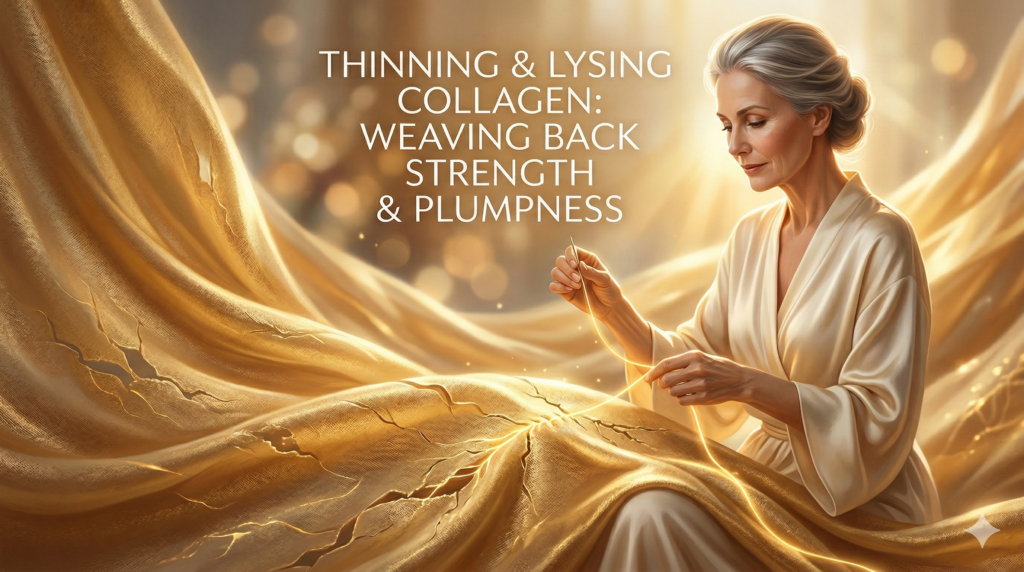
Estrogen stimulates fibroblasts — the cells responsible for producing collagen and elastin — and it also up-regulates the activity of hyaluronic acid synthase enzymes. Studies published in the British Journal of Dermatology have demonstrated that women lose approximately 30% of their skin’s collagen in the first five years following menopause, with a continued decline of roughly 2% per year thereafter. This accounts for the accelerated appearance of fine lines, sagging, and the textural shift many women notice at this stage.
Progesterone decline, which often precedes estrogen fluctuations in the perimenopause timeline, contributes to mood instability, disrupted sleep cycles (another enemy of skin health), and an increase in water retention patterns that can paradoxically make skin both puffy and dehydrated at the same time.
Androgens: The Plot Twist
What surprises many women is that androgens (testosterone and DHEA) become relatively more dominant as estrogen and progesterone decline — not because they increase, but because the balance shifts. This androgenic relative dominance can trigger a second round of hormonally driven acne, excess facial hair, and a change in skin texture. The sebaceous glands, now responsive to androgenic signals without the moderating influence of estrogen, may produce sebum erratically — contributing to both breakouts and patches of extreme dryness simultaneously.
Cortisol, Sleep, and the Stress-Skin Loop
The perimenopause-to-menopause transition frequently disrupts sleep architecture, elevating cortisol (your primary stress hormone). Chronic elevated cortisol degrades collagen, impairs the skin barrier, amplifies inflammatory responses, and accelerates the breakdown of hyaluronic acid. This creates a compounding loop: poor sleep → elevated cortisol → accelerated skin aging → increased stress about visible aging → worsened sleep.
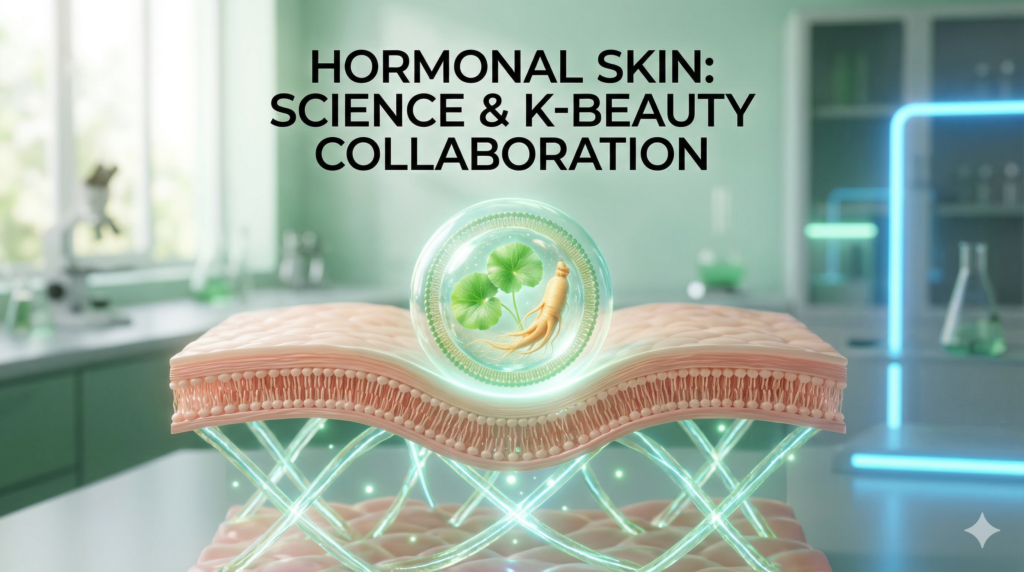
Reading Your Skin’s New Language: Key Perimenopausal Skin Changes
Before you can build an intelligent protocol, you need to accurately identify what your skin is communicating.
Thinning and Loss of Density
Skin becomes measurably thinner as estrogen drops. Dermal thickness decreases, the fat pads beneath the skin shift and shrink, and the overall architecture supporting that youthful plumpness begins to reorganize. This isn’t just cosmetic — thinner skin is more vulnerable to damage, more reactive to actives, and heals more slowly from micro-injuries.
Dryness That Bypasses Surface Hydration
This is one of the most misunderstood changes. Many women reach for richer moisturizers and find only temporary relief. The issue isn’t simply a lack of surface moisture — it’s a structural change in the skin barrier. Ceramide production decreases, lipid ratios shift, and transepidermal water loss (TEWL) increases dramatically. What worked in your thirties — a good hyaluronic acid serum and a moderate moisturizer — may no longer provide lasting relief.
The Return of Adult Acne
Adult perimenopausal acne tends to concentrate along the jawline and chin — classic androgen-pattern territory. Unlike the T-zone acne of adolescence, this type often presents as deep cystic lesions that linger, leave marks more readily, and respond poorly to traditional drying treatments.
Hyperpigmentation and the Sun Damage Accumulation Effect
Declining estrogen affects melanocyte-stimulating activity, making skin more vulnerable to UV-triggered pigmentation. If you’ve spent decades accumulating sun exposure without rigorous protection, this is often when that investment comes due — dark spots that previously faded now persist, and new melasma can appear or intensify.
The K-Beauty Framework for Hormonal Skin: Why Seoul Has It Right
Korean beauty philosophy, particularly its Seoul-based innovation ecosystem, has always understood skin as a long game. While Western beauty culture historically pivoted toward corrective “fixes,” K-Beauty emphasized consistent barrier nourishment, preventive layering, and the concept of skin that is fundamentally healthy rather than just temporarily beautiful — ideas that map brilliantly onto hormonal skin care.
The 5-Skin Method and TEWL Reduction
The original Korean 5-Skin Method — applying a lightweight toner or essence up to five times in thin layers — is actually evidence-supported as a way to address increased TEWL. Multiple thin applications of humectant-rich formulas create a layered moisture film that penetrates more efficiently than a single heavy application. For perimenopausal skin struggling with barrier compromise, this technique is not aesthetically indulgent — it’s functionally intelligent.
Essence Culture and Cellular Renewal
The Korean Essence, long a staple of the 10-step routine, has evolved significantly in its actives profile. Modern essences formulated for mature skin increasingly feature fermented ingredients (galactomyces, bifida ferment lysate), growth factors, and adenosine — a clinically studied compound shown to stimulate collagen synthesis and reduce the appearance of fine lines. This makes the essence step one of the most scientifically loaded applications in the hormonal skin toolkit.
Building Your Hormonal Skin Protocol: A Dermatologist-Informed Regimen
Morning: Protect, Plump, Defend
The morning routine during perimenopause should prioritize barrier fortification and aggressive photoprotection.
Step 1 — Gentle Amino Acid Cleanser: Avoid sulfates entirely. Look for pH-balanced formulas (5.0–5.5) containing amino acid surfactants that cleanse without stripping. Freshly disrupted barrier function in menopausal skin cannot afford any further assault at the cleansing step.
Step 2 — Bifida Ferment Lysate Toner: This probiotic-derived ingredient, popularized by Seoul-based formulators, strengthens the microbiome of the skin, reinforces barrier integrity, and provides measurable anti-inflammatory benefit — exactly what hormonally reactive skin requires. Apply using the 2-3 layer technique for best results.
Step 3 — Peptide-Rich Serum: Signal peptides such as Matrixyl 3000 (palmitoyl tripeptide-1 and palmitoyl tetrapeptide-7), Argireline (acetyl hexapeptide-3), and copper peptides directly address collagen depletion. Unlike retinoids, peptides are generally well tolerated during periods of heightened skin sensitivity — a significant advantage during hormonal flux.
Step 4 — Ceramide-Dominant Moisturizer: This is non-negotiable. The skin’s natural ceramide ratio is disrupted in menopause (ceramide 1, 3, and 6-II decrease disproportionately). A moisturizer that mirrors the natural lipid ratio (ceramides, cholesterol, fatty acids in a roughly 3:1:1 ratio) will outperform any petroleum-based barrier product at reducing TEWL.
Step 5 — SPF 50+, Broad-Spectrum, with Antioxidant Support: Photoprotection becomes even more critical post-estrogen decline. Niacinamide-enriched SPFs serve double duty — UV protection while actively inhibiting melanosome transfer to reduce hyperpigmentation. Korean SPF innovations, particularly essence-texture SPF with lightweight finish, have transformed compliance for women who previously found sunscreen uncomfortable.
Evening: Renew, Repair, Rebuild
Step 1 — Double Cleanse: Oil-based first cleanse removes SPF and environmental pollutants. Water-based second cleanse refines without stripping.
Step 2 — Low-Concentration Retinoid (2-3x per week): Retinoids remain the most evidence-supported ingredient for post-menopausal skin collagen rebuilding. Start with encapsulated retinol (0.025–0.1%) or retinaldehyde to minimize irritation. Pair with a moisturizer applied immediately after (the “sandwich method”) to reduce transepidermal irritation pathways.
Step 3 — Hyaluronic Acid Serum with Multiple Molecular Weights: The critical insight here: hyaluronic acid formulas with only high-molecular-weight HA sit on the skin’s surface without penetration. Multi-weight formulations — combining high (surface), medium (dermal interface), and low/hydrolyzed (deeper dermal) molecular HA — deliver hydration across all skin layers simultaneously.
Step 4 — Sleeping Mask or Rich Night Cream with Bakuchiol + Phytoestrogens: Bakuchiol, derived from the Psoralea corylifolia plant, functions as a retinol-alternative through a distinct biochemical pathway and is tolerated by the vast majority of sensitive and post-menopausal skin types. Paired with phytoestrogen complexes (soy isoflavones, kudzu root extract, red clover extract), this combination addresses both surface renewal and the estrogen-receptor signaling that contributes to collagen loss.
Targeted Ingredient Intelligence: What the Science Actually Supports
Niacinamide: The Hormonal Skin MVP
Niacinamide (vitamin B3) deserves its own section because its benefits during hormonal transition are unusually comprehensive. It inhibits melanin transfer (addressing hyperpigmentation), strengthens the ceramide barrier, reduces sebum production through sebaceous regulation, minimizes the appearance of enlarged pores, and demonstrates meaningful anti-inflammatory activity. At concentrations of 4–10%, it is one of the most evidence-rich, tolerance-friendly actives available. Layer it freely.
Azelaic Acid: The Dual-Action Corrector
For the perimenopausal woman managing both acne and hyperpigmentation simultaneously, azelaic acid is extraordinarily well positioned. It is both antibacterial (addressing Cutibacterium acnes) and a tyrosinase inhibitor (addressing melanin overproduction). At 10–15%, it is available over the counter in many formulations; at 20%, it offers prescription-strength melasma correction.
Growth Factors and EGF: The Regenerative Frontier
Epidermal Growth Factor (EGF) — first isolated from Nobel Prize–winning research — signals skin cells to proliferate and migrate, effectively accelerating the repair and renewal processes that slow dramatically with estrogen decline. While still an emerging ingredient category, the clinical evidence for topical growth factors in reducing wrinkle depth and improving skin density in post-menopausal women is compelling and growing.

Lifestyle Pillars That Amplify Skin-Hormonal Balance
Skincare products work within a physiological context. These lifestyle factors create the conditions under which ingredients perform optimally.
Phytoestrogens Through Diet
Dietary isoflavones from fermented soy (tofu, tempeh, miso, natto) have demonstrated in multiple studies the ability to partially compensate for declining endogenous estrogen — with meaningful effects on skin elasticity, hydration, and collagen density over 12-week supplementation periods. The fermentation process increases bioavailability significantly.
Collagen Peptide Supplementation
Hydrolyzed marine or bovine collagen peptides (2.5–10g daily) taken orally have been shown in randomized controlled trials to increase dermal collagen density and skin elasticity, with effects measurably superior to topical collagen application alone. The tripeptides Gly-Pro-Hyp and Pro-Hyp, derived from enzymatic hydrolysis, are absorbed intact and act as signals that stimulate fibroblast collagen synthesis.
Stress Protocol and Cortisol Management
Breathwork (4-7-8 technique), consistent sleep hygiene, and adaptogenic support (ashwagandha, rhodiola, phosphatidylserine) have demonstrated cortisol-lowering effects in clinical settings. Given cortisol’s established role in collagen degradation and barrier impairment, this is not peripheral wellness advice — it is directly on-topic skincare strategy.
When to Consider Hormonal Support: The MHT Conversation
Menopausal Hormone Therapy (MHT) — formerly called HRT — remains the most clinically potent intervention for both systemic menopause symptoms and skin-specific changes. Studies consistently show that estrogen supplementation (particularly topical/transdermal delivery) produces measurable improvements in skin thickness, collagen content, hydration, and elasticity.
The risk-benefit conversation around MHT has evolved substantially. Current evidence supports the use of low-dose transdermal estrogen and micronized progesterone as a lower-risk option for women without contraindications, particularly when initiated within the “therapeutic window” of early perimenopause. This is a conversation best had with a menopause-specialist gynecologist or endocrinologist who is current with NICE and NAMS (North American Menopause Society) guidelines.
Glass Skin in Your Fifties: Redefining the Goal
The Glass Skin aesthetic — that luminous, pore-blurred, translucent radiance that became the defining beauty ideal of Seoul-influenced culture — is absolutely achievable at every hormonal stage. The path simply requires recalibration. Rather than targeting the ephemeral dewiness of youth, the mature approach to Glass Skin builds on genuine structural health: an intact barrier, dense hydration at multiple levels, addressed pigmentation, and stimulated collagen production.
The result is something arguably more interesting than what comes effortlessly at twenty-two — skin that radiates from within because it has been understood, tended to, and optimized with intelligence and intention.
Stay dewy! ✨
WellbeingPrime.com is your home for evidence-backed beauty intelligence that meets you where you are — hormonally, seasonally, and scientifically. If this guide resonated with you, we’d love to have you join the Dewyfile community on YouTube, where we go deeper into ingredient science, specialist interviews, and skin-health rituals for every stage of life. Subscribe at youtube.com/@Dewyfile — the glow-up awaits.
💡 Frequently Asked Questions (FAQ)
Q1: Which skincare ingredients are most important during perimenopause?
The most evidence-supported actives for perimenopausal skin are ceramides (to restore the compromised lipid barrier and reduce transepidermal water loss), retinoids (to stimulate collagen synthesis and address cell turnover slowdown), peptides such as Matrixyl 3000 and copper peptides (to signal fibroblast activity), niacinamide (to address hyperpigmentation, barrier strengthening, and sebum regulation), and multi-weight hyaluronic acid (to deliver hydration across multiple skin depths). Phytoestrogens like soy isoflavones and bakuchiol round out a scientifically grounded hormonal skin protocol.
Q2: Can I still get Glass Skin results in my fifties?
Absolutely — but the approach shifts from chasing surface dewiness to building structural skin health. The K-Beauty-inspired 5-Skin technique (layering lightweight toners 2–5 times), fermented essence actives like bifida ferment lysate, and targeted ceramide moisturizers all contribute to the translucent luminosity associated with Glass Skin. The result at fifty is arguably more impressive precisely because it reflects genuine skin intelligence rather than effortless youth.
Q3: Is adult acne during perimenopause different from teenage acne, and how should it be treated differently?
Yes — perimenopausal acne is primarily androgenic in origin, driven by the relative dominance of androgens as estrogen and progesterone decline. It typically presents as deep cystic lesions concentrated along the jawline and chin, rather than the T-zone breakouts of adolescence. Drying, alcohol-based treatments that work for teenage acne are counterproductive here — they strip the already-compromised barrier. The most effective approach combines azelaic acid (antibacterial and anti-pigmentation), niacinamide (sebum-regulating and anti-inflammatory), and a non-comedogenic ceramide moisturizer to maintain barrier integrity while addressing the blemish.
🌿 Weekly wellness, health & beauty insights — straight to your inbox
Free subscription · Cancel anytime