Holistic Living · WellbeingPrime.com
Nervous System Regulation 101: Vagus Nerve Exercises & Somatic Practices to Calm Chronic Fight-or-Flight
You optimized your sleep, tracked your macros, and downloaded three meditation apps. Yet somehow, your body still feels like it’s bracing for impact. Here’s what’s actually going on — and how to talk your nervous system down from the ledge.
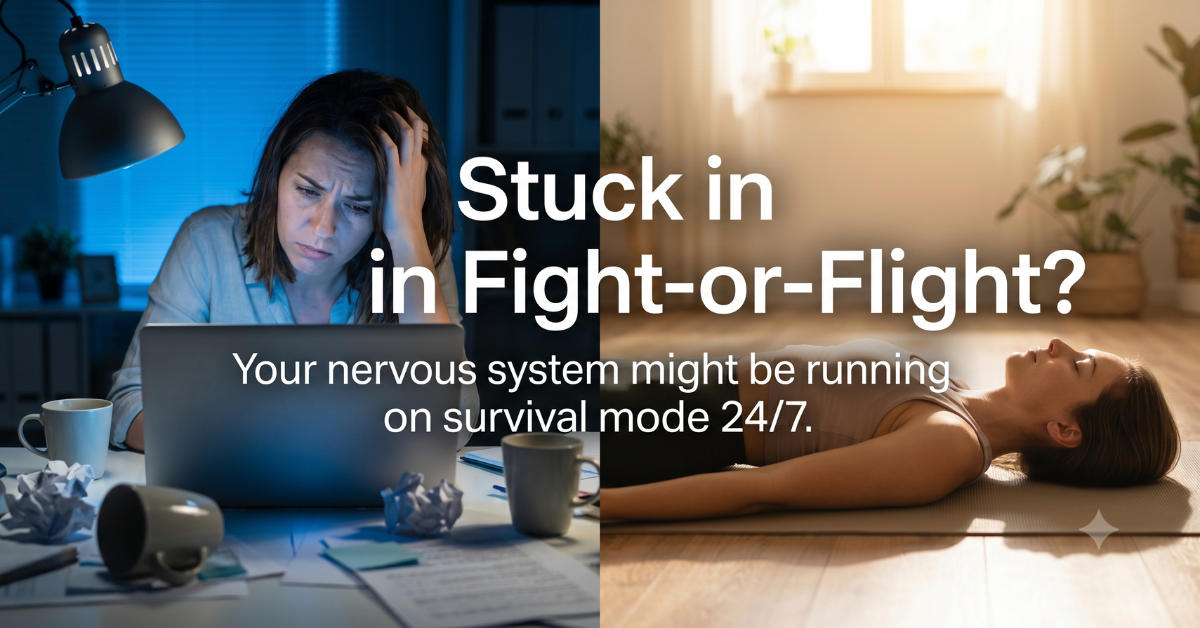
There’s a quiet epidemic that no one is talking about loudly enough: millions of people walking around in a body that never fully exhales. They’re not in danger. There’s no tiger. But the primal alarm system buried deep in their brainstem hasn’t received that memo — and it’s been firing nonstop for months, sometimes years. The clinical term is chronic sympathetic nervous system activation. The lived experience feels like perpetual low-grade dread, tight shoulders, racing thoughts at 2 a.m., and a peculiar inability to enjoy rest even when rest is finally available.
Modern wellness culture tried to solve this with more doing — more supplements, more HIIT, more journaling prompts. But the body doesn’t regulate itself through effort. It regulates through safety. And that’s where the science of nervous system regulation, somatic healing, and vagus nerve therapy becomes genuinely revolutionary. This is not another listicle of tips. This is a science-backed deep dive into why your body gets stuck in fight-or-flight, what the research says about getting out, and exactly how to build a daily practice around it.
The Biology Behind the Burnout: What Chronic Fight-or-Flight Actually Does to You
Your autonomic nervous system operates on a beautifully simple toggle: the sympathetic branch (fight-or-flight) and the parasympathetic branch (rest-and-digest). Under normal conditions, these two systems balance each other elegantly — cortisol spikes to handle a challenge, then recedes once the challenge has passed. Your heart rate climbs, then slows. You activate, then recover.
But chronic stress — the open-loop kind produced by financial anxiety, social media friction, workplace pressure, or unprocessed trauma — jams the system. The off-switch stops working reliably. According to research published in Psychoneuroendocrinology, sustained sympathetic activation is associated with elevated baseline cortisol, systemic inflammation, impaired sleep architecture, compromised immune function, and measurable changes in prefrontal cortex activity — meaning the very part of your brain designed to make rational decisions gets increasingly offline the longer you stay dysregulated.
Dr. Peter Levine, whose decades of research on trauma and the body produced the foundational somatic framework known as Somatic Experiencing®, observed something crucial: humans, unlike animals, rarely complete the physiological cycle of stress arousal. A gazelle that escapes a lion literally trembles and shakes afterward — a full-body discharge of the survival energy. We, instead, sit at our desks and scroll. The energy doesn’t discharge. It lodges. And over time, it becomes the background radiation of a body that’s forgotten what safe actually feels like.
This is not a character flaw. It is a physiological pattern — and physiological patterns can be interrupted, rewritten, and healed.
Wellbeing Essentials · Sponsored
😌 Feeling Wired But Tired? Your Brain Needs This.
L-Theanine with AlphaWave® — the amino acid found in green tea, clinically studied to promote calm focus without drowsiness. The nervous system reset you’ve been looking for, in one clean capsule.
→ Shop L-Theanine AlphaWave® on iHerb*As an affiliate partner, WellbeingPrime may earn a commission at no extra cost to you.
Polyvagal Theory: The Science That Changed Everything
In the 1990s, neuroscientist Dr. Stephen Porges introduced what he called Polyvagal Theory — a framework that has since reshaped how trauma therapists, somatic practitioners, and integrative medicine physicians understand human stress responses. Porges proposed that the autonomic nervous system doesn’t simply have two states (on/off), but three, organized hierarchically:
🟢 Ventral Vagal (Safe & Social): The evolutionarily newest branch. Associated with connection, creativity, play, open-heartedness, and genuine presence. This is the state where healing happens.
🟡 Sympathetic Mobilization (Fight or Flight): Mid-hierarchy. Mobilizes energy for perceived threat. Useful in genuine emergencies. Catastrophic when chronically activated.
🔴 Dorsal Vagal (Shutdown/Freeze): The oldest, most primitive response. Activated when the nervous system concludes that neither fight nor flight is possible. Manifests as numbness, dissociation, collapse, or profound fatigue.
The critical insight from Polyvagal Theory is this: you cannot think your way back to ventral vagal state. The pathways run bottom-up — from body to brain, not the other way around. Cognitive reframing, affirmations, and positive thinking all operate at the cortical level. But the nervous system threat-detection center, the amygdala, operates faster than conscious thought and responds primarily to bodily cues: breath rate, muscle tension, posture, sound frequency, facial expression, and touch.
This is why somatic practices work when purely cognitive ones plateau. They speak the body’s own language.
The Vagus Nerve: Your Body’s Internal Reset Button
The vagus nerve — the longest cranial nerve in the body, running from the brainstem through the throat, heart, lungs, and gut — is the superhighway of the parasympathetic nervous system. Roughly 80% of its fibers are afferent, meaning they carry signals from the body to the brain. This makes the vagus nerve the single most powerful access point for bottom-up nervous system regulation.
The measurable indicator of vagal health is called Heart Rate Variability (HRV) — the natural variation in time between heartbeats. Higher HRV correlates strongly with greater nervous system flexibility, emotional resilience, and recovery capacity. A 2018 meta-analysis in Frontiers in Psychology confirmed that individuals with higher resting HRV demonstrate superior stress recovery and reduced anxiety symptoms.
Evidence-Based Vagus Nerve Exercises to Try Today
1. Diaphragmatic Humming & Chanting
The vagus nerve innervates the larynx. Slow, resonant humming or chanting activates the vagal pathway through vibration. Even 5–10 minutes of gentle humming (think “mmmmm” on a low, sustained exhale) has been shown to increase parasympathetic tone. Some practitioners extend this to overtone singing or simply humming along to calming music.
2. Cold Exposure — Precisely Dosed
Splashing cold water on your face or ending a shower with 30–60 seconds of cool water activates the dive reflex — a hardwired vagal response that immediately slows heart rate. Research from the Journal of Physiology confirms that even modest facial cold exposure triggers measurable parasympathetic activation within seconds.
3. Gargling with Intention
Vigorous gargling for 30–60 seconds contracts the posterior pharyngeal muscles innervated by the vagus nerve. Odd as it sounds, this is a clinically acknowledged vagal toning technique used in some trauma-informed therapeutic settings.
4. Lateral Eye Movements (EMDR-Adjacent)
Slow, horizontal eye movements while in a relaxed posture activate bilateral processing and appear to dampen amygdala reactivity. This forms the basis of EMDR (Eye Movement Desensitization and Reprocessing) therapy, but simple slow lateral eye movements can be self-applied as a grounding tool.
Wellbeing Essentials · Sponsored
🌙 The Mineral Your Nervous System is Starving For
Doctor’s Best High-Absorption Magnesium Glycinate — the form of magnesium with the highest bioavailability, clinically studied for sleep quality, muscle relaxation, and nervous system support. A nightly ritual your body will thank you for.
→ Shop Magnesium Glycinate on iHerb*As an affiliate partner, WellbeingPrime may earn a commission at no extra cost to you.
Breathwork as Neuroscience: The 4-7-8 Method & Beyond
Breath is the only autonomic function you can consciously control — and that single biological fact is the lever that makes breathwork so potent as a nervous system tool. When you deliberately slow and extend your exhale, you directly stimulate the vagus nerve and activate the parasympathetic branch. This isn’t metaphor. It’s measurable neurophysiology.
The 4-7-8 Breathing Protocol
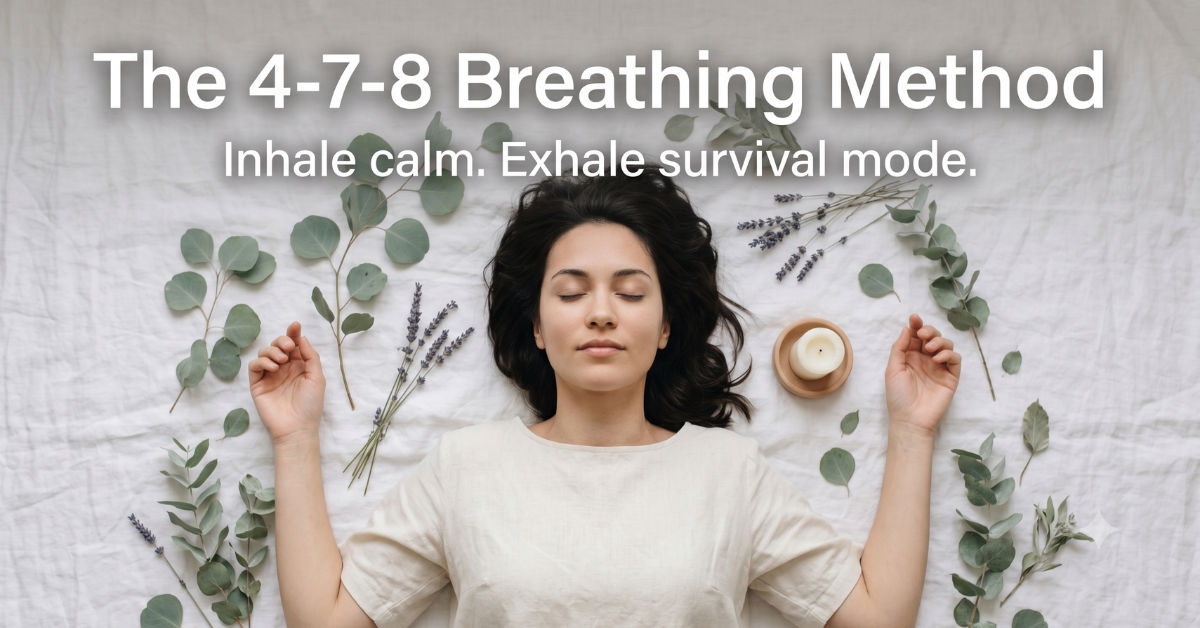
Developed by Dr. Andrew Weil and rooted in pranayama traditions, the 4-7-8 technique works by creating a prolonged exhale-to-inhale ratio that chemically shifts your blood gas balance and signals safety to the amygdala:
🫁 Inhale through your nose for 4 counts
⏸️ Hold your breath for 7 counts
💨 Exhale slowly through your mouth for 8 counts
Repeat 4 cycles. Practice twice daily — once upon waking, once before sleep. Within 4–6 weeks, most practitioners notice measurable reductions in baseline anxiety.
Box Breathing: The Military’s Regulation Tool
Used by Navy SEALs to maintain cognitive clarity under extreme stress, box breathing (4-4-4-4: inhale, hold, exhale, hold) is one of the most researched tactical breathing protocols in existence. A 2020 study in Frontiers in Human Neuroscience demonstrated that 5 minutes of box breathing produced significant reductions in salivary cortisol levels and self-reported anxiety. Notably, the effects were dose-dependent — consistency matters more than session length.
Physiological Sigh: The Body’s Natural Exhale
Researchers at Stanford — notably Dr. Andrew Huberman — have popularized what they call the physiological sigh: a double inhale through the nose (the second inhale “tops off” the lungs) followed by a long, complete exhale through the mouth. This pattern, which humans and animals do spontaneously during emotional overwhelm, has been shown to be the single fastest breathwork intervention for acute stress reduction. One to three physiological sighs can interrupt a stress cascade in real time.
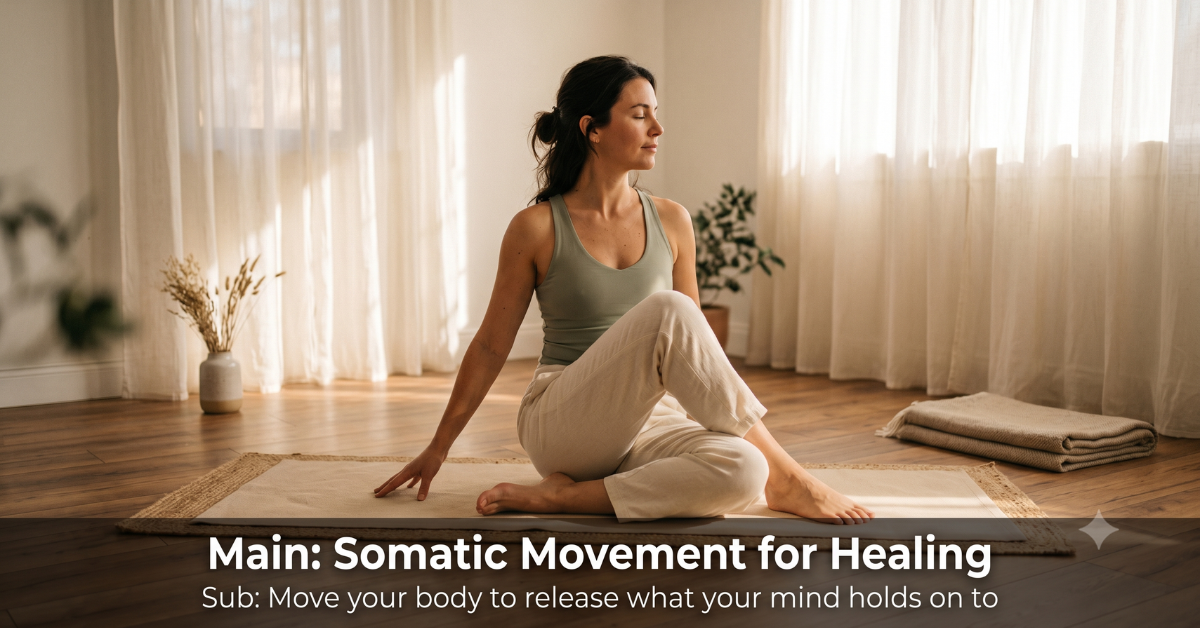
Somatic Movement: When Your Body Holds What Your Mind Can’t Process
The phrase “the body keeps the score” — made famous by psychiatrist Dr. Bessel van der Kolk’s landmark research — captures something that somatic practitioners have known intuitively for generations: unprocessed emotional experience doesn’t simply disappear. It consolidates in tissue. It shows up as chronic tension in the jaw, constriction in the chest, a pelvis that never fully releases, shoulders that never fully drop.
Somatic movement is not yoga, though some yoga lineages incorporate somatic principles. It is not stretching, though tissues do release. Somatic movement is the practice of moving with attention to internal sensation, allowing the body to complete incomplete stress cycles rather than performing poses or achieving flexibility milestones.
TRE: Tension & Trauma Releasing Exercises
Developed by Dr. David Berceli, Tension & Trauma Releasing Exercises (TRE) deliberately fatigue the hip flexors and psoas muscles to trigger natural neurogenic tremoring — the same shaking response animals use to discharge survival energy post-threat. Published clinical trials have demonstrated TRE’s efficacy in reducing PTSD symptoms, decreasing anxiety, and improving sleep quality. The tremors, which feel unusual at first, are not a seizure or loss of control. They are the nervous system doing exactly what it’s designed to do when given permission.
Slow-Flow Yoga as Nervous System Medicine
The distinction between high-intensity yoga (hot flow, power vinyasa) and slow-flow or yin yoga is not merely pacing — it’s neurological. Fast, demanding movement activates the sympathetic nervous system; it produces endorphins but can also reinforce arousal patterns in an already dysregulated body. Slow-flow and yin yoga, with their emphasis on extended holds (2–5 minutes), gentle gravity-assisted release, and attentional presence, consistently produce parasympathetic dominance. A 2019 study in Complementary Therapies in Medicine found that 12 weeks of yin yoga practice significantly reduced anxiety scores and improved HRV compared to a waitlist control group. The key mechanism: long holds allow fascia — the connective tissue that envelops every muscle and organ — to release its held tension in a way that brief movements simply cannot.
Aromatherapy & Somatic Support · Sponsored
🌿 The Scent Your Nervous System Has Been Asking For
NOW Foods 100% Pure Lavender Essential Oil — the most clinically studied essential oil for anxiety reduction and sleep improvement. Inhale before your somatic practice. Diffuse during your yin yoga session. Transform your environment into a healing space.
→ Shop Pure Lavender Oil on iHerb*As an affiliate partner, WellbeingPrime may earn a commission at no extra cost to you.
Sound Healing & Intentional Rest: The Science of Auditory Regulation
Polyvagal Theory offers a surprising insight about sound: the vagus nerve is anatomically connected to the muscles of the middle ear, which are tuned to detect human voice frequencies. This means that the right kinds of sound — particularly prosodic, melodic, mid-frequency tones — can directly signal safety to a dysregulated nervous system. It’s why a calm human voice feels physiologically different from ambient noise, and why certain music seems to physically dissolve tension in the body.
Sound healing practices — from Tibetan singing bowls and binaural beats to guided meditation with specific frequency ranges — leverage this biological pathway. Research published in the Journal of Evidence-Based Integrative Medicine found that a single one-hour sound meditation with singing bowls produced significant reductions in tension, anxiety, and physical pain, while increasing reported feelings of spiritual well-being. The proposed mechanism involves both vagal activation through auditory input and entrainment of brainwave activity toward slower, more restorative frequencies (alpha and theta states).
Rest as Active Medicine
Perhaps the most radical reframe in trauma-informed wellness is this: intentional rest is not passive. It is one of the most metabolically active things a dysregulated nervous system can engage in. The practice of Non-Sleep Deep Rest (NSDR) — popularized by Stanford neuroscientist Dr. Andrew Huberman and rooted in the ancient yogic practice of Yoga Nidra — involves lying in conscious stillness with guided body-scanning attention for 10–30 minutes. Multiple studies confirm that NSDR practice restores dopamine levels in the striatum, accelerates skill consolidation, reduces cortisol, and — critically — trains the nervous system to tolerate states of calm without interpreting them as threatening.
For many chronically dysregulated people, stillness itself is uncomfortable. Rest feels dangerous. If that resonates with you, know that this is not weakness — it is the signature of a nervous system that has been on guard for a very long time. The practice of tolerated stillness, built gradually, is the practice of teaching your body that quiet is safe.
Aromatherapy Discovery · Sponsored
✨ Your Complete Aromatherapy Starter Kit Is Here
Aura Cacia Pure Essential Oils Discover Kit — four expertly curated essential oils to support your somatic practice, sound healing ritual, and intentional rest routine. Lavender, peppermint, eucalyptus, and sweet orange. Everything you need to build a sensory healing sanctuary at home.
→ Shop the Discovery Kit on iHerb*As an affiliate partner, WellbeingPrime may earn a commission at no extra cost to you.
Building Your Daily Nervous System Reset Ritual: A 7-Day Starter Framework
The research is clear on one point: nervous system regulation is not a one-time event. It is a practice — something that builds HRV, vagal tone, and parasympathetic resilience cumulatively, the way fitness builds strength. Here is a starter framework designed to be sustainable, not perfect:
🌅 Morning (10 min): Upon waking, before reaching for your phone, complete 4 rounds of 4-7-8 breathing. Then place one hand on your chest and one on your belly. Simply notice breath moving. This signals to your nervous system that you are beginning the day in your body, not in your threat-detection system.
🕛 Midday (5 min): A physiological sigh reset. Three double-inhale sighs followed by long exhales. This interrupts any sympathetic accumulation from morning screen time, emails, or social friction. Follow with 30 seconds of humming — even quietly at your desk.
🌆 Late Afternoon (20 min): Slow-flow or yin yoga. Even 20 minutes of gravity-assisted hip openers, supported fish pose, or a reclined twist with extended holds begins to physically discharge accumulated tension from the day.
🌙 Evening (15 min): NSDR or Yoga Nidra (free guided sessions are available via Spotify and YouTube). Diffuse lavender essential oil. No screens for 30 minutes prior. This window is where the day’s stress cycle can actually complete, rather than being carried into sleep.
You do not need to do all of this perfectly. Research on nervous system regulation consistently shows that even partial, inconsistent practice produces measurable benefit. Start with the morning breath and the evening NSDR. Add the rest when it feels natural, not obligatory.
The Nervous System-Skin Connection: Why Stress Shows on Your Face
Here is something the wellness-beauty divide has long obscured: your skin has its own nervous system. Keratinocytes, the primary cells of the epidermis, express receptors for cortisol and other stress hormones. Chronic sympathetic activation drives systemic inflammation, elevates sebum production, impairs the skin barrier, and accelerates the breakdown of collagen — meaning that nervous system dysregulation is not merely an emotional problem. It is literally written on your face.
This creates a powerful argument for somatic healing as a skincare practice. When you regulate your nervous system, you reduce circulating cortisol. When you reduce cortisol, you reduce inflammation. When you reduce inflammation, you reduce breakouts, redness, accelerated aging, and reactivity. The most advanced serum in the world cannot undo what chronic cortisol does from the inside out.
That said, supporting the skin barrier with intentional topical care during a somatic healing journey is its own act of self-kindness. Massaging a nourishing body oil into your skin after a somatic movement session — with slow, attentive touch — is itself a nervous system intervention. Touch activates the C-tactile afferent fibers in the skin, which send direct signals to the brain’s social engagement system and promote oxytocin release.
Skin & Body Nourishment · Sponsored
🌸 Turn Your Self-Massage Into a Healing Ritual
NOW Foods Sweet Almond Oil — cold-pressed, pure, and deeply nourishing. Rich in vitamin E and oleic acid. The perfect vehicle for a slow, intentional body massage that supports both skin barrier health and nervous system recovery through mindful touch.
→ Shop Sweet Almond Oil on iHerb*As an affiliate partner, WellbeingPrime may earn a commission at no extra cost to you.
The Bottom Line: Regulation Is Not a Luxury — It’s the Foundation
We have been sold a version of wellness that looks like optimization. More, faster, harder. But the nervous system does not optimize — it regulates. And the currency of regulation is not discipline or willpower. It is safety, consistency, and the willingness to meet your body with curiosity instead of commands.
The practices in this guide — vagus nerve exercises, breathwork protocols, somatic movement, sound healing, intentional rest — are not woo. They are evidence-based, neurologically grounded, and increasingly supported by peer-reviewed research. They are also, in the most profound sense, acts of kindness. They say to your nervous system: I see you. You’ve been working hard. You can rest now.
Start small. Start today. The body will meet you where you are.
Hair & Scalp Wellness · Sponsored
🌿 Scalp Health Starts With Calm — Inside & Out
Chronic stress is one of the leading triggers of hair thinning and scalp inflammation. Avalon Organics Volumizing Rosemary Conditioner — formulated with organic rosemary, known to support scalp circulation and hair vitality. Give your hair the same care you’re giving your nervous system.
→ Shop Rosemary Conditioner on iHerb*As an affiliate partner, WellbeingPrime may earn a commission at no extra cost to you.
Stay dewy! 🌿
Bookmark WellbeingPrime.com for more evidence-based wellness guides that meet you at the intersection of science, nature, and intentional living. Your body knows the way back to balance — we’re just here to light the path.
Health Disclaimer: The information provided on WellbeingPrime.com is for educational and informational purposes only and is not intended as medical advice. Always consult with a qualified healthcare provider before beginning any new wellness practice, especially if you have a history of trauma, anxiety disorders, or other health conditions. Somatic practices are not a substitute for professional mental health treatment.
💡 Frequently Asked Questions
Q: How long does it take to regulate a dysregulated nervous system?
A: Research suggests that measurable improvements in HRV and baseline anxiety can appear within 4–8 weeks of consistent daily practice. However, deeply entrenched dysregulation — particularly when rooted in complex trauma — may take months to years of layered somatic work, ideally supported by a trauma-informed therapist. Neuroplasticity is real, but it rewards patience and consistency above intensity.
Q: What is the difference between somatic healing and regular yoga or meditation?
A: Traditional yoga and meditation can be powerful tools, but they are not inherently somatic. Somatic practices specifically emphasize interoception — the awareness of internal bodily sensation — and are designed to allow completion of incomplete stress cycles. Many people find they can meditate “successfully” while remaining deeply dysregulated. Somatic healing asks the body itself to lead the process, rather than the mind directing it.
Q: Can vagus nerve exercises help with anxiety and panic attacks?
A: Yes — this is one of the most clinically supported applications of vagal toning practices. Extended exhale breathing, cold face exposure, humming, and gargling have all demonstrated measurable anxiolytic effects in peer-reviewed studies. For acute panic, the physiological sigh (double inhale + extended exhale) is particularly effective as a rapid interrupt. These practices work best as preventative maintenance rather than solely crisis interventions.
Q: Is sound healing scientifically validated?
A: Emerging research — particularly studies on singing bowls, binaural beats, and specific frequency interventions — shows promising results for anxiety reduction, pain management, and mood improvement. While the field is not yet as mature as breathwork research, the neurological rationale (auditory-vagal pathway activation, brainwave entrainment) is well-grounded. Sound healing is best understood as a complementary practice that supports the broader somatic regulation toolkit, not a standalone cure.
Q: What supplements can support nervous system regulation?
A: Several evidence-based supplements are frequently used in integrative nervous system support: Magnesium glycinate (supports GABA function and sleep quality; deficiency is extremely common), L-Theanine (promotes calm alertness via alpha brainwave activity), Ashwagandha (adaptogen with robust clinical backing for cortisol reduction), and Omega-3 fatty acids (anti-inflammatory and neuroprotective). These work best as adjuncts to somatic practices, not replacements. Always consult a healthcare provider before starting new supplementation.
🌿 Weekly wellness, health & beauty insights — straight to your inbox
Free subscription · Cancel anytime