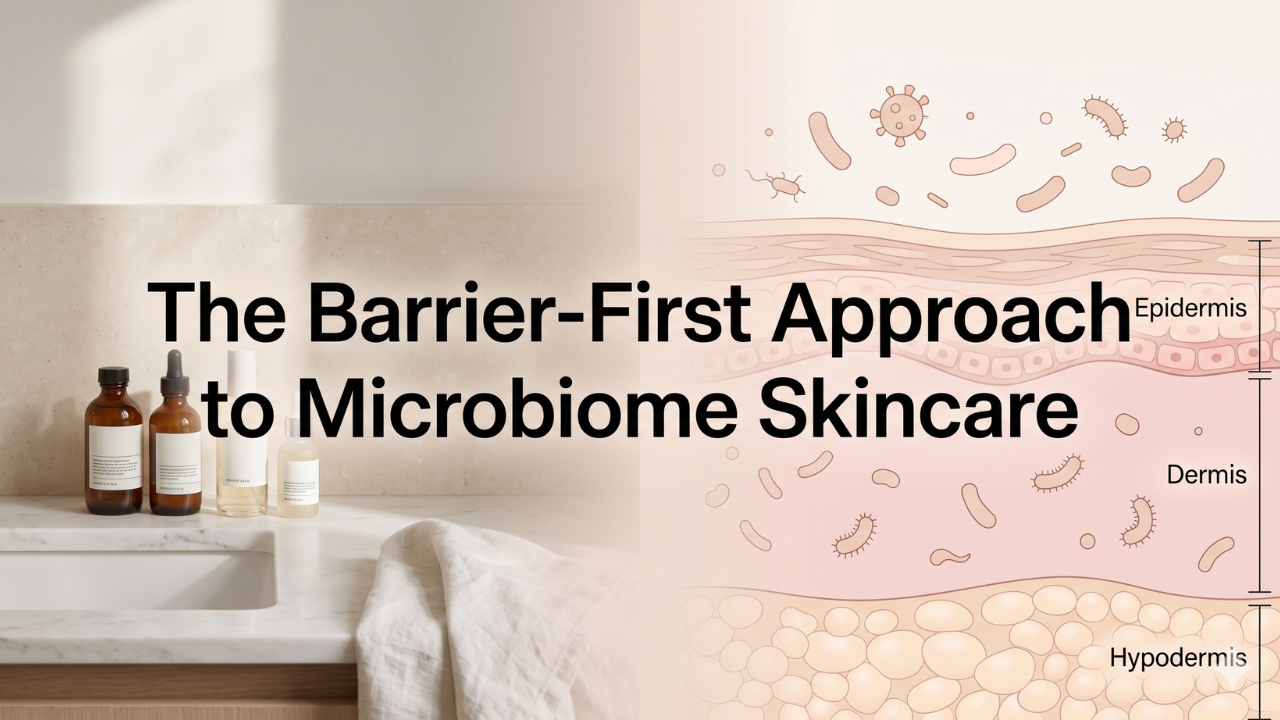
Postbiotics vs. Probiotics vs. Prebiotics: What Your Skin Barrier Actually Needs
Three words that get thrown around constantly in microbiome skincare — and almost never explained clearly. Let’s fix that.
If you’ve spent any time browsing skincare shelves lately, you’ve probably noticed the same three prefixes multiplying across labels: pre-, pro-, and post-biotic. They sound almost interchangeable, which is exactly why so many shoppers default to picking whichever bottle has the prettiest packaging. But these three categories work through genuinely different mechanisms — and understanding the difference is the single most useful thing you can do before building out the ingredient layer of your barrier-first routine.
This is Part 3 of our Barrier-First series, and it’s the one we’d consider the most practically useful. Once you understand what each of these three terms actually does, choosing products stops being guesswork.
Why This Distinction Matters More Than Marketing Suggests
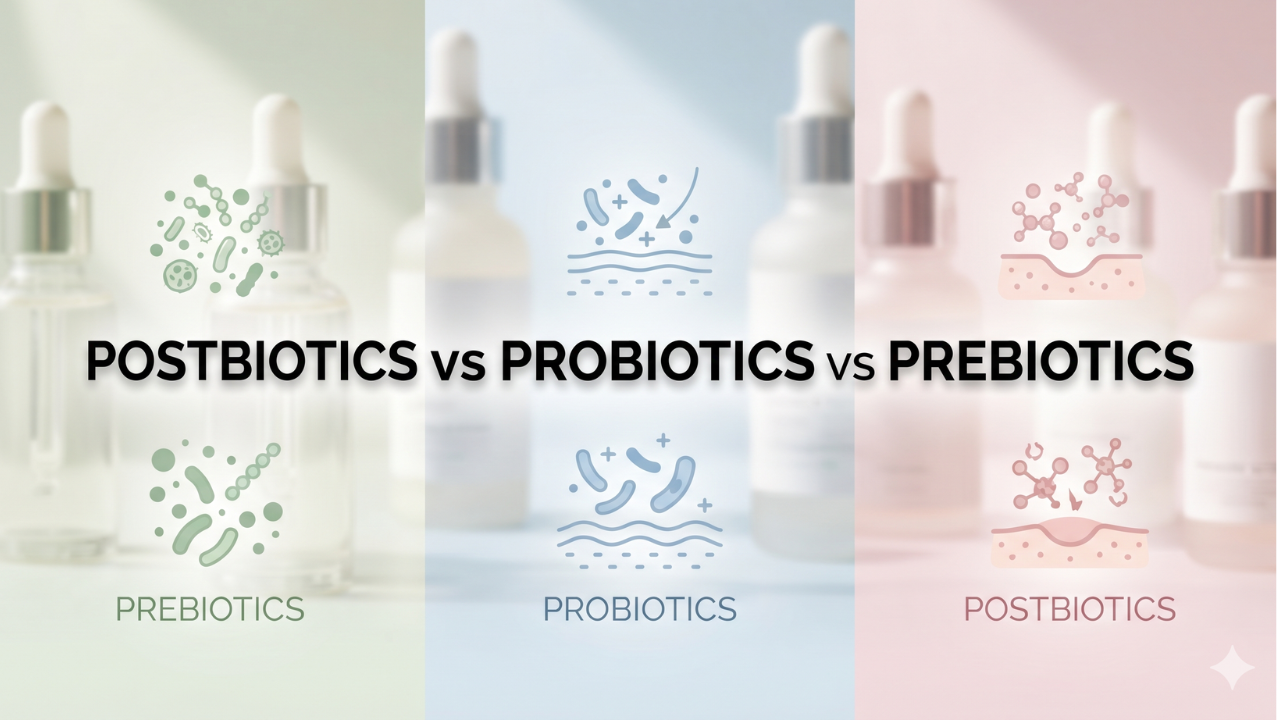
Dermatologists increasingly agree that prebiotics and probiotics work toward the same goal through different mechanisms, while playing distinct roles in maintaining overall skin health. Probiotics introduce beneficial bacteria — or fragments of them — directly to the skin, actively influencing the microbiome’s composition. Prebiotics, on the other hand, don’t add anything new at all; they simply feed and support the bacteria that are already living there.
Postbiotics sit in a category of their own entirely. Rather than introducing live organisms or feeding them, postbiotics deliver the beneficial byproducts those organisms already produce — enzymes, peptides, and fermentation compounds — without requiring any living culture to survive on your skin at all.
Understanding which mechanism you’re activating helps explain why two “microbiome-friendly” products can deliver completely different results.
Prebiotics: Feeding the Ecosystem You Already Have
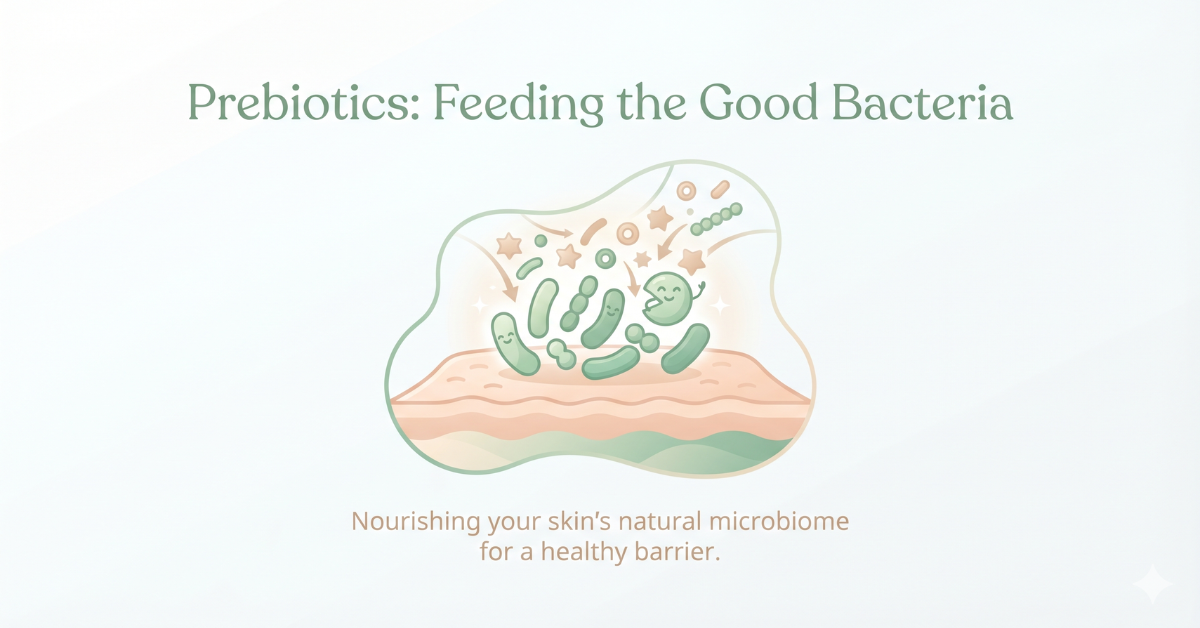
Think of prebiotics as fertilizer rather than seeds. Common prebiotic ingredients — oat extract, chicory root, inulin, beta-glucan — contain sugars and fibers that beneficial bacteria can metabolize, essentially feeding the “good” microbes that already call your skin home.
This matters because your skin’s microbial population is dynamic, not fixed. Harsh cleansers, environmental stress, and over-exfoliation can starve beneficial bacteria just as easily as they can strip your skin’s lipids. A prebiotic-rich formula gives that population the resources to recover and thrive — which, in turn, strengthens the protective layer they help maintain above your barrier.
Prebiotics tend to work best in leave-on formulas — serums, essences, creams — simply because the longer they stay in contact with skin, the more time beneficial bacteria have to use them as fuel.
🌿 PREBIOTIC PICK
Prebiotic-Powered Gentle Cleanser
Formulated with Lactobacillus and Saccharomyces — ingredients that act as fuel for your skin’s existing beneficial bacteria — this cleanser nourishes the microbiome with every wash instead of stripping it away. A genuinely smart first step for anyone shifting toward microbiome-conscious skincare.
Check Current Price on Amazon →Probiotics: Reintroducing Beneficial Microbes
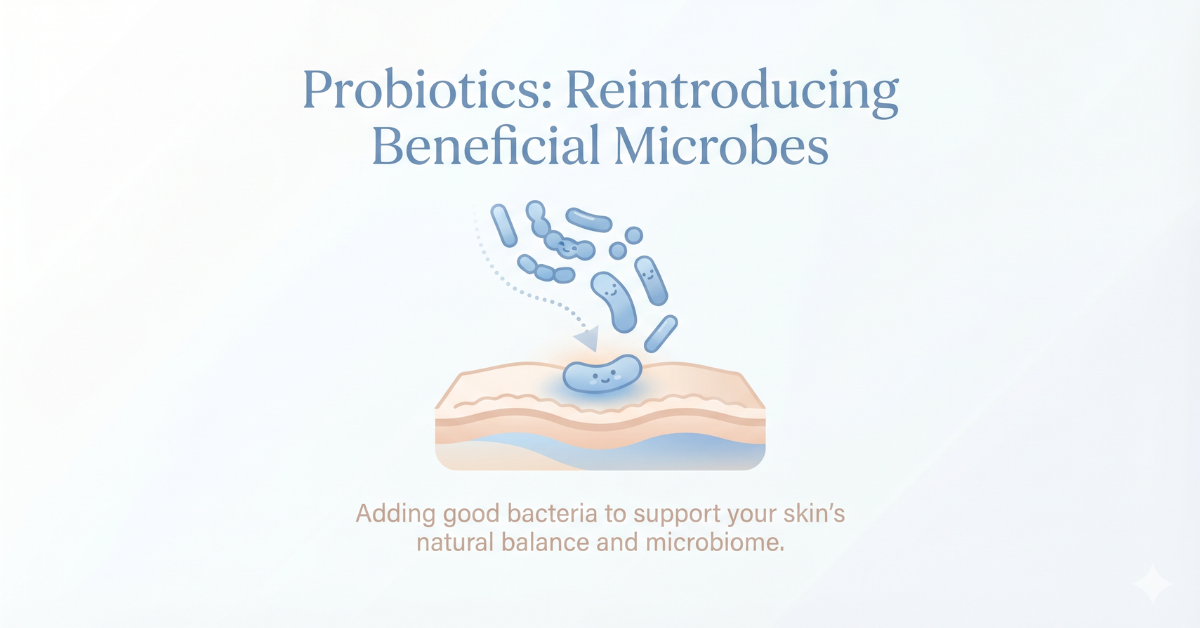
Where prebiotics nourish, probiotics actively contribute. In skincare, “probiotic” typically refers not to live, active cultures (which are notoriously unstable in cosmetic formulations) but to bacterial lysates or ferments — beneficial bacteria that have been processed in a way that retains their skin benefits without needing to stay alive in the jar.
These ingredients work by directly influencing the skin’s microbial balance: helping crowd out problematic bacterial strains, supporting pH regulation, and reinforcing the communication network between your microbiome and your immune response. For skin dealing with redness, occasional breakouts, or general reactivity, probiotic-forward formulas are often the most directly corrective of the three categories.
Dermatologists frequently note that probiotics deliver the most consistent benefit when paired with a prebiotic in the same formula — since introducing beneficial bacteria without also feeding them is a bit like inviting guests to a party with no food on the table.
💡 Worth knowing: Most “probiotic” skincare doesn’t contain living bacteria at all — and that’s by design. Live cultures are difficult to stabilize in a jar or bottle, so the bacterial fragments and ferments used instead are both safer and, in many formulations, more effective at delivering consistent results.
🌿 PROBIOTIC PICK
Probiotic Skin Repair Cream
Built around a probiotic and prebiotic combination, this lightweight, non-comedogenic cream supports a balanced microbiome while delivering hydration without heaviness — making it a strong everyday option for skin that’s currently more reactive than resilient.
Check Current Price on Amazon →Postbiotics: The Byproducts That Do the Repair Work
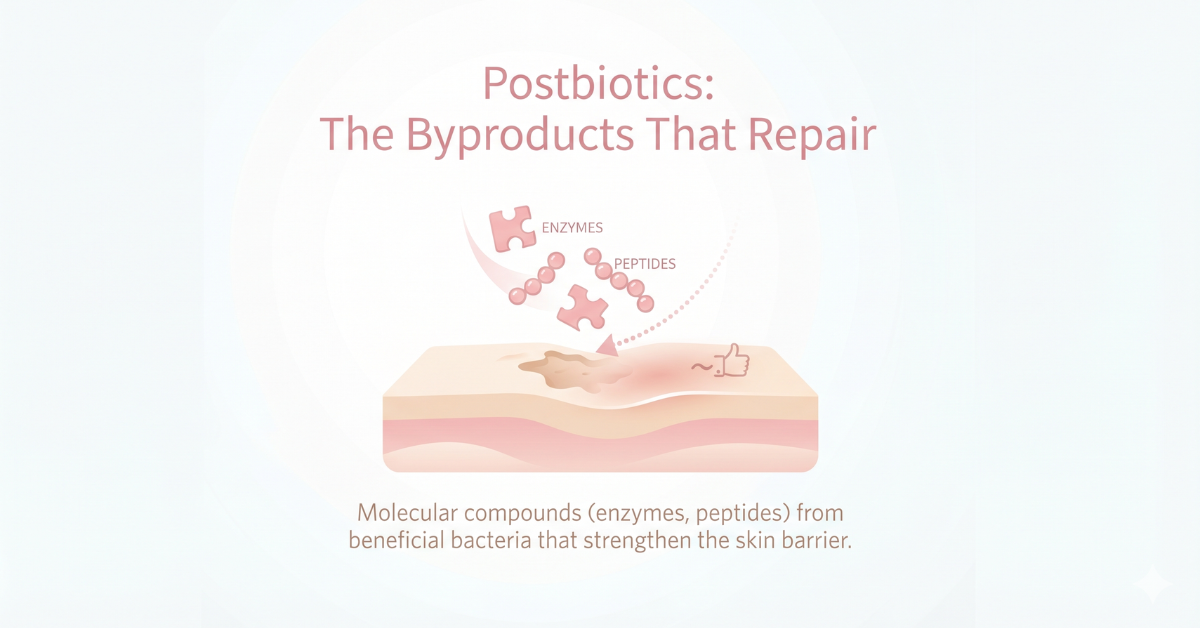
If prebiotics feed and probiotics introduce, postbiotics deliver the finished product. These are the metabolic byproducts — enzymes, peptides, organic acids, and fermentation compounds — that beneficial bacteria naturally produce as part of their life cycle. Postbiotic skincare skips the “living organism” step entirely and goes straight to the part that actually benefits your skin.
This has a practical upside: postbiotics tend to be remarkably stable, well-tolerated, and fast-acting compared to formulas relying on live or near-live cultures. Fermented extracts — long a cornerstone of K-beauty essences — are, in essence, postbiotic skincare that predates the modern terminology by years. Fermentation breaks ingredients down into smaller, more bioavailable compounds, which is part of why fermented skincare so often feels more absorbent and immediately soothing than its non-fermented counterparts.
For barrier repair specifically, postbiotics are frequently the most clinically substantiated of the three categories, with visible improvements in hydration and barrier resilience often appearing within days rather than weeks.
🌿 POSTBIOTIC PICK
Fermented Postbiotic Repair Serum
Combining prebiotic oat extract with postbiotic fermented oat compounds, this serum reinforces the moisture barrier with both instant and long-lasting hydration. Fermentation converts the oat into smaller, more bioavailable molecules — exactly the kind of fast-absorbing, fast-acting formula barrier-repair routines benefit from most.
Check Current Price on Amazon →Side-by-Side: Choosing the Right One for Your Skin
| Category | What It Does | Best For |
|---|---|---|
| Prebiotics | Feeds existing beneficial bacteria | Maintenance and long-term microbiome support |
| Probiotics | Introduces beneficial bacteria or fragments | Redness, reactivity, occasional breakouts |
| Postbiotics | Delivers bacterial byproducts directly | Fast, visible barrier repair and hydration |
In practice, the most effective barrier-first routines don’t pick just one — they layer all three strategically, much like the AM/PM routine we walked through in Part 2 of this series.
How to Read a Label Like You Actually Know What You’re Looking At
- Look for “ferment” or “ferment lysate” in the ingredient list — this typically signals postbiotic content.
- Look for inulin, beta-glucan, or specific plant sugars — these are common prebiotic markers.
- Look for “Lactobacillus,” “Bifida,” or named bacterial strains — usually indicates probiotic-derived ingredients.
- Combination formulas (often labeled “synbiotic”) pair two or more categories, which dermatologists generally consider the most balanced approach.
Once you can spot these on a label, choosing products stops feeling like trend-following and starts feeling like an informed decision grounded in what your skin specifically needs right now.
The Takeaway
None of these three categories is inherently “better” than the others — they simply do different jobs. Prebiotics maintain, probiotics rebalance, and postbiotics repair. The real skill isn’t picking a favorite; it’s recognizing which one your skin needs most right now, and building your routine accordingly.
In the final part of this series, we’ll cover the most common mistakes that quietly undo all of this progress — many of which are habits most people don’t even realize are barrier-damaging.
📚 Barrier-First Series
- ✅ Part 1: What is the Skin Microbiome?
- ✅ Part 2: Building a Barrier-First Routine (AM & PM)
- ✅ Part 3: Postbiotics vs Probiotics vs Prebiotics (you’re reading this)
- 🔜 Part 4: Common Mistakes That Damage Your Barrier
💡 Frequently Asked Questions (FAQ)
Q1. Can I use prebiotic, probiotic, and postbiotic products together?
Yes, and many dermatologists consider this the ideal approach. Prebiotics and probiotics work especially well paired together, since one feeds what the other introduces, while postbiotics can be layered in for more immediate repair benefits.
Q2. Do probiotic skincare products contain live bacteria?
Usually not. Most probiotic skincare uses bacterial lysates or ferments rather than living cultures, since live bacteria are difficult to stabilize in cosmetic formulations. This makes the products safer and often more consistent in their effects.
Q3. Which of the three works fastest for barrier repair?
Postbiotics tend to show the most rapid visible results, often within days, since they deliver finished beneficial compounds directly rather than waiting on a feeding or rebalancing process. Prebiotics and probiotics generally work over a longer timeframe.
This article is for educational purposes only and is not a substitute for professional dermatological advice. If you have persistent skin concerns, please consult a licensed dermatologist. This post contains affiliate links; WellbeingPrime may earn a commission from qualifying purchases at no additional cost to you.
Stay dewy! 🌿 Bookmark WellbeingPrime.com for more evidence-based wellness guides.
🌿 Weekly wellness, health & beauty insights — straight to your inbox
Free subscription · Cancel anytime