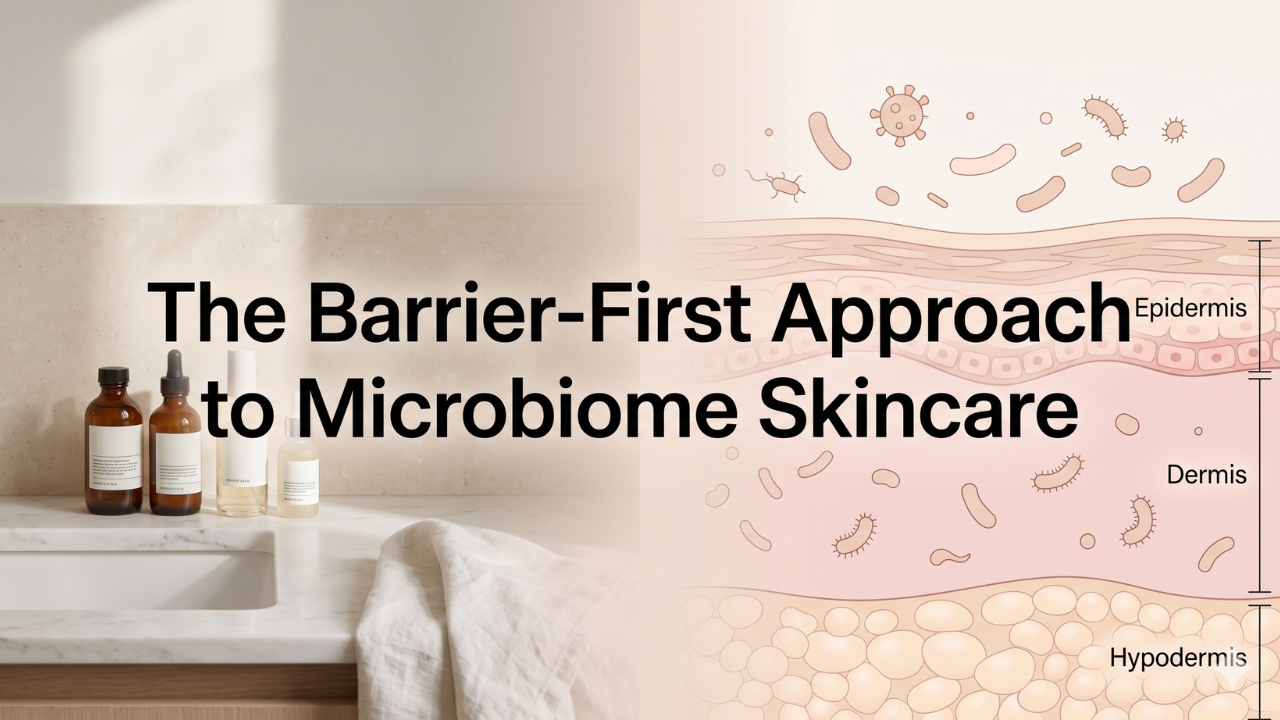
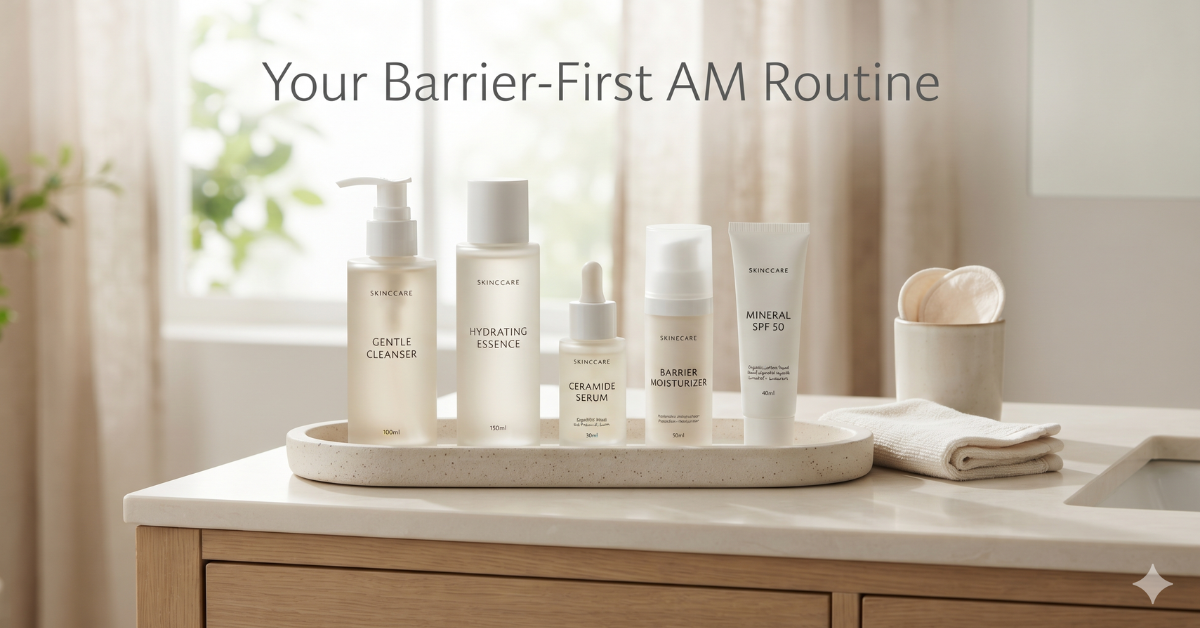
How to Build a Barrier-First Skincare Routine: The Complete AM & PM Guide
You don’t need more products. You need the right order, at the right time of day, doing the right job.
In Part 1 of this series, we unpacked what the skin microbiome actually is and why a barrier-first philosophy is quietly reshaping the wellness world’s approach to skincare. Today, we’re turning that science into something you can actually do every single day: a real, workable AM and PM routine built specifically around protecting — not punishing — your skin’s natural defenses.
If you’ve ever stood in front of your bathroom mirror holding five different bottles, wondering which one goes first, this guide is for you.
Why Morning and Evening Skin Needs Are Completely Different
One of the biggest misconceptions in skincare is that your morning and evening routines should mirror each other. They shouldn’t — and understanding why is the first step toward a genuinely barrier-first mindset.
During the day, your skin is in defense mode. It’s contending with UV radiation, pollution, blue light, and environmental stressors that can degrade barrier lipids and disrupt microbial balance. Morning skincare, then, should prioritize protection: lightweight hydration, antioxidant support, and — non-negotiably — sunscreen.
At night, your skin shifts into repair mode. Cell turnover increases, transepidermal water loss becomes more pronounced without the buffer of makeup or SPF, and this is when reparative ingredients like ceramides and postbiotics can do their deepest work undisturbed. Evening skincare should be heavier, more nourishing, and built around restoration rather than protection.
Once you separate these two missions, the “which product goes when” question almost answers itself.
The Morning (AM) Barrier-First Routine
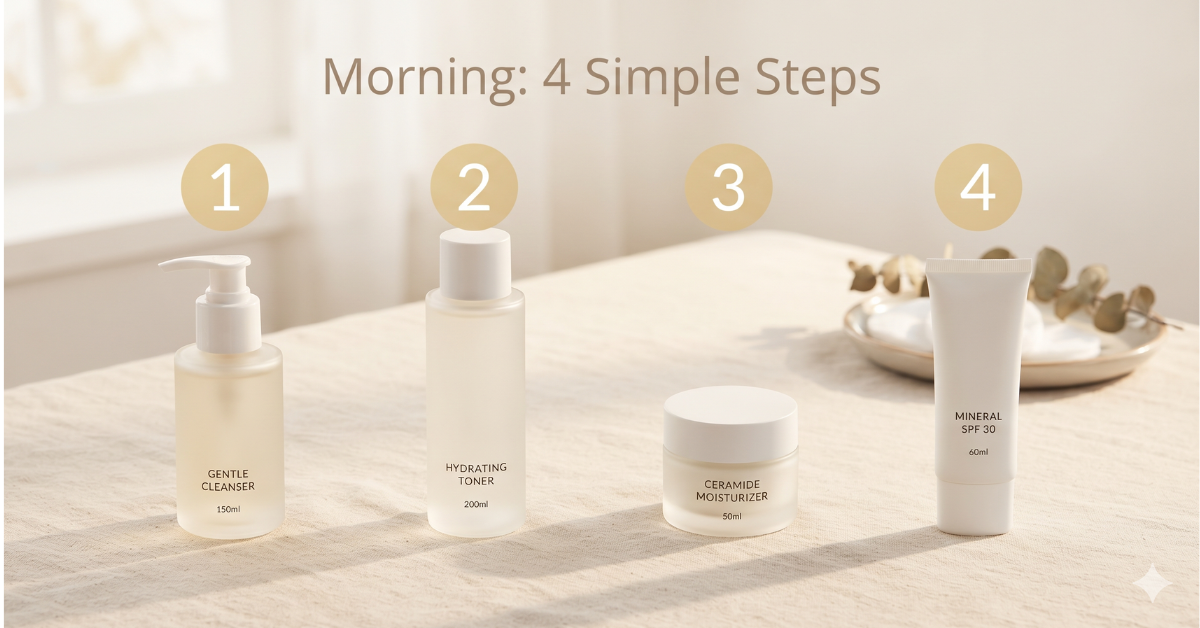
Step 1: A Cleanser That Doesn’t Fight You
Skip the foaming, “squeaky clean” cleansers first thing in the morning. Overnight, your skin hasn’t accumulated much beyond natural oils — there’s no need for an aggressive wash. A gentle, low-pH, hydrating cleanser removes just enough without disturbing the lipid layer you’re trying to protect.
Step 2: A Lightweight Hydrating Layer
A hydrating toner or essence — something humectant-rich rather than alcohol-based — preps skin without adding heaviness. This is the moment to think “thin to thick” in terms of texture, layering progressively richer products afterward.
Step 3: Antioxidant or Barrier-Supportive Serum
Mornings are a great window for antioxidant serums (think vitamin C or niacinamide) that help neutralize environmental stress before it even starts. If your skin is currently reactive, a barrier-focused serum with ceramides or postbiotics is a gentler, equally valuable substitute.
Step 4: Moisturizer
A ceramide-rich moisturizer locks in everything underneath and reinforces the very barrier that’s about to face a full day of environmental exposure.
Step 5: SPF — The Step That’s Never Optional
No barrier-first routine is complete without broad-spectrum SPF. UV exposure is one of the single fastest ways to degrade barrier lipids and disrupt microbial balance — making sunscreen, in a very real sense, a microbiome-protection step, not just an anti-aging one.
🌿 AM ESSENTIAL
Gentle Hydrating Cleanser & Moisturizer Duo
A dermatologist-developed, fragrance-free pairing designed to cleanse without stripping and hydrate without heaviness — exactly what a barrier-first morning routine calls for. Built around ceramides and a time-released delivery system, it’s one of the most consistently recommended starter combinations for restoring comfort to reactive or compromised skin.
Check Current Price on Amazon →The Evening (PM) Barrier-First Routine
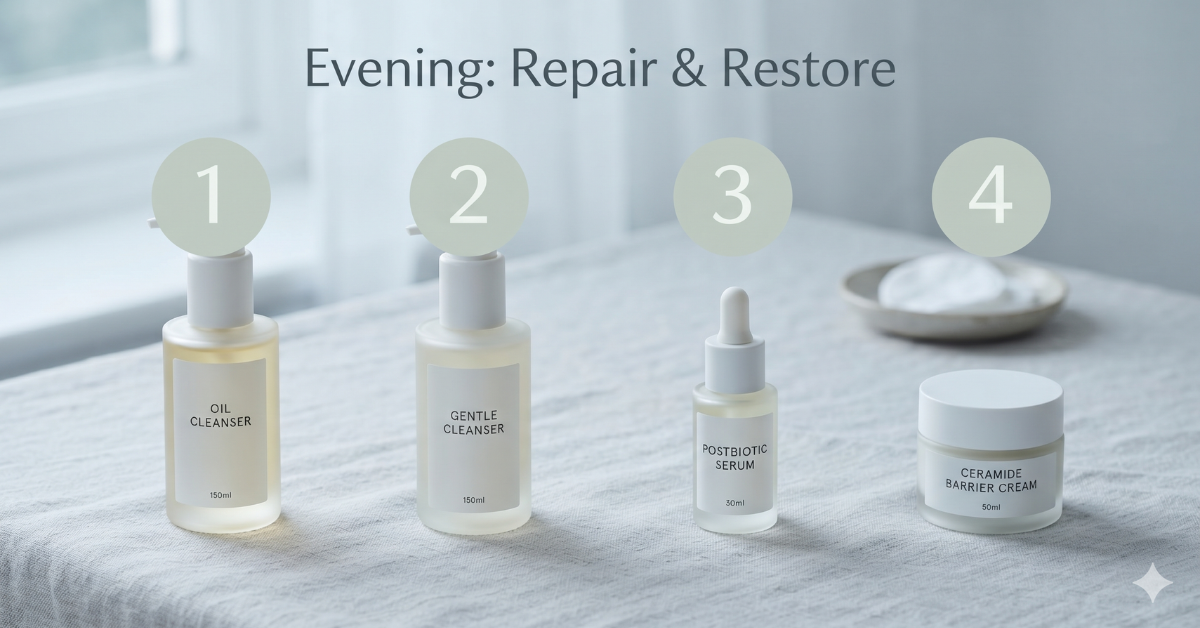
Step 1: Double Cleanse, Gently
If you wear sunscreen or makeup, an oil-based first cleanse helps dissolve it without requiring harsh scrubbing. Follow with the same gentle, low-pH cleanser from your morning routine to finish the job.
Step 2: Postbiotic or Reparative Serum
This is the moment for your most targeted reparative ingredients. Postbiotic serums — built around fermented extracts and metabolic byproducts of beneficial bacteria — are particularly well-suited to nighttime use, since skin is in repair mode and more receptive to barrier-supportive actives.
Step 3: Targeted Treatment (If Needed)
If your skin can currently tolerate it, this is where retinoids or other stronger actives would go — but only once your barrier shows signs of stability. If you’re actively repairing a compromised barrier, it’s worth skipping this step entirely for a few weeks.
Step 4: Rich Ceramide Barrier Cream
Your final, most important step. A nutrient-dense, ceramide-rich moisturizer applied at night has hours of uninterrupted time to do its work, sealing in hydration and rebuilding the lipid matrix while you sleep.
💡 A note on consistency: Barrier repair isn’t about finding one miracle product — it’s about giving your skin the same supportive inputs, in the same order, day after day. Most visible improvement in dryness and redness happens within the first one to two weeks of a consistent AM/PM routine, with deeper barrier strengthening continuing over four to six weeks.
🌿 PM REPAIR STEP
Ceramide Repair Serum
Applied after cleansing, this multi-active serum is designed to support barrier repair while soothing discomfort and visibly reducing redness — clinically shown to noticeably improve dryness and roughness within just three days of consistent use. A genuinely useful mid-routine step for anyone working through barrier sensitivity.
Check Current Price on Amazon →AM vs. PM: A Quick Reference
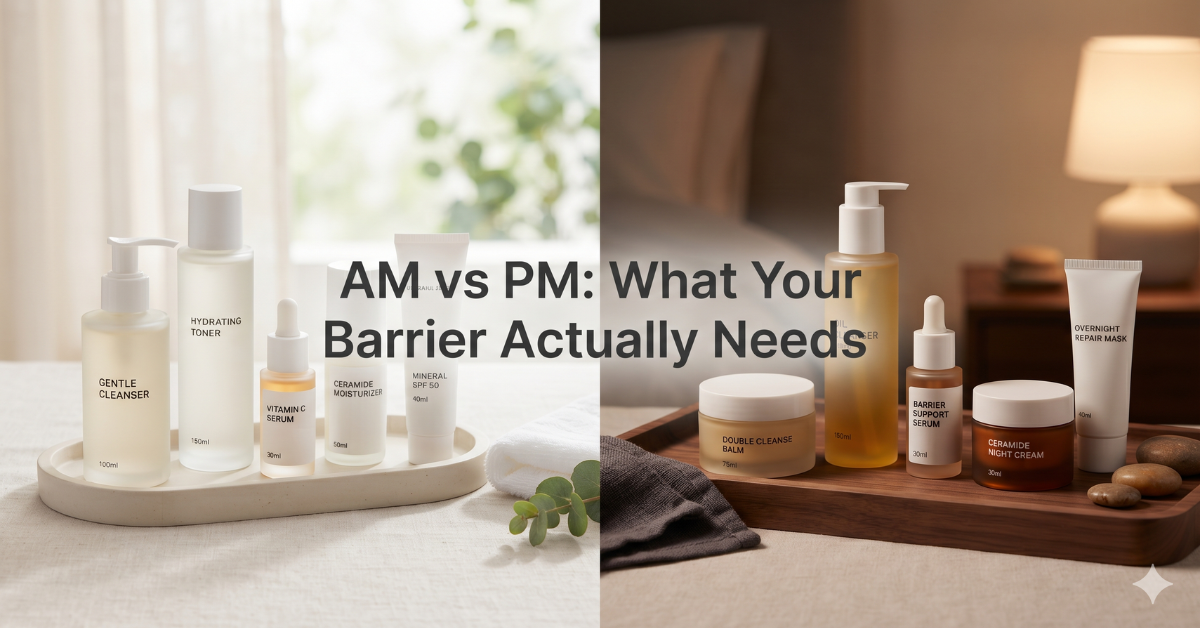
| Step | Morning (AM) | Evening (PM) |
|---|---|---|
| Primary goal | Protect against the day ahead | Repair what the day took out of your skin |
| Cleansing | Single, gentle cleanse | Double cleanse if wearing SPF/makeup |
| Key ingredients | Antioxidants, lightweight humectants | Postbiotics, ceramides, reparative actives |
| Non-negotiable step | Sunscreen | Rich barrier moisturizer |
Common Pitfalls That Undo a Good Routine
- Treating AM and PM identically — using the same heavy night cream in the morning can feel “extra protective” but often just clogs and overwhelms skin unnecessarily.
- Skipping SPF on cloudy days — UV damage doesn’t pause for clouds, and barrier degradation continues regardless of visible sunshine.
- Introducing too many new products at once — when rebuilding a compromised barrier, change one variable at a time so you can actually tell what’s working.
- Layering actives without a recovery buffer — alternating strong actives with barrier-supportive nights, rather than using everything every day, gives skin room to actually repair.
🌿 NIGHTLY BARRIER LOCK-IN
High-Concentration Ceramide Barrier Cream
Formulated with a notably high concentration of pure ceramides alongside a multi-ingredient soothing complex, this cream is built specifically for the final, most important step of a PM barrier-first routine — locking in repair while you sleep and giving your skin the structural support it needs to rebuild overnight.
Check Current Price on Amazon →Building a Routine That Actually Sticks
The best barrier-first routine isn’t the most elaborate one — it’s the one you’ll actually do, twice a day, without fail. Start with the essentials in each step above, give your skin two to four weeks before introducing anything new, and resist the urge to “fix” things faster by adding more. Barrier repair rewards patience and consistency far more than it rewards intensity.
In the next part of this series, we’ll go deep into the ingredient science behind postbiotics, probiotics, and prebiotics — and which one your skin actually needs right now.
📚 Barrier-First Series
- ✅ Part 1: What is the Skin Microbiome?
- ✅ Part 2: Building a Barrier-First Routine (AM & PM) (you’re reading this)
- 🔜 Part 3: Postbiotics vs Probiotics vs Prebiotics
- 🔜 Part 4: Common Mistakes That Damage Your Barrier
💡 Frequently Asked Questions (FAQ)
Q1. Do I really need different products for morning and night?
Not entirely different products, but a different emphasis. Mornings should prioritize protection (antioxidants, SPF) while evenings should prioritize repair (ceramides, postbiotics, reparative actives). Many products can be used in both, but the order and supporting steps should shift.
Q2. How long before I see results from a barrier-first routine?
Most people notice less dryness and redness within one to two weeks of consistent use. Deeper barrier strengthening, including improved resilience to actives and environmental stress, typically takes four to six weeks.
Q3. Can I still use retinol or exfoliating acids in this routine?
Yes, but timing matters. If your barrier is currently compromised, pause stronger actives for two to four weeks while focusing on repair, then reintroduce them gradually, alternating with barrier-supportive nights rather than using them daily.
This article is for educational purposes only and is not a substitute for professional dermatological advice. If you have persistent skin concerns, please consult a licensed dermatologist. This post contains affiliate links; WellbeingPrime may earn a commission from qualifying purchases at no additional cost to you.
Stay dewy! 🌿 Bookmark WellbeingPrime.com for more evidence-based wellness guides.
🌿 Weekly wellness, health & beauty insights — straight to your inbox
Free subscription · Cancel anytime