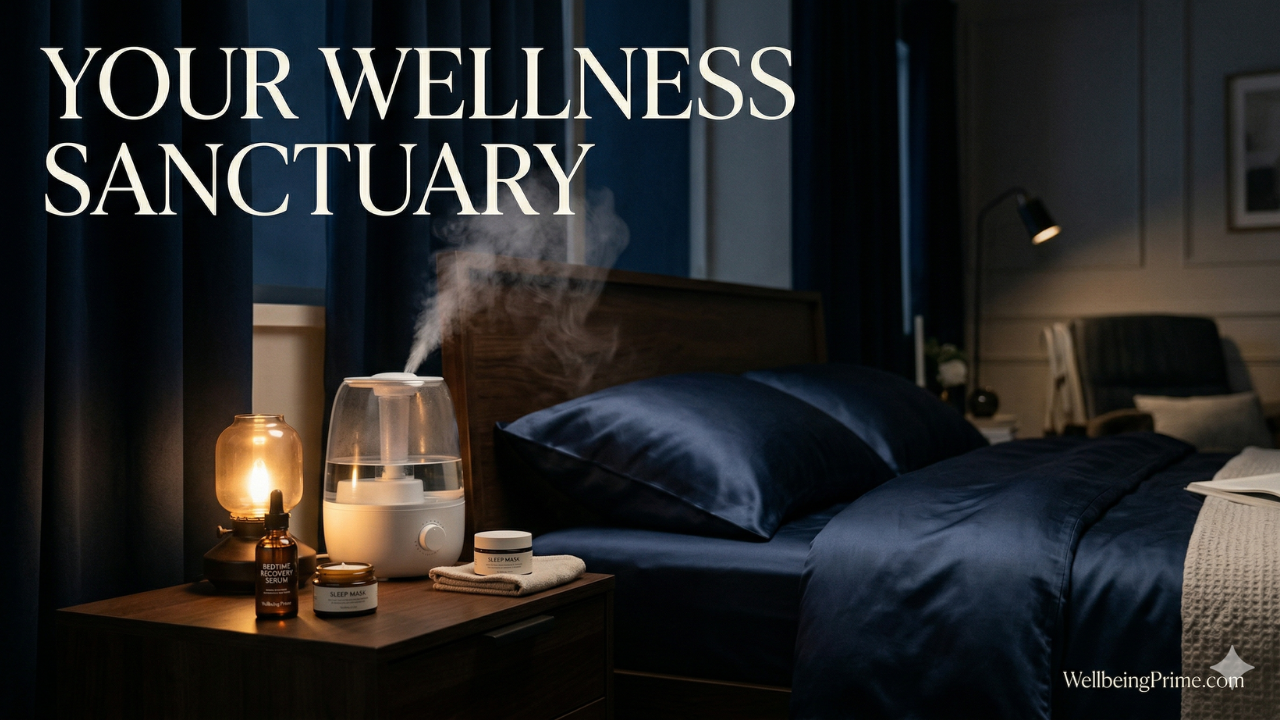
By WellbeingPrime Editorial | Dermatological & Holistic Wellness Consulting
Your home is no longer just where you live — it’s where you heal. In a post-pandemic world reshaped by Seoul-inspired self-care rituals, Scandinavian hygge philosophy, and a booming global wellness economy projected to exceed $8 trillion by 2030, the concept of home wellness has evolved from a luxury into a lifestyle imperative. Whether you’re curating a glass-skin bathroom routine, engineering your sleep environment for cellular repair, or building an indoor air quality protocol worthy of a high-end spa, this guide delivers the science, the strategy, and the sophistication to transform your living space into a genuine wellbeing sanctuary.

H1: Wellness in the Home — The New Science of Living Better Where You Are
The modern wellness home isn’t about aesthetic minimalism or expensive equipment. It’s about understanding how your environment directly interacts with your biology — your skin barrier, your cortisol rhythms, your microbiome, and your neurological stress responses. Drawing from dermatological science, environmental medicine, and K-Beauty’s foundational philosophy of skin-as-reflection-of-inner-health, this guide breaks down every room, every ritual, and every ingredient that matters.
H2: The Skin-Home Connection — Why Your Environment Is Your First Skincare Product
H3: Indoor Air Quality and Your Skin Barrier
Most skincare enthusiasts obsess over their 10-step routines while ignoring what dermatologists increasingly identify as a primary aggressor: indoor air pollution. Studies published in the Journal of Investigative Dermatology have linked particulate matter (PM2.5), volatile organic compounds (VOCs), and low humidity environments to accelerated transepidermal water loss (TEWL) — the very enemy of the glass skin ideal that Seoul-based aestheticians have built an entire philosophy around.
VOCs, emitted by synthetic carpets, paint, and cleaning products, trigger oxidative stress cascades in skin cells, degrading collagen and disrupting the skin’s acid mantle. The fix isn’t complicated, but it is scientific:
Actionable Protocol:
- Maintain indoor humidity between 40–60% using a cold-mist humidifier, particularly in the bedroom where your skin undergoes its primary nocturnal repair cycle.
- Introduce air-purifying botanicals validated by NASA’s Clean Air Study — Chlorophytum comosum (spider plant), Sansevieria trifasciata (snake plant), and Epipremnum aureum (pothos) — to reduce benzene and formaldehyde concentrations.
- Swap VOC-heavy synthetic cleaners for formulations using ethyl alcohol, citric acid, and plant-derived surfactants.
H3: Circadian Lighting and Skin Regeneration
Light is not merely atmospheric — it is biochemical. Blue light wavelengths (400–490nm), emitted by LED overhead fixtures and screens, suppress melatonin secretion and have been shown in dermatological research to generate reactive oxygen species (ROS) in melanocytes, contributing to hyperpigmentation and barrier dysfunction. Meanwhile, warm amber light in the 2,700–3,000K range supports melatonin onset and the skin’s critical nocturnal regeneration window, during which keratinocyte proliferation peaks.
The K-Beauty Home Lighting Principle: Seoul’s leading dermatological clinics have long incorporated warm, diffused ambient lighting into post-treatment environments. Replicate this at home by transitioning to warm-spectrum bulbs after 7 PM and using blue-light-blocking screen filters in the evening.
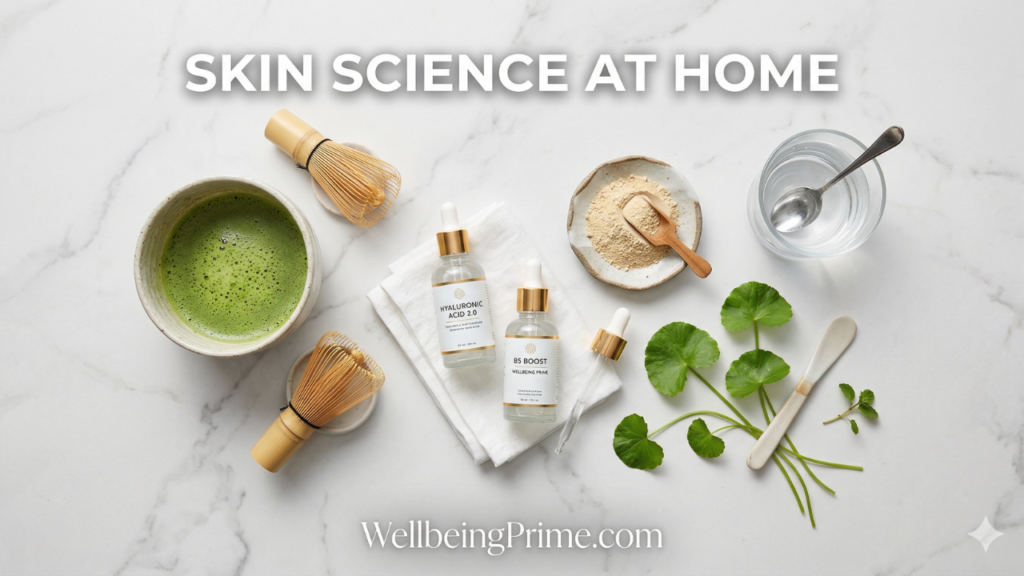
H2: The Science-Backed Home Skincare Sanctuary
H3: Bathroom Architecture for Optimal Skin Health
Your bathroom is your most powerful skincare tool — and most people are using it wrong. Water temperature, mineral content, and even the material of your towels have measurable effects on skin barrier integrity.
Hard Water and the Skin Barrier: Hard water (high in calcium and magnesium ions) has been clinically linked to eczema flare-ups and disrupted ceramide composition. A 2018 study from King’s College London found that hard water exposure significantly increased skin sensitivity and TEWL in infant subjects — findings that translate directly to adult skincare. Installing a shower filter rated for calcium carbonate and chloramine removal is one of the highest-ROI investments a skincare-focused individual can make.
Water Temperature Science: Dermatologists universally recommend lukewarm water (approximately 37°C/98.6°F) for cleansing. Hot water strips the skin’s natural lipid film — the sebaceous secretions, ceramides, and cholesterol that form your barrier’s structural integrity — while cold water, though temporarily vasoconstrictive and refreshing, does not open pores (a persistent beauty myth: pores have no muscles and cannot mechanically open or close).
The 60-Second Rule: Moisturizer applied within 60 seconds of patting skin dry traps residual moisture in the stratum corneum. This principle, now mainstream in Western dermatology, mirrors the K-Beauty skin flooding technique — layering toners, essences, and serums onto damp skin to maximize hydration absorption.
H3: Building Your Home Ingredient Pantry — A Dermatologist’s Perspective
The wellness home stocks its bathroom the way a nutritionist stocks a kitchen: intentionally, scientifically, and without redundancy. Here’s the evidence-based ingredient hierarchy:
Tier 1 — Non-Negotiable Actives:
- Niacinamide (Vitamin B3): A powerhouse that simultaneously inhibits melanosome transfer (brightening), reinforces the ceramide barrier, reduces sebum production via PPAR pathway modulation, and demonstrates anti-inflammatory properties at concentrations as low as 2%.
- Hyaluronic Acid (Multi-Molecular Weight): The glass skin ingredient. A single gram of HA can hold up to six liters of water. Using a product that combines high-molecular-weight HA (surface humectancy) with low-molecular-weight HA (penetrating to the dermis) creates genuine, lasting plumpness.
- Retinoids: The gold standard of dermatological anti-aging, retinol and its prescription-strength cousin tretinoin stimulate fibroblast activity and collagen synthesis via retinoic acid receptor binding. Begin with 0.025–0.05% formulations and titrate upward.
Tier 2 — K-Beauty Philosophy Actives:
- Centella Asiatica (Cica): A Seoul staple. Madecassoside and asiaticoside — its primary triterpenoids — stimulate collagen synthesis and possess potent anti-inflammatory properties validated in wound-healing literature.
- Fermented Ingredients (Galactomyces, Bifida Ferment Lysate): Fermentation, central to Korean food and skincare philosophy alike, increases bioavailability of active compounds and introduces beneficial postbiotics that support the skin microbiome.
- Snail Secretion Filtrate: Rich in glycoproteins, glycolic acid, and growth factors, this K-Beauty iconic ingredient accelerates cellular turnover and has shown efficacy in scar remodeling studies.
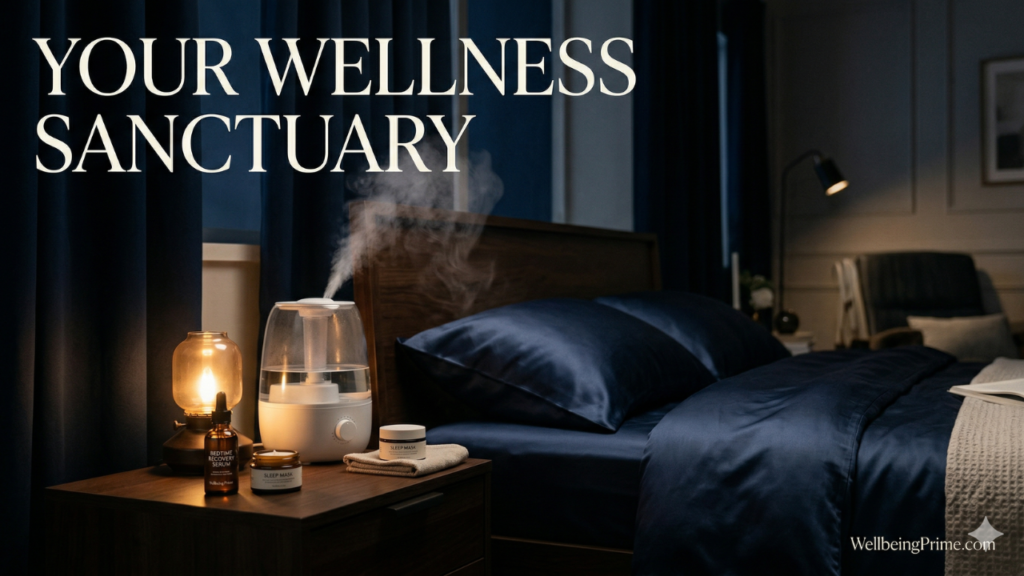
H2: The Wellness Bedroom — Engineering Sleep for Cellular Repair
H3: Sleep Architecture and Skin Biology
Sleep is not passive recovery — it is your body’s most sophisticated biological maintenance protocol. During slow-wave and REM sleep stages, human growth hormone (HGH) secretion peaks, driving cellular repair, collagen synthesis, and immune modulation. Cortisol — the catabolic hormone that breaks down collagen, triggers sebum overproduction, and exacerbates inflammatory skin conditions like acne and rosacea — drops to its lowest circadian levels during quality sleep.
Optimizing Your Sleep Environment:
- Temperature: Core body temperature must drop approximately 1–2°C to initiate sleep onset. Maintain bedroom temperature between 65–68°F (18–20°C).
- Darkness: Blackout curtains or a silk sleep mask block light-induced melatonin suppression. Silk, notably, also reduces facial friction and moisture absorption compared to cotton pillowcases — a genuine dermatological benefit.
- Sound: Pink noise (a frequency-balanced cousin of white noise) has been shown in neuroscience research to enhance slow-wave sleep depth and duration.
H3: The Overnight Skincare Protocol — Maximizing the Repair Window
Nighttime is when your skin’s permeability is at its highest and its repair machinery is most active. A scientifically optimized overnight routine should:
- Double cleanse to remove SPF, pollution particles, and oxidized sebum without stripping the barrier.
- Apply a low-pH toner (pH 5.0–5.5) to restore the acid mantle post-cleansing.
- Layer actives strategically — retinoids and AHAs on alternating nights to avoid antagonistic interactions.
- Seal with an occlusive — petrolatum, shea butter, or the K-Beauty slugging technique using a thin layer of Vaseline — to lock in all preceding layers and minimize overnight TEWL.
H2: Nutrition as Home Wellness — The Inside-Out Skin Science
H3: The Gut-Skin Axis in Your Kitchen
The gut-skin axis is one of the most compelling frontiers in dermatological science. Research published in Frontiers in Microbiology has demonstrated bidirectional communication between gut microbiome composition and skin inflammatory states. Dysbiosis — imbalance in gut flora — correlates strongly with acne vulgaris, atopic dermatitis, psoriasis, and rosacea.
Home Nutrition Protocol for Skin Health:
- Omega-3 Fatty Acids (found in wild salmon, flaxseed, walnuts): Reduce prostaglandin E2 and leukotriene B4 — key inflammatory mediators in acne and eczema pathogenesis.
- Polyphenols (green tea, blueberries, pomegranate): EGCG in matcha green tea, a K-Beauty dietary staple, inhibits matrix metalloproteinases (MMPs) that degrade collagen.
- Fermented Foods (kimchi, kefir, miso): Increase Lactobacillus and Bifidobacterium populations, correlating with reduced skin sensitivity and improved barrier function.
- Collagen Peptides: While dietary collagen is hydrolyzed in digestion, clinical trials have demonstrated that collagen peptide supplementation increases dermal collagen density and skin elasticity — likely via fibroblast stimulation triggered by circulating hydroxyproline-containing peptides.
H2: Movement and Stress Modulation — The Cortisol-Skin Interface
H3: At-Home Exercise and Dermal Circulation
Exercise is a dermatological intervention. Moderate aerobic exercise increases cutaneous blood flow, delivering oxygen and nutrients to skin cells while accelerating the removal of metabolic waste. A landmark Stanford study found that regular exercisers over 40 demonstrated dermal composition closer to 20–30 year olds, with notably thicker stratum spinosum layers.
At-home practices with strong evidence bases include yoga (parasympathetic nervous system activation, cortisol reduction), resistance training (HGH stimulation), and breathwork protocols such as 4-7-8 breathing or box breathing, which have been shown to reduce salivary cortisol within a single session.
H3: Adaptogens and Stress-Skin Science
The adaptogen movement — rooted in Ayurvedic and Traditional Chinese Medicine but now validated by modern pharmacology — offers home wellness enthusiasts a biochemical toolkit for cortisol modulation.
Evidence-Backed Adaptogens:
- Ashwagandha (Withania somnifera): Reduces serum cortisol by up to 27.9% in randomized controlled trials. Cortisol reduction directly correlates with improved skin barrier function and reduced acne severity.
- Rhodiola Rosea: Salidroside and rosavin — its primary actives — modulate the HPA (hypothalamic-pituitary-adrenal) axis, the primary driver of stress-induced skin flare-ups.
- Reishi Mushroom (Ganoderma lucidum): Contains beta-glucans with immunomodulatory properties that support both gut barrier and skin barrier integrity.
H2: The Mindful Home — Mental Wellness Architecture
H3: Sensory Design for Nervous System Regulation
The built environment is a neurological input. Biophilic design principles — incorporating natural materials, views of nature, organic forms, and natural light — have been demonstrated to reduce cortisol, lower blood pressure, and improve mood via activation of the parasympathetic nervous system.
Practical applications include introducing wood, stone, or linen textures; maintaining sightlines to outdoor greenery; using essential oil diffusers with lavender (Lavandula angustifolia, validated in anxiolytic trials) or bergamot (Citrus bergamia, shown to reduce anxiety via GABA receptor modulation); and decluttering spaces to reduce visual cortical load.
H2: Building Your Weekly Home Wellness Ritual — A Complete Framework
A sustainable home wellness practice requires rhythmic structure. Here is an evidence-informed weekly framework:
Daily Non-Negotiables: AM skincare with SPF 30+, hydration (minimum 2L water), sleep hygiene protocol, 10 minutes breathwork or meditation.
Three Times Weekly: Resistance or aerobic movement, fermented food intake, adaptogen supplementation, digital sunset (no screens after 9 PM).
Weekly: Full double-cleanse hair and scalp protocol (scalp microbiome health directly impacts forehead and hairline skin), deep conditioning treatment, magnesium bath soak (magnesium glycinate transdermal absorption supports muscle recovery and sleep quality).
Monthly: Reassess skincare actives for seasonal adaptation, audit indoor plant health and air quality, review nutrition for anti-inflammatory density.
Stay dewy! Your home is the most powerful wellness tool you own — and now you have the science to use it with intention and sophistication. For weekly deep-dives into evidence-based beauty rituals, ingredient breakdowns, and home wellness protocols, subscribe to the [Dewyfile] YouTube channel and join a global community of informed, empowered skincare enthusiasts who never settle for surface-level self-care
💡 Frequently Asked Questions (FAQ)
Q: How does indoor air quality actually affect my skin?
Indoor air pollutants — including VOCs, particulate matter (PM2.5), and low humidity — accelerate transepidermal water loss (TEWL) and trigger oxidative stress in skin cells. This degrades collagen, disrupts the skin’s acid mantle, and exacerbates conditions like eczema and acne. Maintaining 40–60% indoor humidity and filtering VOC sources are evidence-based first steps.
Q: Is hard water really bad for skin, and what can I do at home?
Yes — clinical research, including a landmark King’s College London study, has linked hard water (high in calcium and magnesium ions) to increased skin sensitivity, disrupted ceramide composition, and elevated TEWL. Installing a shower filter rated for calcium carbonate and chloramine removal is one of the most impactful home interventions for skin health.
Q: What are the best evidence-backed adaptogens for skin health?
Ashwagandha (Withania somnifera) has demonstrated cortisol reduction of up to 27.9% in RCTs, directly benefiting stress-triggered acne and barrier dysfunction. Rhodiola rosea modulates the HPA axis, and Reishi mushroom provides beta-glucans that support both gut and skin barrier integrity. Always consult a healthcare provider before beginning supplementation.
🌿 Weekly wellness, health & beauty insights — straight to your inbox
Free subscription · Cancel anytime