Wellness & Nervous System Science
Emotional Fitness 101: 7-Day Training Plan to Build a Calmer Nervous System
A shift is underway. People are done suppressing how they feel — they’re training for it instead.
For years, “emotional wellness” meant reacting after the fact — a bubble bath after a bad week, a vacation after burnout had already taken hold. That model is quietly being replaced. A new wave of research and public interest is treating emotional regulation the way athletes treat physical conditioning: as something you train daily, in small, deliberate reps, long before a crisis ever arrives.
This is the core idea behind emotional fitness — a structured, evidence-informed approach built on three trainable pillars: breathwork, journaling, and mood tracking. None of these are new. What’s new is treating them as a coordinated program rather than isolated coping tools reached for only in a crisis.
If you’re just starting to build a self-care practice, our guide on daily stress-management basics is a helpful primer before diving into the training plan below.
What Is Emotional Fitness, Really?
Emotional fitness refers to the capacity of your nervous system to move fluidly between activation (stress, urgency, focus) and recovery (calm, rest, digestion) without getting stuck in either state. Physiologically, this flexibility is closely tied to the autonomic nervous system — specifically the balance between the sympathetic branch (the “accelerator”) and the parasympathetic branch, largely governed by the vagus nerve (the “brake”).
People with strong emotional fitness aren’t people who never feel stressed. They’re people whose nervous system recovers quickly after stress ends — a trait researchers often associate with higher heart rate variability (HRV), a widely used marker of autonomic flexibility. The encouraging part: this capacity is not fixed. It responds to consistent, structured practice, much like cardiovascular fitness responds to training.
Suppression vs. Regulation: A Quick Comparison
| Approach | What It Looks Like | Long-Term Effect |
|---|---|---|
| Suppression | Pushing feelings down, “staying busy,” avoidance | Nervous system stays activated; fatigue accumulates |
| Venting / Reacting | Immediate emotional release without structure | Short relief, but patterns tend to repeat |
| Regulation (Emotional Fitness) | Daily structured practice: breath, journal, track | Faster recovery, greater resilience under stress |
Editor’s Picks · Affiliate Links
As you build a self-care routine, here are a few wellness finds our readers explore alongside it.
Shop Olive Young Global Browse Our Amazon PicksPillar One — Breathwork: Training Your Vagus Nerve
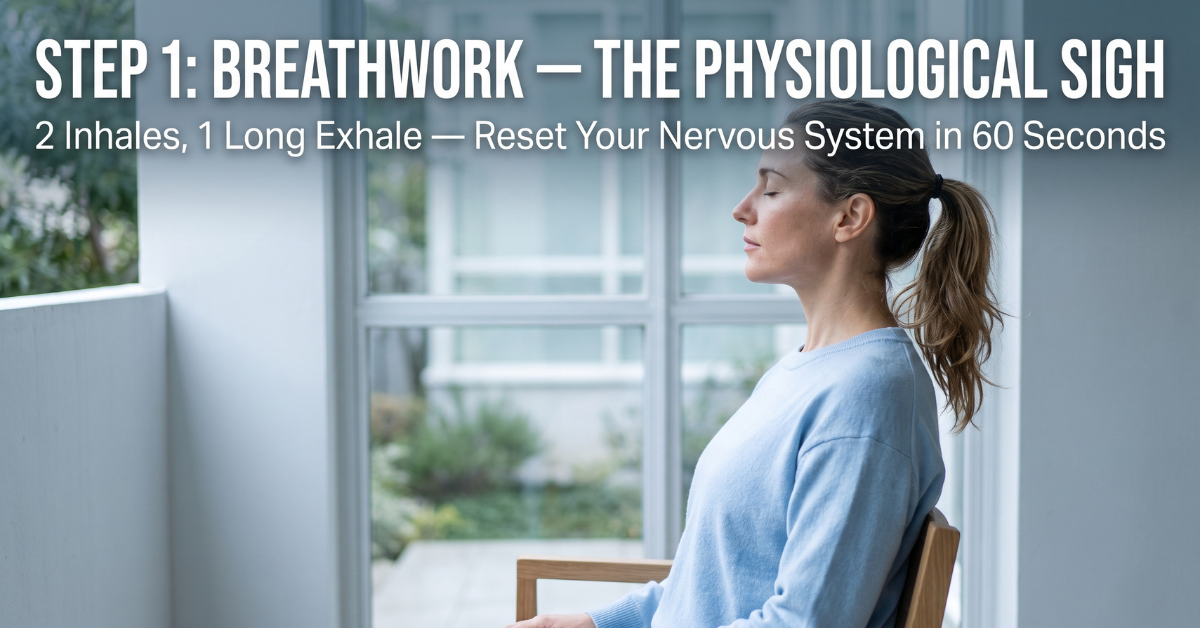
Of the three pillars, breathwork produces the fastest measurable shift. The respiratory system is one of the only parts of the autonomic nervous system you can consciously control, which makes it a direct lever for calming an activated stress response.
One accessible technique gaining traction is the physiological sigh — a double inhale through the nose (a full breath followed by a short second inhale) followed by a long, slow exhale through the mouth. This pattern is thought to help offload carbon dioxide efficiently and re-engage parasympathetic activity more quickly than a single deep breath. Another well-known option is box breathing (inhale 4 seconds, hold 4, exhale 4, hold 4), popular for building sustained focus under pressure.
Try this: Before a stressful meeting or after a hard conversation, do 3–5 physiological sighs. Notice the shift in your shoulders and jaw before moving on.
Pillar Two — Journaling: The 3-2-1 Method
Structured journaling has a long research history, dating back to expressive-writing studies from psychologist James Pennebaker in the 1980s, which found that writing about emotional experiences in a focused way was associated with better long-term psychological adjustment compared to writing about neutral topics. The key word is structured — open-ended venting on a page tends to be less effective than a guided format.
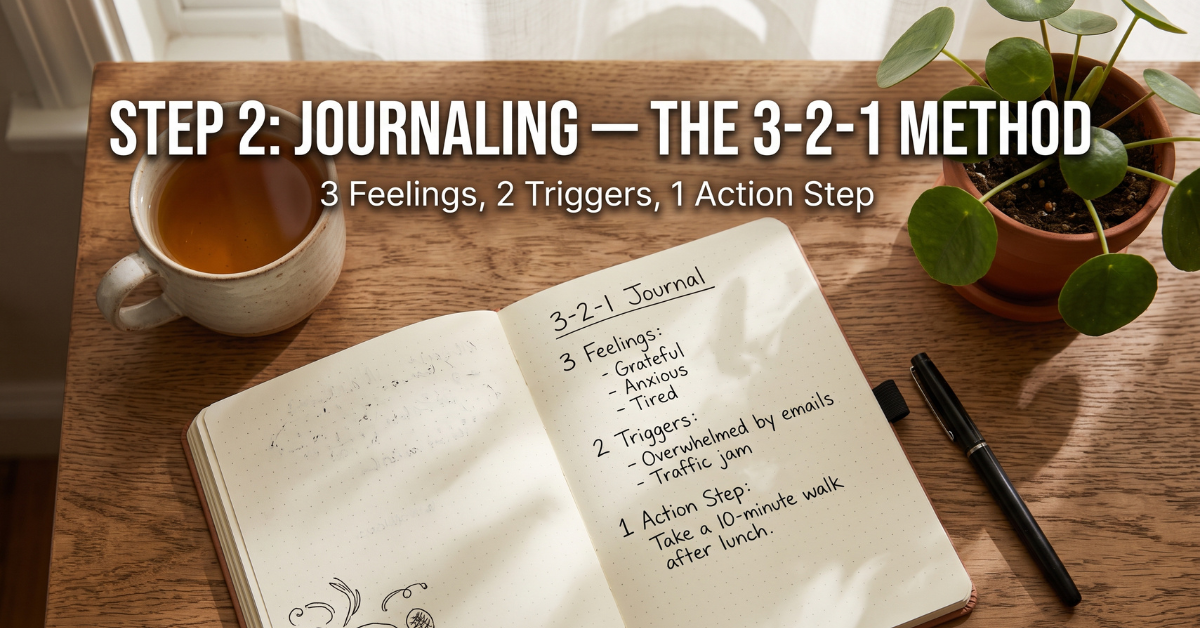
A simple, repeatable structure is the 3-2-1 Method:
- 3 — Name three feelings you experienced today, as specifically as possible (not just “stressed,” but “rushed,” “dismissed,” “overstimulated”).
- 2 — Identify two triggers or moments that preceded those feelings.
- 1 — Choose one small action for tomorrow that addresses one of those triggers.
This takes under five minutes and turns journaling from a vague emotional outlet into a diagnostic tool you can actually act on. For more structured prompts, see our roundup of self-care rituals that actually work.
Pillar Three — Mood Tracking: Establishing Your Baseline
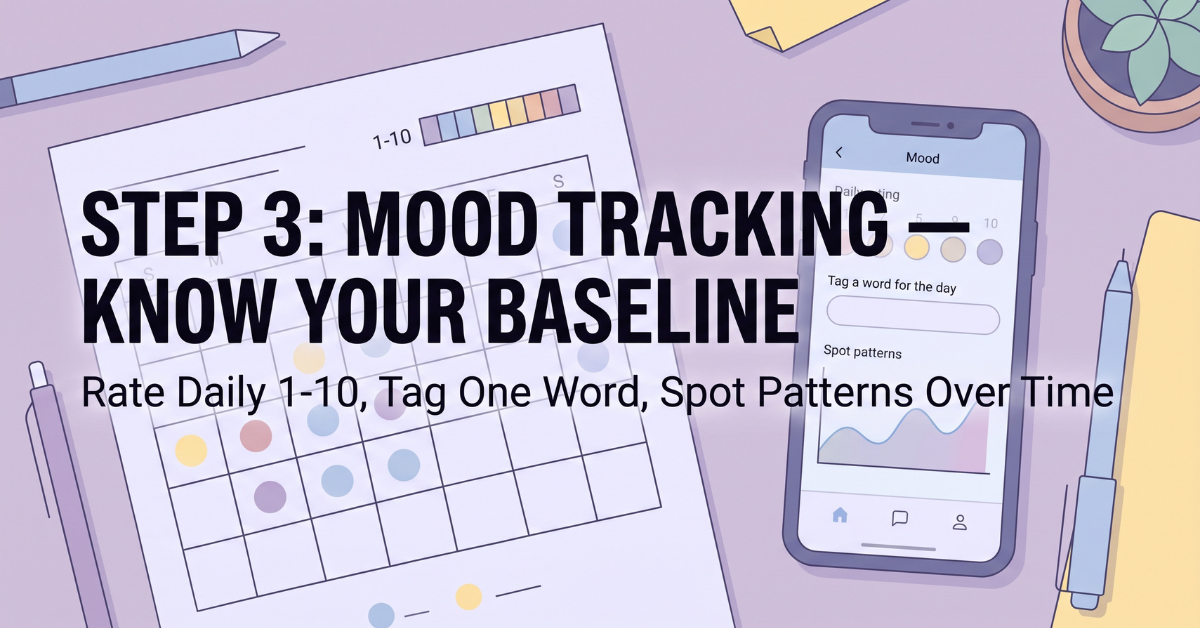
You can’t train what you don’t measure. Mood tracking is the feedback loop that turns breathwork and journaling from isolated habits into a system you can actually improve over time. The method doesn’t need to be complicated: rate your overall mood once daily on a 1–10 scale, and tag it with one word describing the dominant emotion.
Over two to three weeks, patterns tend to surface — certain days of the week, certain types of meetings, certain sleep patterns that consistently precede low scores. This is where emotional fitness stops being guesswork and starts being a personalized, data-informed practice.
Your 7-Day Emotional Fitness Starter Plan
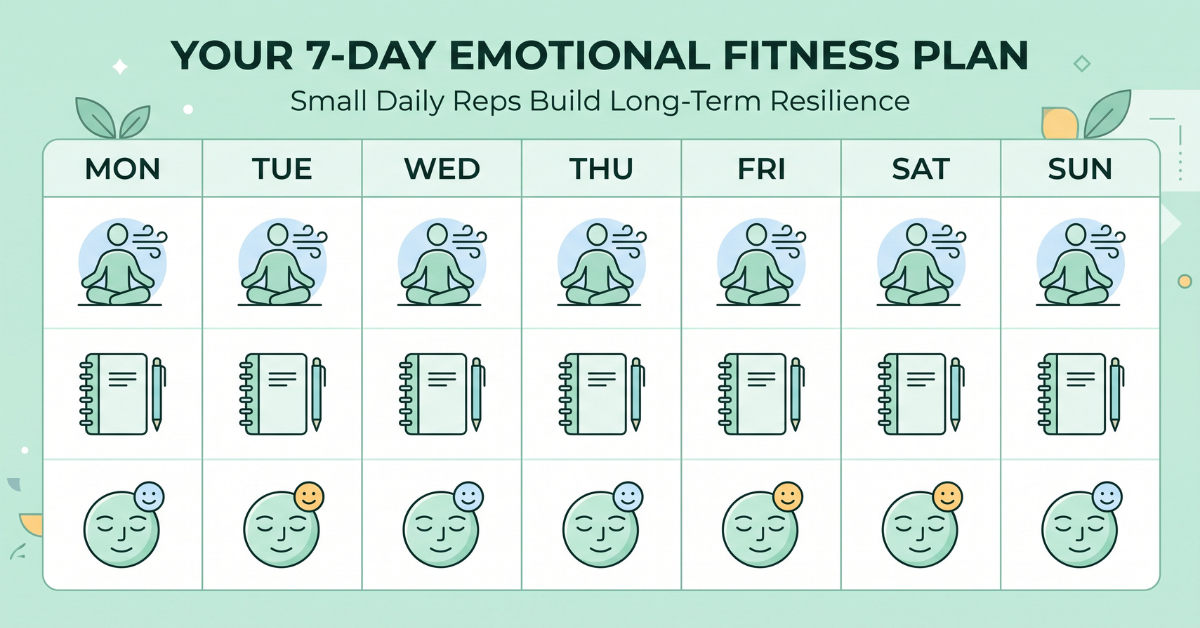
| Day | Morning | Evening |
|---|---|---|
| Mon | 5 physiological sighs | 3-2-1 journal + mood score |
| Tue | Box breathing, 2 min | Mood score only |
| Wed | 5 physiological sighs | 3-2-1 journal + mood score |
| Thu | Box breathing, 2 min | Mood score only |
| Fri | 5 physiological sighs | 3-2-1 journal + mood score |
| Sat | Rest — mood score only | Free journaling, no format |
| Sun | Review the week’s mood scores | Set one intention for next week |
Editor’s Picks · Affiliate Links
Building a routine often means exploring the wider wellness aisle too — here’s what’s trending right now.
View on Olive Young US Visit Our Amazon StorefrontNote: Always check ingredient labels and consult a healthcare provider before adding any supplement to your routine, especially caffeine-containing products, if you are sensitive to stimulants or are managing anxiety or sleep issues.
Preventing Burnout Before It Starts
Burnout doesn’t arrive suddenly — it accumulates through weeks or months of an activated nervous system that never fully downshifts. The value of emotional fitness isn’t that it eliminates stress; it’s that it shortens your recovery time after each stressful event, so activation doesn’t compound day after day.
This is why mood tracking matters as much as the practices themselves. A gradually declining trend line over two or three weeks — even if no single day looks alarming — is often the earliest, most reliable signal that your routine needs adjusting before exhaustion sets in.
Building It Into a Sustainable Practice
The biggest predictor of whether any of this sticks isn’t intensity — it’s consistency. A 60-second breathing practice done daily will outperform an elaborate 30-minute routine attempted twice a month. Start with one pillar, run it for a week, then layer in the next. Emotional fitness, like physical fitness, rewards small, repeatable reps far more than occasional heroic effort.
Once your baseline habits feel steady, our deeper dive on burnout recovery covers what to do when a rough week turns into a rough month.
That’s the full training plan — three pillars, one weekly structure, and a feedback loop that helps you notice what’s actually working. Bookmark WellbeingPrime.com for more evidence-informed wellness guides like this one.
Stay dewy! ✨
Disclosure: This post contains affiliate links, including to Olive Young and the Amazon Associates Program. We may earn a commission on qualifying purchases at no extra cost to you. Health & Beauty Disclaimer: This content is for informational purposes only and is not a substitute for professional medical advice, diagnosis, or treatment. Statements regarding dietary supplements have not been evaluated by the FDA and are not intended to diagnose, treat, cure, or prevent any disease. Always consult a qualified healthcare provider before starting a new supplement or wellness routine.
Recommended Tags
Emotional Fitness, Nervous System Regulation, Burnout Prevention, Breathwork, Mood Tracking
💡 Frequently Asked Questions (FAQ)
Q: How long does it take to see results from emotional fitness practices?
Breathwork can produce a noticeable shift in minutes. Journaling and mood tracking tend to show pattern-level benefits after two to three weeks of consistent daily use, once enough data points build a picture of your baseline.
Q: Do I need any special equipment to start?
No. A notebook or notes app and a quiet minute are enough. Some people prefer a dedicated app or printed tracker for mood scoring, but the method works with pen and paper.
Q: Is breathwork safe for everyone?
Basic techniques like the physiological sigh and box breathing are generally considered low-risk for most healthy adults. However, anyone with a respiratory condition, cardiovascular condition, or who is pregnant should consult a healthcare provider before starting a new breathing practice.
Q: What’s the difference between mood tracking and journaling?
Mood tracking is quantitative — a quick daily score used to spot trends over time. Journaling is qualitative — it captures the context and specifics behind those numbers. Used together, they give you both the “what” and the “why.”
🌿 Weekly wellness, health & beauty insights — straight to your inbox
Free subscription · Cancel anytime