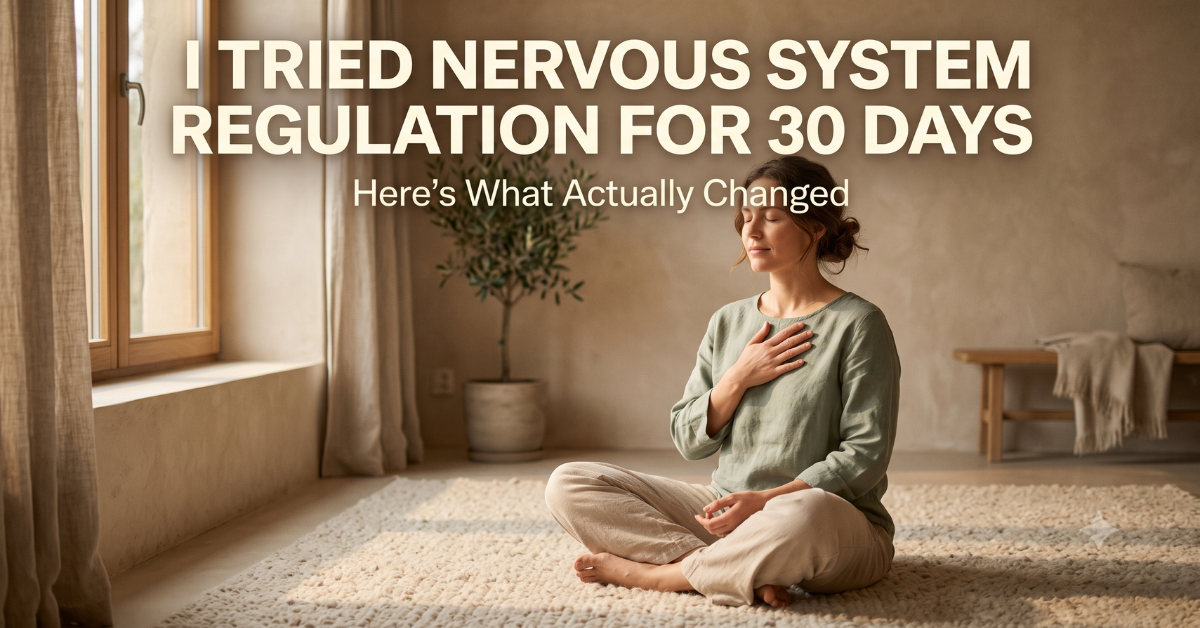
I Tried Nervous System Regulation for 30 Days — Here’s What Actually Changed
A first-person, evidence-informed look at what happens when you stop fighting your nervous system and start listening to it.
I didn’t set out to write a wellness article. I set out to fix a very specific, very unglamorous problem: I could not fall asleep before 1 a.m., I flinched at every notification, and my jaw ached from clenching it in my sleep. A friend who works in somatic therapy said something that stuck with me — “You don’t have a stress problem. You have a dysregulated nervous system.” So I decided to spend 30 days doing something about it, on purpose, and write down exactly what happened.
What Nervous System Regulation Actually Means
Before diving into the diary of it, it’s worth grounding this in the actual science, because “nervous system regulation” has become one of those phrases that gets thrown around without much explanation.
Your autonomic nervous system runs on two main branches: the sympathetic branch (fight-or-flight) and the parasympathetic branch (rest-and-digest). In theory, these two systems should move fluidly — stress rises, you respond, then your body settles back down. In practice, many of us live in a state where the sympathetic branch never fully powers down. Dr. Stephen Porges’ polyvagal theory helped popularize the idea that the vagus nerve — the long, wandering nerve connecting your brainstem to your heart, lungs, and gut — is central to how quickly (or slowly) your body can shift out of that stress state.
“Regulation,” then, isn’t about eliminating stress. It’s about restoring the body’s ability to move through a stress response and return to baseline, rather than getting stuck at the top of the curve. That’s the working definition I used for this challenge.
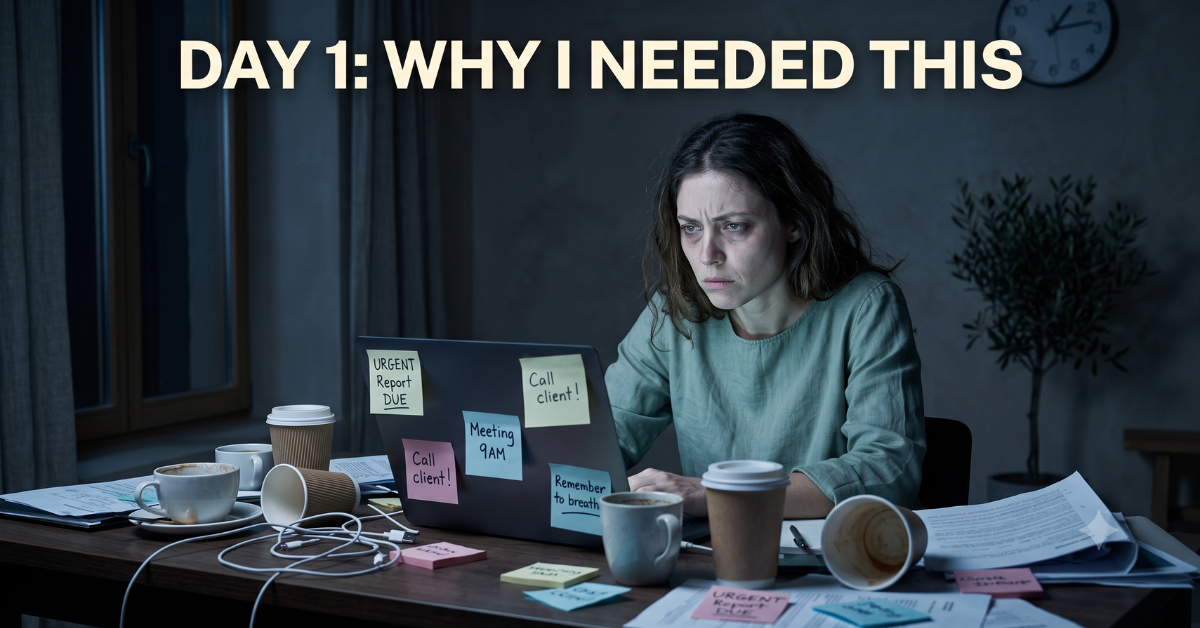
Day 1: Why I Needed This
My baseline wasn’t dramatic — no panic attacks, no burnout diagnosis. Just a low hum of tension I’d started treating as personality. Tight shoulders. A racing mind at 11 p.m. that only calmed down once I was too exhausted to think. Looking back at my notes from Day 1, the phrase I wrote was: “I don’t feel unwell. I just don’t feel like I’m ever fully off.”
I gave myself four rules for the month: no supplements or tools I hadn’t researched, no changing more than one variable per week so I could actually tell what was working, daily notes (even one line), and no pretending a bad day meant the whole thing had failed.
Week 1: Learning to Breathe Again
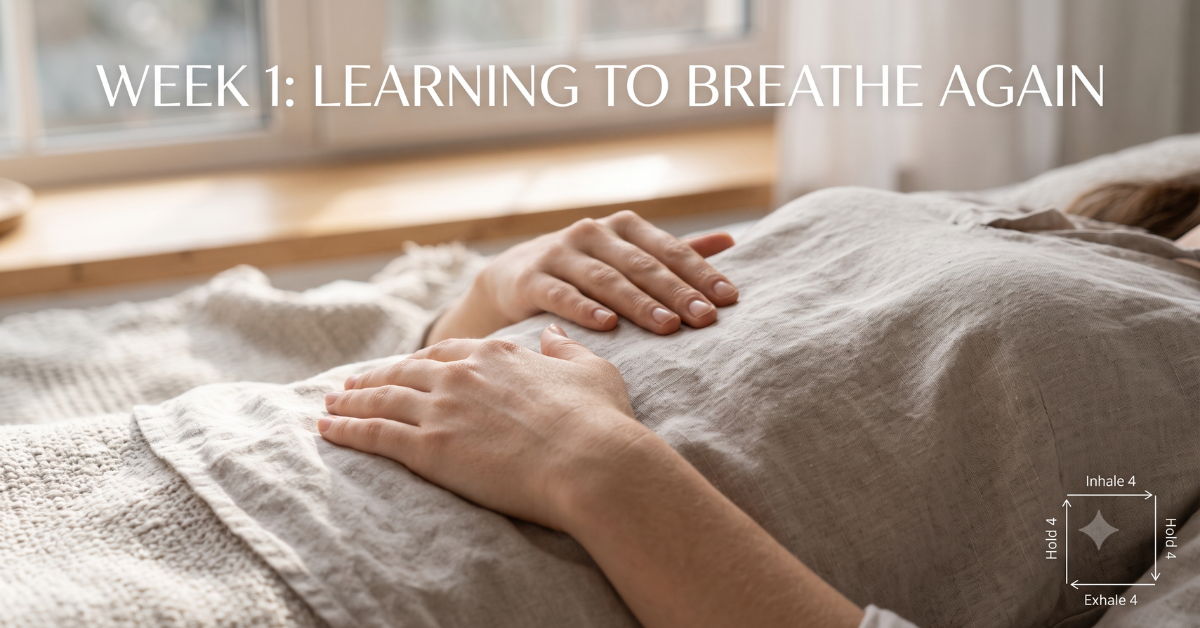
I started with the cheapest, most accessible tool available: breath. Specifically, extended exhale breathing — inhaling for four counts, exhaling for six to eight. The physiological logic here is straightforward and well documented: a longer exhale relative to the inhale activates the vagus nerve and nudges the body toward parasympathetic dominance. Research on heart rate variability (HRV) — a commonly used marker of autonomic flexibility — has repeatedly linked slow, extended-exhale breathing with increased vagal tone.
I paired the breathing practice with a small sensory ritual that, frankly, I was skeptical about: diffusing a calming essential oil blend while I did it. I went with NOW Foods Bergamot Essential Oil, mostly because bergamot has some preliminary research behind it for cortisol and mood, and partly because I needed the ritual to feel distinct from “just another item on my to-do list.”
By Day 5, the breathing itself had stopped feeling like an exercise and started feeling like an off-switch. Not instantly — the first two or three days, my mind wandered constantly. But somewhere around Day 6, I noticed I could use the same four-six breath pattern in the middle of a stressful email and feel my shoulders actually drop.
The Evening Ritual I Introduced Next: Topical Magnesium
Shop Life-flo Pure Magnesium Oil Spray →Week 2: Building the Routine

Week 2 was about stacking a second habit on top of the breathwork without letting the whole thing become overwhelming. I added brief cold exposure — thirty seconds of cold water on my face and wrists each morning — which is a simple, low-cost way to stimulate the vagus nerve via the “mammalian dive reflex,” a reflex that slows heart rate when the face is exposed to cold water.
I also introduced topical magnesium into my evening routine. Magnesium is involved in regulating the HPA axis (the body’s central stress-response system), and while oral absorption varies a lot between people, applying it directly to skin as an evening ritual gave me something tactile to associate with “winding down.” I used Life-flo Pure Magnesium Oil Spray on my calves and forearms about 30 minutes before bed.
Honestly, this was the week I nearly quit. Stacking habits sounds simple in theory, and in practice, Day 11 and Day 12 I skipped everything because work ran late. What kept me going was the “no pretending a bad day means failure” rule from Day 1 — I just picked the breathing back up the next morning, no big narrative around it.
Week 3: The Plateau Nobody Talks About

Most wellness content skips this part, but I think it’s the most honest section of this whole piece: Week 3 felt like nothing was happening. The novelty had worn off, my sleep hadn’t dramatically transformed, and I was tired of thinking about my nervous system at all. This is, apparently, incredibly common — behavior-change research consistently shows a mid-point dip where the initial motivation fades and the new habit hasn’t yet become automatic.
Two changes helped me push through. First, I switched from a topical-only magnesium routine to adding an oral supplement at night — Doctor’s Best High Absorption Magnesium Glycinate Lysinate, chosen specifically because the glycinate/lysinate chelated form is generally better tolerated and better absorbed than cheaper magnesium oxide. Second, I introduced weighted blanket use during my wind-down hour — this cooling-cover weighted blanket specifically, because deep pressure stimulation has some evidence behind it for reducing physiological arousal, similar in concept to a firm hug.
Feeling the Week-3 Plateau Too? These Two Helped Me Push Through
Doctor’s Best Magnesium Glycinate → Cooling Weighted Blanket →Week 4: Something Shifted
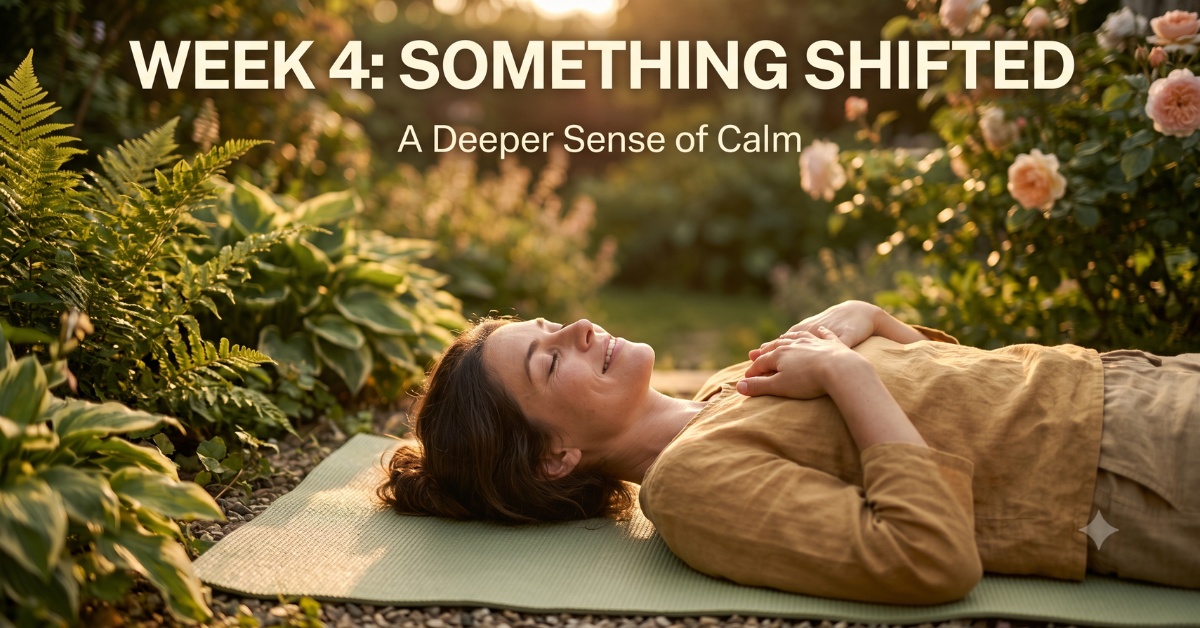
I want to be careful here, because I think this is where a lot of “I tried X for 30 days” content overpromises. I didn’t wake up on Day 28 as a transformed person. What I noticed instead was smaller and, honestly, more useful: I stopped bracing. My default state during the day used to be a low-level readiness for something to go wrong. By Week 4, that background tension had genuinely quieted.
I added one final piece — a short guided evening practice using a wearable meditation and sleep-tracking headband, mostly out of curiosity to see whether my subjective sense of “calmer” matched anything measurable. It wasn’t essential to the results, but it made the last week feel more intentional, and gave me some rough data to compare against my Day 1 notes.
Before vs. After: What Actually Changed
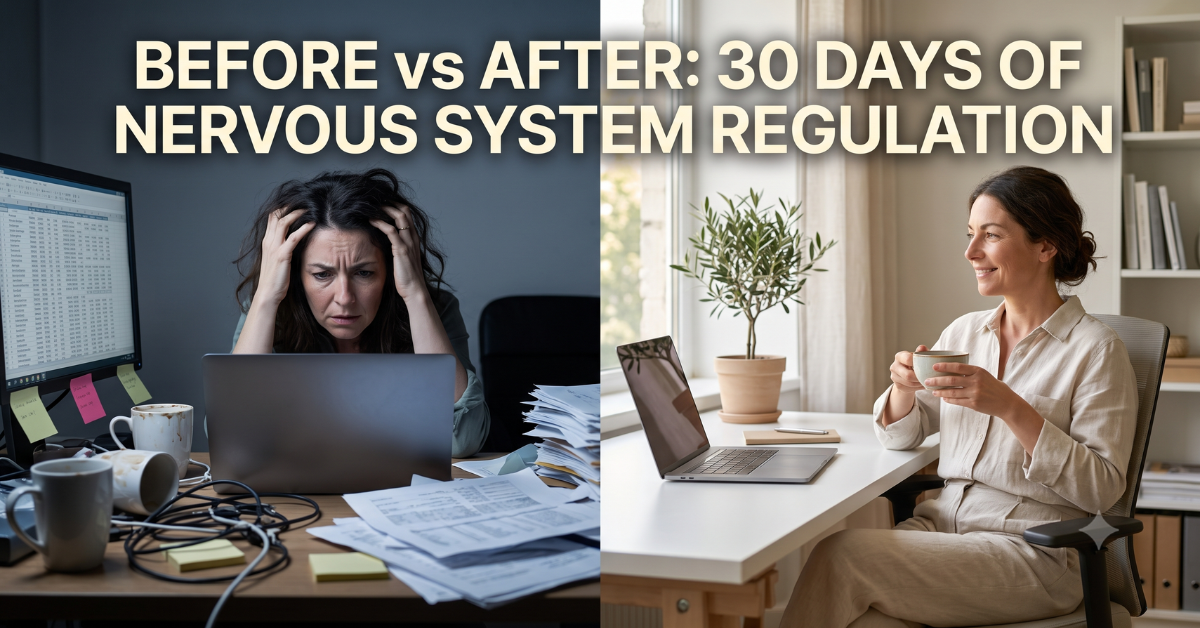
| Area | Day 1 | Day 30 |
|---|---|---|
| Falling asleep | Often past 1 a.m., mind racing | Noticeably faster, calmer wind-down |
| Baseline tension | Near-constant shoulder/jaw tightness | Present under real stress, but releases faster |
| Reaction to notifications | Flinch, spike, hard to refocus | Noticeable, but recovers within minutes |
| Tools used | None | Breathwork, cold exposure, magnesium, weighted blanket |
The honest summary: this wasn’t a cure, and I don’t think “nervous system regulation” is something you complete and then move on from. It’s closer to a set of skills that get easier and more automatic with repetition — the same way strength training doesn’t “finish,” it just becomes part of how your body operates.
My Go-To Nervous System Reset Kit
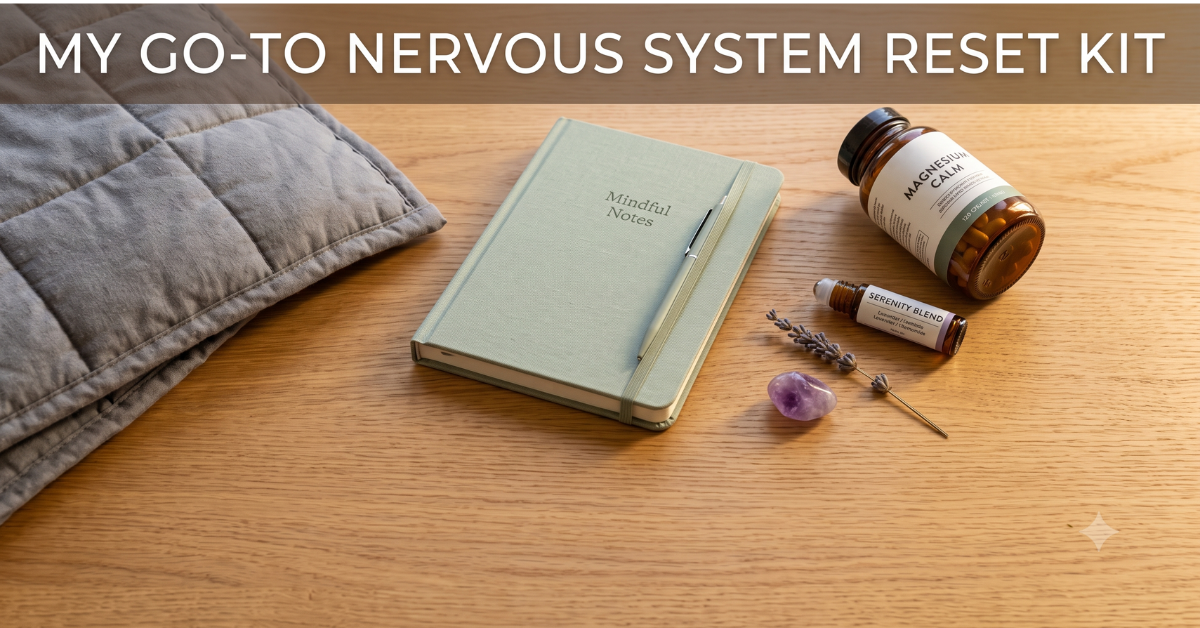
If you’re looking to try any of this yourself, here’s exactly what I used, in the order I introduced them:
- NOW Foods Bergamot Essential Oil — for the breathwork ritual
- Life-flo Pure Magnesium Oil Spray — evening topical routine
- Doctor’s Best Magnesium Glycinate Lysinate — oral supplement, added Week 3
- Cooling Weighted Blanket — deep pressure support during wind-down
- Guided Meditation & Sleep Headband — Week 4 addition
Shop My Full 30-Day Nervous System Reset Kit
Bergamot Oil → Magnesium Oil Spray → Magnesium Glycinate → Weighted Blanket → Sleep Headband →💡 Frequently Asked Questions
What is the fastest way to regulate your nervous system?
Extended-exhale breathing (inhaling for 4 counts, exhaling for 6–8) is one of the fastest, most accessible ways to activate the parasympathetic nervous system via the vagus nerve, often producing a noticeable effect within minutes.
Does magnesium really help with nervous system regulation?
Magnesium plays a role in regulating the HPA axis, the body’s central stress-response system. Both topical and oral magnesium (such as glycinate/lysinate chelated forms) are commonly used to support relaxation, though individual absorption and response vary.
Are there side effects to nervous system regulation supplements like magnesium?
Oral magnesium can cause mild digestive upset in some people, especially at higher doses. Topical magnesium is generally well tolerated but may cause mild skin tingling. Anyone pregnant, nursing, or on medication should consult a healthcare provider before starting supplementation.
This post contains affiliate links to Amazon and iHerb. If you make a purchase through these links, WellbeingPrime may earn a small commission at no extra cost to you. This article reflects one individual’s personal experience and is for informational purposes only — it is not medical advice. Nervous system regulation practices and supplements affect individuals differently, and magnesium or herbal supplementation may not be appropriate for everyone, particularly those who are pregnant, nursing, managing a chronic condition, or taking medication. Please consult a qualified healthcare provider before starting any new supplement or wellness routine.
Stay dewy! 🌿 Bookmark WellbeingPrime.com for more evidence-based wellness guides.
🌿 Weekly wellness, health & beauty insights — straight to your inbox
Free subscription · Cancel anytime