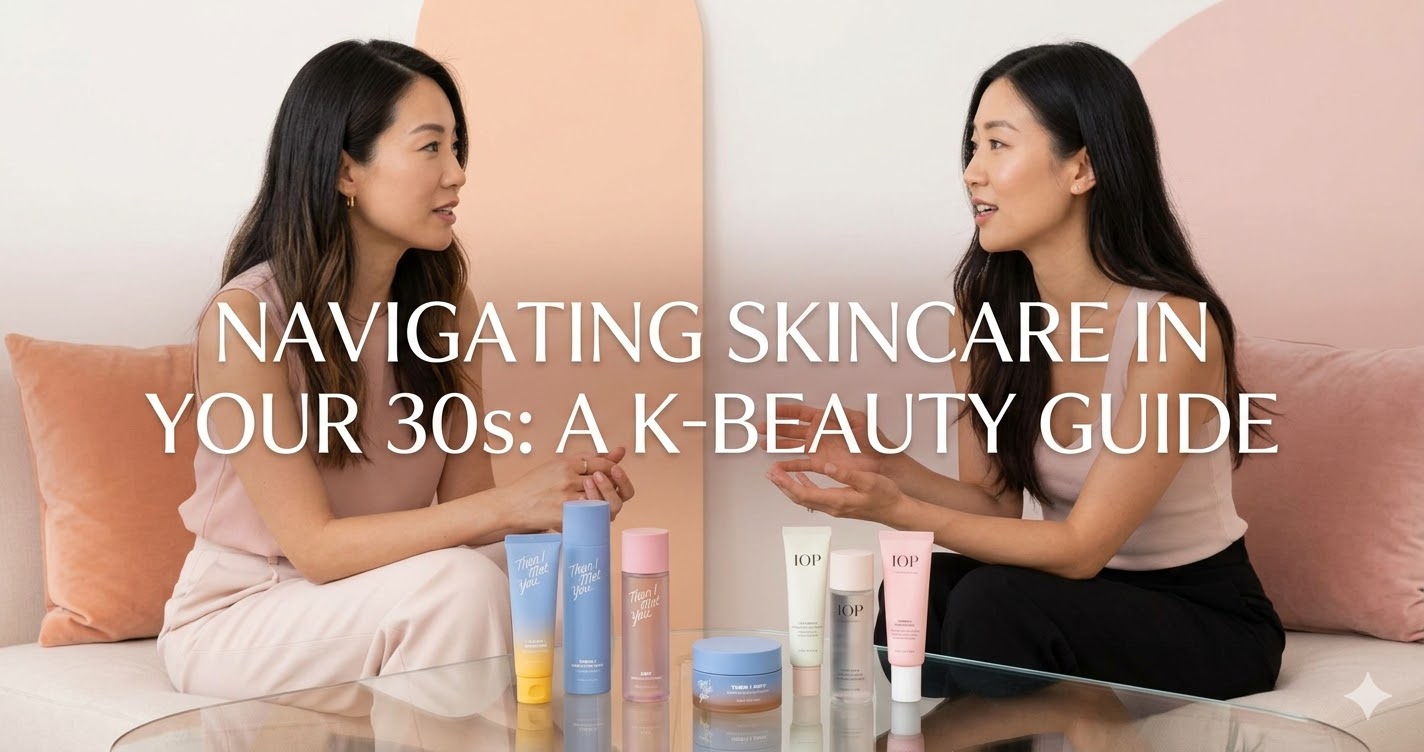
I used to think I had my skincare routine entirely locked down. I spent my 20s navigating the trials and tribulations of different products, thinking that by the time I hit 30, I would have perfect, glowing skin forever. Spoiler alert: I was wrong.
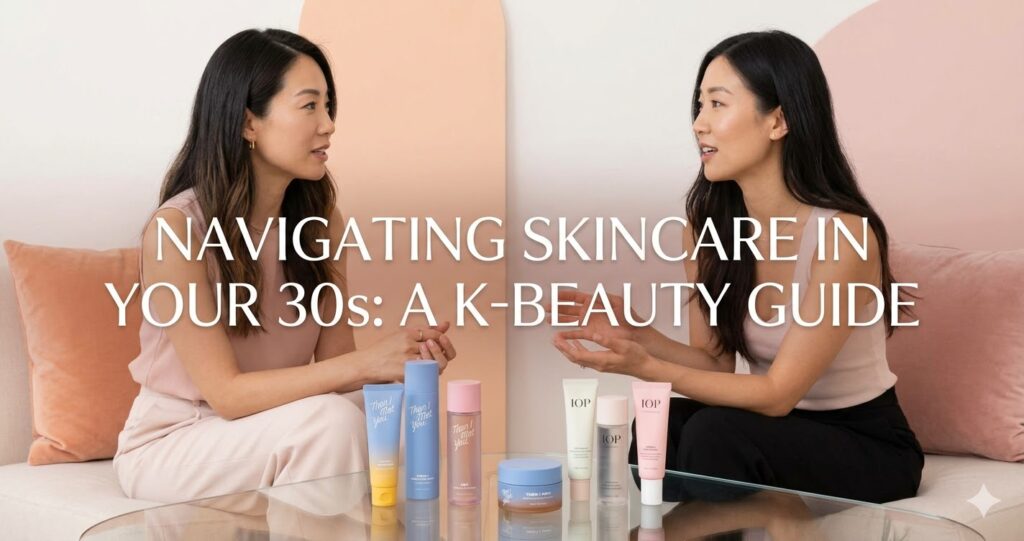
It felt like as soon as I turned 30, someone flipped a switch. Suddenly, the techniques and harsh ingredients that worked for my younger skin were doing more harm than good. If you are currently in your 30s, or approaching 40, you have likely noticed these changes too. The phrase “Korean vampire” is often thrown around to describe women who seemingly don’t age, but trust me, that look requires a radical shift in strategy once you leave your 20s.
I had to let go of everything I thought I knew about skincare and start over. It became less about chasing trends and more about a targeted, intentional era of treating specific needs. Here is how I navigated the chaos of skin changes in my 30s—from hormonal acne to pregnancy—using the gentle, effective philosophy of K-Beauty.
The Great 30s Shift: Dryness and the Lingering Hangover
The first thing I noticed, around age 28, was a fundamental shift in my skin’s behavior. It started becoming significantly less naturally moisturized. The plumpness of my 20s was being replaced by a persistent dryness I had never experienced before.
Furthermore, I realized it took much longer for hyperpigmentation to fade. In my 20s, I could pick at a spot (we all did it, let’s be honest) and it would be gone in two days. After 28? That same mark would still be there two weeks later, staring back at me in the mirror.
It is very much like the classic “hangover” analogy. When you are younger, you can function on three hours of sleep, bounce back after a night out, and your skin still looks smooth. In your 30s, that same lack of sleep leaves your face looking weary for days. This realization forced me to become much more methodical about what I was putting on my face.
The Horror of Adult Hormonal Acne
Perhaps the most shocking change was the sudden onset of hormonal acne. I felt so knowledgeable about skincare, and then—boom—my chin and jawline were covered in breakouts. Over 50% of adults deal with adult acne, yet when it happens to you, it feels incredibly isolating and frustrating.
I spent years trying to figure out the trigger. I kept thinking it was a fluke, a mistake, or that I must be exceptionally stressed. I questioned everything I ate. But month after month, it was still there. Dealing with it took an immense amount of time, because a lot of hormonal issues are internal.
During this time, I also had my two children—one at 35 and another at 38. This introduced a whole new host of skincare nightmares. Pregnancy is truly the gift that keeps on giving: pigmentation, melasma, redness, hair loss, and yes, more acne. Plus, when you are trying to take care of a newborn, you do not have the time to research product ingredients. I had to ditch my complex routine and rebuild something fast and effective.
Rethinking Acne: The Gentle K-Beauty Approach and Holy Grail Patches
When I was in my 20s, I treated acne with harsh, drying chemicals like salicylic acid. But hormonal acne in your 30s requires the exact opposite. If you overdo it with drying ingredients, you get that dry, crusty, irritated ring around the breakout that is almost harder to cover than the original pimple.
I learned to lean into the Korean philosophy of acne treatment, which centers on gentle, natural ingredients like Tea Tree Oil and Azelaic Acid. However, the true game-changer for me was pimple patches.
Technically, an active pimple is a wound on your skin. Putting a hydrocolloid patch on it is like putting a Band-Aid on a wound. Hydrocolloid technology works by drawing the moisture and pus away from the infection, flattening it in 24 to 48 hours. Most importantly, it keeps your dirty fingers away from that open wound. Pimple patches allowed me to adopt a far more gentle approach to acne management that actually sped up healing time rather than just drying out the surrounding skin.
Navigating Skincare During Pregnancy: The Great Swap
Pregnancy makes skincare incredibly difficult because so many potent actives are off-limits. You cannot use AHAs, BHAs, or Retinol (Vitamin A). While there are no specific studies showing these harm a fetus (doing testing on pregnant women is unethical), you simply do not want to take the risk.
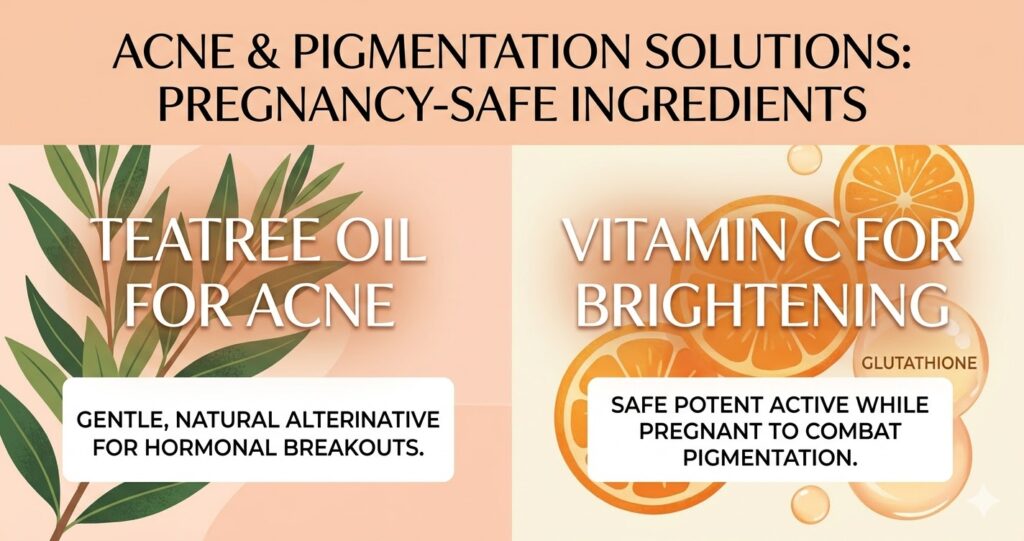
So, what can you use? Vitamin C became my absolute savior. It is one of the few potent actives that is safe during pregnancy. I doused myself in Vitamin C to combat pregnancy pigmentation and melasma.
I started looking into high-potency options, specifically those utilizing potent forms of L-ascorbic acid blended with other brightening agents. I also got really interested in natural forms of Vitamin C, like the trendy Hallabong (a variety of mandarin orange). While pregnant, this was the only step in my routine where I felt I could still use a “punch” of active ingredients.
Cracking the Hydration Code for Rosacea and Aging
As I progressed through my late 30s, the extreme dryness only worsened. Every pregnancy is different; during my second, my skin was so dry I had dander on my scalp for the first time.
After my pregnancies, as my body was trying to “reset,” I was diagnosed with a little rosacea, something I had never previously experienced. Melasma also persisted. sknicare products cannot remove certain types of pigmentation; sometimes you need lasers for that. I haven’t tackled that yet, but it is on my plan for a future trip to Korea.
For the rosacea, I learned that the best defense is deep, consistent hydration. It is all about smoothing and calming the skin barrier. I became obsessed with finding the perfect texture in my moisturizers. I began layering products, just like I did in my 20s, but with richer, barrier-supporting creams.
I also discovered unique hybrid products, like a toner that merges deeply hydrating “milk” (using something like 78% Birch Juice) with a very low percentage of acids (around 1%). This strikes the necessary fine balance: it gently, chemically exfoliates to address texture, but leading with intense hydration. Your skin absolutely needs moisture to heal itself.
Retinol and the Future: Preparing for the 40s
Now that I am approaching 40, I am ready to get back into Retinol. Since I was pregnant for a significant portion of my late 30s, I had to avoid it for years. I am definitely starting to see those fine lines popping up.
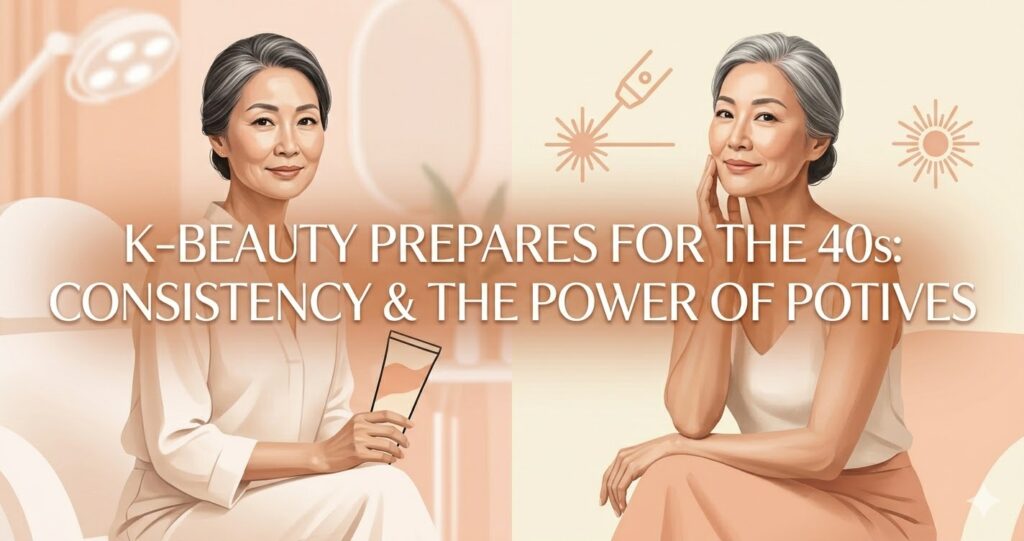
Retinol is a well-studied, proven ingredient for anti-aging. Koreans have been ahead of the curve on this as well; some Korean brands were the pioneers of stabilizing retinol for over-the-counter use. I recommend starting with a gentle formulation, perhaps around 0.1%, that can be used even near the eye area without irritation. The packaging is critical here—look for tubes with layered technology that keep oxygen out, as that is essential for maintaining retinol’s potency.
As I look forward to my 40s, I accept that topical skincare has limitations. While consistency is key, gravity eventually takes its toll. In Korea, lasers and preventative “baby Botox” are normalized. The goal is to prevent the face from creating deep lines in the first place, rather than trying to erase them later. While I haven’t dabbled much in that yet, I anticipate seeking those treatments out in my 40s.
Conclusion: Embrace consistency and the K-Beauty Philosophy
Aging is inevitable, but how we age is largely within our control. Entering my 30s taught me that I cannot beat my skin into submission with harsh chemicals. It required a softer, more respectful, and intensely hydrating approach.
The Korean beauty philosophy of balance, consistency over time, and a “gentle approach” has allowed me to navigate these changes without losing my mind or my glow. My journey in my 30s has been about intentional treatment and listening to what my changing skin actually needs. I feel more comfortable in my own skin now than ever before, and I look forward to what my 40s will bring. Stay consistent, and the skincare will work for you.
🌿 Weekly wellness, health & beauty insights — straight to your inbox
Free subscription · Cancel anytime