Disclosure
Health Disclaimer: This article is for informational purposes only and is not medical advice. It is not meant to diagnose, treat, or replace care from your doctor or another qualified health professional. Please talk with your doctor or pharmacist before changing your diet, exercise, sleep habits, or supplement use, especially if you are pregnant, breastfeeding, managing a chronic condition, or taking medication.
Affiliate Disclosure: Some links in this post are affiliate or sponsored links. If you make a purchase through them, I may earn a small commission at no extra cost to you. I only share resources that fit the topic.
As an Amazon Associate, I earn from qualifying purchases.
A holistic morning routine for people who hate mornings doesn’t start with a 5 a.m. alarm, a cold plunge, or a 12-step checklist. It starts with something much kinder: permission to go slowly.
Living in California, I’ve noticed that early November is when even the cheerful early risers I know start to grumble. The clocks fall back, the fog lingers, and the sky outside the window stays a moody gray long after the coffee maker starts. If you have always been the person who hits snooze, avoids eye contact before 9 a.m., and secretly rolls your eyes at “rise and grind” videos, this guide is for you.
Here is the good news. You do not need to become a morning person to have better mornings. You simply need a routine that works with your body, your brain, and your real life, not against them.
In this guide, you’ll learn why mornings can feel so hard, the small science-backed habits that make waking up easier, a realistic 7-day plan, and a few honest signs that tiredness may need a doctor’s attention. Nothing here asks you to be perfect. Pick one idea, try it this week, and let the rest wait.
Why Mornings Feel So Hard (It’s Not a Character Flaw)
If mornings have always felt like climbing out of wet cement, there are real reasons behind it. Understanding them can take away a lot of guilt.
Your chronotype is partly written in your genes
Your chronotype is your body’s natural preference for when to sleep and when to wake. Some people are “larks” who feel sharp at sunrise. Others are “owls” who come alive later in the day. A large genetic study published in Nature Communications analyzed data from nearly 700,000 people and found 351 genetic variants linked to chronotype. Before that study, researchers knew of only 24. The researchers estimated that somewhere between a fifth and a half of our chronotype is set by our genes.
Interestingly, the same research found that morning people did not sleep longer or better than night owls. The main difference was when they slept. In other words, being a night owl is not laziness. It is a different internal schedule living in a world built around early starts.
Sleep inertia: that heavy, foggy first half hour
Sleep inertia is the groggy, slow, slightly grumpy feeling you get right after waking up. Your brain is still shifting gears from sleep mode to awake mode. It is normal, and it usually fades on its own as you move, get light, and wake up gradually. That’s why a gentle routine often works better than forcing yourself to be productive the second your feet hit the floor.
Not enough sleep makes every morning harder
The CDC recommends that adults get 7 or more hours of sleep per night, and it reports that about 1 in 3 U.S. adults regularly falls short (CDC, as of November 2026). Many people who “hate mornings” are actually just short on sleep. A beautiful morning ritual cannot fully make up for a night that was too short or too broken.
So before we talk about what to do in the morning, keep this simple truth in mind: a better morning usually begins the night before. We’ll come back to that later.
Sponsored Resource
A Light-Blocking Sleep Mask
If streetlights, early sunrise, or a partner’s reading lamp slip into your bedroom, a contoured sleep mask is a simple way to keep your sleep space darker. Choose one that feels soft and doesn’t press on your eyes.
View the Sleep Mask on AmazonThe Holistic Morning Routine for People Who Hate Mornings: 4 Gentle Principles
“Holistic” simply means caring for the whole you: body, mind, and the environment around you. For non-morning people, that translates into four guiding principles.
- Small beats ambitious. A 10-minute routine you actually do is better than a 60-minute routine you abandon by Thursday.
- Body first, brain later. Water, light, and gentle movement come before email, news, and hard decisions.
- Remove friction the night before. Every decision you make in the evening is one less decision your groggy morning self has to make.
- Consistency over intensity. Your body clock loves rhythm. Waking up at a similar time most days often matters more than waking up early.
Put simply, a holistic morning routine for people who hate mornings protects your energy instead of demanding more of it. The six steps below follow these principles. Think of them as a menu, not a rulebook. On a rough morning, even one step counts.
Step 1: Wake Up Gently
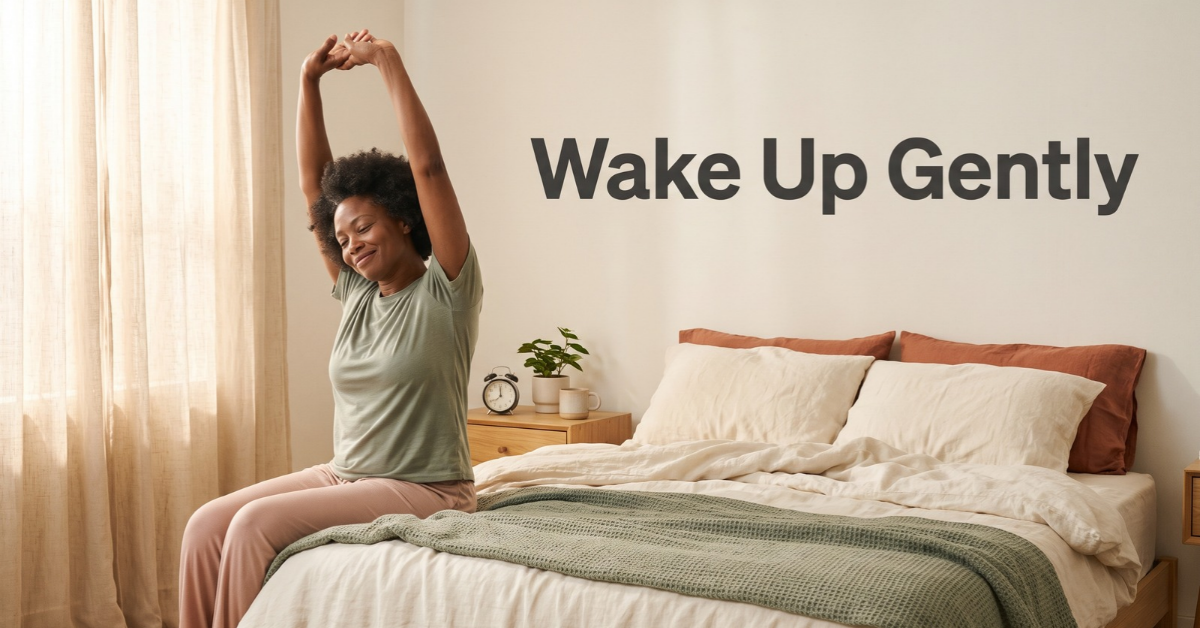
For many night owls, the alarm is the worst part of the day. A jarring buzz can make you feel like you’re starting the morning already behind. Here’s how to soften that first moment.
What research says about the snooze button
You may have heard that snoozing is “terrible” for you. The research is more nuanced. A 2023 study from Stockholm University, published in the Journal of Sleep Research, surveyed 1,732 adults and found that many snoozed regularly, especially younger adults and evening types. In a second part of the study, 31 habitual snoozers slept in a lab. On the morning they were allowed a 30-minute snooze, they lost about six minutes of sleep but showed no negative effects on overnight sleep, stress hormones, mood, or morning sleepiness. They even performed slightly better on some thinking tests right after waking.
There’s an important caveat. The lab study included only people who already snooze and fall back asleep easily, and it tested only a 30-minute snooze window. So the honest takeaway is this: if snoozing feels good and you still get enough total sleep, you don’t need to feel guilty about it. If snoozing turns into an hour of stressful dozing, it may be worth setting one alarm a bit later instead.
A softer wake-up checklist
- ☐ Choose a gentler alarm sound, like chimes or nature sounds, instead of a harsh beep.
- ☐ Try a sunrise-style alarm clock or open the curtains a few inches before bed so light can gradually fill the room.
- ☐ Before you get up, take three slow breaths and stretch your arms overhead while still lying down.
- ☐ Sit on the edge of the bed for 30 seconds before standing, especially if you sometimes feel lightheaded.
- ☐ Keep your phone across the room so your first moments aren’t spent scrolling news or email.
Waking up gently is not about being soft on yourself in a lazy way. It’s about giving your nervous system a calm start instead of a startled one.
Step 2: Hydrate First

After several hours without a drink, a glass of water is one of the easiest and most comforting ways to start the day. It’s also a “tiny win” that requires zero willpower.
How much water do you need overall? According to Mayo Clinic, which summarizes guidance from the U.S. National Academies, women need about 11.5 cups (2.7 liters) of total fluids per day, and men about 15.5 cups (3.7 liters). That total includes water from food and other drinks, not just plain water. Your needs go up with heat, exercise, and illness.
You don’t need to chug a huge amount in the morning. A single glass is a lovely, realistic start.
Make it effortless
- Set a filled glass or water bottle on your nightstand before bed.
- Add a slice of cucumber, lemon, or a few mint leaves if plain water feels boring.
- If you prefer something warm, try warm water or a caffeine-free herbal tea. Peppermint, rooibos, and ginger are popular gentle options. You can learn more about traditional herb uses at DannyWrites.
Step 3: Get Morning Light

If you only adopt one habit from this guide, consider this one. Light is the strongest signal your internal body clock (your circadian rhythm, the roughly 24-hour cycle that guides sleep and alertness) receives.
According to CDC’s National Institute for Occupational Safety and Health (NIOSH), your body clock is most sensitive to light in the morning and evening, and light at those times has opposite effects. Bright light in the morning tends to shift your rhythm earlier, which helps you feel sleepy earlier at night and wake more easily the next day. Bright light late at night tends to push your rhythm later.
For people who hate mornings, this is powerful. Morning light can, over time, make your mornings feel a little less brutal.
Easy ways to get morning light
- Drink your water or tea by a bright window or on a porch, balcony, or front step.
- Take a slow 5 to 10-minute walk around the block. Outdoor light is usually much brighter than indoor light, even on cloudy days.
- Open all the blinds as soon as you get up.
- In darker winter months, some people use light boxes. If you’re considering one, especially for low mood in winter, talk with your doctor first, since light therapy isn’t right for everyone.
Never look directly at the sun. Simply being in natural daylight is enough. And if you’re out for longer stretches, follow your usual sun protection habits.
Step 4: Move for Just Five Minutes
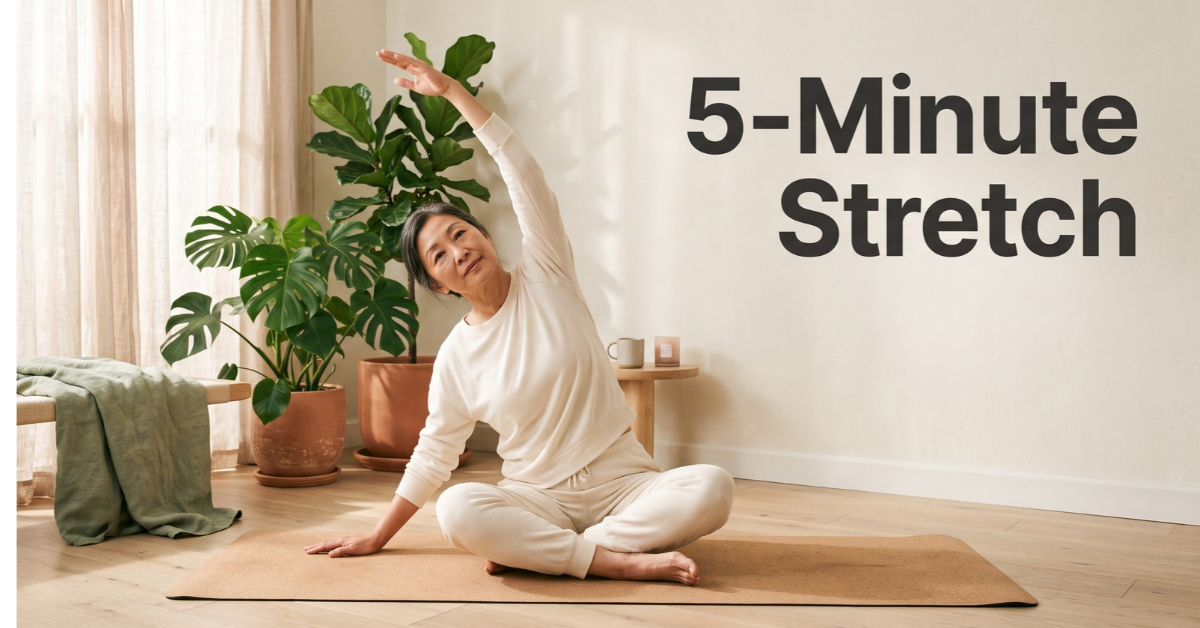
You don’t need a sunrise workout. You need a little movement to tell your body, “We’re up now.” Gentle stretching helps ease stiffness, warms up your muscles, and can lift that heavy, foggy feeling.
For bigger-picture health, the CDC recommends adults aim for at least 150 minutes of moderate-intensity activity per week, such as brisk walking, plus muscle-strengthening activities on at least two days (CDC Physical Activity Guidelines, as of November 2026). Your morning five minutes won’t cover all of that, and that’s okay. It’s a starting point that makes the rest of the day’s movement feel more natural.
A simple 5-minute wake-up flow
- Neck rolls (30 seconds): Slowly tilt your ear toward each shoulder. Avoid full circles if your neck feels sensitive.
- Shoulder rolls (30 seconds): Roll your shoulders backward ten times, then forward ten times.
- Seated side stretch (1 minute): Sit tall, reach one arm overhead, and lean gently to the opposite side. Switch sides.
- Cat-cow (1 minute): On hands and knees, gently round and arch your back with your breath.
- Standing reach and fold (1 minute): Reach up tall, then soften your knees and fold forward only as far as feels comfortable.
- March in place (1 minute): Lift your knees gently and swing your arms to get your blood moving.
Helpful Tool
Prefer to Follow Along?
If you find it easier to move when someone guides you, a fitness and yoga app can offer short, beginner-friendly sessions you can do in your living room. Look for options that let you choose low-impact or chair-based routines.
Explore Guided Yoga SessionsStep 5: Keep Breakfast (and Coffee) Simple

If you’re not hungry first thing, that’s common for night owls. You don’t have to force a big breakfast. But having something simple and nourishing within a few hours of waking can help keep your energy steadier.
The “no-thinking” breakfast formula
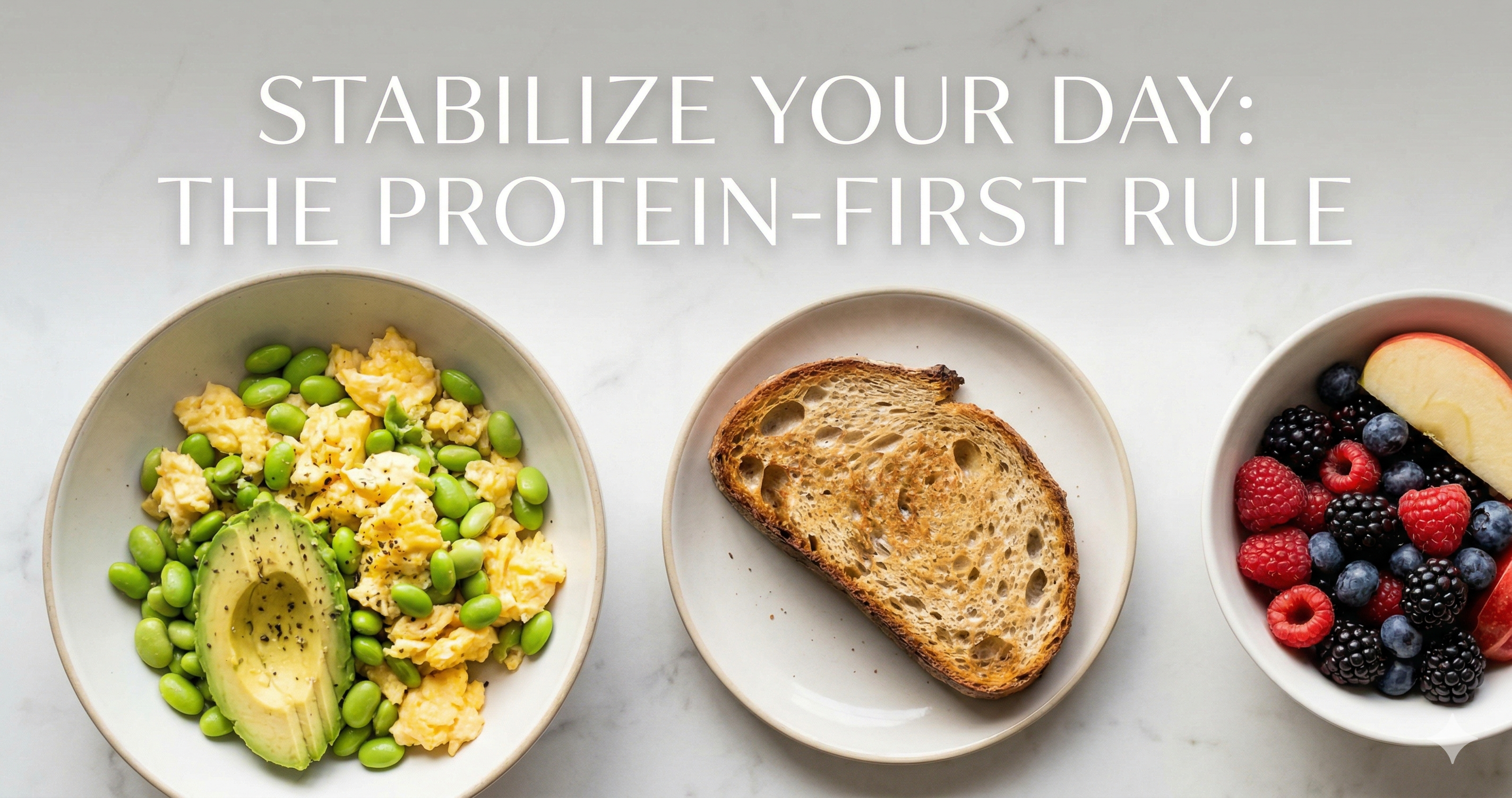
Aim for a little protein, some fiber, and a bit of healthy fat. This combination tends to feel more satisfying than a pastry alone.
| If you have… | Try this |
|---|---|
| 2 minutes | Greek yogurt with berries, or a banana with a spoon of nut butter |
| 5 minutes | Whole-grain toast with avocado or a boiled egg (boil a batch on Sunday) |
| 0 minutes (prepped the night before) | Overnight oats with chia seeds, cinnamon, and fruit |
| No appetite yet | A small smoothie, or pack something easy to eat mid-morning |
About that morning coffee
You don’t have to give up coffee to have a holistic routine. According to Mayo Clinic, up to 400 milligrams of caffeine a day appears to be safe for most healthy adults, roughly the amount in four cups of brewed coffee. However, caffeine may not suit people who are sensitive to it, who are pregnant, or who take certain medications or supplements that interact with it.
You may have seen advice to wait 90 minutes after waking before drinking coffee. The evidence behind a specific waiting time is limited. A gentler approach is simply to drink your water first, enjoy your coffee with breakfast if you like, and avoid caffeine late in the day so it doesn’t steal from tonight’s sleep.
Sponsored Resource
Exploring Gut-Friendly Wellness Support
Some readers like to learn about wellness products designed to support healthy aging and digestion alongside a balanced breakfast. Supplements are not a substitute for nourishing food, and they can interact with medications, so please check with your doctor or pharmacist before trying anything new.
Learn MoreStep 6: Breathe Before You Begin
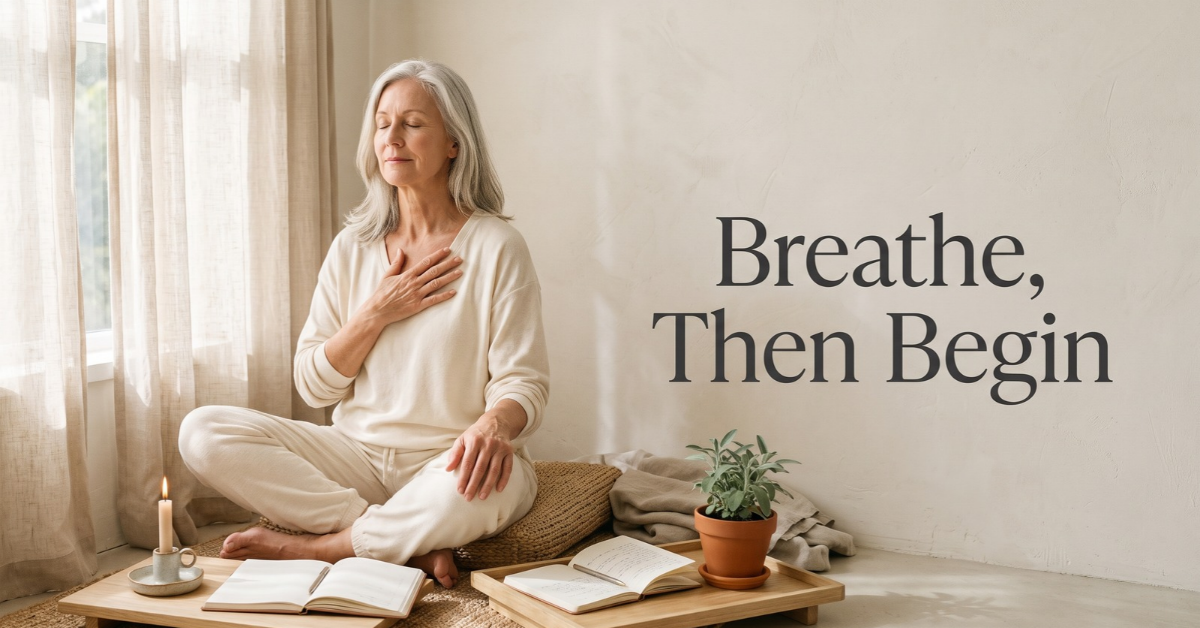
Many people who dislike mornings aren’t just tired. They feel a rush of dread about everything waiting for them. A minute or two of slow breathing can create a small pocket of calm before the day starts asking for things.
The National Center for Complementary and Integrative Health (NCCIH) notes that relaxation techniques, including deep breathing, aim to bring on the body’s natural “relaxation response,” which can include a slower heart rate and lower blood pressure. Research suggests these practices may help with stress, though evidence for specific health conditions is still limited. They’re generally safe, low-cost, and easy to try.
The 2-minute morning breath
- Sit comfortably and rest one hand on your chest, one on your belly.
- Breathe in gently through your nose for a count of 4. Let your belly rise.
- Breathe out slowly through your mouth for a count of 6.
- Repeat for about 8 to 10 breaths.
- Finish by naming one thing you’re looking forward to today, however small. A warm drink counts.
If counting feels stressful, skip it. Just let your exhale be a little longer than your inhale. If you feel dizzy, return to normal breathing.
Optional: a one-line journal
Keep a small notebook by your favorite chair. Each morning, write one line: how you feel, one intention, or one thing you’re grateful for. No pressure, no essays. Over time, it becomes a gentle record of your days.
Sponsored Resource
A Natural Wellness Option for Calm and Clarity
For readers who are curious about supplements, this natural wellness formula is designed to support a sense of calm, mental clarity, and restful sleep as part of a balanced lifestyle. It is not a replacement for medical care. Because supplements can interact with prescription medications, please talk with your doctor or pharmacist first, especially if you are pregnant, breastfeeding, or managing a health condition.
See the DetailsYour Best Mornings Start the Night Before

Here’s the secret most morning people won’t tell you: their mornings look easy because a lot of the work happened the night before. For non-morning people, a short evening wind-down is the most underrated part of any morning routine.
The 15-minute evening reset
- ☐ Lay out tomorrow’s clothes so there’s one less decision in the morning.
- ☐ Prep breakfast: overnight oats, a boiled egg, or fruit by the door.
- ☐ Set out your mug and water glass as a cheerful “welcome” for your morning self.
- ☐ Dim the lights about an hour before bed. Remember, bright light at night can nudge your body clock later.
- ☐ Charge your phone outside the bedroom or across the room.
- ☐ Keep a steady bedtime that allows at least 7 hours of sleep.
Sleep Resource
Want More Support for Better Nights?
If evenings are where your mornings fall apart, this sleep-focused resource offers ideas for creating a calmer bedtime. Use it alongside the simple habits above, and talk with your doctor if sleep problems continue.
Explore the Sleep ResourceMake your bedroom a calm space
A cool, dark, quiet bedroom helps many people sleep more soundly. Natural fabrics like cotton or linen, soft lighting, and a tidy nightstand can make the room feel like a place to rest rather than a second office. If you like calming home touches, you can browse everyday wellness essentials at GMartUS.
Waking up with a stiff neck can also make mornings feel worse. A supportive pillow that keeps your head and neck comfortably aligned may help you wake up feeling more at ease.
Sponsored Resource
An Ergonomic Memory Foam Pillow
This contoured memory foam pillow is designed to offer ergonomic neck support for side and back sleepers. Please note: a pillow is not a treatment for sleep apnea. If you snore loudly or wake up gasping, talk with your doctor about a proper evaluation.
View the Pillow on AmazonYour 7-Day Gentle Start Plan (Step-by-Step)
Instead of changing everything at once, add one small habit each day. By the end of the week, you’ll have a full routine, built slowly enough that it actually sticks.
| Day | New Habit | Time Needed |
|---|---|---|
| Day 1 | Put a glass of water by your bed and drink it when you wake up. | 1 min |
| Day 2 | Open the blinds right away and sit by a window with your drink. | +5 min |
| Day 3 | Do the 2-minute morning breath before checking your phone. | +2 min |
| Day 4 | Add the 5-minute wake-up stretch flow. | +5 min |
| Day 5 | Prep tomorrow’s breakfast and clothes the night before. | 10 min (evening) |
| Day 6 | Take a short outdoor walk or sit outside for 5 to 10 minutes. | +5–10 min |
| Day 7 | Reflect: Which steps felt good? Keep those. Let go of the rest without guilt. | 5 min |
Choose your routine size
Some days you’ll have more energy than others. Having three versions of your routine means you never have to “fail.” You just pick the size that fits today.
| Routine | What It Includes | Best For |
|---|---|---|
| Tiny (5 min) | Water, open the blinds, 3 slow breaths | Rushed or exhausted mornings |
| Steady (15 min) | Water, light by a window, 5-minute stretch, 2-minute breath, simple breakfast | Most weekdays |
| Slow (30 min) | Everything above, plus a 10-minute outdoor walk and a one-line journal | Weekends and slower days |
Common mistakes to avoid
- Setting your alarm two hours earlier overnight. If you want to wake earlier, shift by about 15 minutes every few days instead.
- Sleeping in very late on weekends. A big swing in wake-up time can make Monday feel like jet lag. Try to stay within about an hour of your usual time.
- Copying someone else’s routine. A routine is only “right” if it fits your body, schedule, and season of life.
- Using your phone as the first thing you see. News and email can flood your brain before you’ve had a chance to settle in.
A holistic morning routine for people who hate mornings works best when it feels like a small act of self-care rather than another task you’re failing at.
When Morning Tiredness Is a Sign to Check In With Your Doctor
Disliking mornings is normal. Feeling exhausted no matter how much you sleep is different. Please talk with your doctor if you notice any of the following:
- Loud, frequent snoring, gasping, or pauses in breathing at night. According to the National Heart, Lung, and Blood Institute (NHLBI), these can be signs of sleep apnea, along with daytime sleepiness and dry mouth. Often a bed partner notices first. A doctor may recommend a sleep study.
- Morning headaches that happen often.
- Falling asleep during quiet activities or while driving.
- Trouble falling or staying asleep most nights for several weeks.
- Persistent low mood, loss of interest, or feeling hopeless, especially if it gets worse in darker months.
- New or unexplained fatigue, which can sometimes be related to thyroid issues, anemia, medications, or other health conditions.
If you’re struggling emotionally: You don’t have to handle it alone. If you’re feeling overwhelmed, hopeless, or having thoughts of harming yourself, you can call or text 988 to reach the 988 Suicide & Crisis Lifeline in the U.S., available 24/7. A counselor or therapist can also help with ongoing stress, anxiety, or sleep worries.
In an emergency: If you have chest pain, sudden shortness of breath, sudden confusion, weakness or numbness on one side of the body, or trouble speaking, call 911 right away.
Frequently Asked Questions
Is it safe to start a morning routine with herbal tea or supplements?
Many herbal teas are commonly enjoyed as gentle, caffeine-free drinks. However, some herbs and supplements can interact with prescription medications or may not be suitable during pregnancy, breastfeeding, or certain health conditions. Before adding a new supplement or drinking an herbal tea daily, check with your doctor or pharmacist. Start with simple water, light, and movement, which are low-risk for most people.
How can I fit a morning routine into a busy workday?
Use the “Tiny” version: a glass of water, open the blinds, and three slow breaths. It takes about five minutes. Prepping your clothes, breakfast, and water glass the night before frees up even more time. On busier days, you can stretch at lunch or walk outside on a break. Small habits done consistently matter more than long routines done occasionally.
Do I have to become an early riser to be healthy?
No. This is one of the most common myths. Research suggests that chronotype is partly genetic, and night owls are not simply “lazy.” What tends to matter more is getting enough sleep (at least 7 hours for most adults, per the CDC), keeping a fairly regular schedule, and getting some daylight in the morning. You can build a healthy, calm morning at 7 a.m., 8 a.m., or 9 a.m.
A Gentle Closing Thought
If you have spent years feeling like mornings are a test you keep failing, I hope this guide offers a softer way to see them. You don’t need to love mornings. A holistic morning routine for people who hate mornings simply means a few small rituals that make them feel a little kinder: a glass of water, a patch of light, a stretch, a slow breath, and a night-before routine that sets you up for success.
Start with one step tomorrow. Notice how it feels. Then let your routine grow at its own pace, the way a plant on the windowsill slowly leans toward the light. Be patient with yourself. You’re not behind. You’re simply beginning.
Here’s to calmer, gentler mornings, on your own schedule. 🌿
Sources
- Centers for Disease Control and Prevention (CDC): Sleep
- CDC / NIOSH: Effects of Light on Circadian Rhythms
- Stockholm University: You Don’t Lose If You Snooze (2023)
- Jones et al., Nature Communications: Genome-wide association analyses of chronotype in 697,828 individuals
- Mayo Clinic: Water — How Much Should You Drink Every Day?
- Mayo Clinic: Caffeine — How Much Is Too Much?
- CDC: Adult Activity — An Overview
- NCCIH: Relaxation Techniques — What You Need To Know
- NHLBI: Sleep Apnea Symptoms
- 988 Suicide & Crisis Lifeline
🌿 Weekly wellness, health & beauty insights — straight to your inbox
Free subscription · Cancel anytime