The Holistic Guide to Skin Barrier Repair: Products, Steps & Daily Habits That Actually Work
A science-informed, wellness-first roadmap for anyone whose skin has started whispering (or shouting) that something isn’t right.
If your skin has felt tight after cleansing, flushed for no obvious reason, or strangely reactive to products it used to tolerate just fine, you are not imagining it. You’re likely dealing with a compromised skin barrier — and it’s one of the most common, most misunderstood issues in modern skincare. Search interest in “skin barrier repair” has climbed steadily in recent years, and it’s easy to see why: between over-exfoliating routines, harsh winters, indoor heating and air conditioning, and the sheer number of actives marketed to us at once, our skin is under more pressure than ever to keep up.
This guide takes a holistic approach, meaning we won’t just hand you a product list and call it a day. We’ll look at the underlying biology of what’s actually happening beneath the surface, walk through the ingredients with real evidence behind them, map out a simplified daily routine you can follow without guesswork, and cover the lifestyle habits that quietly make or break your results. Skin barrier repair is rarely about doing more — it’s almost always about doing less, but doing it consistently and correctly.
What the Skin Barrier Actually Is (And Why It Matters So Much)
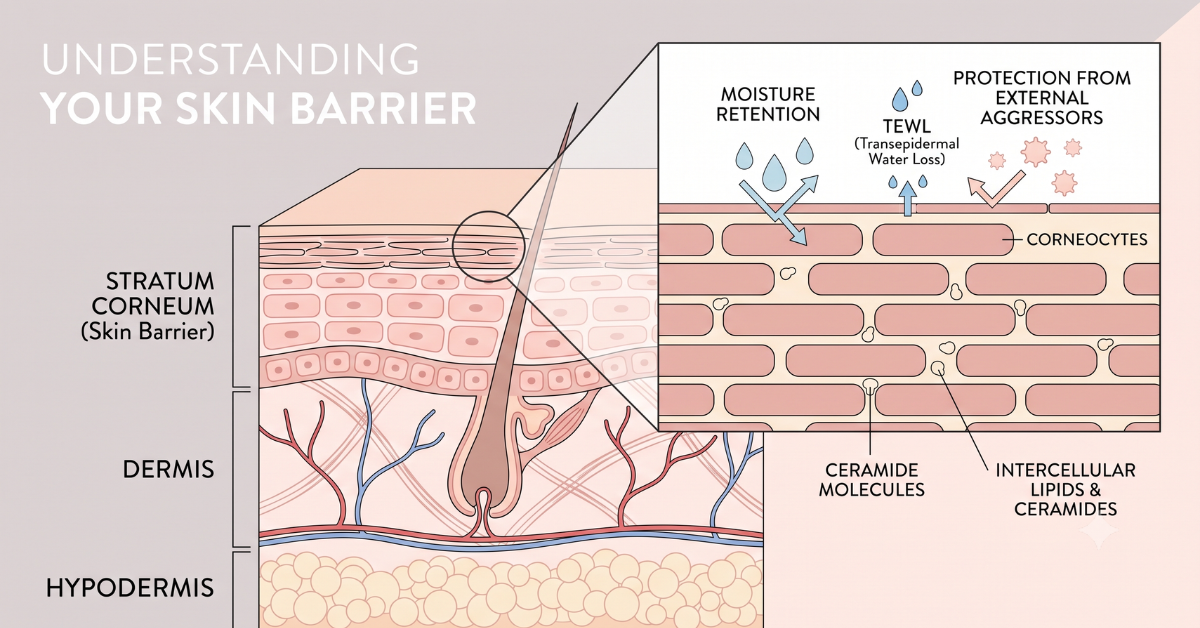
Dermatologists often describe the outermost layer of skin, the stratum corneum, using what’s known as the “brick and mortar” model — a framework popularized by dermatologist Peter Elias. In this model, skin cells (corneocytes) act as bricks, while a mixture of ceramides, cholesterol, and free fatty acids forms the mortar that holds everything together. When that lipid mortar is intact, your skin retains moisture efficiently and keeps irritants, allergens, and pollutants out. When it’s depleted — through over-exfoliation, harsh cleansers, extreme weather, or simply aging — water escapes faster than it should (a phenomenon researchers call transepidermal water loss), and the door is left open for irritants to get in.
This is why barrier damage rarely shows up as one isolated symptom. It tends to cascade: dryness leads to sensitivity, sensitivity leads to inflammation, and inflammation can make almost every other skin concern — from breakouts to premature aging — harder to manage.
It’s also worth understanding that the barrier isn’t a static structure. It’s constantly renewing itself in roughly a two- to four-week cycle as new corneocytes rise to the surface and old ones shed away. This is actually good news: it means a damaged barrier isn’t a permanent state, but a temporary disruption to a process your skin is already designed to repeat on its own. Your job isn’t to force repair — it’s to stop interfering with the cycle and give it the raw materials (moisture, lipids, and a calm environment) it needs to complete itself.
5 Signs Your Skin Barrier Needs Repair
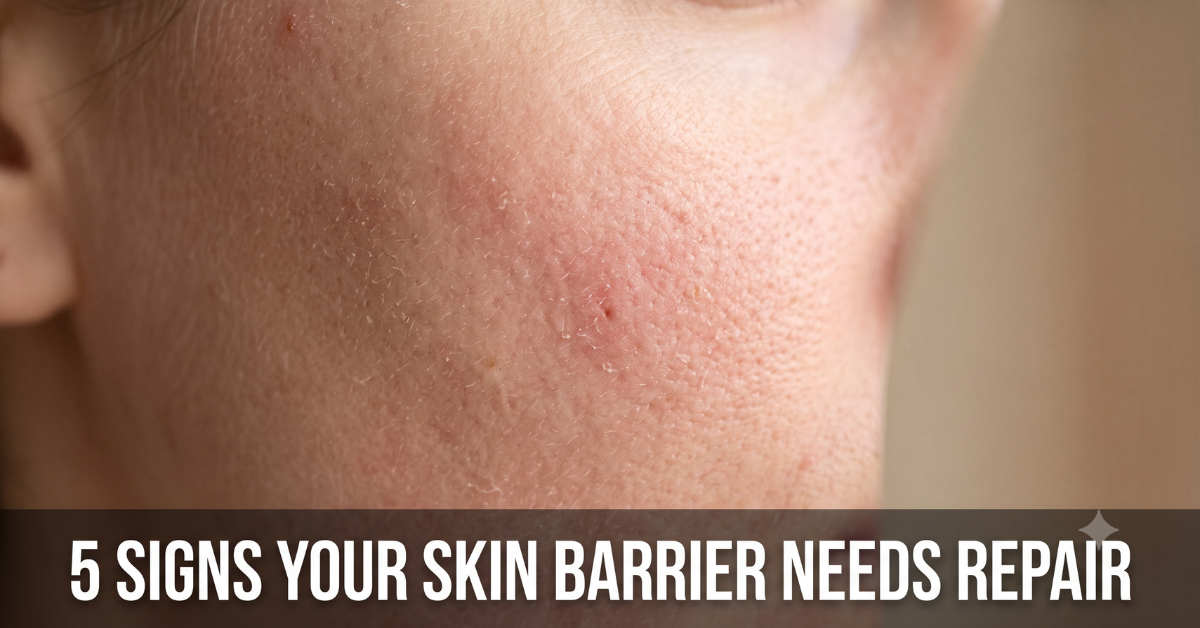
- Persistent tightness after washing your face, even minutes later.
- Stinging or burning when you apply products you’ve used for months without issue.
- Rough or flaky patches that don’t respond to your usual moisturizer.
- Unexplained redness that flares with heat, wind, or stress.
- Breakouts alongside dryness — a confusing combination that often signals the barrier, not your oil production, is the real issue.
If two or more of these sound familiar, it’s a strong signal to pause any aggressive actives (retinoids, strong acids, physical scrubs) and shift into repair mode.
Explore barrier-friendly essentials curated by our team at Wemmerce, and browse holistic wellness supports at Gmartus.
Holistic Ingredients That Restore Your Skin Barrier
“Holistic” repair doesn’t mean abandoning proven ingredients — it means choosing formulas that work with your skin’s own biology instead of against it. Here’s what to look for, along with a few standout options from OLIVE YOUNG Global’s barrier-care lineup.
Ceramides
Ceramides are lipid molecules that make up roughly half of the skin’s natural mortar. Replenishing them topically helps rebuild the barrier from the outside in.
👉 COSRX The Ceramide Skin Barrier Moisturizer — a lightweight, fragrance-conscious cream designed specifically to reinforce the lipid layer without feeling heavy.
Panthenol (Provitamin B5)
Panthenol is a humectant with a well-documented calming effect, often used to soothe compromised skin while it heals.
👉 easydew Barrier Repair Cream — a dermatology-adjacent staple frequently recommended for sensitive, reactive skin in the middle of a barrier flare-up.
Centella Asiatica (Cica)
Long used in traditional herbal medicine and now widely studied for its skin-soothing properties, centella pairs naturally with ceramide-based formulas.
👉 ILLIYOON Ceramide Ato Concentrate Cream — combines ceramide with centella, popular among those managing easily irritated or atopic-prone skin.
Fatty Acids & Cholesterol
These round out the “mortar” trio alongside ceramides, and are especially useful in lightweight barrier creams meant for daily, all-over use.
👉 Dr. Althea 147 Barrier Cream — a gentle, non-comedogenic option formulated for daily reinforcement without clogging pores.
Disclosure: This article contains affiliate links. If you purchase through them, WellbeingPrime may earn a small commission at no extra cost to you. Product details are accurate as of publication — please check the retailer’s page for the most current formulation and ingredient list.
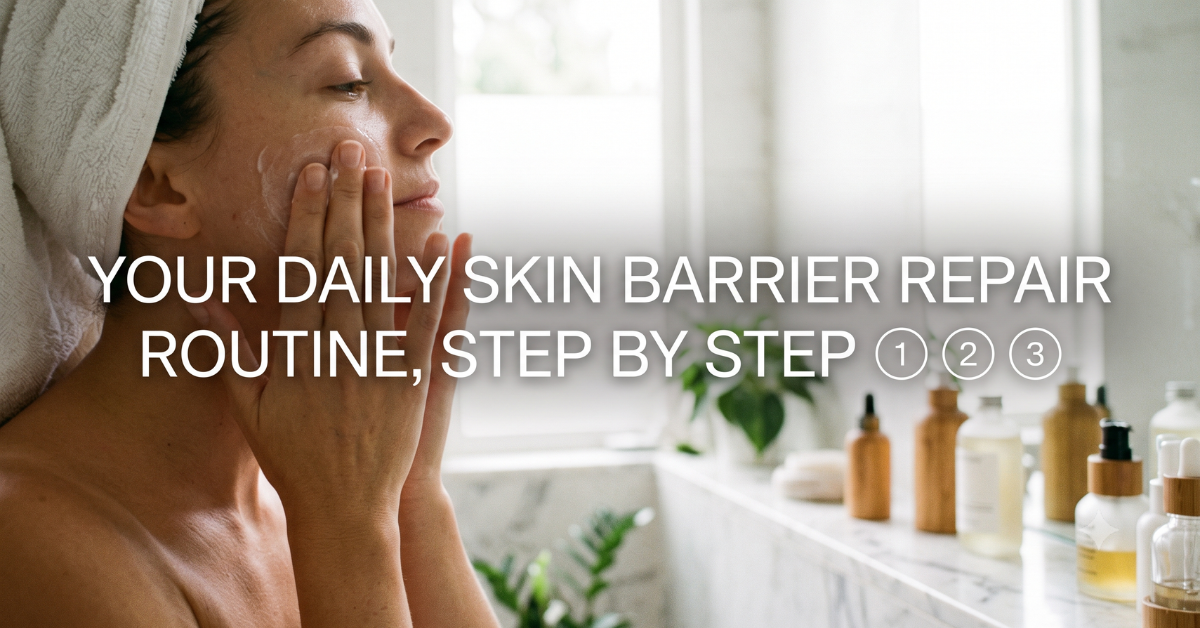
Your Daily Skin Barrier Repair Routine, Step by Step

Morning
- Rinse only, or use a cream cleanser. Skip foaming cleansers while your barrier heals — they strip lipids you’re trying to rebuild.
- Apply a ceramide-rich moisturizer while skin is still slightly damp, to help lock in water.
- Finish with broad-spectrum SPF. UV exposure is one of the fastest ways to undo barrier repair progress.
Evening
- Double cleanse gently — an oil-based cleanser followed by a low-pH, non-foaming cleanser.
- Layer a soothing, panthenol- or centella-based essence.
- Seal with a barrier cream or balm. During active repair, this is not optional — think of it as the “roof” over everything else.
During a barrier-repair phase, resist the urge to layer in retinoids, vitamin C, or exfoliating acids. Simplicity is the strategy, not the compromise.
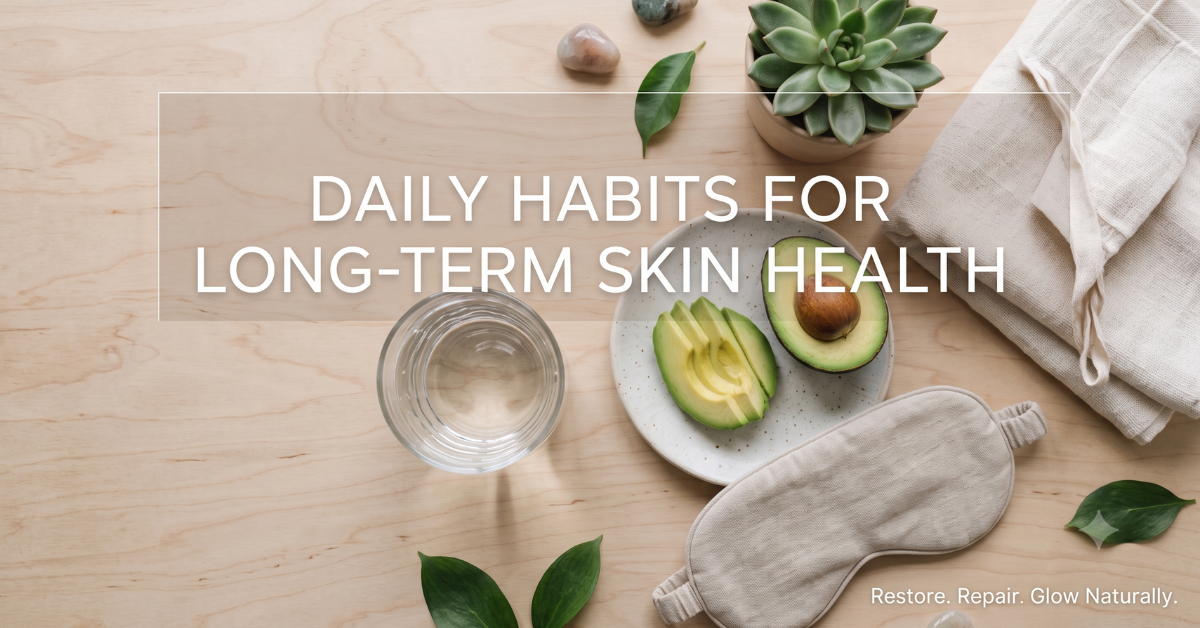
Daily Habits for Long-Term Skin Health
Topical products can only do so much if the rest of your lifestyle is working against your skin. A truly holistic approach considers the whole picture:
- Hydration from the inside out. Adequate water intake supports overall skin function, though topical moisturizers remain essential for sealing that hydration in.
- Prioritize sleep. Skin repair processes are most active during rest, which is why chronic sleep disruption is so often visible on the face.
- Watch your indoor humidity. Heated or air-conditioned environments accelerate transepidermal water loss — a humidifier can meaningfully help.
- Reduce unnecessary friction. Over-cleansing, harsh towel drying, and frequent physical exfoliation all chip away at barrier integrity over time.
- Manage stress where you can. Elevated cortisol has been linked to impaired barrier recovery in dermatological research, making stress management a genuinely skin-relevant habit, not just a wellness cliché.
Pair your topical repair routine with holistic wellness essentials from Gmartus, and discover more barrier-friendly formulas at Wemmerce.
Common Mistakes That Quietly Delay Barrier Repair
Even with the right products in hand, a few habits can undo progress before it starts. Here are the ones we see most often:
- Chasing results too fast. Swapping products every few days because you don’t see instant change actually resets the repair process each time. Give a simplified routine at least two to three weeks before judging it.
- Layering too many actives at once. Vitamin C, retinol, and exfoliating acids all have their place, but introducing several simultaneously while the barrier is fragile is one of the most common causes of prolonged sensitivity.
- Using hot water on the face. Hot water feels comforting but strips lipids faster than lukewarm water, undoing some of the very repair you’re trying to support.
- Skipping moisturizer because skin feels oily. Oily and dehydrated are not opposites — skin can produce excess oil precisely because it’s compensating for a lack of water, making moisturizer more necessary, not less.
- Forgetting sunscreen during the repair phase. Freshly repairing skin is often more UV-reactive, so this is exactly the wrong time to skip SPF.
Avoiding these five habits alone can shorten your recovery timeline significantly, often more than adding another “miracle” product ever could.
💡 Frequently Asked Questions (FAQ)
How long does it take to repair a damaged skin barrier?
Mild barrier disruption can improve in as little as one to two weeks with a simplified routine. More significant damage — from over-exfoliation or prolonged product misuse — can take four to six weeks or longer to fully stabilize.
Can I still use active ingredients like retinol while repairing my barrier?
It’s best to pause retinoids, strong exfoliating acids, and physical scrubs during active repair. Reintroduce them slowly, one at a time, once your skin tolerates your basic routine without stinging or redness.
Are ceramide creams suitable for oily or acne-prone skin?
Yes. Look for non-comedogenic, lightweight ceramide formulas. A healthy barrier actually helps regulate oil production, so barrier care can benefit oily skin too, not just dry skin.
What ingredients should I avoid while my barrier is compromised?
Avoid high concentrations of alcohol, fragrance, sulfates, and strong acids (AHA/BHA) until your barrier has stabilized, as these can further disrupt an already weakened lipid layer.
Is barrier damage the same as sensitive skin?
Not exactly. Sensitive skin can be a baseline trait, while barrier damage is often a temporary, situational state caused by external factors — though a damaged barrier can make any skin type behave like sensitive skin until it heals.
This article is for general wellness and educational purposes only and is not a substitute for professional dermatological advice. If you experience persistent redness, pain, or a skin condition that doesn’t improve, please consult a board-certified dermatologist.
Your skin barrier isn’t just a beauty concern — it’s your first line of defense, and it deserves patience, not punishment. Rebuild it gently, layer by layer, habit by habit.
Stay dewy! 💧
Bookmark WellbeingPrime.com for more evidence-based wellness guides.
Recommended Tags
skin barrier repair, ceramide skincare, holistic skincare routine, sensitive skin care, K-beauty skincare
🌿 Weekly wellness, health & beauty insights — straight to your inbox
Free subscription · Cancel anytime