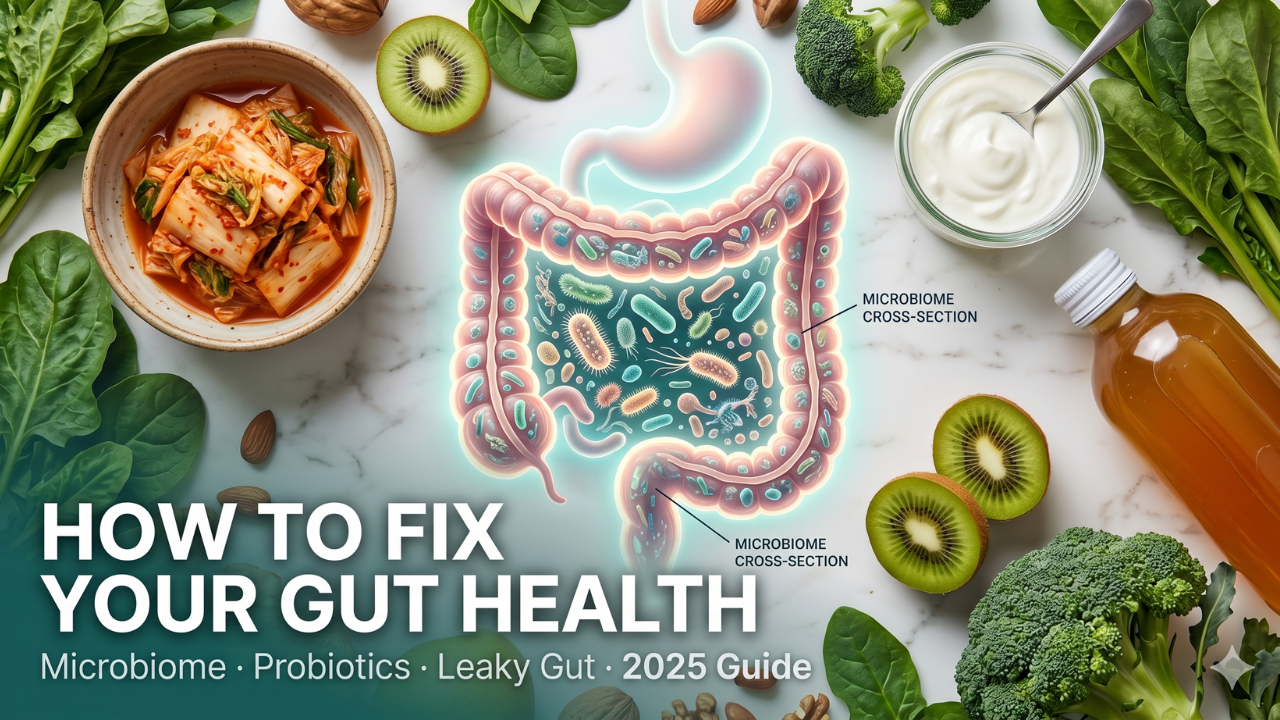
How to Fix Your Gut Health: The Complete Guide to Microbiome, Probiotics & Leaky Gut (2025)
Your gut is arguably the most powerful — and most overlooked — system in your body. Science now confirms what ancient medicine always suspected: optimal health begins in the gut. Here’s everything you need to know, backed by the latest 2025 research.
·
⏱ 12 min read
·
🔬 Evidence-Based
📖 IN THIS GUIDE
- What Is the Gut Microbiome — and Why Does It Run Everything?
- Leaky Gut Syndrome: The Hidden Root Cause
- Best Probiotic Foods & Fermented Superfoods
- The Gut-Brain Axis: Your Second Brain
- Prebiotic Foods That Feed Your Good Bacteria
- Warning Signs Your Gut Health Is Off
- The 30-Day Gut Reset Plan
1. What Is the Gut Microbiome — and Why Does It Run Everything?
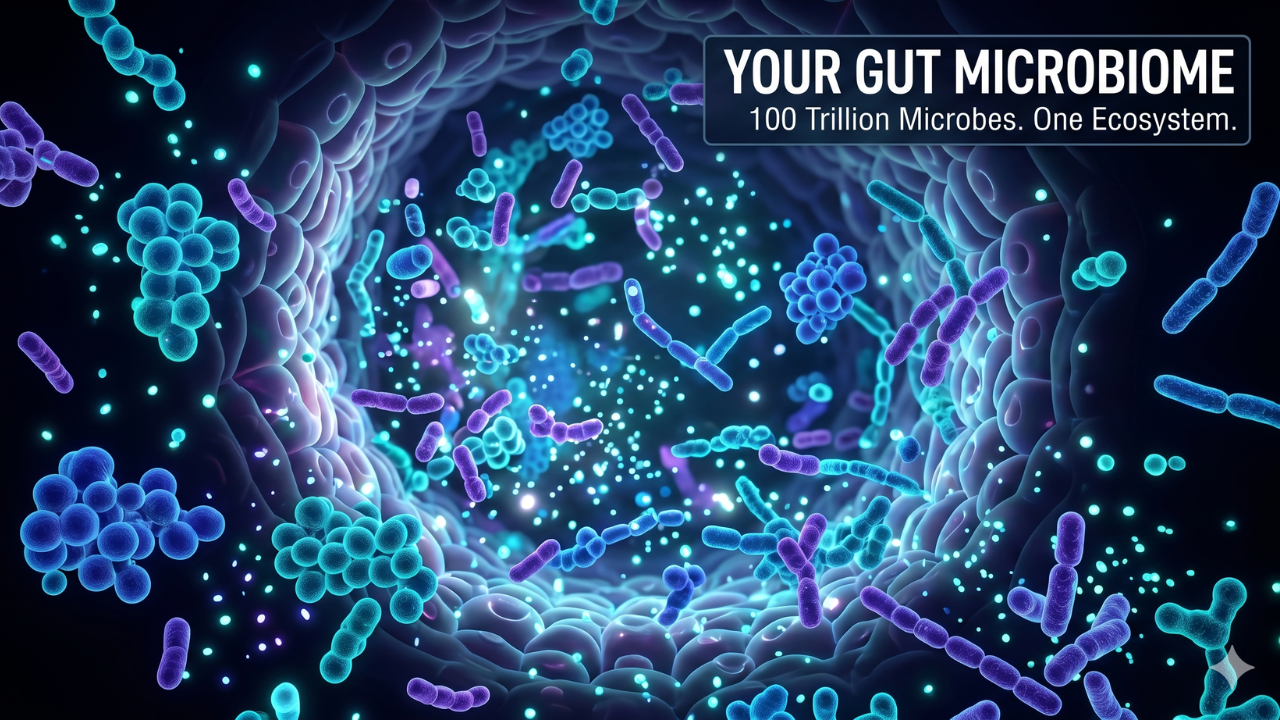
Your gut microbiome is a vast, living ecosystem of over 100 trillion microorganisms — bacteria, fungi, viruses, and archaea — residing primarily in your large intestine. To put that in perspective: microbial cells in your body outnumber your own human cells. You are, quite literally, more microbe than human.
But this isn’t cause for alarm — it’s cause for awe. These microscopic tenants are your silent biological partners, performing functions your body simply cannot do alone:
- Digesting complex carbohydrates and extracting nutrients your cells need
- Synthesizing vitamins including B12, K2, and short-chain fatty acids (SCFAs)
- Training and regulating your immune system — 70% of which lives in your gut lining
- Producing neurotransmitters like serotonin, dopamine, and GABA
- Protecting against pathogens through competitive exclusion
What Makes a “Healthy” Microbiome?
Cutting-edge research from Probiota 2025 has challenged the old notion of a single “ideal” microbiome. The science now confirms: diversity is the true marker of gut health. A microbiome rich in varied bacterial species — particularly Lactobacillus, Bifidobacterium, and Akkermansia muciniphila — correlates strongly with lower rates of metabolic disease, depression, autoimmune conditions, and even certain cancers.
The modern Western lifestyle is devastating to this diversity. Ultra-processed foods, chronic stress, antibiotics, inadequate sleep, and low fiber intake are the primary culprits driving what researchers now call dysbiosis — a microbial imbalance at the root of dozens of chronic conditions.
35%
Increase in Google searches for “gut health” in 2024 alone — reflecting a global awakening to microbiome science. (Magnitude Biosciences, 2025)
2. Leaky Gut Syndrome: The Hidden Root Cause
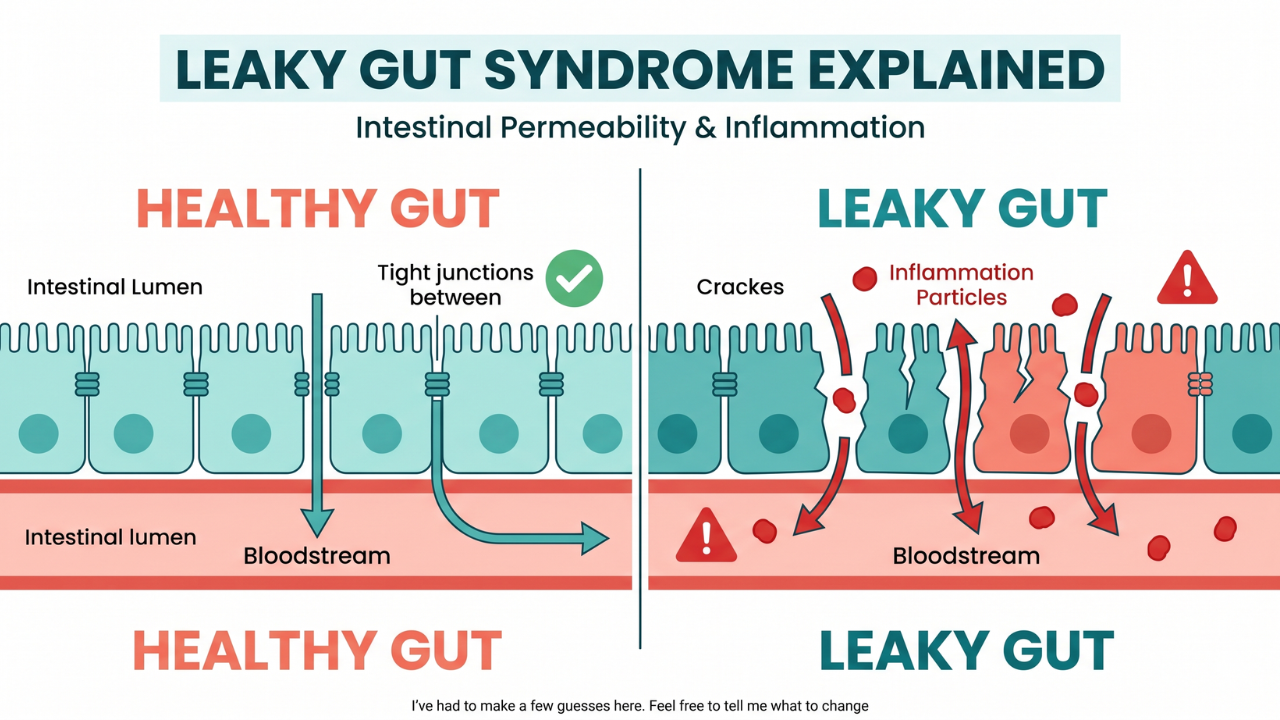
Technically termed intestinal hyperpermeability, leaky gut occurs when the tight junctions between your intestinal epithelial cells become compromised — allowing partially digested food particles, toxins, and bacterial byproducts to “leak” into your bloodstream.
Your immune system, encountering these foreign particles in places they shouldn’t be, mounts an inflammatory response. Repeat this thousands of times a day, and you have the biological blueprint for:
How to Heal a Leaky Gut
The most evidence-backed approach combines L-Glutamine (the primary fuel for intestinal cells), postbiotics like Butyrate (which strengthen tight junctions), zinc carnosine (clinically shown to reinforce the gut barrier), and targeted probiotic strains that enhance mucus production and reduce permeability.
3. Best Probiotic Foods & Fermented Superfoods
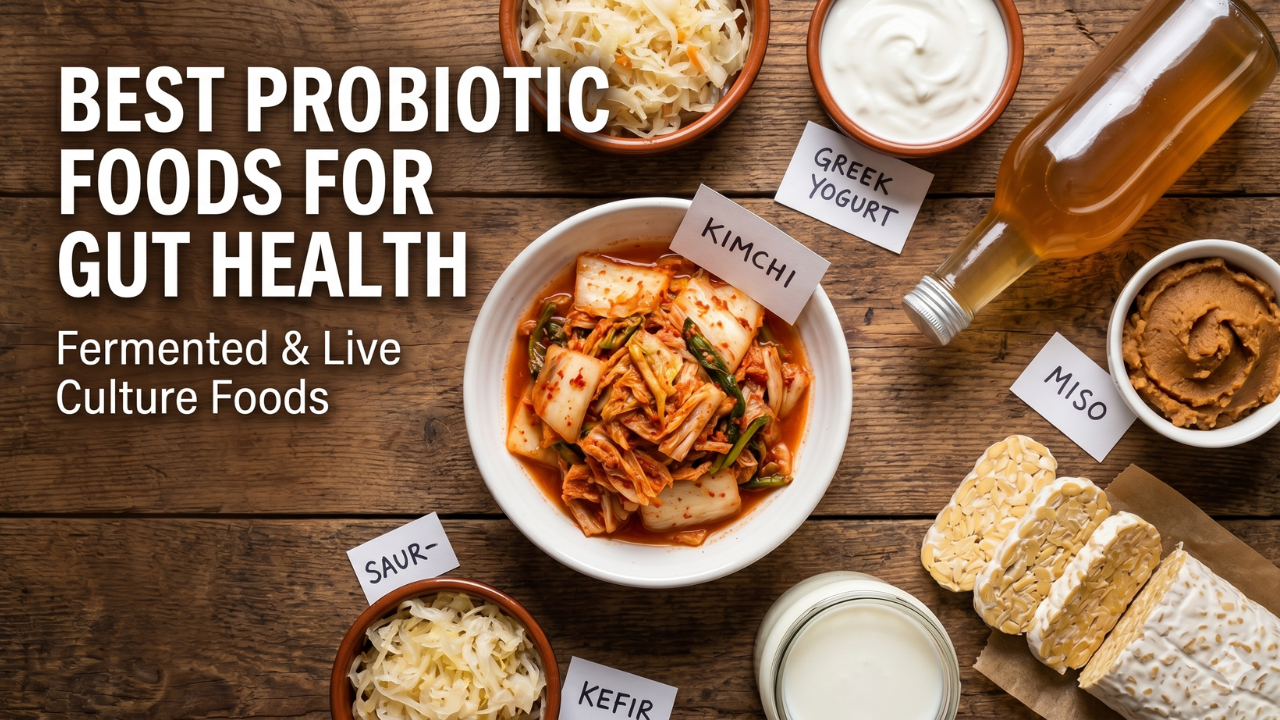
Before supplements, there was food. Traditional cultures around the world have relied on fermented foods for millennia — not just for preservation, but for the profound health benefits now validated by modern science. The 2025 McKinsey Global Wellness Report identifies fermented foods and pre/probiotic beverages as among the fastest-growing food categories globally.
The Elite Fermented Foods List
Can’t eat fermented foods consistently every day? A high-quality synbiotic (probiotic + prebiotic combined) can reliably fill the gap — and on busy days, it’s invaluable.
4. The Gut-Brain Axis: Your Second Brain
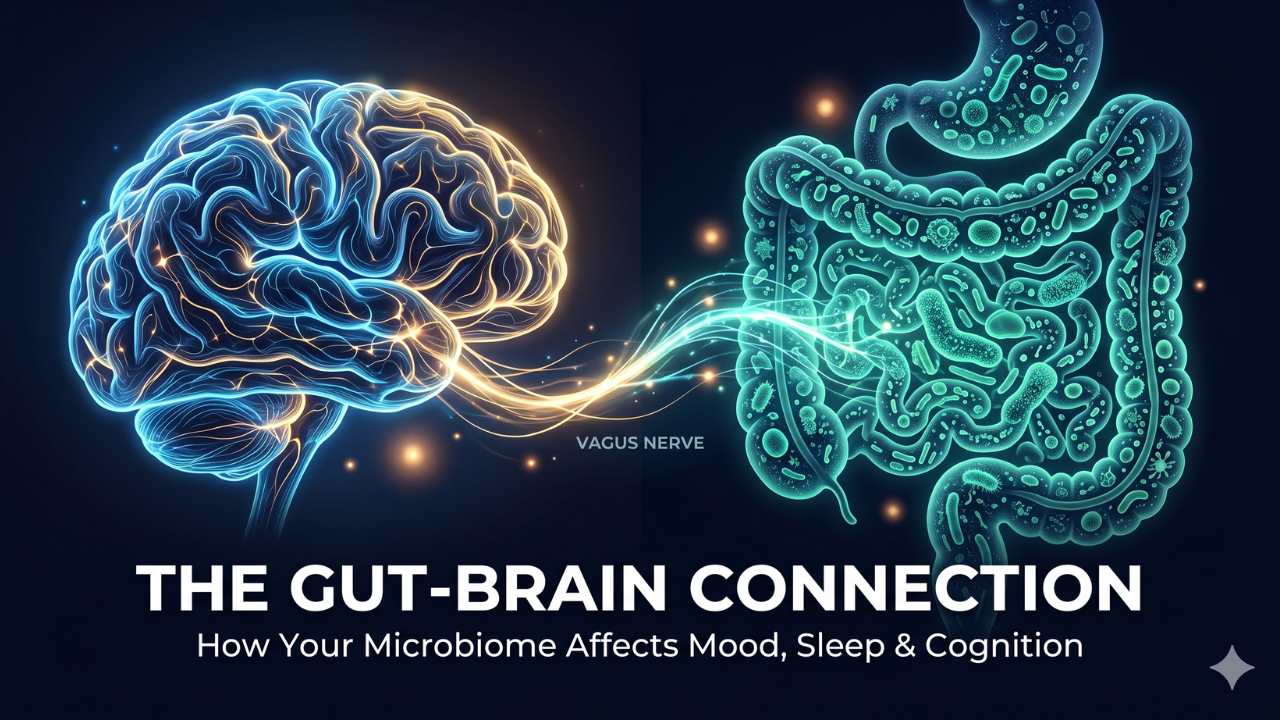
Perhaps the most revolutionary discovery in modern neuroscience isn’t in the brain at all — it’s in the gut. Your enteric nervous system contains over 500 million neurons, communicating bidirectionally with your brain via the vagus nerve in what scientists call the gut-brain axis.
Here’s the staggering part: approximately 90% of your body’s serotonin is produced in the gut — not the brain. Your gut microbiome directly influences serotonin production, dopamine availability, GABA synthesis, and cortisol regulation. When your microbiome is disrupted, your brain feels it — in the form of anxiety, depression, brain fog, and poor sleep.
Psychobiotics: The New Frontier
A groundbreaking category of probiotics called psychobiotics — strains specifically selected for their ability to influence brain chemistry — is emerging as one of the most exciting areas in mental health research. Clinical trials presented at Probiota 2025 demonstrated that specific Lactobacillus and Bifidobacterium strains significantly improved stress resilience, sleep quality, and mood scores in double-blind studies.
5. Prebiotic Foods That Feed Your Good Bacteria
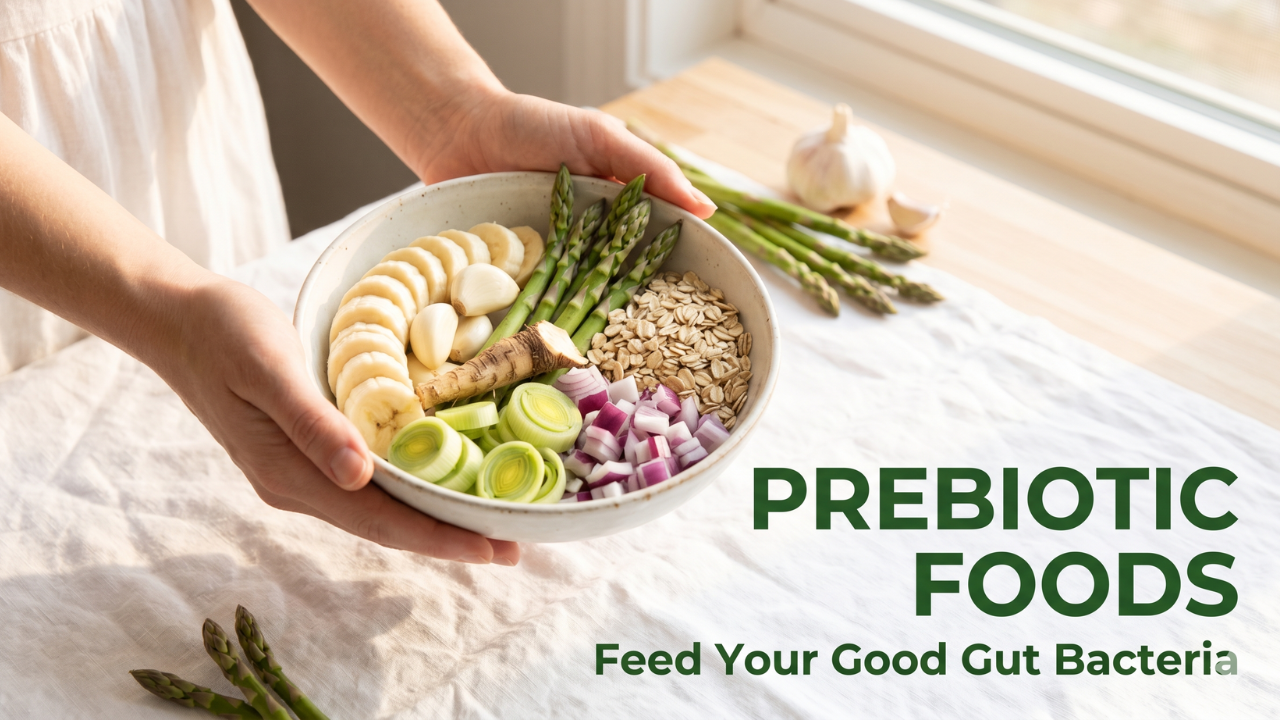
Probiotics get all the glory — but without prebiotics, they simply can’t thrive. Prebiotics are specialized plant fibers that selectively nourish beneficial bacteria, allowing them to proliferate and outcompete harmful species. Research from Magnitude Biosciences shows that searches for prebiotics are growing at twice the rate of probiotics — signaling a maturing consumer awareness.
Top Prebiotic Foods to Eat Daily
6. Warning Signs Your Gut Health Is Off
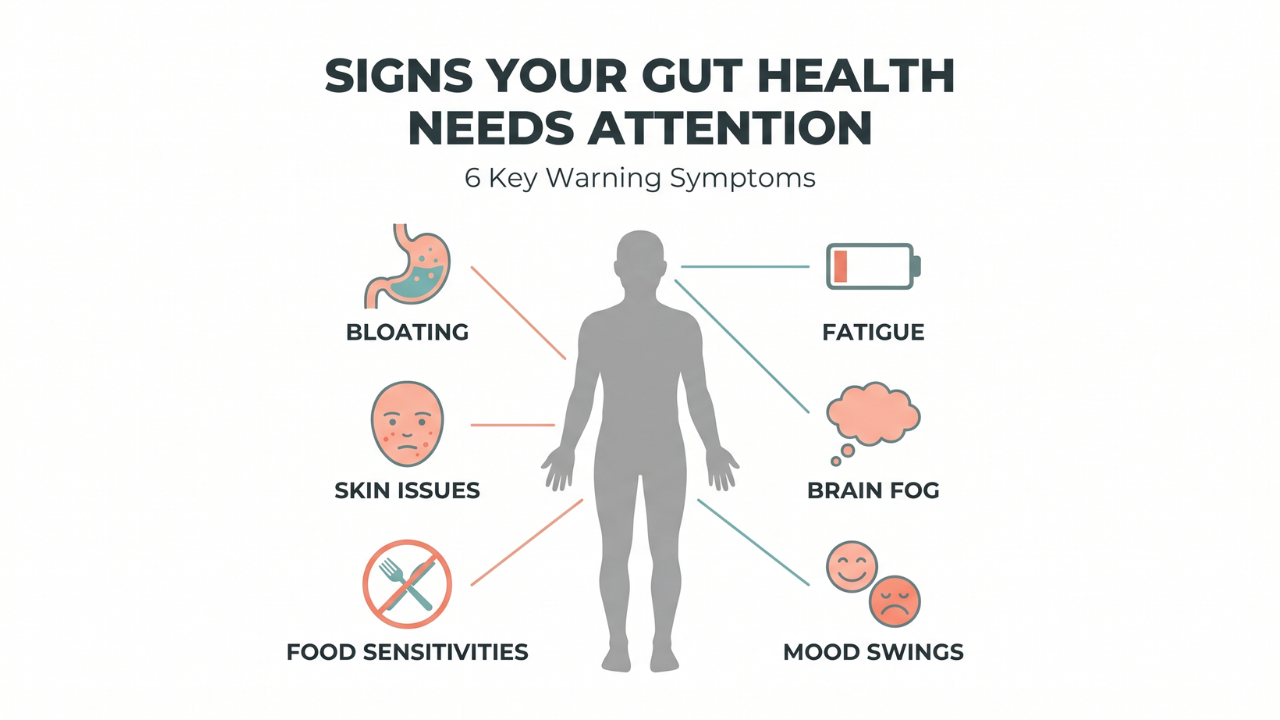
According to the American Gastroenterological Association, 40% of Americans report that digestive issues affect their daily quality of life. Yet many don’t connect their symptoms to gut health. Here are the key warning signals your body sends when your microbiome needs attention:
Persistent bloating after meals is one of the earliest and most reliable signs of gut dysbiosis or food intolerances driven by microbial imbalance.
When gut bacteria are out of balance, nutrient absorption suffers and mitochondrial function declines — leaving you perpetually tired despite adequate sleep.
Lipopolysaccharides (LPS) leaking from a permeable gut trigger neuroinflammation — directly impairing cognitive clarity and memory.
The gut-skin axis is real. Dysbiosis-driven inflammation surfaces on the skin — especially as hormonal disruptions from poor gut health manifest externally.
A sudden inability to tolerate foods you once ate without issue is a hallmark sign of increased intestinal permeability.
With 90% of serotonin produced in the gut, disrupted microbiome balance directly undermines emotional regulation and stress resilience.
7. The 30-Day Gut Reset Plan
Ready to transform your gut health? This evidence-based 30-day framework follows the “4R Protocol” used by functional medicine practitioners worldwide: Remove, Replace, Reinoculate, Repair.

Your gut health journey isn’t a sprint — it’s a lifelong investment in every system of your body, from immunity to mood to longevity. Start small, stay consistent, and trust the process. The science is on your side.
Stay dewy! 💚
Bookmark WellbeingPrime.com for more evidence-based wellness guides, and share this with someone whose gut health deserves a reset.
💡 Frequently Asked Questions
How long does it take to improve gut health?
Most people notice initial improvements in bloating and digestion within 2–4 weeks of consistent dietary changes and probiotic supplementation. However, meaningful microbiome remodeling — particularly healing a leaky gut or restoring full microbial diversity — typically requires 8–12 weeks of sustained effort. Full gut restoration can take 3–6 months depending on the severity of dysbiosis and lifestyle factors.
What are the best probiotics for gut health?
Look for multi-strain probiotics with at least 10–30 billion CFU containing clinically studied strains like Lactobacillus acidophilus, Lactobacillus rhamnosus GG, Bifidobacterium longum, and Bifidobacterium lactis. For mood and stress support, choose formulations including Lactobacillus helveticus and Bifidobacterium longum R0175. Always check that CFU counts are guaranteed through the expiration date, not just at time of manufacture.
What is leaky gut and how do I know if I have it?
Leaky gut (intestinal hyperpermeability) occurs when the tight junctions between gut epithelial cells become compromised, allowing undigested food particles and toxins to enter the bloodstream. Common indicators include chronic bloating, food sensitivities, skin conditions like eczema or acne, fatigue, brain fog, and joint pain. A functional medicine physician can confirm intestinal permeability through a lactulose/mannitol urine test or zonulin blood test.
Can gut health affect my mood and mental health?
Absolutely. The gut-brain axis is one of the most significant discoveries in modern neuroscience. Your gut produces approximately 90% of the body’s serotonin and 50% of its dopamine. Dysbiosis directly disrupts these neurotransmitter pathways, contributing to anxiety, depression, and brain fog. Emerging research on psychobiotics — probiotic strains specifically targeting the gut-brain connection — shows promising results for mood stabilization and stress resilience.
What foods should I avoid for better gut health?
The most damaging foods for gut health include ultra-processed foods containing emulsifiers (carrageenan, polysorbate-80), refined sugar and high-fructose corn syrup, artificial sweeteners (particularly saccharin and sucralose), excessive alcohol, and conventionally raised meat containing antibiotic residues. Gluten and dairy may also exacerbate symptoms for individuals with existing gut permeability issues or specific food sensitivities.
🌿 Weekly wellness, health & beauty insights — straight to your inbox
Free subscription · Cancel anytime