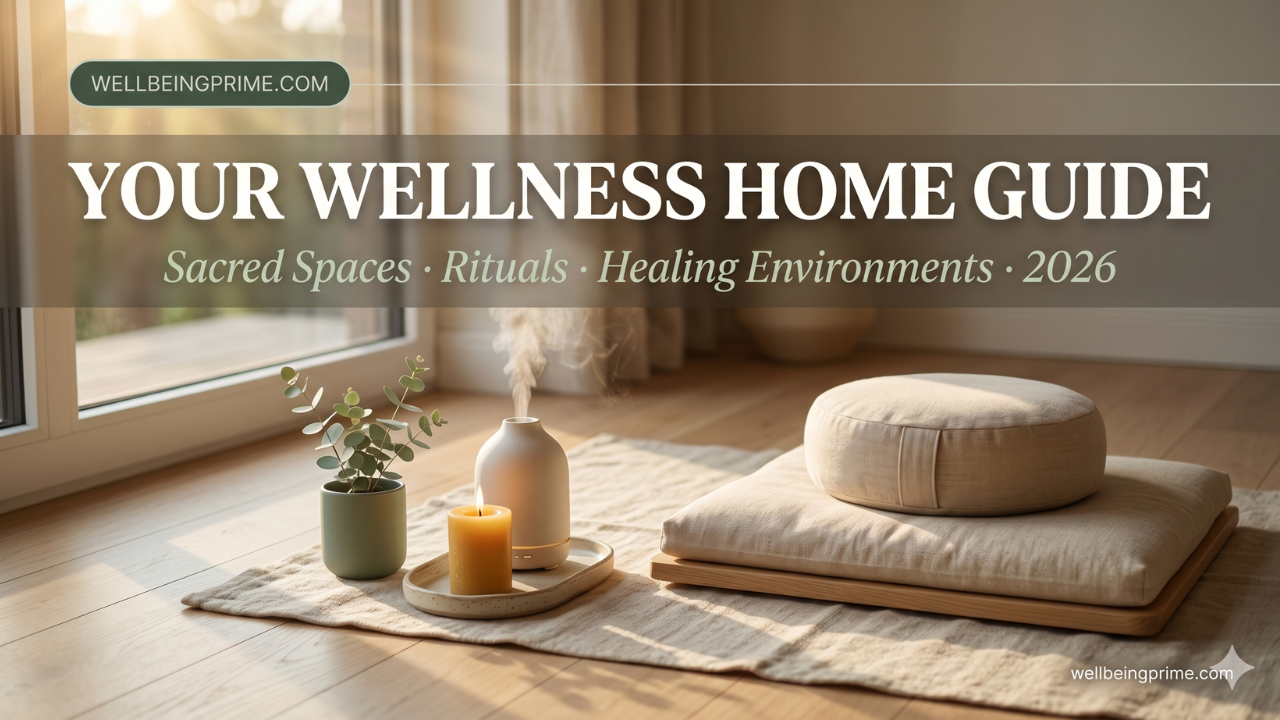
Wellness Home & Sacred Spaces: The Science-Backed Blueprint for Your Healing Sanctuary in 2026
Your home is the most powerful wellness tool you own. Science now confirms what ancient traditions always knew — the spaces we inhabit shape our biology, mood, and longevity. Here’s how to design yours with intention.
Close your eyes for a moment and imagine arriving home after a long day. Not to chaos and clutter — but to a space that breathes with you. A home that knows how to hold you.
This isn’t interior design fantasy. It’s the emerging science of wellness architecture — a field that sits at the intersection of environmental psychology, circadian biology, and the ancient wisdom of sacred space design. In 2026, the most health-conscious people aren’t just optimizing their supplements and sleep schedules. They’re redesigning their homes.
The data is striking: surveys show 63% of people now identify their home environment as a primary factor in their mental health, while the global home wellness market is projected to exceed $180 billion by 2027. Your living space isn’t neutral — it’s either actively healing you or quietly depleting you.
This guide gives you the science, the strategy, and the step-by-step rituals to transform your home into a genuine sanctuary — one room, one corner, one ritual at a time.
The Science of Sacred Spaces: Why Your Environment Is Your Biology
Environmental Psychology 101
The relationship between space and psyche is one of the most robustly researched areas in behavioral science. A landmark study published in the Journal of Environmental Psychology demonstrated that room temperature, ceiling height, natural light exposure, and sound levels measurably alter cognitive performance, emotional regulation, and even immune function.
When we feel “at home,” our parasympathetic nervous system — the “rest and digest” branch — activates. Cortisol drops. Heart rate variability improves. Oxytocin rises. The body begins the repair work it cannot do under stress. Conversely, cluttered, poorly lit, or overstimulating environments keep the nervous system in a low-grade fight-or-flight state, silently elevating inflammatory markers and disrupting sleep architecture.
The Sacred Space Principle
Across cultures — from Japanese ma (negative space philosophy) to Scandinavian hygge to the feng shui tradition — the concept of a deliberately curated, intentional living space appears universally. The modern neuroscience of this is clear: when the brain registers a space as “safe, purposeful, and restorative,” it releases a cascade of neurochemicals — dopamine, serotonin, GABA — that support healing, creativity, and emotional resilience.
You don’t need a mansion. You need intention.
Creating Your Sacred Corner: The $50 Sanctuary Starter
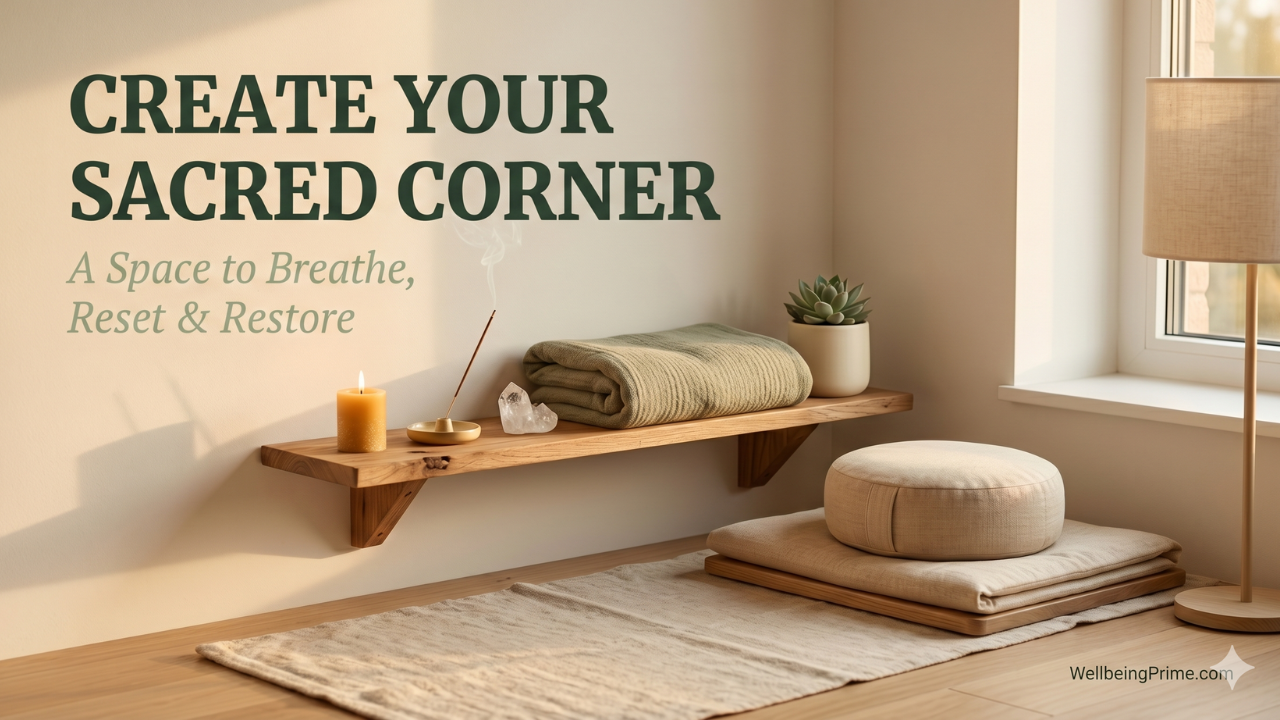
The most impactful change you can make today doesn’t require renovation. It requires 5 square feet and intention.
A sacred corner is a designated physical space — however small — that your nervous system learns to associate with rest, reflection, and restoration. Feng shui practitioners call it an “anchor space.” Cognitive behavioral therapists call it “environmental cueing.” The neuroscience calls it context-dependent memory consolidation: your brain literally changes its chemical output based on where you are.
The Three Non-Negotiables
1. Dedicated Texture: Place a natural-fiber mat, cushion, or folded blanket. The tactile signal tells your nervous system: this is different from the rest of the space. Organic cotton, wool, or linen work best — synthetic materials have been shown to subtly elevate skin conductance (a stress marker).
2. A Single Light Source: Avoid overhead fluorescents. Use a warm-toned candle (2,700K or below), a Himalayan salt lamp, or a small amber bulb. Research from the Lighting Research Center confirms that warm, low-intensity light reduces cortisol by up to 17% compared to cool overhead lighting within 20 minutes of exposure.
3. One Sensory Anchor: A scent (candle, incense, or diffuser), a small plant, or a meaningful object. The key is consistency — use the same scent every time you sit in this space. Over 4–6 weeks, your olfactory system creates a conditioned relaxation response. You’ll feel calmer the moment you catch the scent.
Amazon · Wellness Essentials
🛒 Recommended for your Sacred Corner & Yoga Practice
Start Free →
View on Amazon →
View on Amazon →
*Affiliate links. We earn a small commission at no extra cost to you.
Scent & Sensory Rituals: The Neuroscience of Your Home’s Fragrance
Of all five senses, smell has the most direct pathway to the brain’s limbic system — the seat of emotion, memory, and autonomic nervous system regulation. This is why a single scent can transport you instantly to a memory, shift your mood within seconds, or drop your heart rate without a single conscious thought.
The Scentscape Protocol: Hour-by-Hour Aromatherapy
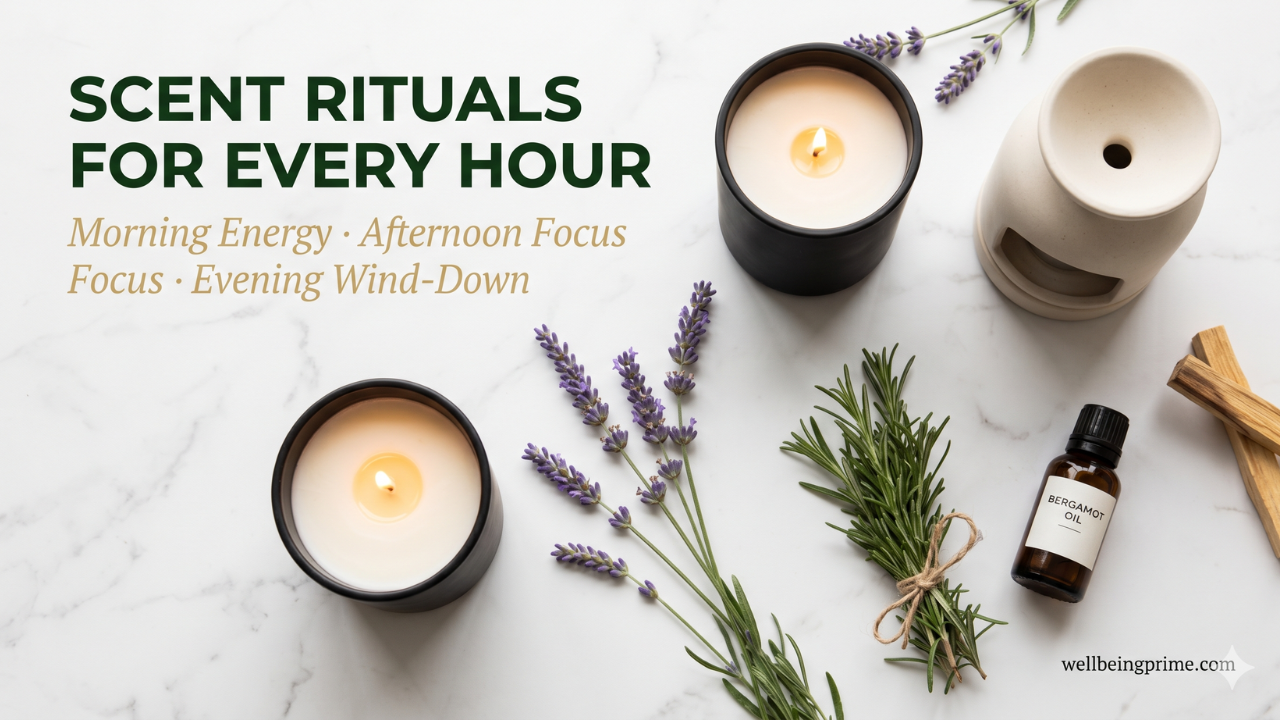
Forward-thinking interior designers are now talking about “scentscaping” — the intentional layering of fragrance to match the biological and emotional needs of each time of day. Here’s the evidence-based framework:
🌅 Morning (6–10am): Energizing & Clarifying
Citrus (bergamot, lemon, sweet orange) and eucalyptus. A 2019 study in Chemical Senses demonstrated that citrus aromatherapy increases alertness scores by 21% and reduces perceived fatigue within 10 minutes of exposure.
☀️ Midday (10am–3pm): Focus & Grounding
Rosemary, peppermint, and cedarwood. Rosemary aromatherapy has been linked to a 75% increase in speed of mental arithmetic in controlled studies (Northumbria University, 2016).
🌆 Evening (6–9pm): Transitional & Calming
Lavender, chamomile, and clary sage. Lavender’s anxiolytic effect is mediated through GABA receptor modulation — comparable in effect size to low-dose anxiolytic medications in multiple RCTs.
🌙 Bedtime (9pm+): Deep Sleep Induction
Vetiver, frankincense, and Roman chamomile. Vetiver in particular has shown significant sedative properties in EEG studies, increasing delta wave activity associated with deep sleep.
Biophilic Design: Rewiring Stress Through Nature Connection
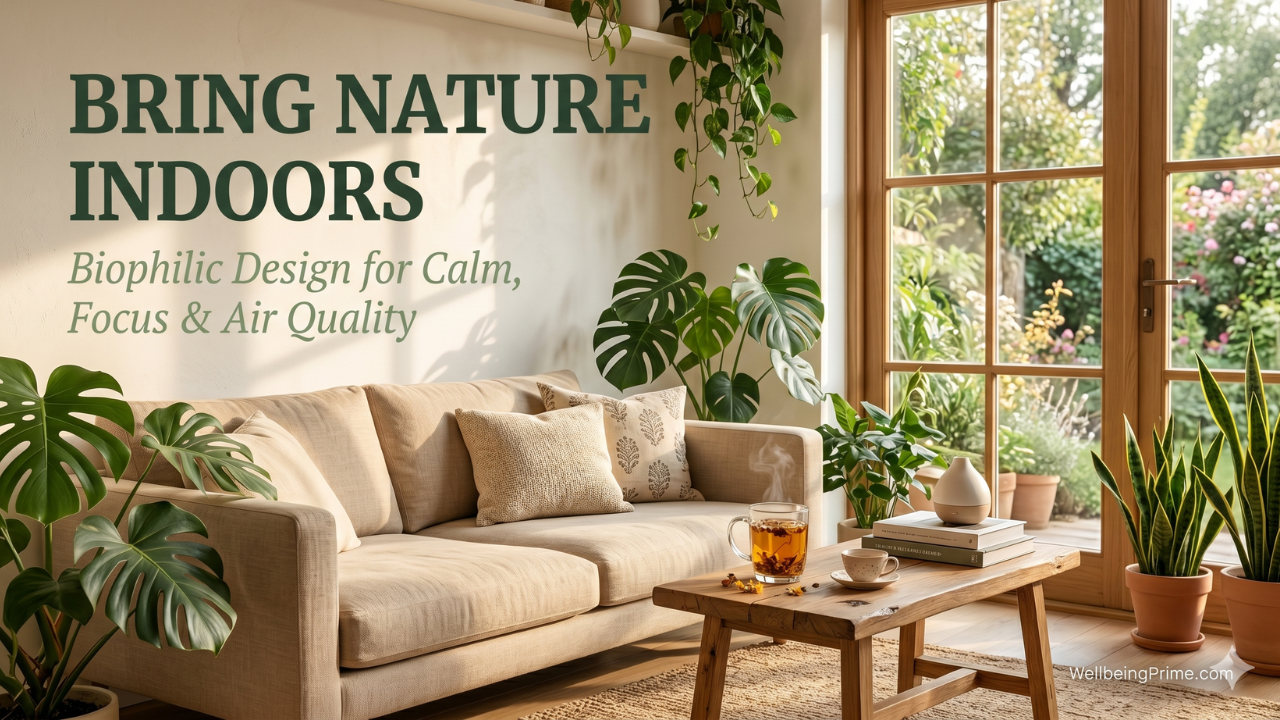
Biophilia — the human instinct to connect with nature — isn’t a poetic concept. It’s a neurobiological imperative. Edward O. Wilson’s foundational research established that humans have an evolutionary drive toward natural environments, and decades of subsequent research confirm that even simulated nature exposure — plants, natural materials, water sounds — measurably reduces cortisol, lowers blood pressure, and enhances prefrontal cortex activity (the seat of emotional regulation and decision-making).
The Biophilic Home Checklist
Living Plants
Pothos, snake plant, and peace lily are NASA-validated air purifiers. A minimum of 1 plant per 100 sq ft is the evidence-based recommendation for measurable air quality improvement.
Natural Materials
Wood, stone, linen, wool, and rattan. Studies show that tactile exposure to natural materials reduces sympathetic nervous system activation — measurable via skin conductance within minutes.
Water Elements
A small tabletop fountain or water sounds through a speaker have been shown to shift brainwave activity toward alpha waves — the relaxed-alert state optimal for healing and creativity.
Natural Light Access
63% of wellness-focused homeowners cite natural light as their top priority. Morning light exposure (10–30 min) anchors your circadian clock and increases morning cortisol awakening response by 50%.
Amazon · Biophilic Home Essentials
🌿 Transform your space with these nature-inspired essentials
View on Amazon →
View on Amazon →
View on Amazon →
*Affiliate links. We earn a small commission at no extra cost to you.
Circadian Home Design: Engineering Your Space for Better Sleep
Your circadian clock — the master biological timer governing sleep, metabolism, immune function, and hormonal cycles — is primarily set by light. And yet most modern homes are engineered entirely at odds with circadian biology: bright overhead lights until midnight, blue-spectrum screens in every room, blackout curtains blocking morning sun.
Room-by-Room Circadian Protocol
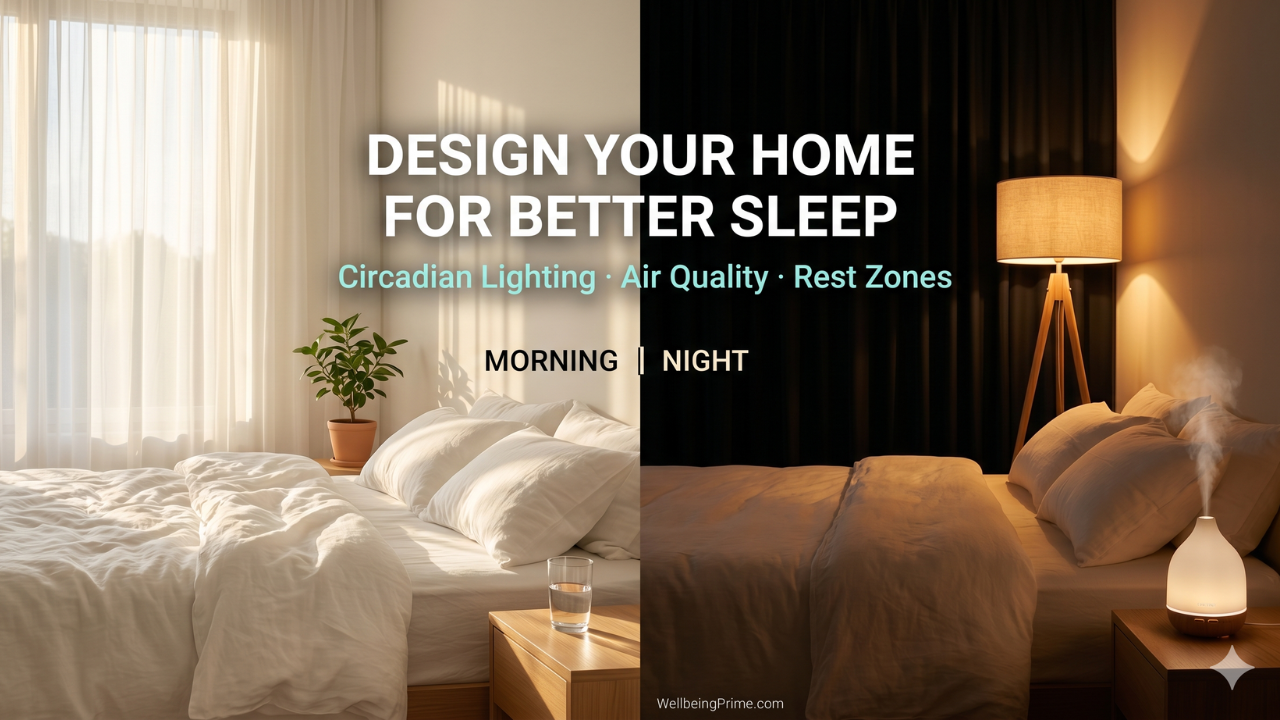
Bedroom: No screens within 60 minutes of sleep. Blackout curtains (but use a sunrise alarm clock to reintroduce light at wake time). Keep the room at 65–68°F (18–20°C) — the thermal sweet spot for deep sleep. Remove all ambient blue light sources. A 2022 meta-analysis in Sleep Medicine Reviews found that bedroom darkness below 3 lux was associated with 23% deeper NREM sleep stages.
Living Room: Invest in smart bulbs tunable from 6,500K (bright daylight blue for mornings) to 2,200K (candlelight amber for evenings). This single intervention has been shown to advance sleep onset time by an average of 22 minutes in sleep lab studies.
Kitchen: Bright, cool light at breakfast amplifies the cortisol awakening response (your body’s natural morning energizer). Consider a dedicated “sunrise breakfast zone” near a window or with a 5,000K+ daylight bulb.
Evening Rituals & Community: The Social Architecture of Home Wellness
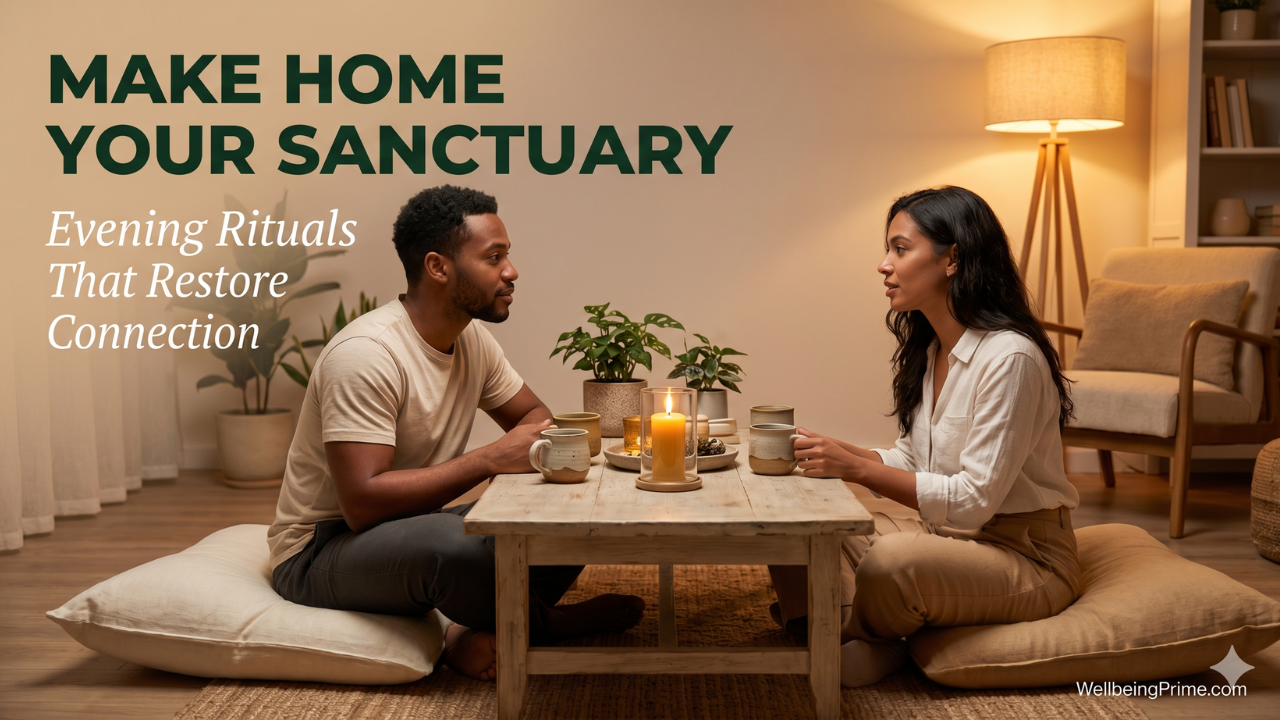
The Global Wellness Institute has identified social connection as “the most underrated design decision in home wellness.” And the science agrees: loneliness elevates inflammatory cytokines by up to 30%, impairs immune function, and is associated with a 26% increased risk of early mortality — comparable to smoking 15 cigarettes per day.
Your home can be designed to facilitate connection, not just individual optimization.
The 20-Minute Evening Ritual Blueprint
🕯️ 7:00 PM — Light Transition: Switch to warm amber lighting throughout the home. Light a candle in your sacred corner. Signal to your nervous system: the active day is ending.
🍵 7:15 PM — Sensory Ritual: Brew an herbal tea (chamomile, lemon balm, or passionflower). Hold the warm mug. Breathe the steam. This combination of warmth + scent + breath activates the parasympathetic system within 5 minutes.
📵 8:00 PM — Digital Sunset: All screens off or switched to the warmest night mode setting. Replace with reading, journaling, stretching, or conversation — activities that don’t emit blue light.
🧘 9:00 PM — Sacred Space Practice: 10 minutes in your corner. Meditation, breathwork, or simply sitting in silence. This single habit, practiced consistently, has been shown to reduce bedtime cortisol by 31% over 8 weeks (Journal of Alternative and Complementary Medicine, 2021).
Your 30-Day Wellness Home Transformation Plan
Foundation
Choose & clear your sacred corner. Add one candle + one cushion. Begin the evening lighting transition ritual daily.
Scent + Plants
Add your essential oil diffuser. Begin morning citrus + evening lavender protocol. Place 2–3 plants in key rooms.
Light Redesign
Install warm lighting in bedroom. Add sunrise alarm clock. Implement full digital sunset at 8 PM.
Integration
Layer all elements together. Add the evening herbal tea ritual. Begin 10-minute nightly sacred space practice.
Your Home Is Your Healer
Every intentional element you add — the candle, the plant, the warm light at dusk — is a message to your nervous system: you are safe here. You can rest now.
Stay dewy! 💚 — Bookmark WellbeingPrime.com for more evidence-based wellness guides.
💡 Frequently Asked Questions
Q: Do I need a big home to create a wellness sanctuary?
Not at all. The most powerful wellness spaces are often the smallest. A 5-square-foot corner with a cushion, a candle, and a consistent daily ritual outperforms an elaborate but rarely used wellness room. The key is consistency of use, not scale of space. Even a bedside table with a diffuser and a warm lamp qualifies as a sacred space if you use it with intention daily.
Q: Which indoor plants are safest if I have pets?
This is critical — many popular houseplants are toxic to cats and dogs. Safe, air-purifying options include spider plants (Chlorophytum comosum), Boston ferns, areca palms, and bamboo palms. Avoid peace lily, pothos, snake plant, and monstera if you have pets, as these are toxic to both cats and dogs according to the ASPCA.
Q: How quickly can I expect results from wellness home changes?
Some changes are near-immediate: warm lighting switches can reduce evening cortisol within 20 minutes of exposure. Scent conditioning takes 4–6 weeks of consistent use to build a strong conditioned relaxation response. Sleep quality improvements from circadian lighting redesign typically show measurable results within 2–3 weeks. The full biophilic and circadian transformation — practiced consistently — shows its most significant results at the 8–12 week mark, which aligns with how long it takes for circadian rhythm recalibration and nervous system retraining to consolidate.
🌿 Weekly wellness, health & beauty insights — straight to your inbox
Free subscription · Cancel anytime