Published on WellbeingPrime.com | Beauty Science Edition
The Silent Shift: Understanding Post-Menopausal Skin Biology
There’s a conversation happening in the most forward-thinking dermatology clinics and K-Beauty research labs from Seoul to Los Angeles — and it’s reshaping everything we thought we knew about aging skin. Post-menopause isn’t simply the absence of estrogen. It’s a profound biological recomposition of the skin’s architecture, one that demands an equally sophisticated response.
When estrogen levels drop — typically by 30% within the first year post-menopause and continuing to decline thereafter — the cascade of effects on skin is nothing short of seismic. Collagen synthesis decreases by approximately 30% in the first five years. Hyaluronic acid production, the very molecule responsible for that luminous, dewy bounce we associate with glass skin, plummets. The skin barrier weakens. Transepidermal water loss (TEWL) accelerates. Sebaceous gland activity diminishes, stripping away the natural lipid film that once regulated radiance and resilience.
But here’s what the beauty world’s most progressive voices are now proclaiming: this is not a sentence. It is an invitation — a call to recalibrate with the most biotechnologically advanced, plant-derived tools available. Chief among these? Plant-based exosomes.
What Are Plant-Based Exosomes — And Why Is Seoul Obsessed?
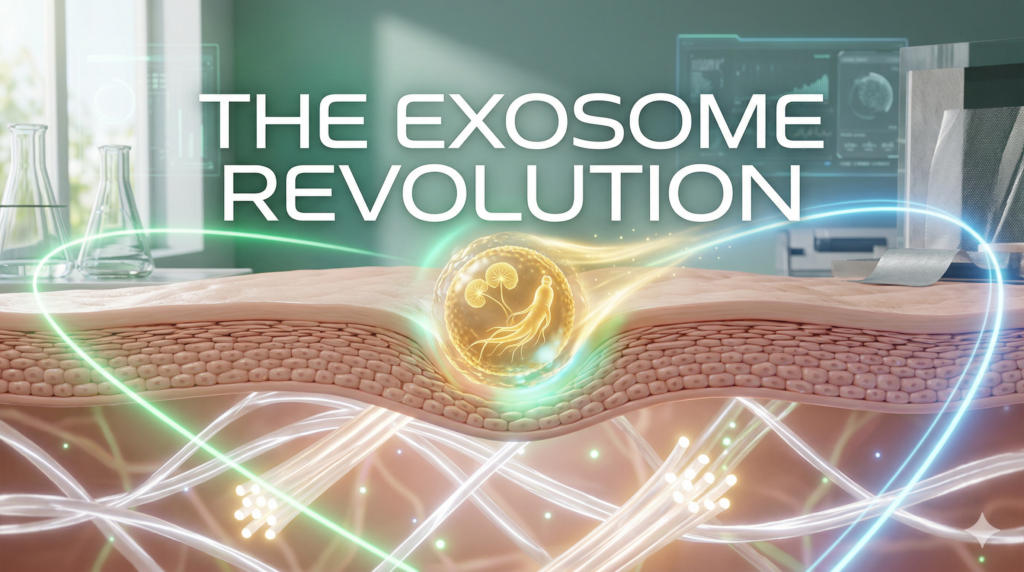
Exosomes are nanoscale extracellular vesicles — tiny biological messengers — originally studied in the context of human stem cell therapy. But a new wave of K-Beauty innovation, backed by serious biotech research, has shifted focus to plant-derived exosomes as a revolutionary, ethically sustainable alternative.
The Science of Cellular Communication
Think of exosomes as the skin’s internal courier system. These lipid bilayer nanoparticles (ranging from 30 to 150 nanometers in diameter) carry a remarkable cargo: proteins, lipids, messenger RNA (mRNA), and microRNAs (miRNAs) capable of modulating gene expression in recipient cells. When applied topically, plant-derived exosomes penetrate the epidermis with extraordinary efficiency — far surpassing traditional macromolecules that often fail to breach the skin barrier.
Plant sources currently generating the most scientific excitement include:
- Ginseng-derived exosomes (Panax ginseng): Rich in ginsenosides and adaptogenic compounds, these exosomes have demonstrated the ability to upregulate collagen I and III synthesis, directly addressing the post-menopausal collagen deficit.
- Centella Asiatica (Cica) exosomes: A Seoul-born staple, Cica exosomes carry asiaticoside and madecassoside cargo with documented wound-healing, antifibrotic, and barrier-restoration properties.
- Grape-derived exosomes (Vitis vinifera): Packed with resveratrol-adjacent compounds and antioxidant polyphenols, these nanoparticles combat the oxidative stress that accelerates post-menopausal inflammaging.
- Broccoli sprout exosomes: Sulforaphane-carrying vesicles that activate the NRF2 antioxidant pathway — a mechanism increasingly linked to longevity and skin resilience.
- Rose stem cell exosomes: Elevated in Seoul’s luxury skincare scene, these carrier vesicles deliver rose petal-derived phytochemicals with potent anti-inflammatory and moisture-retaining activity.
The elegance of plant-based exosomes lies in their biocompatibility. Unlike synthetic actives, these vesicles communicate in the language the skin already speaks — biological signaling — without triggering inflammatory responses.
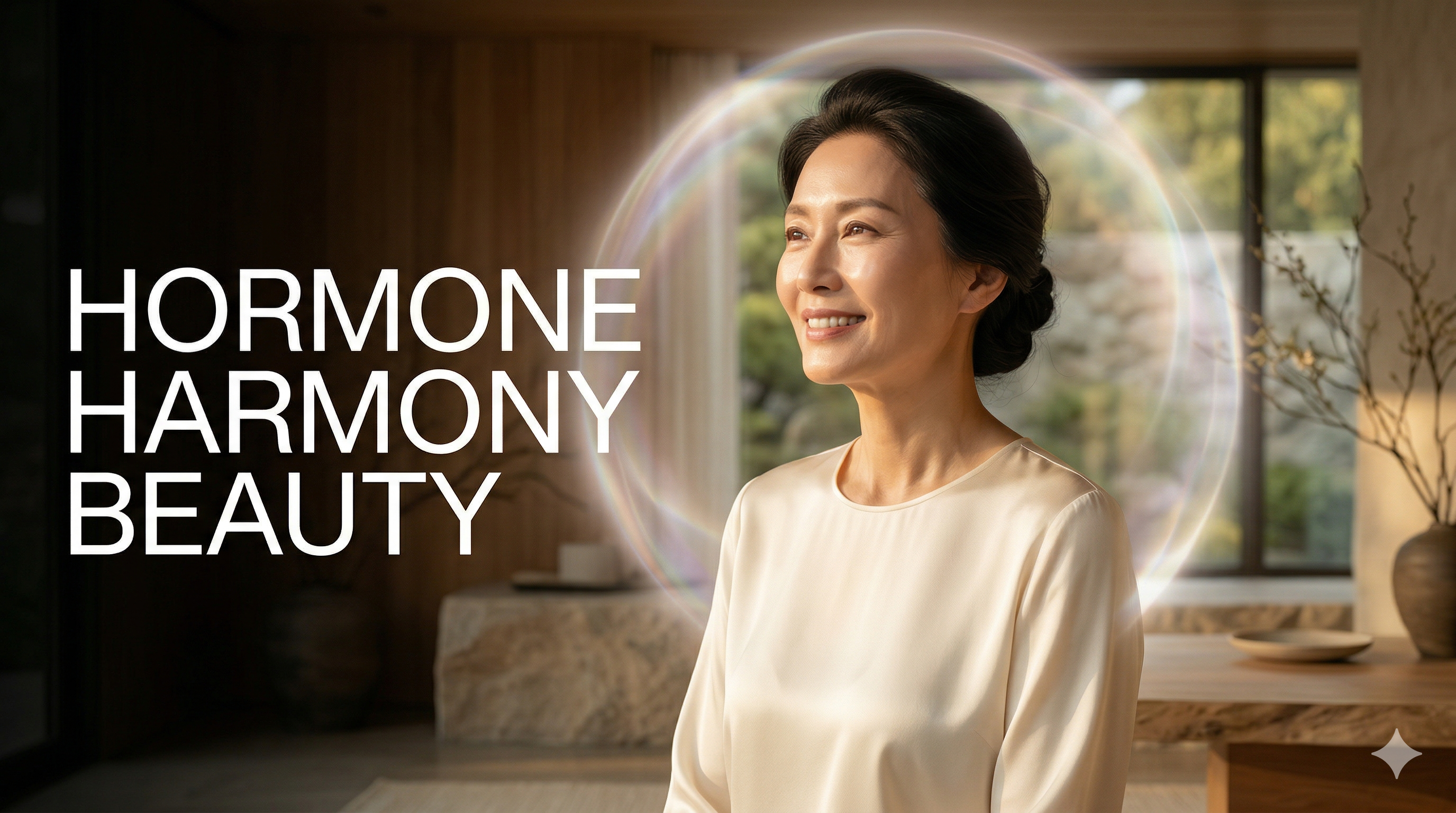
Hormone Harmony: The Missing Link in Post-Menopausal Skincare
The concept of hormone harmony in topical skincare is not about replacing estrogen. It is about working intelligently alongside the hormonal landscape that exists — supporting, adapting, and compensating through carefully chosen bioactives.
Phytoestrogens: Nature’s Hormonal Diplomats
Phytoestrogens are plant-derived compounds structurally similar to estradiol, capable of binding to estrogen receptors (ERα and ERβ) in skin cells. Unlike systemic hormone replacement therapy (HRT), topical phytoestrogens act locally and with considerably gentler receptor affinity — making them a compelling option for those seeking hormone-supportive skincare without systemic intervention.
Key phytoestrogen actives with skin-specific evidence:
Isoflavones (Soy, Red Clover): Multiple clinical studies — including a landmark trial published in the British Journal of Dermatology — have demonstrated that topical soy isoflavones improve skin thickness, elasticity, and collagen content in post-menopausal women over 12 to 24 weeks of use. The active compound, genistein, has been shown to stimulate procollagen synthesis and inhibit matrix metalloproteinases (MMPs) — the enzymes that degrade the skin’s structural matrix.
Pueraria Mirifica (Kwao Krua): A botanical powerhouse native to Thailand and well-integrated into Seoul-influenced wellness circles, this plant contains miroestrol and deoxymiroestrol — phytoestrogens with some of the highest receptor affinity of any botanical compound. Research points to its ability to improve dermal density and reduce the microatrophy commonly seen in post-menopausal skin.
Resveratrol: While known primarily as an antioxidant, resveratrol also demonstrates estrogenic receptor activity and has been clinically associated with improved skin texture and the suppression of UV-induced pigmentation — a particularly relevant concern post-menopause, when melanocyte regulation becomes dysregulated.
Adaptogens and the Cortisol-Skin Connection
Hormone harmony extends beyond estrogen. Post-menopause often brings dysregulated cortisol rhythms — a phenomenon with real, measurable consequences for skin. Elevated cortisol accelerates collagen breakdown, impairs barrier function, and amplifies the inflammatory cascade responsible for redness, sensitivity, and breakouts that paradoxically affect skin long after the teenage years.
Ashwagandha (Withania somnifera): Topically applied ashwagandiols and withanolides have demonstrated anti-cortisol adaptogenic effects at the skin cell level, reducing stress-induced glycation and supporting barrier lipid synthesis.
Schisandra Berry: An emerging hero in K-Beauty’s botanical pharmacopeia, Schisandra’s lignans (schisandrin, gomisins) modulate skin’s neuroendocrine stress response while delivering potent antioxidant and anti-inflammatory activity.
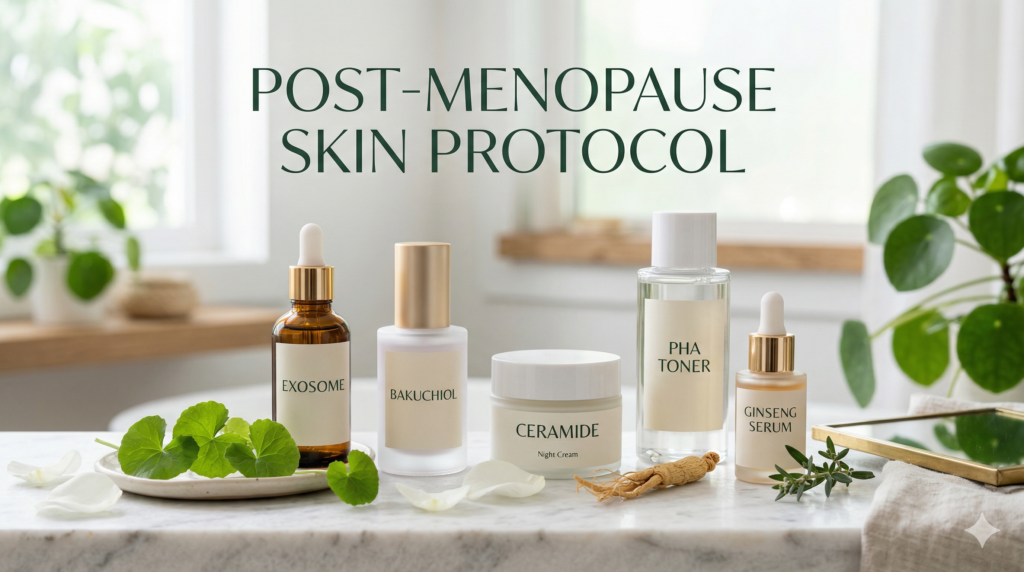
Building the Ultimate Post-Menopausal Skin Protocol: A Layered Approach
Inspired by K-Beauty’s famed multi-step philosophy — itself rooted in the principle that skin health is cumulative, not instantaneous — the following protocol integrates plant-based exosomes and hormone-harmonizing actives with dermatological precision.
Step 1: Double Cleanse with Barrier Preservation
Post-menopausal skin demands a pH-balanced, lipid-replenishing cleanse. Oil cleansers infused with ceramide precursors and plant squalane are non-negotiable. Follow with a gentle water-based cleanser featuring amino acid surfactants (sodium lauroyl glutamate, sodium cocoyl glycinate) — never sulfates.
Step 2: The Toning Phase — Essence First
The Korean first essence step is where transformation begins. Look for formulations featuring:
- Fermented bifida filtrate or galactomyces for microbiome optimization
- Niacinamide (4–5%) for barrier lipid synthesis and post-inflammatory hyperpigmentation
- Low molecular weight hyaluronic acid for immediate transepidermal hydration
Step 3: The Exosome Serum — The Star of the Routine
This is where plant-based exosome technology earns its place. Applied to damp skin before heavier occlusives, an exosome serum works at its most effective when the skin’s hydration gradient supports cellular uptake.
Look for formulations with documented delivery systems — phospholipid encapsulation, liposomal carriers, or PLGA (poly lactic-co-glycolic acid) microspheres — that protect exosome integrity and enhance dermal penetration.
Pro tip from Seoul’s leading dermatology clinics: pair your exosome serum with a low-frequency facial massage device or gua sha ritual. The mechanical stimulation enhances lymphatic circulation and amplifies the diffusion gradient for nanoparticle uptake.
Step 4: Phytoestrogen Treatment Layer
A dedicated isoflavone or phytoestrogen concentrate applied nightly allows sustained receptor engagement. Soy isoflavone concentrations between 0.5–5% are the evidence-backed sweet spot. Avoid layering with retinol on the same evening — both actives are potent, and competition for epidermal renewal pathways can compromise tolerance, especially in a skin barrier already working harder due to hormonal shifts.
Step 5: Barrier-Sealing Moisturizer
The skin’s altered lipid profile post-menopause means the ceramide ratio itself changes. A moisturizer formulated with the physiological ratio of ceramides (ceramide NP, AP, EOP), cholesterol, and fatty acids is dermatologically critical — not a luxury. Brands drawing on the research of Dr. Peter Elias (UCSF’s late barrier biology pioneer) have built formulations that specifically address this ceramide stoichiometry.
Step 6: SPF — The Non-Negotiable
Post-menopausal skin is more photosensitive and more prone to UV-induced DNA damage due to reduced melanocyte activity and thinner epidermis. Broad-spectrum SPF 50+ with zinc oxide (a phytoestrogen-compatible mineral filter) is the single most evidence-backed anti-aging investment available, full stop.
Glass Skin Goals in Post-Menopause: Is It Actually Achievable?
Glass skin — that luminous, semi-translucent, poreless complexion synonymous with Seoul’s beauty aesthetic — is not a skin type. It is a skin condition that can be pursued at any hormonal stage, with appropriately calibrated tools.
For post-menopausal skin specifically, glass skin pursuit involves:
Hydration stacking: Multiple lightweight layers of humectants (glycerin, betaine, sodium PCA) mimic the moisture density previously maintained by estrogen-stimulated HA synthesis.
Lipid occlusion: Squalane, bakuchiol-infused facial oils, or ceramide-rich sleeping masks seal hydration and create the light-refracting smoothness associated with the glass skin effect.
Exfoliation recalibration: Post-menopausal skin cell turnover slows significantly — from approximately 28 days to 40–60 days. Gentle chemical exfoliation (lactic acid 5–8%, mandelic acid, or polyhydroxy acids like gluconolactone) is essential for clearing the dead cell accumulation that dulls radiance. However, frequency must be reduced: 2–3 times weekly maximum, never in combination with retinoids.
Bakuchiol as a Retinol Alternative: Increasingly validated by peer-reviewed dermatological literature, bakuchiol (derived from Psoralea corylifolia) stimulates retinoid receptor pathways without the irritation, photosensitivity, or barrier disruption associated with retinol — making it an ideal night active for the post-menopausal skin profile.
Comparative Skincare Routine Analysis: Traditional vs. Exosome-Enhanced Protocol
| Parameter | Traditional Anti-Aging Routine | Exosome-Enhanced Hormone Harmony Protocol |
|---|---|---|
| Active Delivery | Surface-level (epidermis) | Nanoparticle-mediated dermal penetration |
| Collagen Stimulation | Retinol, peptides | Exosome-signaled + phytoestrogen upregulation |
| Barrier Support | Ceramides | Ceramides + adaptogen barrier modulation |
| Hormonal Consideration | None | Phytoestrogen receptor targeting |
| Microbiome Integration | Optional probiotic | Fermented actives + barrier restoration synergy |
| Inflammation Management | Niacinamide, antioxidants | Cica exosomes + adaptogenic cortisol modulation |
The Inflammation Factor: Inflammaging and the Post-Menopausal Skin Paradox
One of the most clinically significant — and underappreciated — changes in post-menopausal skin is inflammaging: the chronic, low-grade inflammatory state that accelerates biological skin aging. Estrogen, it turns out, was a potent anti-inflammatory regulator. Its withdrawal removes a critical brake on inflammatory cytokine production, leaving skin more reactive, sensitive, and structurally vulnerable.
Plant-based exosomes address this directly. The miRNA cargo delivered by plant-derived vesicles has been shown in in-vitro models to downregulate NF-κB — the master inflammatory signaling pathway — and suppress pro-inflammatory interleukins (IL-1β, IL-6, TNF-α). This is anti-inflammaging at the cellular communication level, not simply surface soothing.
Combined with microbiome-supportive prebiotics (inulin, beta-glucan) that maintain the skin’s immune homeostasis, this creates a comprehensive anti-inflammaging ecosystem within your skincare routine.
Ingredient Spotlight: The Post-Menopausal Power Shelf
For those curating the ultimate post-menopausal skincare regimen, these are the evidence-backed actives worth investing in:
Bakuchiol — The retinol alternative for estrogen-depleted skin. Clinically validated for collagen stimulation and fine line reduction without irritation.
Genistein (Soy Isoflavone) — The phytoestrogen with the most robust dermatological evidence. Seek topical concentrations of 1–5%.
Centella Asiatica Exosome Complex — Seoul’s contribution to the exosome era. Barrier restoration + anti-inflammaging in one vesicle payload.
Niacinamide — The workhorse active. Barrier ceramide synthesis, melanin transfer inhibition, sebum regulation, and anti-inflammatory activity make it irreplaceable.
Peptides (Matrixyl 3000, Argireline) — Signal peptides mimic growth factor activity, directing fibroblasts to synthesize collagen and elastin even in an estrogen-depleted environment.
Zinc Oxide — Not just SPF. Topical zinc supports wound healing enzymes and has anti-androgenic activity relevant to the testosterone-relative predominance that characterizes the post-menopausal hormonal landscape.
Ceramide NP/AP/EOP complex — The three-ceramide physiological ratio is non-negotiable for barrier restoration.
The Holistic Dimension: Inside-Out Hormone Harmony
No topical protocol operates in isolation. Dermatologists and functional medicine practitioners now align on a foundational truth: skin is an endocrine organ, and what happens internally reflects visibly externally.
Phytoestrogen-rich nutrition — Fermented soy (miso, tempeh), flaxseed, and legumes support the gut microbiome’s equol-producing capacity. Equol, a soy isoflavone metabolite, has demonstrated superior skin benefits to unmetabolized genistein in studies of women with specific gut microbiome profiles.
Omega-3 fatty acid supplementation — EPA and DHA directly support barrier lipid synthesis, reduce the prostaglandin-driven inflammation in post-menopausal skin, and improve the skin’s natural oil composition.
Collagen peptide supplementation — Hydrolyzed marine collagen (2.5–10g/day) has accumulated meaningful evidence for improving skin elasticity and hydration — complementing rather than duplicating topical collagen strategies.
Sleep optimization — Growth hormone — the master repair signal — is predominantly secreted during deep sleep. Post-menopausal disruption of sleep architecture is not merely fatiguing; it materially impairs nocturnal skin regeneration.
Stay dewy!
The future of post-menopausal skincare is not about fighting time — it’s about speaking the skin’s own language with unprecedented scientific fluency. Plant-based exosomes, phytoestrogen harmony, and the layered wisdom of K-Beauty philosophy represent the most compelling convergence of nature and biotechnology available to us right now. Your skin at this stage isn’t less deserving of radiance. It’s simply inviting a smarter conversation.
For deeper dives into K-Beauty science, dermatological ingredient breakdowns, and glass skin tutorials tailored to every skin stage, subscribe to the Dewyfile YouTube channel — where science meets soul, one dewy layer at a time.
💡 Frequently Asked Questions (FAQ)
Q1: What exactly are plant-based exosomes and how do they differ from stem cell exosomes?
Plant-based exosomes are nanoscale lipid vesicles naturally secreted by plant cells, carrying biological cargo including proteins, lipids, and microRNAs. Unlike human or animal stem cell-derived exosomes (which raise ethical and regulatory concerns), plant-derived exosomes are sustainably sourced, have a favorable safety profile, and have demonstrated skin penetration and cellular signaling activity in in-vitro studies. Common sources include ginseng, Centella Asiatica, grape, and rose — each delivering a unique bioactive payload.
Q2: Can phytoestrogen skincare replace hormone replacement therapy (HRT) for skin concerns?
No — topical phytoestrogens are not a substitute for systemic HRT and do not address systemic menopausal symptoms. However, for localized skin concerns such as collagen loss, skin thinning, dryness, and elasticity reduction, topical phytoestrogens (particularly soy isoflavones/genistein at concentrations of 0.5–5%) have clinical evidence supporting improvement in dermal density and collagen content. Always consult your dermatologist or gynecologist for a holistic post-menopausal health plan.
Q3: What are the potential side effects or sensitivities to watch for with exosome serums?
Plant-based exosome serums are generally well-tolerated. Potential sensitivities are typically linked to carrier ingredients (emulsifiers, preservatives, fragrance) rather than the exosomes themselves. Introduce any new exosome product gradually — patch test for 48 hours on the inner arm before facial application. Those with known plant allergies (e.g., soy, ragweed for Cica cross-reactivity) should review formulation labels carefully. Avoid combining with strong acids or retinoids in the same application step to prevent potential barrier disruption.
Q4: How long does it take to see visible results from a plant-based exosome and phytoestrogen protocol?
Clinical studies on topical phytoestrogens typically report measurable improvements in skin thickness, hydration, and elasticity at 12–24 weeks of consistent daily use. Exosome-enhanced serums may show more rapid results in hydration and surface texture (4–8 weeks), while structural collagen improvements require longer commitment. Consistency and layering order matter enormously — results compound over time with a well-maintained protocol.
🌿 Weekly wellness, health & beauty insights — straight to your inbox
Free subscription · Cancel anytime