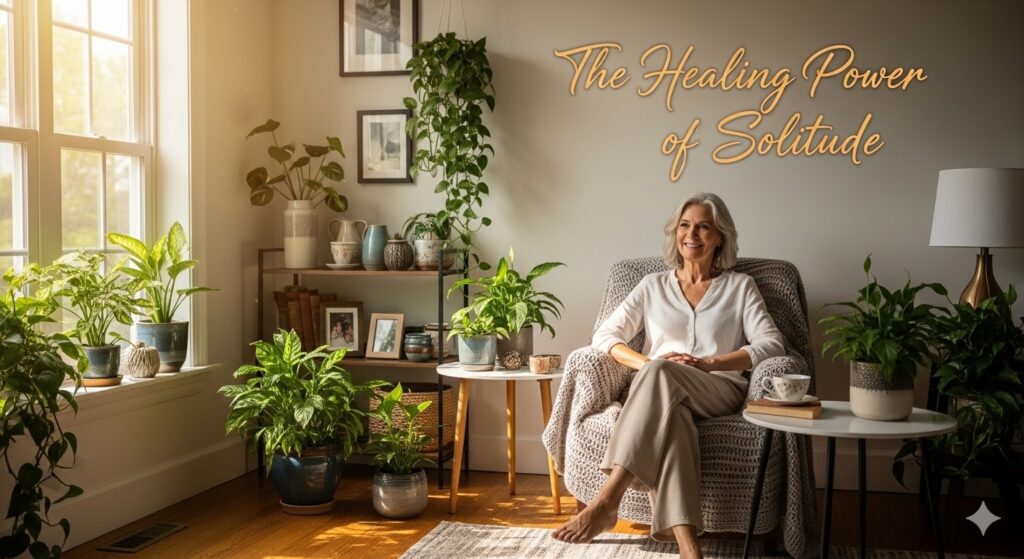
Have you ever met a woman in her seventies who lives completely alone, eats birthday cake for breakfast, talks back to the television, and looks like she is having the absolute time of her life? If you haven’t, you are missing out on witnessing one of the most beautiful awakenings a human being can experience. I met three such women just last week, and let me tell you—they possess more spark, clarity, and vital energy than most twenty-somethings fueled by double espressos.
For a long time, society has painted a rather gloomy portrait of living alone after sixty, seventy, or eighty. The cultural narrative often leans toward words like sad, quiet, or lonely. But what I’ve learned from some of the wisest, funniest, and most unfiltered women I know is that living alone isn’t the end of the story. For a vast and growing number of older women, it is the profound beginning of their best, most authentic chapter yet.
Living in California, especially around the serene coastal communities where wellness and holistic living are woven into the fabric of daily life, I’ve seen a beautiful shift in how older women embrace their independence. They are turning solitude into a sacred practice. Today, we are going to explore exactly why living alone is a masterclass in holistic healing—through real stories, hard-earned wisdom, and a few midnight kitchen confessions where there is absolutely no one around to judge.
Reclaiming Your Nourishment: The Kitchen as a Mindful Canvas
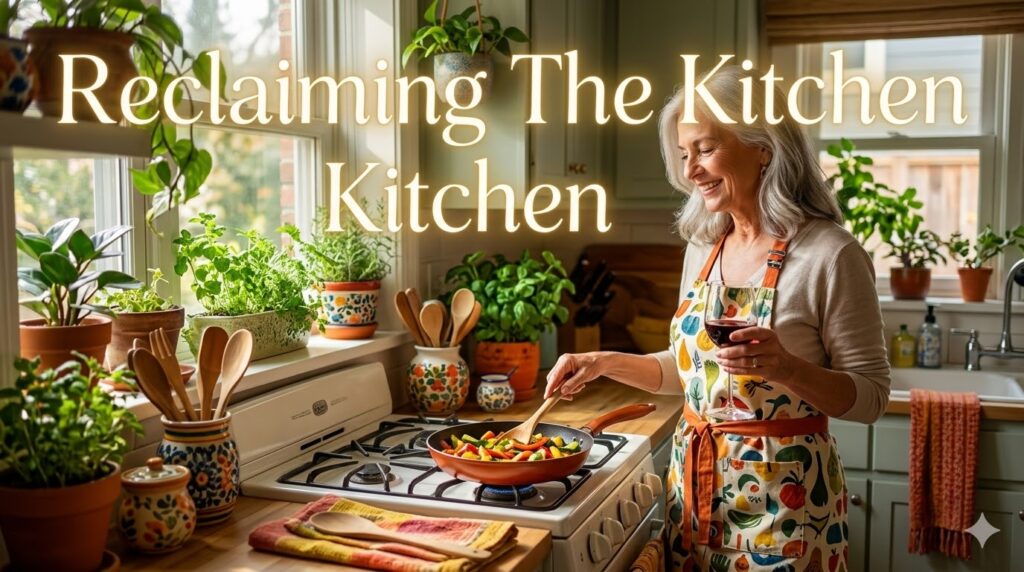
For decades, many women have viewed the kitchen not as a place of personal nourishment, but as a site of negotiation and service. When you live alone, however, food becomes an expression of pure, unadulterated joy. You can finally break all the culinary rules and reclaim the kitchen as your own mindful canvas.
Let me introduce you to Diane. At sixty-eight, she has been divorced for five years and lives in a sunlit, cozy house with a squeaky screen door and a crooked little spice rack she built entirely by herself. When I visited her recently, she greeted me wearing an apron that read, “Don’t ask me what’s for dinner,” while holding a glass of wine that she proudly proclaimed was her “sass seasoning.”
She waved me into her kitchen and declared, “This is my kingdom now. No bland meatloaf, no heartburn-inducing chili, no passive-aggressive comments about quinoa.”
For the majority of her adult life, Diane cooked for someone else. She cooked for a man who liked his eggs scrambled just so, who thought broccoli was entirely too green, and who insisted that dinner had to be served at 6:00 PM on the dot. Now? Diane eats when her body tells her it’s hungry, not when the clock dictates it. She experiments with holistic, vibrant recipes that her ex-husband couldn’t even pronounce—rich shakshuka, fragrant chickpea curry, and a deeply comforting drunken mushroom soup that involves generous splashes of sherry and a lot of storytelling.
She is far from alone in this culinary liberation. Across wellness communities and online forums, hundreds of older women are echoing the same sentiment: I am finally cooking for me. Some enjoy mindful eating while standing at the kitchen counter, gazing out the window. Others bake snickerdoodles at midnight simply because the mood strikes. One woman proudly declared that she eats a slice of birthday cake for breakfast every July, because why not?
When you live alone, your kitchen transforms from a battleground of compromises and garlic-level debates into a sanctuary of curiosity. Every bite becomes an act of self-care. It’s no longer just about the food; it’s about finally getting the full, uninterrupted taste of your own life.
Curating Your Personal Sanctuary Without Compromise
Your home is an extension of your spirit. When you live alone, you possess the ultimate freedom to decorate however your soul desires, including embracing all the wonderfully eccentric things that make you smile. You no longer have to explain your hobbies or your aesthetic choices to anyone.
I never fully realized how much women were made to feel “weird” for liking the things they loved until I started listening to their unedited stories. Take Susan, a seventy-two-year-old who lives alone in a quiet town. She has turned her living room into what she affectionately calls her “mini-museum of dead celebrities.” We are talking vintage Elvis figurines, beautifully framed Marilyn Monroe magazine covers, and a life-sized cardboard cutout of Frank Sinatra that startles guests every time they round the corner.
“My late husband hated it,” she told me with a gentle laugh. “He said it was creepy. But me? I say Frank is better company than most folks I know.” There is something profoundly beautiful in her rebellion. When you live alone, you don’t owe anyone an aesthetic explanation. You don’t need permission to collect stamps, build birdhouses, or cross-stitch delightfully sarcastic sayings onto velvet pillows.
The “Velvet Cave” and the Healing Power of Unapologetic Design
Consider Ellie, a sixty-nine-year-old widow who transformed her primary bedroom into what she proudly calls her “velvet cave.” It features deep purple velvet curtains, a quirky lamp shaped like a flamingo, and walls covered in vintage 1970s album covers. Her late husband preferred neutrals, beige walls, and “good taste.” Ellie prefers personality, color therapy, and funk.
“My house used to look like a sterile hotel lobby,” she shared. “Now it looks like my soul got drunk and redecorated. And I love it.”
In holistic living, we often talk about how our environment impacts our nervous system. Being surrounded by objects, colors, and textures that bring you genuine joy is a legitimate form of therapeutic healing. There is something downright restorative about letting loose in your own space. It is not merely about interior design; it is about reclaiming the right to be seen by yourself, for yourself. When you stop decorating for someone else’s approval, your home becomes a mirror. And suddenly, you start deeply liking the woman you see reflected back.
Releasing the “Emotional Concierge”: The Somatic Healing of Unclenching
One of the most profound holistic benefits of living alone is the sudden, beautiful release from performing the traditional “wife’s role”—especially when you are exhausted.
I once asked a woman in her seventies what surprised her the most about living alone after her husband passed away. Without a second of hesitation, she said, “I didn’t realize how much of my life was spent being an emotional concierge.”
That phrase is striking. Emotional concierge. It perfectly describes the exhausting, invisible labor of always anticipating someone else’s needs. Playing the peacekeeper, the cheerleader, the nurse, the cook, the therapist, and the event planner—all rolled into one single human being. And doing it all even when your own body was aching, and your own spirit was depleted.
Even in good marriages with sweet, dependable partners, there is a constant undertow of unspoken expectations. Having dinner ready. Remembering his medications. Scheduling the dentist appointments. Laughing at the same joke he has been telling since 1992. It isn’t always miserable—sometimes it is incredibly warm and familiar—but it is never optional.
The Physical Reality of Letting Go
When women finally live alone, the silence in their homes is filled with something incredibly rare: total, unapologetic relief. They don’t have to explain their shifting moods. They don’t have to be “on.” There is no forced small talk, no checking if someone else’s socks made it into the laundry hamper, and no suffering through the evening news just to feel connected. They get to rest. Truly, holistically rest, without a single ounce of guilt.
This brings us to a crucial somatic concept: Unclenching. A woman named Barbara explained this to me in a way that shifted my entire perspective. “I didn’t know I had been clenching for thirty years,” she said. “My jaw, my stomach, my opinions. All of it. I was holding my breath through my marriage. I just got really good at making it look like I wasn’t.”
During her first few months of living alone, Barbara kept bracing herself. She waited for someone to ask her to do something, to fix something, to be something. But nothing came. And that is when her nervous system finally, mercifully, let go. She stopped sucking in her stomach when walking past mirrors. She stopped censoring her thoughts. She stopped sitting up with perfect posture when no one else was in the room.
This unclenching is not just physical; it is deeply psychological. It is the exact moment your body finally registers the message: You are safe now. You are entirely your own.
4 Ways to Practice Somatic Unclenching Daily
If you are transitioning into living alone, or just want to embrace this freedom, try these holistic practices:
- The Morning Body Scan: Before getting out of bed, spend five minutes mentally scanning your body from head to toe. Notice where you are holding tension (usually the jaw, shoulders, or pelvic floor) and consciously exhale to release it.
- Vocal Freedom: Sing off-key in the shower, laugh out loud at a memory, or literally talk to yourself. Reclaiming your voice in an empty room is incredibly empowering.
- The ‘Ugly’ Lounge: Have at least one outfit (old pajamas with holes, a massive oversized robe) that is purely for tactile comfort, with zero regard for how it looks. Wear it proudly.
- Guilt-Free Slumber: Fall asleep in the middle of a mystery marathon on the couch. Drool on your pillow. Wake up realizing that nobody cares, and let that realization wash over you like a warm wave of peace.
The Rhythm of Solitude: Sleep, Silence, and True Restoration
Healing on your own terms is a quiet, sacred process. Society pushes the illusion that healing only happens in brightly lit therapy offices or through tearful, agonizing conversations with friends. While those avenues are incredibly valuable, some of the deepest holistic healing happens in absolute slowness, in the comfort of your own home, when absolutely no one is watching.
You see it in how a woman rearranges her furniture after a divorce, moving the heavy recliner that used to be “his” chair. You see it in the intentional rituals they create: brewing a cup of herbal tea and actually sitting down to taste it, rather than gulping it between chores.
And nowhere is this healing more evident than in the bedroom. Let’s talk about sleep.
I once heard a woman joke, “Marriage taught me many things, but mostly how to sleep on two inches of mattress without starting a fight.” If you have ever shared a bed with someone who snores like a lawnmower on gravel, or who wraps themselves in the duvet like a burrito, leaving you shivering in the dark, you know the struggle.
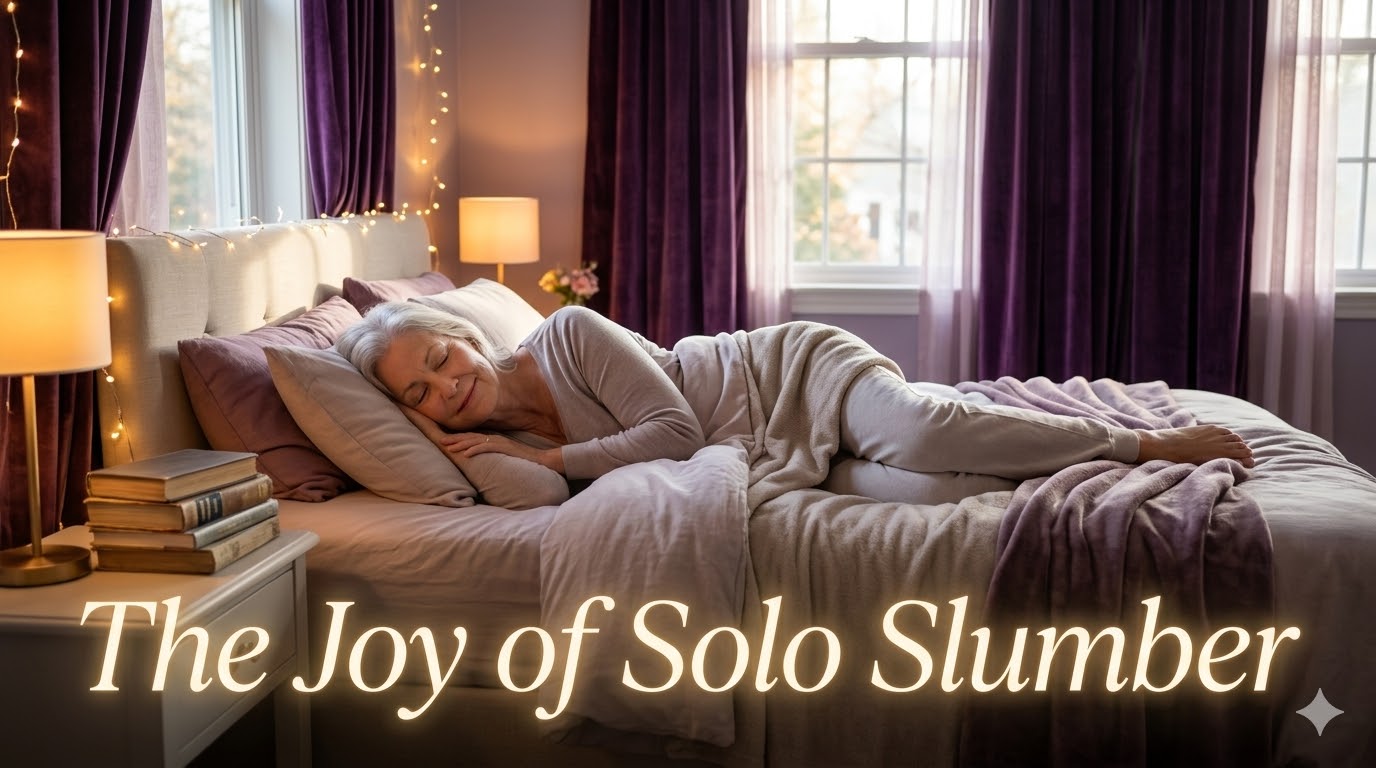
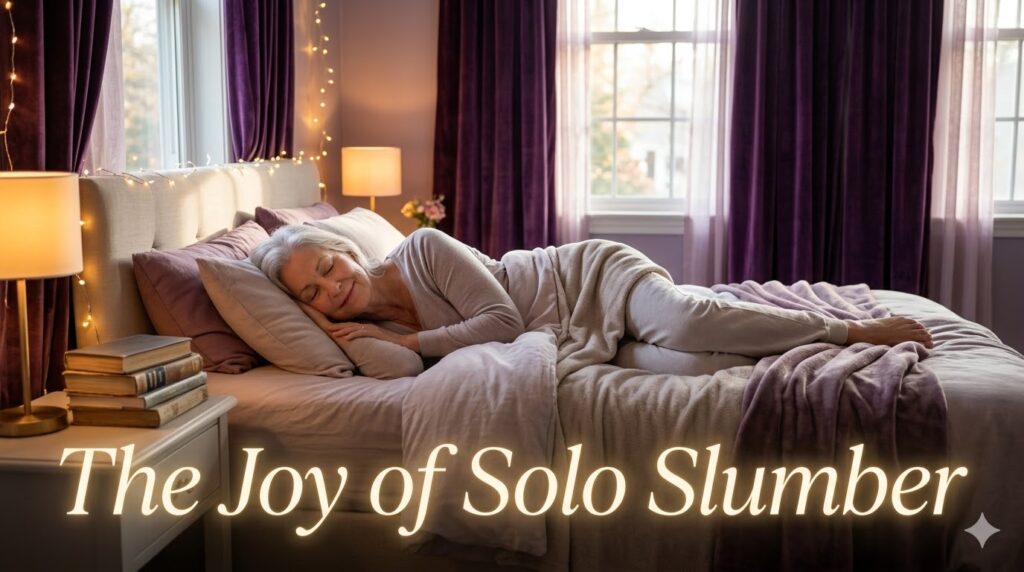
Marianne, a seventy-year-old retired librarian, was initially nervous about sleeping alone after her divorce. On the first night, she left a pillow on her ex-husband’s side of the bed for comfort. By the second night, she tossed that pillow onto the floor. By the end of the week, she was sleeping diagonally across a king-sized mattress, a heating pad tucked under her back, grinning like royalty.
“I sleep like a cat now,” she told me. “In weird positions, with no one asking what time I’m getting up or why I’m still awake at 2:00 AM watching baking shows.”
Holistically speaking, uninterrupted sleep is the foundation of wellness. When your body truly rests—because there is no one else in the bed demanding space you don’t want to give—everything improves. Your mood stabilizes, your joint inflammation decreases, your memory sharpens, and your sense of humor returns. The world simply gets easier to navigate when you aren’t dragging around an empty gas tank from years of fragmented sleep.
Controlling the Remote, Controlling Your Joy
Part of this evening restoration involves a sacred piece of plastic: the television remote. Controlling the remote and the volume is not a trivial thing; it is symbolic of autonomy. It is the right to curate your own joy and your own rhythm.
Imagine it is 8:00 PM. You are wrapped in your favorite blanket. There is no one beside you flipping through channels like they are defusing a bomb. No one groaning when you put on a British period drama. No one begging to watch an action movie for the eighth time. It is just you, the remote, and the volume set exactly where you want it. Whether you want the surround sound blasting during The Crown, or the volume low with closed captions so you can knit in peace—it is your choice. You are the queen of your castle, and the flat screen is your royal court.
Discovering Inner Strength and Liking Your Own Company
Eventually, the quiet of living alone reveals a beautiful secret: you possess strengths you never knew you had.
Gloria, a seventy-three-year-old retired nurse, told me about a plumbing disaster in her home. Recently divorced after forty-one years of a “lukewarm, vanilla” marriage, she found herself staring at a leaking bathroom sink. “I didn’t know I could take apart a bathroom sink until it tried to flood my whole house,” she laughed. With one hand under the pipe and the other holding her phone to watch a YouTube tutorial, she figured it out. It wasn’t fast, and it wasn’t pretty, but the victory was entirely hers.
When you live alone, you uncover parts of yourself that were buried under decades of saying, “He’ll handle it,” or “I’ve never done that before.” You learn to negotiate with contractors, set up stubborn Wi-Fi routers, and change smoke detector batteries. It stretches you in ways that might sting at first, but ultimately fill you with a warm, steady pride that no one can ever take away from you. As one woman perfectly articulated on an online forum: “I used to think I was fragile. Turns out, I was just untested.”
A Holistic Guide to Embracing Your Own Company
As you build this strength, something magical shifts: you start to genuinely like your own company. You stop outsourcing your joy to others.
- Take Yourself on Solo Dates: Visit a new cafe, bring a beautiful book, and order a slice of cake. Romanticize your own life.
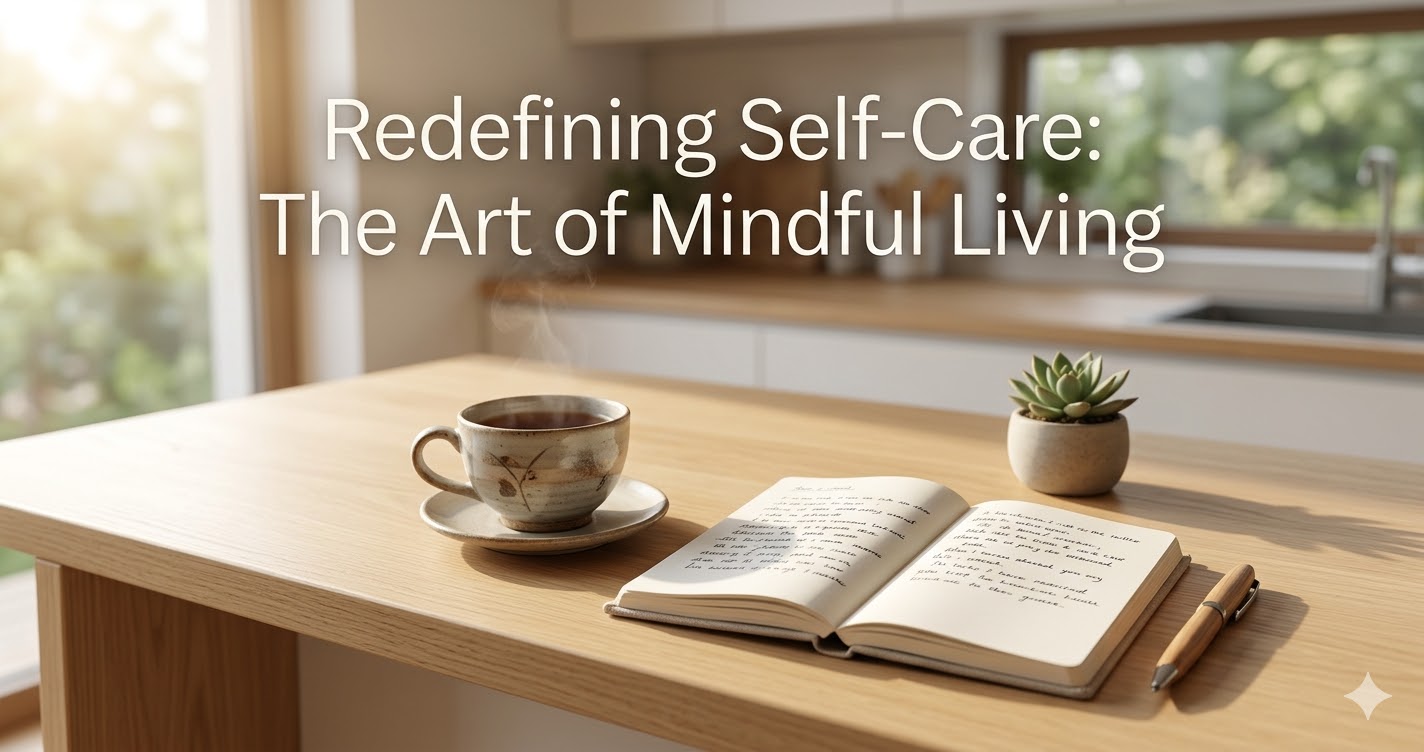
- Embrace the Silence: Don’t immediately turn on the TV or radio to fill the void. Sit with your morning coffee and let your thoughts wake up gently beside you.
- Talk to Yourself: It isn’t crazy; it is processing. Answer yourself back. Debate with yourself. Enjoy the dynamic energy of your own mind.
- Dress Up for the Mirror: Put on a beautiful outfit or a swipe of bright lipstick just because it makes you feel vibrant, not because you have anywhere to go.
The Final Exhale
Living alone as an older woman is not about being forgotten by the world. It is about finally being found by yourself.
It is the quiet victory of sleeping diagonally. The boldness of hanging purple velvet curtains. The empowering frustration of fixing a sink with your bare hands. It is the profound joy of laughing out loud in your own kitchen, suddenly realizing that you are no longer waiting on anyone else to make your life feel full again. You already are.
If you are sitting in your quiet home right now, wondering if it is okay to feel this deeply content, the answer is a resounding yes. It is not just okay; it is a beautiful, holistic triumph. You have become the kind of woman who can enjoy the silence, because now, the silence finally knows your name.
🌿 Weekly wellness, health & beauty insights — straight to your inbox
Free subscription · Cancel anytime