Health Disclaimer: This article is for informational purposes only and is not medical advice. Herbal supplements can interact with medications and health conditions. Please talk with your doctor or pharmacist before starting any new supplement, especially if you are pregnant, breastfeeding, managing a chronic condition, or taking prescription medicine.
Affiliate Disclosure: This post contains affiliate links. If you buy through them, WellbeingPrime may earn a small commission at no extra cost to you. We only mention products that fit the topic, and a link is never a promise of results.
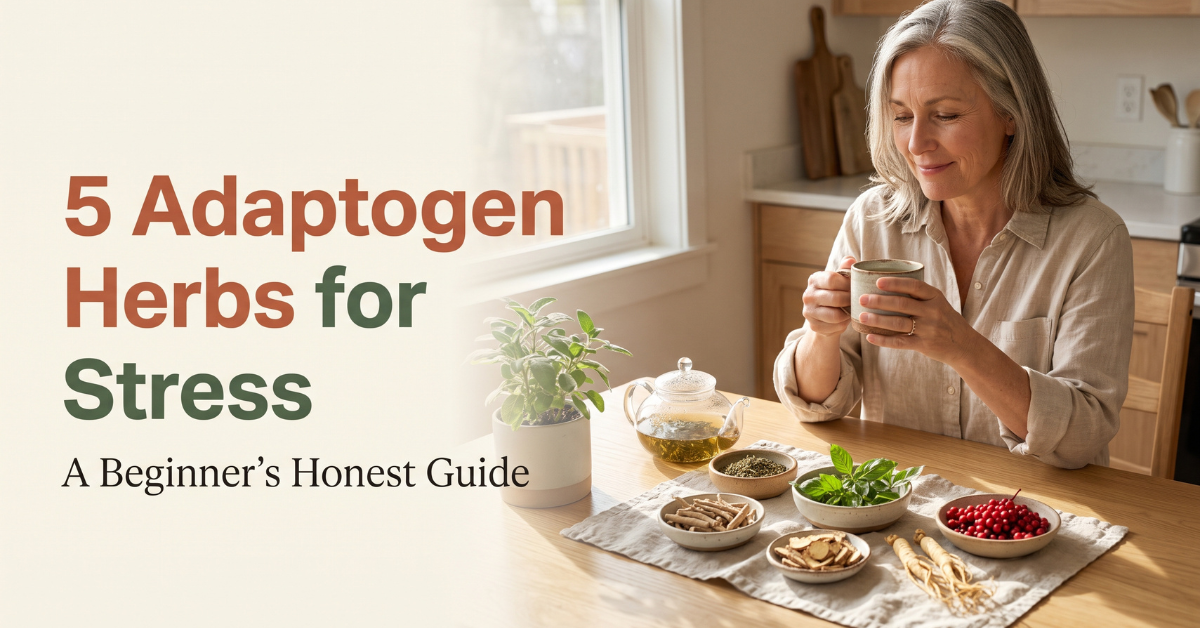
Adaptogen herbs for stress are everywhere right now, from coffee-shop lattes to sleek supplement bottles that promise a calmer, more balanced you. Living in California, I’ve watched “adaptogenic” go from a word you only heard at the farmers market to something printed on sparkling water cans at the grocery store checkout.
If you’re curious but a little skeptical, you’re in the right place. This is not a hype piece. It’s an honest beginner’s guide to five of the most studied adaptogens, what the research really says as of November 2026, who should skip them, and how to try one carefully if you and your doctor decide it makes sense.
Here’s the short version up front: some of these herbs have encouraging early research. None of them is a cure for stress. And the habits that calm your nervous system, like sleep, movement, and connection, still do most of the heavy lifting. Herbs can be a gentle supporting player, not the star of the show.
In This Guide
- What adaptogens are, in plain English
- Five herbs: ashwagandha, rhodiola, holy basil, Asian ginseng, and schisandra
- An honest “evidence level” for each one
- Who should skip adaptogens or talk to a doctor first
- A simple 4-week beginner action plan
What Are Adaptogens, Really?
“Adaptogen” is a word for plants (and some mushrooms) that are believed to help your body handle stress and return to balance. Cleveland Clinic describes them as plants and mushrooms that may help your body respond to stress, anxiety, and fatigue.
The idea is that they work on your HPA axis. That’s short for the hypothalamic-pituitary-adrenal axis, the communication loop between your brain and your adrenal glands that controls your stress hormone, cortisol. When stress hits, this system turns up. When the stress passes, it should turn back down. Adaptogens are thought to help that “turning down” happen more smoothly.
That sounds great. But here are three honest facts every beginner should know:
- “Adaptogen” is not a medical category. The FDA does not formally recognize the term. It’s a traditional and marketing label, not a drug class.
- Supplements are not FDA-approved before they’re sold. Manufacturers are responsible for the safety and labeling of their own products. Quality varies a lot from brand to brand.
- Short-term use is what’s been studied. Cleveland Clinic notes that adaptogens seem to work best for shorter stretches, under about six months. Most research lasts only 6 to 12 weeks.
So think of adaptogens as a possible short-term support while you work on the root causes of stress, not as a long-term fix.
How We Chose These 5 Adaptogen Herbs for Stress
There are dozens of plants sold as adaptogens. We picked these five because they are the ones beginners see most often, and because each has at least some human research. We relied on the National Center for Complementary and Integrative Health (NCCIH), the NIH Office of Dietary Supplements, Cleveland Clinic, and the Merck Manual.
To keep things honest, each herb gets an evidence level:
| Evidence Level | What It Means |
|---|---|
| Moderate | Several human trials point the same way, though most are small and short. |
| Early / Mixed | Some promising studies, but results conflict or quality is low. |
| Limited | Mostly traditional use, lab, or animal studies. Very little human data on stress. |
1. Ashwagandha: The Most Studied for Stress
Evidence level: Moderate (for stress and sleep)
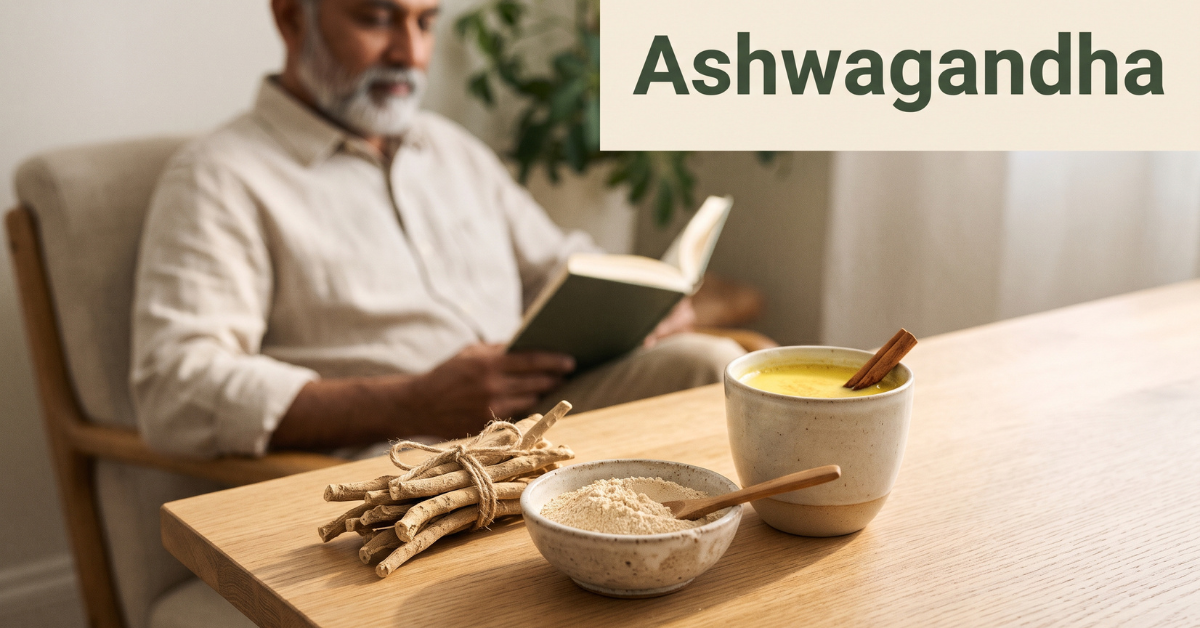
Ashwagandha (Withania somnifera) is a small evergreen shrub from India, Africa, and the Middle East. It has been used for centuries in Ayurveda, the traditional medicine system of India. The root is the part most often used.
What the research says
According to the NIH Office of Dietary Supplements, people in several studies who took ashwagandha for 6 to 8 weeks reported feeling less stress and anxiety, plus less fatigue and sleeplessness. Some studies also showed lower cortisol levels. NCCIH agrees that some ashwagandha preparations may help with stress and insomnia, but says it’s unclear whether they help with anxiety.
For sleep, the benefit was real but small. The catch: most studies were small, short, and used different extracts. That makes it hard to compare products or know what will work for you.
Safety notes
- Ashwagandha may be safe for up to about 3 months. Long-term safety is not established.
- Common side effects are usually mild: upset stomach, loose stools, nausea, and drowsiness.
- It may affect the thyroid and has been linked to rare liver problems. Stop and call your doctor if you notice yellowing skin or eyes, dark urine, or unusual tiredness.
- It may interact with thyroid, diabetes, and blood pressure medicines, sedatives, and immune-suppressing drugs.
- Avoid it if you are pregnant or breastfeeding, have hormone-sensitive prostate cancer, or have an autoimmune or thyroid condition, unless your doctor says otherwise. Stop before any planned surgery.
Best fit for: healthy adults whose stress shows up as racing thoughts and restless nights, after checking with a doctor or pharmacist.
If You and Your Doctor Decide to Try It
California Gold Nutrition Ashwagandha is a widely available vegetarian capsule option. Read the label carefully, compare the dose with what your doctor suggests, and look for third-party testing information.
View on iHerb →2. Rhodiola: For Stress That Feels Like Burnout
Evidence level: Early / Mixed
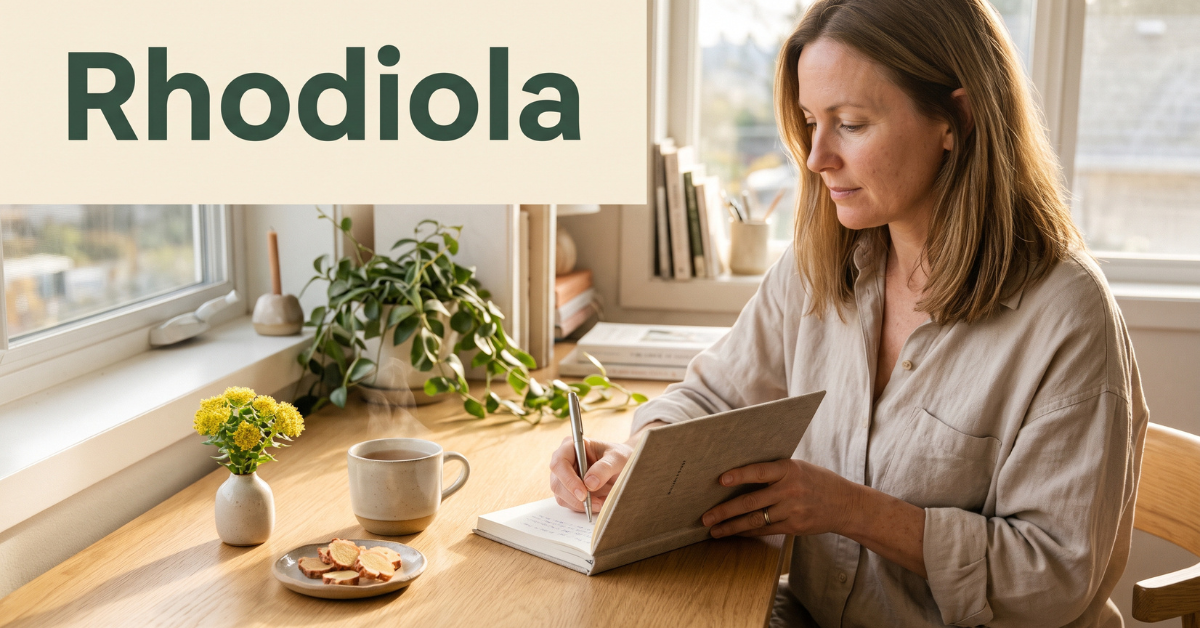
Rhodiola (Rhodiola rosea), also called golden root or arctic root, grows in cold, high-altitude regions of Europe, Asia, and North America. In Russia and Scandinavia, it was traditionally used for fatigue, endurance, and work performance.
Where ashwagandha is often described as calming, rhodiola is usually described as gently energizing. People tend to reach for it when stress feels like mental fatigue: tired, foggy, and stretched thin.
What the research says
This is where honesty matters. As of November 2026, NCCIH says we haven’t learned enough to say whether rhodiola is useful for any health purpose. Some small studies on stress-related fatigue and mood look encouraging, but the Merck Manual notes there are no high-quality human studies proving it treats any condition.
Safety notes
- Possibly safe for up to 12 weeks, according to NCCIH.
- Side effects may include dizziness, headache, trouble sleeping, and dry mouth or extra saliva. Because it can feel stimulating, many people take it earlier in the day.
- It may interact with antidepressants, blood pressure medicines (an interaction with losartan has been reported), diabetes medicines, blood thinners like warfarin, and immune-suppressing drugs.
- Avoid it if you’re pregnant or breastfeeding, or have an autoimmune condition. People with bipolar disorder should talk to their doctor first.
Best fit for: people whose stress feels like exhaustion rather than anxiety, who aren’t on antidepressants or blood pressure medicine.
Sponsored Resource
NOW Foods Rhodiola comes in vegetarian capsules from a long-established supplement brand. Check with your pharmacist about interactions before your first dose, especially if you take any daily medication.
View on iHerb →3. Holy Basil (Tulsi): The Gentle Tea-Time Option
Evidence level: Early / Mixed
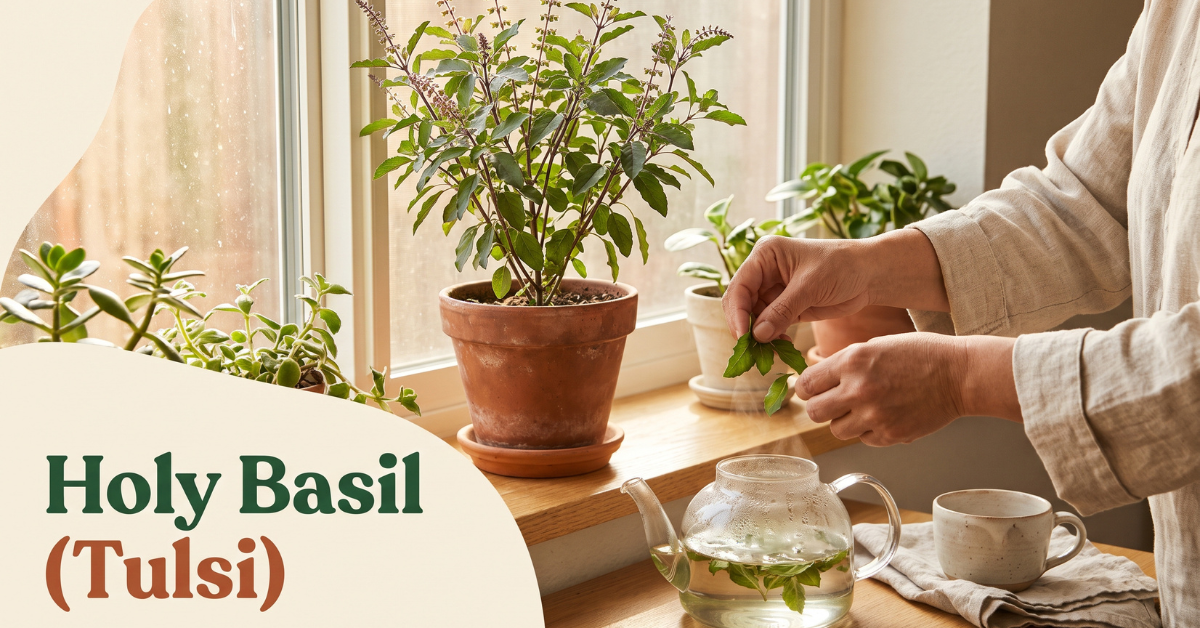
Holy basil (Ocimum tenuiflorum, also called Ocimum sanctum) is a fragrant cousin of the basil in your kitchen. In India, it’s called tulsi and is considered a sacred plant. It has been part of Ayurvedic practice for thousands of years.
What makes tulsi beginner-friendly is that it’s easy to enjoy as a tea. Many people find that the ritual of brewing and sipping a warm cup is calming on its own, whatever the herb inside.
What the research says
A 2017 systematic review looked at 24 human studies on tulsi. Overall, the results were favorable for things like psychological stress, blood sugar, and general well-being, and no study reported serious side effects. However, only three trials had 100 or more people, and products and doses varied widely. Researchers called for larger, better-designed studies.
Safety notes
- Human trials have reported few side effects, but long-term safety of concentrated extracts isn’t well studied.
- Tulsi may lower blood sugar, so it could interact with diabetes medicines. It may also interact with blood thinners and sedatives.
- Safety during pregnancy, breastfeeding, or while trying to conceive has not been established, so it’s best avoided at those times.
- Stop taking it about two weeks before surgery unless your surgeon tells you otherwise.
Best fit for: beginners who want a gentle start, especially as a daily tea ritual.
Sponsored Resource
Organic India Tulsi Holy Basil capsules come from a brand known for its tulsi products. If you prefer to start more gently, a plain tulsi tea is another easy way to explore this herb.
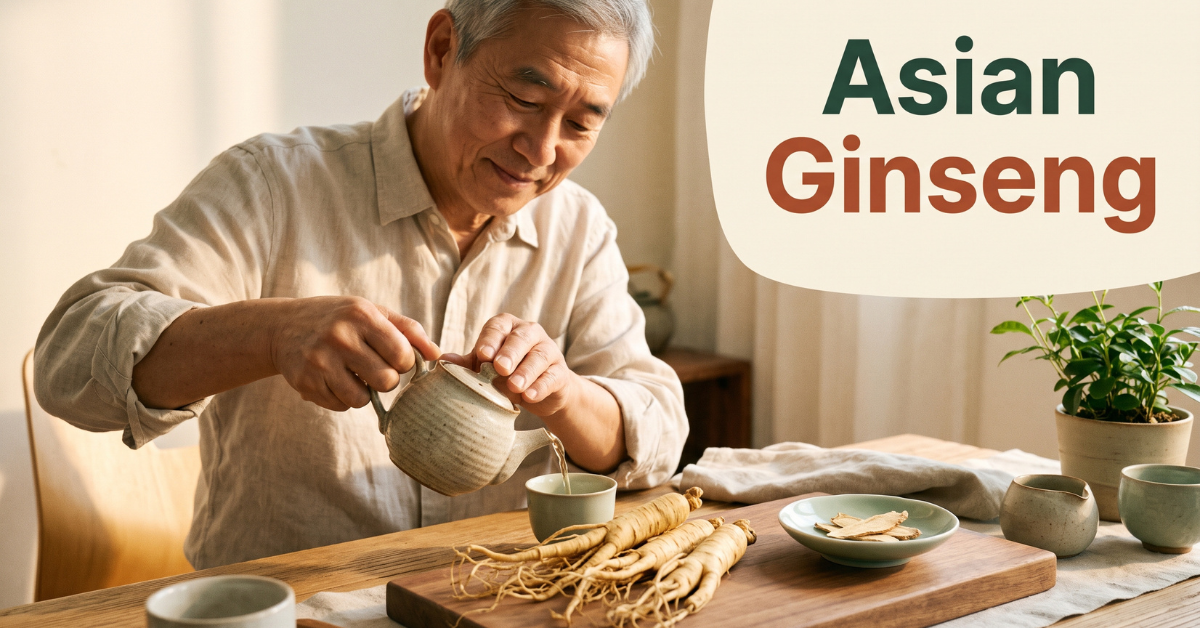
View on iHerb →4. Asian Ginseng: More “Energy” Than “Calm”
Evidence level: Early / Mixed (and not specifically for stress)
Asian ginseng (Panax ginseng), also called Korean or Chinese ginseng, has been used in East Asian medicine for centuries. “Red” and “white” ginseng are the same plant, just prepared in different ways. Its main active compounds are called ginsenosides.
One quick note: “Siberian ginseng” (eleuthero) is a completely different plant, and American ginseng is a different species. Always check the Latin name on the label.
What the research says
Ginseng is traditionally used for energy, stamina, and resilience. Research has grown in recent years, but NCCIH says there isn’t enough reliable information to know whether it helps with anxiety. Studies on fatigue are mixed. In other words, ginseng is more of a “tired and run down” herb than a “wound up and anxious” herb.
Safety notes
- Insomnia is the most common side effect, so it’s usually not a bedtime herb. Headaches and stomach upset are also possible.
- Ginseng may lower blood sugar. If you have diabetes, talk to your doctor first.
- It may affect blood clotting and interact with blood thinners, and it may worsen autoimmune conditions.
- Some experts suggest limiting use to about 3 months. Reports of breast tenderness, menstrual changes, and higher blood pressure exist, so women after menopause should check with their doctor.
- Not recommended during pregnancy or breastfeeding.
Best fit for: people who feel drained rather than anxious and don’t have blood sugar, blood pressure, or clotting concerns.
Sponsored Resource
Nature’s Way Asian Ginseng is a simple root capsule. Because ginseng can disturb sleep, most people who use it take it in the morning, and only after a quick chat with their pharmacist.
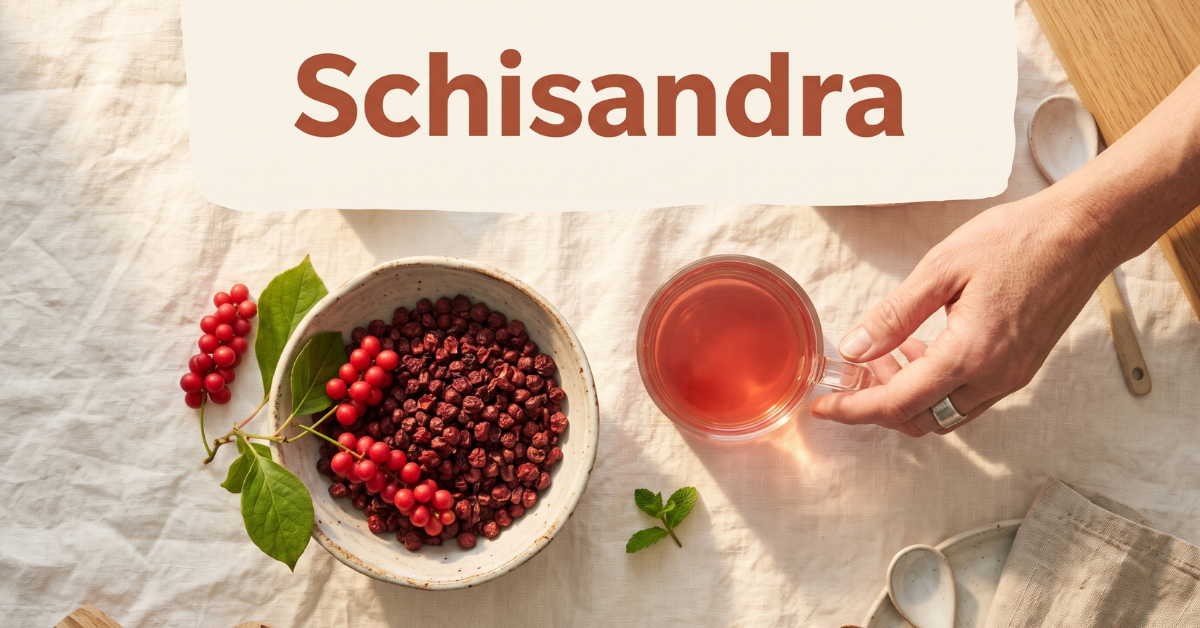
View on iHerb →5. Schisandra: The “Five-Flavor Berry”
Evidence level: Limited
Schisandra (Schisandra chinensis) is a vine native to northern China, Korea, and the Russian Far East. Its bright red berries are said to hold all five flavors: sweet, sour, salty, bitter, and pungent. That’s why it’s nicknamed the “five-flavor berry.” In Korea, it’s known as omija and is often enjoyed as a tart, rosy tea.
What the research says
Schisandra was studied as an adaptogen in the former Soviet Union, and it has a long history in Traditional Chinese Medicine for fatigue and focus. But high-quality human research on stress is thin. Much of what we know comes from lab and animal studies. Of the five herbs in this guide, schisandra has the least evidence for stress.
Safety notes
- Short-term use appears generally well tolerated. Mild stomach upset and heartburn are possible.
- Schisandra can change how your liver processes many medicines. That means more potential drug interactions than you might expect from a berry. Please ask your pharmacist if you take any prescription.
- Avoid it during pregnancy and breastfeeding.
- Long-term safety of concentrated extracts is unknown.
Best fit for: curious tea lovers who enjoy trying traditional foods, with realistic expectations.
Sponsored Resource
Solaray Schizandra is one capsule option for this berry. Given its interaction profile, it’s especially important to clear this one with your pharmacist first.
View on iHerb →Side-by-Side: Which Adaptogen Fits Your Kind of Stress?
Stress doesn’t look the same for everyone. Some of us feel wired and can’t switch off. Others feel flat and drained. This table compares the five adaptogen herbs for stress in one place, so you can start a conversation with your doctor about which herb, if any, might fit.
| Herb | Often Used For | Feels More | Evidence | Key Caution |
|---|---|---|---|---|
| Ashwagandha | Stress, restless sleep | Calming | Moderate | Thyroid, liver, pregnancy |
| Rhodiola | Mental fatigue, burnout | Energizing | Early / Mixed | Antidepressants, BP meds |
| Holy Basil | Everyday stress, tea ritual | Gentle, balancing | Early / Mixed | Blood sugar, blood thinners |
| Asian Ginseng | Low energy, fatigue | Stimulating | Early / Mixed | Insomnia, clotting, blood sugar |
| Schisandra | Focus, fatigue (traditional) | Mild, balancing | Limited | Many drug interactions |
If you’re new to all of this, holy basil tea is often the gentlest place to start. If you want the herb with the most research behind it for stress, that’s ashwagandha, as long as it’s safe for you.
How to Choose a Quality Supplement
Since supplements aren’t approved by the FDA before they reach store shelves, the quality of what’s inside the bottle is largely up to you to check. Here’s a simple shopping checklist:
✓ Label Checklist
- ☐ Latin name listed (for example, Withania somnifera, not just “ashwagandha blend”)
- ☐ Plant part named (root, leaf, or berry)
- ☐ Single herb rather than a “proprietary blend” that hides amounts
- ☐ Third-party testing seal such as USP, NSF, or ConsumerLab
- ☐ No big promises like “cures anxiety” or “melts away stress”
- ☐ Clear contact info for the manufacturer
Third-party testing matters even more for Ayurvedic products. NCCIH has warned that some Ayurvedic products have been found to contain lead, mercury, or arsenic above safe levels. A testing seal doesn’t prove a product works, but it does help confirm that what’s on the label is what’s in the bottle.
Sponsored Resource
Comparing ashwagandha options? Swanson Full Spectrum Ashwagandha is another vegan capsule choice. Use the checklist above to compare labels side by side before you decide.
View on iHerb →Who Should Skip Adaptogens or Talk to a Doctor First
“Natural” doesn’t always mean “safe for everyone.” Please check with your doctor or pharmacist before trying any adaptogen herbs for stress if any of these apply to you:
- You are pregnant, breastfeeding, or trying to conceive
- You take any prescription medicine, especially for thyroid, blood pressure, diabetes, depression, anxiety, sleep, or blood clotting
- You have an autoimmune condition (such as rheumatoid arthritis, lupus, or Hashimoto’s)
- You have liver disease or a history of liver problems
- You have bipolar disorder or another mental health condition that’s being treated
- You have hormone-sensitive cancer or are in cancer treatment
- You have surgery coming up in the next few weeks
A good tip: bring the actual bottle to your pharmacy. Pharmacists can check interactions in minutes, and it’s usually free.
When Stress Is More Than Everyday Stress
If stress, anxiety, low mood, or poor sleep have lasted for weeks or are getting in the way of daily life, please reach out to a doctor or licensed mental health professional. Herbs are not a substitute for real support.
If you are in crisis or thinking about harming yourself, call or text 988 to reach the 988 Suicide & Crisis Lifeline in the U.S. If you have chest pain, trouble breathing, or another emergency, call 911.
The Stress Basics That Work With or Without Herbs
Cleveland Clinic puts it plainly: adaptogens are more like a temporary bandage than a solution for long-term stress. The good news is that the foundations are free, and they make any herb you try more likely to help.
Protect your sleep
Keep a steady bedtime and wake time, even on weekends. Dim the lights an hour before bed and keep phones out of reach. Sleep and stress feed each other, so improving one often improves the other.
Sponsored Resource
Looking for more ideas to support your evening wind-down? You can explore Yu Sleep, a nighttime support product. Please read the full ingredient list first, and ask your pharmacist before combining any sleep product with an adaptogen or other medicine, since some ingredients can add to drowsiness.
Learn More →Move a little every day
You don’t need an intense workout. A 20-minute walk, gentle yoga, or gardening can lower tension and lift your mood. Morning light outside is a bonus for your sleep cycle too.
Breathe slower, on purpose
Try this: breathe in through your nose for 4 counts, then out through your mouth for 6 counts. Repeat for 2 to 3 minutes. A longer exhale helps signal to your body that it’s safe to relax.
Stay connected
A phone call with a friend, a shared meal, or a walk with a neighbor can ease stress in a way no capsule can. If you’re in your 50s, 60s, or beyond, our friends at Senior Journey Blog share more ideas for staying active and connected as we age.
Go easy on caffeine and alcohol
Both can make stress and sleep worse. This matters even more if you try a stimulating herb like rhodiola or ginseng, since caffeine can stack on top of that effect.
Your 4-Week Beginner Action Plan (Step by Step)
If you and your doctor agree that trying an adaptogen makes sense, this simple plan keeps things slow, safe, and easy to track.
A Simple Daily Rhythm
| Time | What to Do |
|---|---|
| Morning | Glass of water, 5 minutes of daylight, herb (if morning-type) with breakfast |
| Midday | 10–20 minute walk, last caffeine before 2 p.m. |
| Afternoon | 3-minute breathing break (in for 4, out for 6) |
| Evening | Warm caffeine-free tea, dim lights, rate your stress signs in a notebook |
Want to Go Deeper on Herbs?
If you love learning about plants and how people have used them over the centuries, you’ll find more herbal stories and guides at DannyWrites.
The Honest Bottom Line
Here’s what I’d want a friend to know before buying her first bottle of adaptogen herbs for stress:
- Ashwagandha has the most human research for stress and sleep, but it isn’t right for everyone.
- Rhodiola and ginseng lean energizing and fit “tired” stress better than “wired” stress.
- Holy basil is a gentle, enjoyable starting point, especially as tea.
- Schisandra is interesting, but the evidence is still thin.
- Start with one, track honestly, keep it short-term, and always check with your doctor or pharmacist.
Stress is part of being human, and you don’t have to fix it all at once. Maybe your first step isn’t a supplement at all. Maybe it’s a cup of warm tea by the window, a slow breath, and a few quiet minutes that belong only to you. Be gentle with yourself. Small, steady care adds up.
Wishing you calmer days and softer nights. 🌿
Frequently Asked Questions
Can I take more than one adaptogen at the same time?
It’s best not to, especially as a beginner. Combining herbs raises the chance of side effects and drug interactions, and you won’t know which one is helping. Many “stress blend” products mix several herbs, so read labels carefully and check with your pharmacist before starting.
How long does it take for adaptogens to work?
In most studies, people took ashwagandha for about 6 to 8 weeks before reporting less stress. Other herbs have less data. Give one herb about 4 weeks of honest tracking, then review with your provider. Most research covers short-term use only, so long-term daily use isn’t well studied.
If adaptogens are natural, aren’t they automatically safe?
No. This is one of the most common myths. Herbs contain active compounds that can affect hormones, blood sugar, blood pressure, and how your liver handles medicine. Ashwagandha has been linked to rare liver problems, and schisandra can interact with many drugs. “Natural” means plant-based, not risk-free.
Sources (accessed November 2026)
- NCCIH: Ashwagandha
- NIH Office of Dietary Supplements: Ashwagandha Fact Sheet for Consumers
- NCCIH: Rhodiola
- Merck Manual Consumer Version: Rhodiola
- NCCIH: Asian Ginseng
- Merck Manual Consumer Version: Ginseng
- Jamshidi & Cohen (2017): The Clinical Efficacy and Safety of Tulsi in Humans, a Systematic Review
- NCCIH: Herb-Drug Interactions, What the Science Says
- Cleveland Clinic: Adaptogens
- 988 Suicide & Crisis Lifeline
🌿 Weekly wellness, health & beauty insights — straight to your inbox
Free subscription · Cancel anytime