Health Disclaimer: This article is for informational purposes only and is not medical advice. It does not replace a visit with your doctor or another qualified health professional. Please talk with your doctor before changing your exercise routine, sleep aids, or supplements, especially if you are pregnant, breastfeeding, managing a chronic condition, or taking medication.
Affiliate Disclosure: Some links in this post are affiliate or sponsored links. If you choose to purchase through them, I may earn a small commission at no extra cost to you. I only share resources that fit the topic of the article.
These daily habits to reduce inflammation naturally don’t ask you to give up bread, count every gram of sugar, or buy a cabinet full of powders. They ask for something gentler: a walk in the morning light, a glass of water before your coffee, a few slow breaths when the day gets loud, and a bedtime you actually protect.
Living in California, I’ve noticed how often “anti-inflammatory” gets sold as a strict menu. Juice shops, cleanse kits, elimination plans. Yet when I read what researchers at Harvard, the CDC, and the National Institutes of Health actually say, the picture is much calmer. Sleep, movement, stress, oral care, and connection matter just as much as what’s on your plate.
So this guide is for the busy woman over 40 who wants to feel steadier and more comfortable in her body, without starting a “special diet.” You’ll find 10 simple habits, what the research says about each one (honestly, including where evidence is limited), a 4-week action plan, and a printable-style daily checklist.
Inflammation, Explained Simply

Inflammation is your immune system’s repair crew. When you cut your finger or catch a cold, your body sends immune cells and signaling chemicals to the spot. The redness, warmth, and swelling you notice are signs that the crew is working. This short-term kind is called acute inflammation, and it usually settles down within hours or days.
The trouble starts when the crew never clocks out. Chronic inflammation (low-grade inflammation that lingers for months or years) can simmer quietly in the background. According to Harvard Health Publishing, lifestyle factors such as smoking, poor diet, alcohol, sitting most of the day, stress, and weight gain can all feed this persistent state.
Researchers even have a name for the slow rise of inflammation that tends to come with age: “inflammaging.” Harvard Women’s Health Watch notes that it isn’t inevitable, and that everyday choices play a big role. That’s the hopeful part. You can’t control your age, but you can shape your days.
Why it matters after 40
- Chronic inflammation is linked to many conditions that become more common with age, including heart disease and type 2 diabetes.
- Its signs are often vague: tiredness, aches, poor sleep, or digestive discomfort, so they’re easy to blame on “just getting older.”
- There is no single habit that “fixes” it. Harvard experts point out that the more healthy habits you stack, even small ones, the better your odds.
One important note before we begin: only your doctor can tell whether you have elevated inflammation, usually through blood tests such as C-reactive protein (CRP, a protein your liver makes when inflammation is present). The habits below support overall health. They are not a way to diagnose or treat any condition.
10 Daily Habits to Reduce Inflammation Naturally
You don’t need all ten on day one. Read through, notice which two or three feel easiest, and start there. Each habit includes a “start small” version for busy days.
Habit 1: Start Your Day With Morning Light and a Short Walk

A morning walk does double duty. It gets your body moving, and daylight early in the day helps set your internal clock, which supports better sleep later. Better sleep, as you’ll see in Habit 7, is one of the strongest everyday tools we have.
Harvard Health suggests that even a quick daily walk is a worthwhile step, since exercise may encourage the body to produce hormones that help keep inflammation in check. You don’t have to power-walk. A relaxed pace that lets you talk but not sing counts as moderate activity.
- Start small: Step outside for 5–10 minutes with your coffee or tea.
- Level up: Walk 20–30 minutes, ideally within an hour or two of waking.
- Make it easier: Lay out your shoes the night before, or invite a neighbor.
Habit 2: Move a Little, Often (Especially After Meals)
The CDC recommends that adults get at least 150 minutes of moderate-intensity activity per week, plus 2 days of muscle-strengthening activity (as of November 2026, per the CDC’s adult activity guidelines). That’s about 30 minutes, 5 days a week, and the CDC says it can be broken into smaller chunks.
Here’s an easy win many women overlook: the after-dinner stroll. A 2022 review in the journal Sports Medicine found that even 2 to 5 minutes of light walking after a meal helped blood sugar rise and fall more gently than sitting. Steadier blood sugar is one piece of the bigger metabolic and inflammation picture.
Strength work matters too, especially after 40, when muscle naturally declines. Wall push-ups, sit-to-stand from a chair, and light resistance bands all count. Adults 65 and older are also encouraged by the CDC to add balance activities.
- Start small: Walk for 5 minutes after your largest meal.
- Level up: Set a timer to stand and stretch every 30–45 minutes while you work.
- Safety note: If you have heart, joint, or balance concerns, check with your doctor before starting a new routine.
For more gentle movement ideas for later life, our sister site Senior Journey Blog shares beginner-friendly routines.
Move at Home
Prefer a little guidance?
If you like having someone talk you through a short routine, JustFit offers home workout programs you can follow at your own pace. Choose low-impact options, start slowly, and listen to your body.
Explore JustFit →Habit 3: Sip Water and Caffeine-Free Herbal Tea
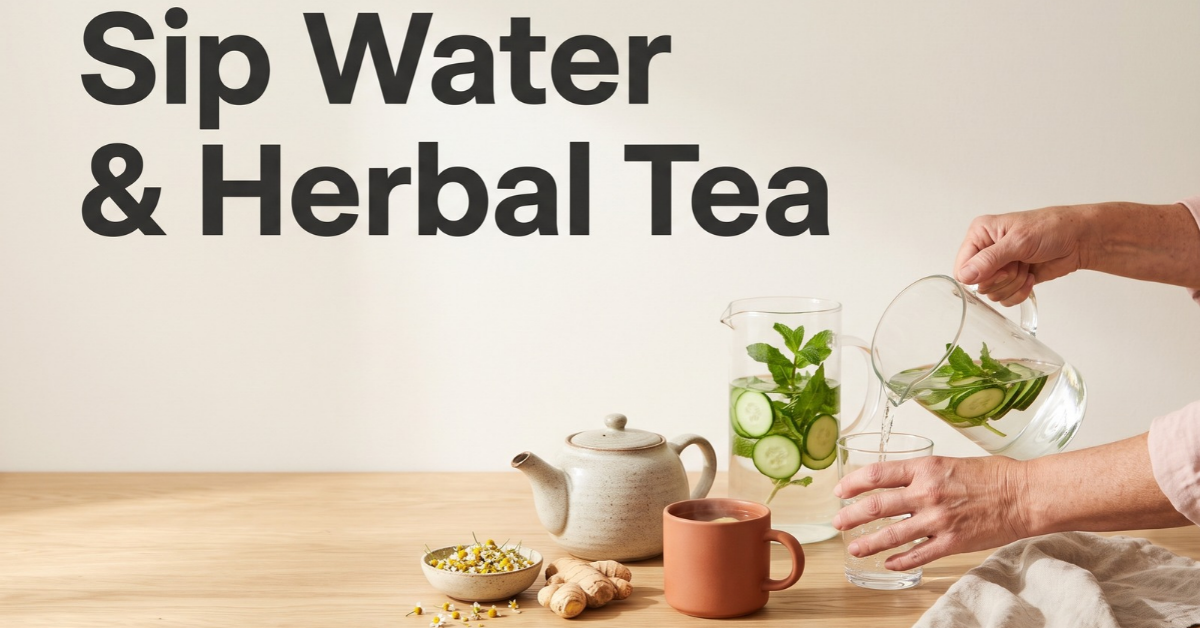
Water won’t “flush out” inflammation, and I’d gently steer you away from anyone who promises that. But staying hydrated helps your body do its everyday work, and swapping one sugary drink for water or tea is a simple, realistic change.
Tea is a lovely middle ground. Harvard Health lists tea among the sources of polyphenols (protective plant compounds) in an anti-inflammatory eating pattern. Ginger and turmeric are also popular in warm drinks. Here’s what the evidence honestly says:
- Ginger: Traditionally used for centuries. The NCCIH notes that ginger supplements might help knee osteoarthritis symptoms, but much of that research is low quality.
- Turmeric: According to the NCCIH, early evidence is positive, but higher-quality studies are needed before firm conclusions. Turmeric supplements may be unsafe during pregnancy.
- Chamomile and peppermint: Traditionally used for relaxation and digestion. Evidence for inflammation specifically is limited, but they’re a calming, caffeine-free ritual.
If you love learning about herbs, Danny Writes explores traditional herbal uses in more depth.
- Start small: Drink one glass of water before your first cup of coffee.
- Level up: Keep a pitcher of water with cucumber or mint in the fridge, and make an afternoon cup of herbal tea your “pause button.”
Sponsored Resource
Looking for more ideas to support a calm, natural daily routine? Take a look at this featured resource from our partner.
Learn More →Habit 4: Add Color to Your Plate (No Special Diet Required)
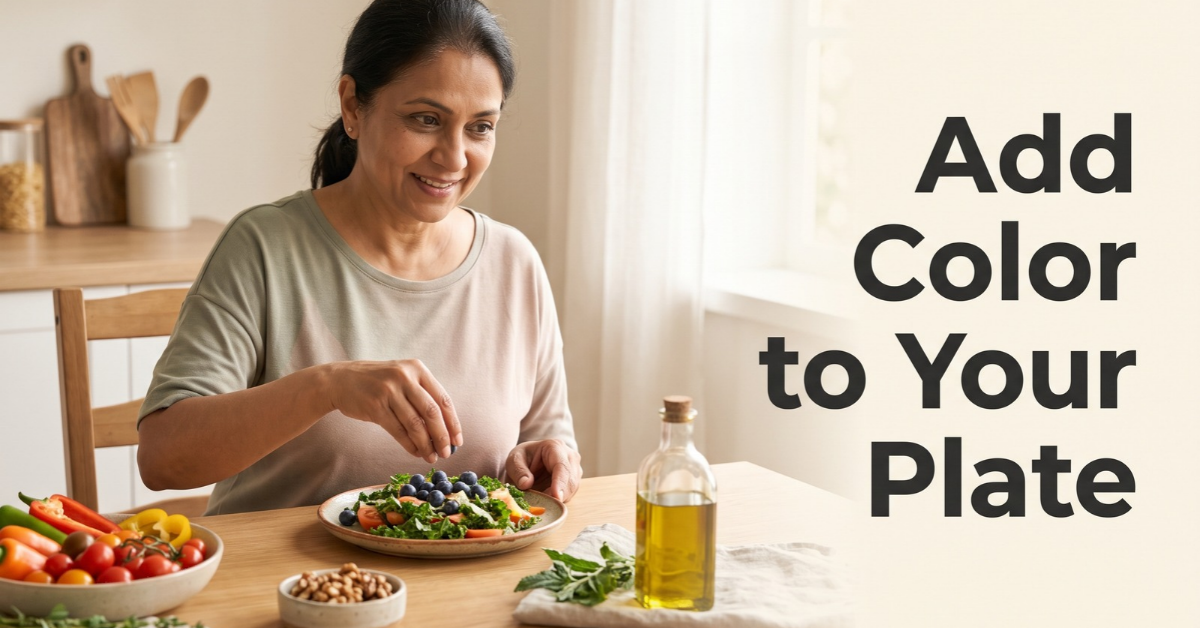
This is the heart of the “no special diet” promise. Instead of removing foods, try adding them. Harvard Health highlights berries, fatty fish, leafy greens, nuts, seeds, tomatoes, and olive oil as foods that may help keep inflammation in check. All of them fit into a Mediterranean-style way of eating, which is about patterns, not rules.
Think of it as “crowding in.” When half your plate is colorful plants, there’s naturally less room for ultra-processed foods. You still get to enjoy your favorite meals.
| Instead of… | Try adding… |
|---|---|
| Plain bagel with cream cheese | Whole-grain toast with a drizzle of olive oil and sliced tomato |
| Cookies at 3 p.m. | A handful of walnuts with an apple |
| Pasta with sauce only | The same pasta plus a big handful of spinach and white beans |
| Cake for dessert every night | A bowl of mixed berries most nights, cake when it’s special |
| Takeout fried chicken | Baked salmon or sardines twice a week, if fish suits you |
- Start small: Add one fruit or vegetable to a meal you already eat.
- Level up: Aim for “two colors per plate” at lunch and dinner.
If you have food allergies, kidney disease, a digestive condition, or take blood thinners (leafy greens contain vitamin K), talk with your doctor or a registered dietitian before making big changes.
Habit 5: Breathe Slowly to Calm Daily Stress
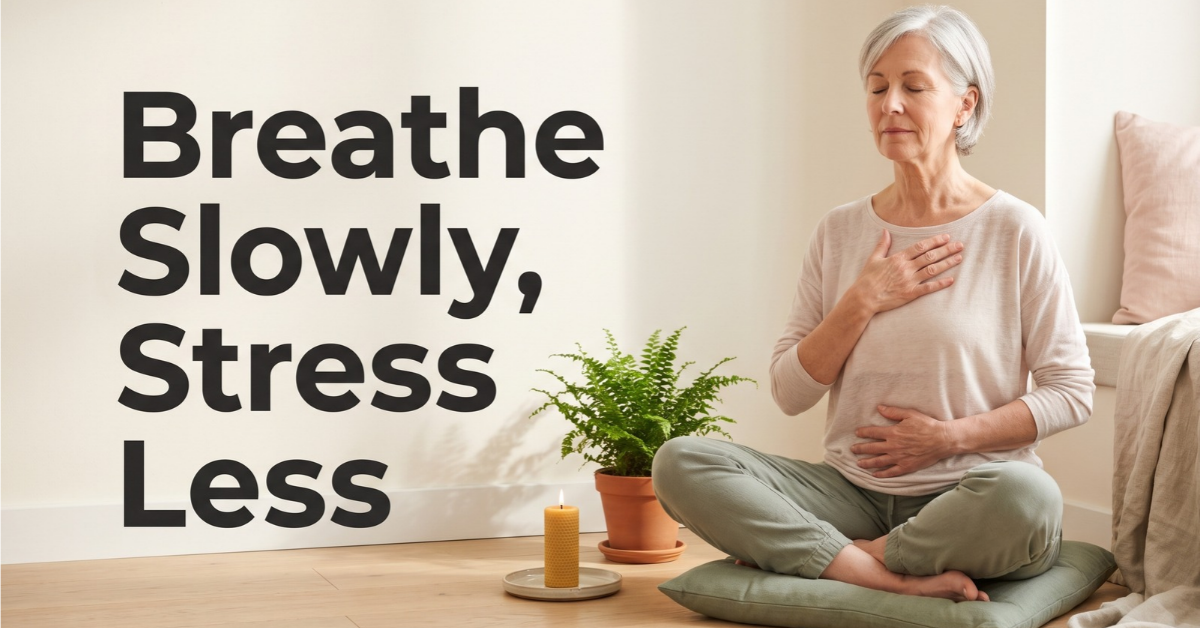
Stress in short bursts is normal and even useful. The problem is stress that never lets up. NCCIH Director Dr. Helene Langevin has written that chronic stress can set off a negative cascade affecting hormones, sleep, metabolism, the immune system, and inflammatory responses (NCCIH).
Research also suggests one possible pathway. A national study published on PubMed Central found that higher perceived stress was linked to a flatter daily cortisol rhythm (cortisol is a key stress hormone), and that flatter rhythm was in turn linked to higher inflammation markers. It’s an association, not proof of cause, but it fits what many of us feel: a frazzled mind and a tense body go together.
Try this 4-6 breath (about 2 minutes):
- Sit comfortably. Place one hand on your chest and one on your belly.
- Breathe in through your nose for a count of 4, letting your belly rise.
- Breathe out slowly through your mouth for a count of 6.
- Repeat 8–10 times. If you feel lightheaded, return to normal breathing.
- Start small: Do 3 slow breaths at every red light or before you open your email.
- Level up: Add a 10-minute guided meditation, gentle yoga, or a quiet journal page in the evening.
Sponsored Resource
Curious about more ways to quiet a busy mind? Mind Silence is a featured resource you can explore as part of your calm-down routine.
Discover Mind Silence →Habit 6: Brush and Floss Like It Matters (Because It Does)
This one surprises people. Your gums are part of your immune system’s daily workload. The CDC explains that gum (periodontal) disease involves infection and inflammation of the tissues around your teeth, and it’s very common: about 42% of U.S. adults 30 and older have periodontitis, according to CDC data from national surveys (2009–2014).
The good news? The CDC notes that gingivitis, the mildest form, is preventable and reversible with good oral hygiene and professional care. Harvard Health lists maintaining good oral health right alongside diet, exercise, sleep, and stress as habits that help counter chronic inflammation.
- Daily: Brush twice a day and floss (or use interdental brushes) once a day.
- Yearly: See your dentist at least once a year for a check-up and cleaning.
- Watch for: Red, swollen, or easily bleeding gums. These are worth mentioning to your dentist.
Habit 7: Protect Your Sleep Like an Appointment

If I could choose only one habit for you, it might be this one. Rheumatologist Dr. Robert Shmerling, writing for Harvard Health, explains that even a single night of disturbed sleep can raise inflammatory substances in the blood. Harvard also notes that 7 to 9 hours of sleep a night is associated with lower risk of many chronic diseases.
The CDC recommends at least 7 hours of sleep for adults. Yet according to a CDC data brief released in May 2026, about 30.5% of U.S. adults surveyed in 2024 were getting less than that. If you’re tired, you’re far from alone.
A gentle wind-down routine:
- Keep the same bedtime and wake time, even on weekends (within about 30–60 minutes).
- Dim the lights an hour before bed and put your phone face-down or in another room.
- Stop caffeine by early afternoon, and keep alcohol light (it can fragment sleep).
- Try a warm shower or bath before bed. Cooling down afterward can help you feel sleepy.
- Keep your bedroom cool, dark, and quiet.
Loud snoring, gasping at night, or constant daytime sleepiness can be signs of sleep apnea or another sleep disorder. Please talk with your doctor. Hot flashes and night sweats during perimenopause and menopause are also worth discussing, since there are many options to help.
Sleep Support
Exploring a sleep supplement?
YuSleep is a sleep-support supplement you may want to learn about as one part of a healthy bedtime routine. Supplements work best alongside the habits above, not instead of them.
Please check with your doctor or pharmacist first, especially if you take other medications, sleep aids, or supplements, or if you are pregnant or breastfeeding. Supplements can interact with medications.
Learn About YuSleep →Habit 8: Go Easy on Alcohol and Step Away From Smoke
I know this isn’t the fun one. But it’s one of the most powerful. The FDA states that smoking cigarettes can cause inflammation and cell damage throughout the body and weaken the immune system. If you smoke, quitting is one of the kindest things you can do for your whole body, and you don’t have to do it alone. Talk to your doctor or call 1-800-QUIT-NOW for free support.
Alcohol affects inflammation too, according to Harvard’s T.H. Chan School of Public Health. The U.S. Dietary Guidelines have advised that women who choose to drink limit themselves to one drink or less per day, and newer federal guidance emphasizes that drinking less is better for overall health (as of November 2026, per the CDC). One drink equals about 5 ounces of wine, 12 ounces of beer, or 1.5 ounces of spirits.
- Start small: Choose 2–3 alcohol-free nights each week.
- Swap it: Sparkling water with lime, a mocktail, or an evening herbal tea.
- Avoid secondhand smoke when you can, especially indoors.
Habit 9: Stay Connected to People You Enjoy

Friendship might not sound like an inflammation habit, but research suggests it could be. A study using data from the U.S. National Health and Aging Trends Study found that older adults who were socially isolated had higher levels of two inflammation markers, IL-6 and CRP, even after accounting for age, income, smoking, weight, and chronic conditions (published on PubMed Central).
This is an association, so it doesn’t prove that loneliness causes inflammation. Still, connection is good for us in so many ways that it’s worth protecting on purpose, the same way you’d protect a doctor’s appointment.
- Start small: Send one “thinking of you” text a day.
- Level up: Set a standing weekly walk or tea date with a friend.
- Try something new: A community class, volunteer shift, or book club.
Habit 10: Spend Time Outside in Nature
A 2019 study in Scientific Reports, based on nearly 20,000 people in England, found that those who spent at least 120 minutes a week in nature were more likely to report good health and higher well-being than those who spent none (White et al., 2019). Interestingly, it didn’t matter whether the time came in one long visit or several short ones.
This study measured self-reported health, not inflammation directly. But time in nature often comes bundled with other habits on this list: movement, daylight, stress relief, and time with others. That’s what makes it such an efficient habit.
- Start small: Eat lunch outside or on a balcony a few times a week.
- Level up: Plan one longer weekend outing to a park, beach, trail, or garden.
- Bring the outdoors in: Houseplants and an open window on cooler days still help you feel connected.
Small Daily Habits vs. a Strict “Anti-Inflammatory Diet”
Strict plans can work for some people, especially with a dietitian’s support. But for many busy women, they fizzle out within weeks, while daily habits to reduce inflammation naturally tend to stick. Here’s how the two approaches compare:
| Small daily habits | Strict diet overhaul | |
|---|---|---|
| Focus | Sleep, movement, stress, food, connection | Mostly food rules |
| Effort to start | Low: 5–10 minutes | High: new shopping, cooking, and planning |
| Social life | Fits easily into dinners and holidays | Can feel isolating |
| Long-term | Easier to keep for years | Often hard to sustain |
| Mindset | Adding good things | Removing “bad” things |
Your 4-Week Action Plan: Step by Step
The secret to building daily habits to reduce inflammation naturally isn’t doing everything at once. It’s stacking one small habit onto the last, week by week. Keep each week’s habits as you add the next.
Step 1 (Week 1): Build Your Foundation
- Drink one glass of water before your first coffee.
- Take a 10-minute morning walk at least 4 days this week.
- Pick a consistent bedtime and set a “lights dim” reminder an hour before.
Step 2 (Week 2): Add Color and Calm
- Add one fruit or vegetable to at least two meals a day.
- Practice the 4-6 breath once in the morning and once in the evening.
- Floss every night (put the floss next to your toothbrush).
Step 3 (Week 3): Move More, Sit Less
- Walk 5 minutes after dinner most nights.
- Add 2 short strength sessions (10–15 minutes) this week.
- Choose 2–3 alcohol-free evenings with a herbal tea ritual.
Step 4 (Week 4): Connect and Get Outside
- Schedule one walk or tea date with a friend.
- Add up your outdoor time and aim for about 120 minutes this week.
- Reflect: Which habits felt easiest? Keep those, and gently retry the others.
Your daily checklist
☐ Morning light + a short walk
☐ Water before coffee, herbal tea in the afternoon
☐ Two colors on my plate at lunch and dinner
☐ 5-minute walk after a meal
☐ 2 minutes of slow breathing
☐ Brush twice, floss once
☐ One message or visit with someone I care about
☐ Lights dim, phone down, in bed on time
When to Talk With Your Doctor
Lifestyle habits are supportive, not a substitute for medical care. Harvard Health notes that chronic inflammation can show up through subtle symptoms such as fatigue, joint pain, and digestive issues. Please make an appointment if you notice:
- Ongoing joint pain, swelling, or morning stiffness
- Fatigue that doesn’t improve with rest
- Persistent digestive changes, unexplained weight changes, or frequent infections
- Skin rashes that don’t go away
- Bleeding, swollen gums (see your dentist)
Common Myths About Inflammation
Myth: “You need a detox to remove inflammation.”
Your liver, kidneys, and immune system already do this work every day. There’s no strong evidence that detox teas or cleanses lower chronic inflammation. Steady habits are more helpful than quick resets.
Myth: “One superfood will fix it.”
Turmeric, ginger, and berries can be part of a healthy pattern, but no single food or spice is a cure. Harvard experts emphasize that the combined effect of many small habits is what adds up.
Myth: “If I don’t feel inflamed, I’m fine.”
Chronic inflammation is often silent. Regular check-ups, including blood work your doctor recommends, are the best way to understand what’s going on inside.
Myth: “It’s too late to change after 50 or 60.”
The research in this guide includes many older adults. The nature study, for example, found benefits across age groups, including people with long-term health conditions. It’s never too late to start small.
Sponsored Resource
Want to keep exploring gentle, natural ways to care for yourself? This partner resource is a good next stop.
See the Resource →A Gentle Closing Thought
You don’t have to earn a calmer body through perfection. The daily habits to reduce inflammation naturally that we’ve explored are small on purpose: a walk, a breath, a glass of water, a colorful plate, an early night, a friend’s laugh. On their own, each one is modest. Together, practiced most days, they become a quiet kind of care.
So pick one habit for tomorrow morning. Just one. When it starts to feel natural, add the next. Your body has been looking after you for decades. These habits are simply a way of looking after it in return.
Be gentle with yourself. You’re doing better than you think. 🌿
Sources
- Harvard Health Publishing – Easy ways to keep inflammation in check
- Harvard Health Publishing – All about inflammation
- Harvard Women’s Health Watch – How “inflammaging” shapes our health
- Harvard Health Publishing – Fighting inflammation with food
- Harvard Health Publishing – How acute inflammation turns chronic
- Harvard T.H. Chan School of Public Health – Healthy lifestyle choices can help control inflammation
- CDC – Adult Activity: An Overview
- CDC – FastStats: Sleep in Adults
- CDC – About Periodontal (Gum) Disease
- CDC – About Moderate Alcohol Use
- FDA – Health Effects of Tobacco Use
- NCCIH – Turmeric
- NCCIH – Ginger
- NCCIH – Let’s Talk About Stress—and Stress Research
- PubMed Central – Perceived stress, diurnal cortisol, and inflammation in a national sample of adults
- PubMed Central – Social isolation, IL-6, and CRP in older adults (NHATS)
- White et al. (2019), Scientific Reports – Spending at least 120 minutes a week in nature
- Health Library summary of the 2022 Sports Medicine review on short walks after eating
Frequently Asked Questions
Can I lower inflammation without following a special diet?
Diet is only one piece. Harvard Health lists regular exercise, enough sleep, good oral health, and stress reduction alongside healthy eating as habits that help counter chronic inflammation. Many people find it easier to add colorful foods to meals they already enjoy than to follow strict rules. If you have a medical condition, ask your doctor or a registered dietitian what’s right for you.
Are turmeric and ginger safe for everyone?
Using them as spices or in tea is common in everyday cooking. Concentrated supplements are different. The NCCIH notes that turmeric supplements may be unsafe during pregnancy and can cause stomach upset, and herbal supplements may interact with medications such as blood thinners. Always check with your doctor or pharmacist before starting any herbal supplement.
How soon will I notice a difference?
It varies, and chronic inflammation often has no obvious symptoms, so “feeling” it change isn’t a reliable test. Many people notice better sleep, steadier energy, or a calmer mood within a few weeks of consistent habits. To understand your inflammation levels, talk with your doctor, who may suggest blood tests such as CRP.
🌿 Weekly wellness, health & beauty insights — straight to your inbox
Free subscription · Cancel anytime