
Natural Ways to Lower Cortisol Without Strict Dieting: The Complete Evidence-Based Guide
If you’ve ever typed “how to lower cortisol” into a search bar at 11 p.m. while simultaneously feeling wired, exhausted, and inexplicably puffy around the midsection, welcome to the club. Cortisol has become the wellness world’s most talked-about hormone — blamed for everything from stubborn belly fat to sleepless nights to that specific brand of anxiety that hits the moment your head touches the pillow. But here’s the twist almost nobody tells you: the aggressive, restrictive “cortisol detox” diets flooding your social feed may actually be making the problem worse, not better.
This guide takes a different approach. Instead of another 21-day elimination protocol, we’re going to walk through the actual physiology of cortisol, why extreme dieting backfires, and the evidence-informed, sustainable habits that genuinely help regulate your stress response — without ever stepping on a scale or counting a single macro. Along the way, we’ll also separate the genuine science from the oversimplified social-media claims, walk through a realistic sample day, and offer a phased roadmap you can actually stick with, rather than another list of habits you’re expected to adopt all at once and inevitably abandon by the second week.
Natural Ways to Lower Cortisol: A Quick Overview
Before diving into the science, here’s the short version: the most reliable natural ways to lower cortisol all center on rhythm rather than restriction. That means consistent sleep timing, morning light exposure, slow breathing, gentle rather than punishing movement, real social connection, balanced meals, and select adaptogens like ashwagandha once the basics are in place. Each of these is covered in depth below, backed by the physiology behind why it works.

The Science of Cortisol: Understanding Your Body’s Stress Hormone
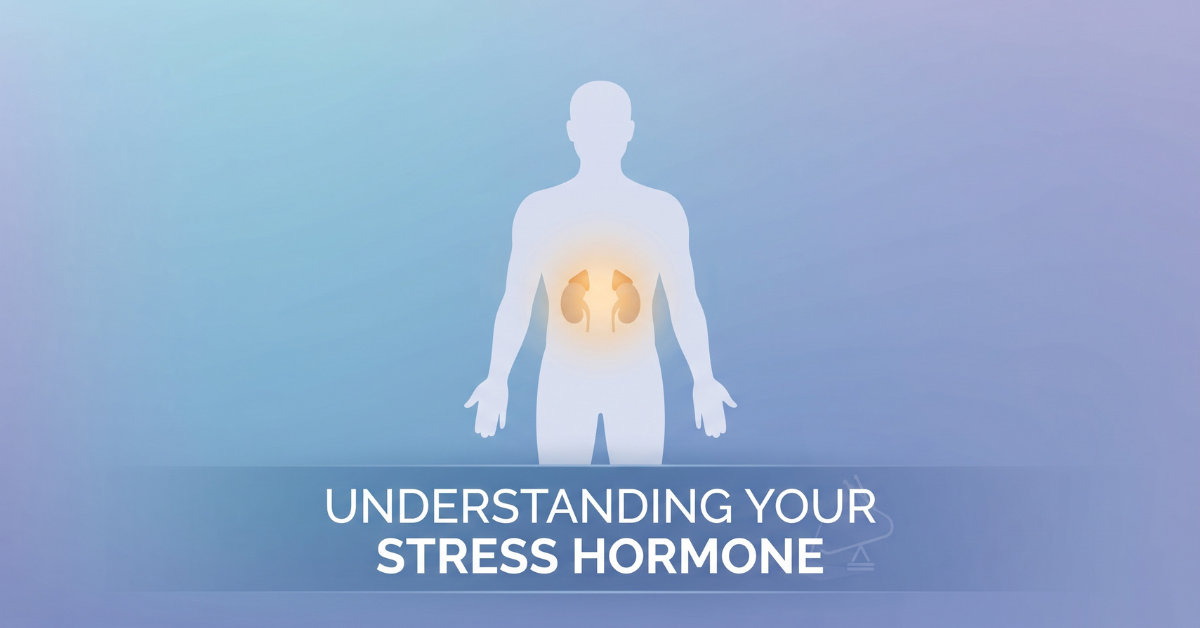
Cortisol is produced by the adrenal glands, two small structures that sit atop your kidneys, and it operates on what endocrinologists call the hypothalamic-pituitary-adrenal (HPA) axis — a communication loop between your brain and your adrenal glands that governs how your body perceives and responds to stress. Far from being an “enemy” hormone, cortisol is essential for survival: it regulates blood sugar, controls inflammation, supports blood pressure, and helps you wake up in the morning.
Under healthy conditions, cortisol follows a predictable diurnal rhythm. It peaks about 30 to 45 minutes after waking — a phenomenon researchers call the Cortisol Awakening Response — and then gradually tapers off throughout the day, reaching its lowest point around midnight. This rhythm is what allows you to feel alert in the morning and naturally sleepy at night. Problems tend to arise not because cortisol itself is “bad,” but because chronic psychological stress, poor sleep, overtraining, and yes, aggressive caloric restriction, can flatten or disrupt this rhythm, keeping cortisol elevated at the wrong times of day.
Signs Your Cortisol Rhythm May Be Off
While only a physician can diagnose a true HPA axis dysfunction through proper lab work, many wellness researchers point to a cluster of everyday signals that suggest your stress-response system may be running in overdrive: difficulty falling asleep despite feeling exhausted, a “wired but tired” sensation in the evening, sugar or salt cravings in the late afternoon, increased abdominal fat storage despite a stable diet, irritability or a short fuse, and a racing heart or shallow breathing during ordinary daily tasks. If several of these sound familiar, the good news is that the solution rarely lies in restriction — it lies in restoring rhythm.
Why Strict Dieting Backfires: The Diet-Stress Paradox
Here is the paradox that trendy “cortisol cocktail” content rarely addresses: your body cannot distinguish between the stress of a looming work deadline and the stress of eating 800 fewer calories than it needs. Both register in the hypothalamus as a threat to survival. When you drastically cut calories, skip meals, or eliminate entire food groups, your body interprets this as a resource scarcity emergency and responds by increasing cortisol output to mobilize glucose from stored energy. In other words, the very “cortisol diets” promising a flatter stomach in two weeks can trigger the exact hormonal spike they claim to fix.
This is why sustainable, evidence-informed cortisol management focuses on nervous system regulation and lifestyle rhythm rather than restriction. The following sections walk through six pillars — sleep, breathwork, movement, light exposure, connection, and nourishment — that research consistently associates with a calmer, more balanced stress response.
Pillar One: Sleep Architecture and the Cortisol Rhythm
If there is one non-negotiable pillar in cortisol regulation, it’s sleep. Sleep researchers have repeatedly observed that even a single night of shortened or fragmented sleep can elevate evening cortisol levels the following day, and chronic sleep restriction appears to blunt the natural morning peak while raising the evening trough — effectively flattening the rhythm your body relies on. This creates a frustrating loop: elevated evening cortisol makes it harder to fall asleep, which further disrupts the rhythm the next night.
Practical Sleep Hygiene Adjustments
Rather than chasing a rigid eight-hour rule, sleep scientists generally recommend focusing on consistency: going to bed and waking up within the same 30-to-60-minute window every day, including weekends. A cooling bedroom environment, ideally between 65 and 68 degrees Fahrenheit, supports the natural drop in core body temperature that precedes sleep onset. Dimming household lights in the two hours before bed also helps, since bright artificial light, particularly blue-spectrum light from phones and laptops, can suppress melatonin and delay the natural evening decline in cortisol.
A wind-down ritual matters more than most people realize. This doesn’t need to be elaborate: dimming lights, light stretching, reading a physical book, or a warm shower can all signal to the nervous system that the day’s demands are winding down. For those who find their mind races the moment they lie down, a diffused calming scent can be a remarkably simple addition to a nightly routine — lavender essential oil, in particular, has been studied for its mild sedative and anxiolytic properties, and a few drops in a bedside diffuser like the Cliganic Organic Lavender Essential Oil can become a sensory cue that it’s time to unwind.
Pillar Two: Breathwork and Mindfulness as Nervous System Regulators

Of every intervention studied in stress physiology, slow, controlled breathing may have the most immediate and measurable effect. When you breathe slowly and extend your exhale, you stimulate the vagus nerve, which activates the parasympathetic (“rest and digest”) branch of your nervous system and directly counteracts the sympathetic (“fight or flight”) activation that drives cortisol release. This is not abstract wellness talk — it’s basic autonomic physiology, and it’s why a short breathing practice can shift how you feel within minutes.
A Simple Protocol: The 4-7-8 Technique
One widely taught technique is the 4-7-8 breath: inhale quietly through the nose for a count of four, hold the breath for a count of seven, and exhale completely through the mouth for a count of eight. Repeating this cycle four to eight times, ideally twice a day, gives the vagus nerve consistent signals to downshift. Many people find this most powerful either first thing in the morning, to prevent the day’s stressors from compounding, or in the ten minutes before bed.
Building a Sustainable Mindfulness Habit
Mindfulness meditation has one of the deepest research bases in stress science, with numerous studies associating consistent practice with reduced perceived stress and, in several trials, measurably lower cortisol output. The barrier for most people isn’t belief in meditation — it’s consistency. Rather than aiming for 30-minute sessions that inevitably get skipped, wellness practitioners increasingly recommend “micro-mindfulness”: three to five minutes, anchored to an existing habit like your morning coffee or your commute.
If silence and self-guided meditation feel intimidating or you struggle to quiet racing thoughts on your own, structured audio-guided programs can dramatically lower the barrier to entry. Tools designed specifically around calming the mind before sleep or during high-stress moments, such as MindSilence, are worth exploring if you want a guided, done-for-you approach rather than building a meditation practice entirely from scratch.
Pillar Three: Gentle Movement Over Extreme Exercise

This may be the most counterintuitive piece of cortisol advice in the entire wellness space: more exercise is not automatically better. High-intensity interval training, long fasted cardio sessions, and daily maximal-effort workouts are themselves potent physical stressors, and for a nervous system that is already dysregulated from work stress, poor sleep, or under-eating, piling intense exercise on top can push cortisol higher rather than lower it. This doesn’t mean exercise is the enemy — it means matching the intensity of movement to your current capacity for recovery.
Low-Intensity Steady State: The Underrated Cortisol Tool
Brisk walking, easy cycling, swimming at a conversational pace, and restorative yoga fall into a category exercise physiologists call low-intensity steady-state (LISS) activity. These forms of movement improve circulation, support healthy blood sugar regulation, and appear to promote parasympathetic activity without triggering the same acute cortisol surge associated with high-intensity training. A simple daily target — a 20 to 30 minute walk outdoors, ideally in the morning — is one of the most reliably recommended, low-risk interventions in the entire stress-management literature.
When Structure Helps More Than Willpower
For many people, the challenge isn’t knowing that gentle movement helps — it’s actually building consistency around it. If you find that unstructured “just go for a walk” advice never quite sticks, a structured, progressive movement program can provide the accountability and variety that keeps you engaged without tipping into overtraining. Platforms like JustFit are built around adaptable, at-home routines that can be scaled to a lower-intensity, recovery-focused format, making them a reasonable option for anyone specifically trying to move their body without adding another stressor to an already taxed system.
Pillar Four: Sunlight, Circadian Anchoring, and Nature Exposure

Your cortisol rhythm is deeply tied to light exposure, specifically the light that enters your eyes and signals your suprachiasmatic nucleus — the master clock of your brain — that the day has begun. Getting outside within the first hour of waking, even for just 10 to 15 minutes without sunglasses, appears to help anchor a healthy morning cortisol peak and, by extension, support the natural evening decline that allows for restful sleep. This single habit, often called “morning light hygiene,” is one of the simplest and most evidence-supported interventions for regulating circadian-linked hormones.
The Restorative Power of Green Space
Beyond light exposure alone, time spent in natural, green environments has been associated in environmental psychology research with reduced markers of physiological stress, including salivary cortisol. The Japanese practice of shinrin-yoku, or “forest bathing,” has been studied specifically for its calming autonomic effects, with researchers observing reductions in stress hormone markers among participants who spent unhurried time in wooded or green environments compared to urban settings. You don’t need a forest to benefit — a local park, a tree-lined street, or even a well-tended garden can offer a similar, if smaller-scale, effect when visited regularly and without your phone in hand.
Pillar Five: Social Connection and Laughter as Biological Regulators

Human connection is not a soft, secondary consideration in stress physiology — it is one of the most direct regulators of the HPA axis available to us. Social support has been consistently linked in psychoneuroendocrinology research to a dampened cortisol response to acute stressors, and conversely, chronic social isolation has been associated with elevated baseline cortisol over time. Warm physical touch, meaningful conversation, and shared laughter all appear to stimulate oxytocin release, a hormone that works in direct counterbalance to cortisol.
Making Connection a Deliberate Practice
In a culture that often treats socializing as a scheduling afterthought, it’s worth treating connection with the same intentionality as a workout or a meal plan. A weekly phone call with a close friend, a recurring coffee date, or simply choosing an in-person conversation over a text message when possible can meaningfully shift your baseline stress load over time. Even brief, low-stakes social interactions — chatting with a neighbor, laughing at a genuinely funny video with a partner — appear to offer a small but real buffering effect against the day’s accumulated stress.
Pillar Six: Nourishing Without Restriction — Food as Regulation, Not Punishment

As established earlier, the goal here is not restriction — it’s stability. Blood sugar volatility is one of the most underappreciated drivers of cortisol spikes. When you skip meals or go long stretches without eating, blood glucose drops, and your body releases cortisol specifically to trigger glucose release from the liver. This is a normal, protective mechanism, but when it happens repeatedly throughout the day due to erratic eating patterns, it contributes to the very “wired but tired” feeling many people are trying to escape.
Building Balanced, Regular Meals
Rather than following a rigid “cortisol diet” meal plan, the most sustainable approach is simply eating regularly spaced meals that include a source of protein, fiber-rich carbohydrate, and healthy fat at each sitting. This combination slows glucose absorption and helps prevent the sharp blood sugar swings that provoke a stress response. Complex carbohydrates in particular — oats, sweet potatoes, legumes — have been associated with modest reductions in cortisol compared to highly refined, sugar-dense alternatives, likely due to their gentler effect on blood glucose and their role in supporting serotonin production.
Small Comforts, Not Forbidden Foods
Dark chocolate, herbal teas, and a small handful of nuts are frequently featured in “anti-cortisol” food lists, and there’s reasonable science behind the inclusion of each. Dark chocolate with a high cocoa percentage contains flavanols that have been studied for mild reductions in stress hormone reactivity, chamomile and other herbal teas offer a calming ritual alongside mild bioactive compounds, and nuts provide magnesium and healthy fats that support overall nervous system function. The point is not that any single food is a magic fix — it’s that framing meals around nourishment and enjoyment, rather than restriction and guilt, removes an entire category of self-imposed stress from your day.
Cortisol Myths vs. Facts: Separating Wellness Trends From Physiology
The explosion of “cortisol face,” “cortisol belly,” and “cortisol cocktail” content across social platforms has done something unusual: it has made more people aware of a real hormone while simultaneously spreading a fair amount of oversimplified or outright inaccurate information. Before going further, it’s worth clearing up a few of the most persistent myths.
Myth: “Cortisol Face” Is a Distinct, Diagnosable Condition
Puffiness, facial fullness, and fluid retention can absolutely be influenced by chronic stress, poor sleep, high sodium intake, and hormonal fluctuations — and cortisol dysregulation can be one contributing factor among several. However, “cortisol face” as a specific, self-diagnosable syndrome is more a social-media framing than a recognized clinical entity. If facial swelling is sudden, severe, or accompanied by other symptoms, it warrants an actual medical evaluation rather than a supplement routine.
Myth: You Can “Detox” Cortisol in a Weekend
Cortisol isn’t a toxin sitting in your tissues waiting to be flushed out through a juice cleanse. It’s a hormone produced continuously by an active gland in response to real-time signals from your brain. There is no 48-hour “detox” that meaningfully resets a rhythm that took months or years of chronic stress, poor sleep, and dietary volatility to disrupt. Rhythm restoration is a matter of weeks of consistency, not a weekend protocol.
Myth: All Stress Is Bad for Cortisol
Short bursts of acute stress — a challenging workout, a public speaking engagement, even a cold shower — trigger a healthy, adaptive cortisol spike that resolves within an hour or two and can actually build resilience over time, a concept researchers refer to as hormesis. The concern is chronic, unresolved stress: the kind that never gets a chance to fully wind down before the next stressor hits. The goal of this guide isn’t to eliminate cortisol spikes entirely; it’s to ensure your body gets adequate recovery between them.
Fact: Cortisol Fluctuates Meaningfully Across the Menstrual Cycle
For women, cortisol doesn’t operate in isolation — it interacts closely with estrogen and progesterone. Many people notice heightened stress reactivity and sleep disruption in the luteal phase (the one to two weeks before menstruation), a pattern some researchers attribute to progesterone’s influence on the HPA axis. Understanding this cyclical variation can be genuinely validating: if you notice you feel more “on edge” during a specific week each month, that isn’t a personal failing — it’s a predictable hormonal interaction worth planning around, for example by front-loading demanding tasks earlier in the cycle when possible.
Cortisol Across Life Stages
Perimenopause and Menopause
As estrogen declines during perimenopause and menopause, many women report a noticeable uptick in anxiety, disrupted sleep, and a stress response that feels more intense than it used to. Estrogen has a modulating effect on the HPA axis, and its decline can leave cortisol responses somewhat less buffered. This makes the foundational pillars in this guide — particularly consistent sleep, morning light, and magnesium sufficiency — especially relevant during this life stage, and it’s a conversation worth having directly with a healthcare provider, since hormone-related options may also be appropriate depending on individual circumstances.
High-Stress Careers and “Always On” Culture
For those in demanding, high-responsibility roles, the challenge is less about a single acute stressor and more about the absence of any true recovery window between meetings, notifications, and deadlines. In this context, “micro-recoveries” become essential: a 90-second breathing reset between calls, a lunch break actually spent away from a screen, or a hard stop time in the evening after which work communication is genuinely closed off. These boundaries are not indulgent — they are the functional equivalent of letting a muscle recover between sets, applied to the nervous system.
New Parents and Sleep-Deprived Households
New parents face a uniquely difficult version of this challenge, since the primary lever — consistent, sufficient sleep — is often simply unavailable for months at a time. In this specific situation, doubling down on the other pillars becomes especially valuable: even five minutes of morning light on the porch while holding a coffee, brief shared laughter with a partner, and protein-forward snacks that stabilize blood sugar between fragmented sleep stretches can meaningfully soften the physiological load during an inherently high-stress season.
Common Mistakes That Quietly Keep Cortisol Elevated
Before layering in new habits, it’s worth auditing for a handful of common, easy-to-miss patterns that can undo even a well-intentioned routine.
1. Checking Your Phone Within Minutes of Waking
Reaching for your phone before your feet hit the floor front-loads your nervous system with unfiltered stimulation — emails, news, notifications — before your cortisol awakening response has even finished doing its job of gently bringing you to alertness. A 15 to 20 minute phone-free buffer after waking gives that natural rhythm room to unfold without immediate competition.
2. Relying on Caffeine as Your Only Morning Energy Strategy
Caffeine itself stimulates cortisol release, particularly on an empty stomach or when consumed within the first hour of waking, layering an additional stimulant response on top of your body’s already-peaking natural cortisol. Delaying caffeine by 60 to 90 minutes after waking, and pairing it with food, tends to produce steadier energy without the same late-morning crash-and-jitters pattern many people describe.
3. Treating Weekends as “Catch-Up Sleep” Days
Sleeping in dramatically later on weekends creates what sleep researchers sometimes call “social jet lag” — a mismatch between your weekday and weekend sleep schedule that disrupts the very rhythm you’re trying to protect. A one-hour variance is generally fine; a three or four-hour swing tends to leave people feeling more fatigued by Monday, not less.
4. Skipping Meals to “Save Calories” for Later
As covered earlier, this is one of the most direct dietary triggers of cortisol spikes. If weight management is a genuine goal, it is far better served by consistent, moderate portions throughout the day than by skipping meals and risking a late-day binge driven by both hunger and cortisol-elevated cravings for quick energy.
5. Doom-Scrolling as a “Wind Down” Activity
Scrolling social media or news right before bed feels passive, but it is cognitively and emotionally activating — the opposite of what your nervous system needs in the hour before sleep. Swapping even a portion of this time for a physical book, a guided audio session, or simply lying in dim light can shift the pre-sleep window from stimulating to genuinely restful.
A Sample Low-Cortisol Day, Hour by Hour
Reading about principles is one thing; seeing them assembled into an actual day makes the approach far easier to adopt. Below is a realistic, non-extreme example of how these pillars might fit together for someone with a standard daytime work schedule.
Morning (6:30–9:00 AM)
Wake at a consistent time. Spend the first 15 minutes phone-free. Step outside for 10 minutes of natural light, even if it’s cloudy, ideally while drinking a glass of water. Eat a protein-forward breakfast — eggs, Greek yogurt, or a protein smoothie — before your first cup of coffee, and delay caffeine until roughly an hour after waking.
Midday (12:00–2:00 PM)
Eat lunch away from your desk when possible, including a source of protein and fiber to avoid a mid-afternoon blood sugar crash. Take a 15 to 20 minute walk outdoors after eating, which supports both blood sugar regulation and an additional dose of daylight exposure. If work stress is spiking, a two-minute 4-7-8 breathing reset between meetings can prevent tension from accumulating unchecked.
Evening (6:00–10:00 PM)
Eat dinner at a consistent time rather than very late, allowing your evening cortisol decline to proceed unimpeded by active digestion late into the night. Dim household lighting starting around 8:00 PM. Take ashwagandha and magnesium bisglycinate with dinner or shortly after, if you’ve chosen to incorporate them, since both are commonly used in the evening. Spend 20 to 30 minutes on a screen-free wind-down activity, diffuse lavender oil in the bedroom, and aim for lights-out at a consistent time that allows for seven to nine hours of sleep.
Tracking Progress Without a Scale
Because this approach deliberately avoids restrictive dieting, it’s worth defining success in terms that actually reflect cortisol regulation rather than weight change, which can be influenced by dozens of unrelated factors. Useful markers to track over two to four weeks include: how long it takes you to fall asleep at night, whether you wake up feeling rested versus groggy, the intensity and frequency of afternoon sugar or caffeine cravings, your general emotional reactivity to minor frustrations, and how quickly your heart rate settles after a stressful moment. Journaling these a few times a week, even briefly, tends to reveal a clearer trend than day-to-day mood alone.
Cortisol Testing: What the Numbers Actually Mean
With cortisol’s rise in popularity has come a rise in at-home testing kits, typically measuring cortisol through saliva, urine, or hair samples. While these tests can offer interesting data points, interpreting them correctly requires context that a standalone kit rarely provides. Saliva testing captures a single moment in time and is heavily influenced by the exact time of day, recent food or caffeine intake, and even how well you slept the night before, which is why clinicians who use cortisol testing meaningfully typically rely on a four-point diurnal panel — morning, midday, evening, and night samples — rather than a single reading.
When Testing Is Actually Useful
A structured diurnal panel, ideally ordered and interpreted through a healthcare provider, can be genuinely informative if you’re experiencing persistent, unexplained symptoms such as significant fatigue, unexplained weight changes, or symptoms suggestive of an actual adrenal disorder like Cushing’s syndrome or Addison’s disease. These are distinct medical conditions involving cortisol production far outside the range that lifestyle interventions can address, and they require proper diagnosis and, often, medical treatment. For the vast majority of people dealing with everyday, stress-related cortisol elevation rather than a diagnosable endocrine disorder, however, tracking the practical symptoms discussed earlier in this guide — sleep quality, energy stability, cravings, emotional reactivity — tends to be more actionable than a single test result.
A Word on Hair Cortisol Testing
Hair cortisol analysis, which reflects average cortisol exposure over the preceding one to three months, has gained traction in research settings as a way to capture chronic, long-term stress load rather than a single day’s fluctuation. It remains primarily a research tool rather than a standard clinical diagnostic, and results can vary based on hair treatments, washing frequency, and hair color, so any at-home version of this test should be interpreted with appropriate caution.
Workplace Strategies for Managing Cortisol During the 9-to-5
For most working adults, the office or home-office environment is where the majority of daily cortisol-triggering moments occur, which makes it a high-leverage place to intervene. A few structural changes can meaningfully reduce the cumulative stress load of a workday without requiring a career change or a dramatically reduced workload.
Batch Your Notifications
Constant email and chat notifications create a steady drip of minor, unresolved alerts that keep the sympathetic nervous system mildly activated throughout the day. Checking messages in three or four dedicated windows, rather than reactively throughout the day, has been associated in workplace psychology research with lower reported stress and improved focus, since it removes the anticipatory tension of wondering what might have just arrived.
Protect Genuine Breaks
Eating lunch at your desk while continuing to work removes one of the few natural cortisol-lowering windows available during a workday. Stepping away, even for 20 minutes, and ideally combining it with the outdoor movement discussed earlier, gives your nervous system a genuine chance to downshift before the afternoon stretch.
Set a Real End-of-Day Boundary
Work that bleeds into the evening without a clear stopping point prevents the natural evening cortisol decline from proceeding uninterrupted. A simple, consistent shutdown ritual — closing your laptop, writing tomorrow’s top three priorities, and physically leaving your workspace — provides a clear psychological signal that the workday’s demands have ended, even if your task list has not.
Cortisol and Caffeine: Finding Your Personal Threshold
Caffeine sensitivity varies significantly based on genetics, particularly variations in the CYP1A2 gene that determine how quickly you metabolize caffeine, which is why some people can drink coffee at 4 p.m. without any sleep impact while others feel wired from a single morning cup well into the evening. Beyond genetics, caffeine directly stimulates cortisol and adrenaline release, and this effect is more pronounced during periods of high psychological stress, meaning your usual amount of coffee may hit differently during a demanding week than during a calm one.
A practical approach is to treat your caffeine intake as adjustable rather than fixed: during unusually high-stress periods, consider reducing your usual intake by a third to half, shifting your last cup earlier in the day, and paying attention to whether afternoon jitteriness or a racing heart improves. This is not about eliminating caffeine, which for most people carries genuine cognitive and even some metabolic benefits in moderation, but about recognizing that your tolerance is not static.
The Role of Hydration in Stress Physiology
Even mild dehydration, in the range of one to two percent of body weight, has been shown in controlled studies to measurably increase cortisol levels, likely because dehydration itself represents a physiological stressor that your body responds to as it would any other perceived threat. This is an easy factor to overlook amid more complex stress-management advice, yet it may be one of the simplest levers available. Aiming for consistent water intake throughout the day, rather than large amounts consumed infrequently, along with adequate sodium and potassium from whole foods to support proper fluid balance, is a foundational and often underrated piece of the cortisol puzzle.
The Gut-Cortisol Connection
The relationship between your gut and your stress response runs in both directions, a dynamic researchers refer to as the gut-brain axis. Chronic stress and elevated cortisol can alter gut motility, increase intestinal permeability, and shift the composition of the gut microbiome toward less favorable bacterial populations. In turn, an imbalanced microbiome appears to influence the HPA axis itself, partly through the vagus nerve and partly through the production of neurotransmitter precursors, since a substantial portion of the body’s serotonin is produced in the gut.
Supporting Gut Health as a Stress Strategy
This doesn’t require an elaborate protocol. Regularly including fermented foods such as plain yogurt, kefir, sauerkraut, or kimchi introduces beneficial bacterial strains, while a diverse intake of plant fiber — different vegetables, legumes, and whole grains across the week rather than the same three foods on repeat — feeds a wider range of beneficial gut species. Because this is, again, about diversity and consistency rather than restriction, it fits naturally alongside the non-restrictive nutrition approach outlined earlier in this guide.
Why Gut Symptoms Often Flare During Stressful Periods
If you’ve noticed that digestive discomfort, bloating, or irregularity tends to intensify during your most demanding weeks, this is a well-documented physiological pattern rather than a coincidence. Cortisol diverts blood flow and energy away from digestive processes during a perceived threat, since digestion is a lower survival priority than an acute stress response. Addressing the underlying stress load, rather than only treating digestive symptoms in isolation, is often the more effective long-term approach.
Cortisol and Skin Health: The Beauty Industry’s Favorite Hormone
It’s no accident that “cortisol” has become a fixture in skincare marketing alongside wellness content. Chronically elevated cortisol can measurably affect skin in several ways: it increases sebum production, which can worsen acne; it breaks down collagen over time, potentially accelerating the appearance of fine lines; and it impairs the skin’s natural barrier function, making skin more reactive and prone to dryness or irritation. This is why many dermatologists now describe skin health as inseparable from overall stress physiology rather than treating it as a purely topical concern.
A Skin-Supportive Routine That Complements Internal Stress Work
While no cream can substitute for addressing the root physiological drivers covered throughout this guide, a consistent, gentle skincare routine can meaningfully reduce the additive stress of skin irritation and inflammation. Prioritizing a barrier-supportive moisturizer, daily broad-spectrum SPF, and antioxidant-rich serums (vitamin C and niacinamide are particularly well studied) helps protect skin from the compounding effects of both UV exposure and internal inflammatory processes, allowing your skin to reflect the internal progress you’re making rather than lagging behind it.
Your 4-Week Cortisol Rhythm Roadmap
Rather than attempting every recommendation in this guide simultaneously, consider a phased four-week approach that builds sustainably.
Week One: Anchor Your Rhythm
Focus exclusively on two habits: a consistent wake time (within a 30-minute window, seven days a week) and 10 minutes of morning outdoor light. Resist the urge to add anything else. These two habits alone begin re-anchoring your circadian rhythm and, by extension, your cortisol curve.
Week Two: Regulate Your Nervous System
Layer in a twice-daily breathing practice (morning and pre-bed) and establish a genuine screen-free wind-down window of at least 20 minutes before sleep. Continue the Week One habits without interruption.
Week Three: Stabilize Nutrition and Movement
Introduce three balanced, evenly spaced meals per day and a daily 20 to 30 minute low-intensity walk. If you’ve been engaging in frequent high-intensity training alongside high life stress, consider reducing to two or three sessions per week during this phase and observe how your sleep and energy respond.
Week Four: Layer in Targeted Support
With the foundational rhythm now more established, this is a reasonable point to introduce evidence-informed supplementation, such as ashwagandha and magnesium bisglycinate, alongside intentional social connection goals, such as one dedicated, phone-free conversation with a friend or family member each week. By this stage, most people report noticeably steadier energy, more predictable sleep, and fewer late-afternoon crashes compared to where they started.
Cortisol and Weight: Separating What’s Proven From What’s Overhyped
No discussion of cortisol would be complete without addressing the claim that launched a thousand social media posts: does cortisol actually cause weight gain, particularly around the midsection? The honest answer is nuanced. Chronically elevated cortisol does appear to promote the storage of visceral fat — the fat surrounding internal organs, as opposed to subcutaneous fat just under the skin — partly because visceral fat tissue has a higher density of cortisol receptors than fat stored elsewhere. Elevated cortisol also drives cravings for calorie-dense, highly palatable foods, since it increases the reward value of sugar and fat as part of the body’s ancient “refuel after a threat” mechanism.
What This Does Not Mean
This does not mean that cortisol alone explains most cases of weight gain, nor that “fixing your cortisol” will automatically produce significant fat loss independent of overall energy balance, activity level, and diet quality. Weight regulation remains a multifactorial process involving genetics, total caloric intake, physical activity, sleep, and numerous other hormones beyond cortisol alone, including insulin, leptin, and thyroid hormones. Cortisol is a meaningful piece of the puzzle for many people, particularly those under significant chronic stress, but it is rarely the sole driver, and framing it as a single miracle explanation tends to oversimplify a genuinely complex system.
Why the Non-Restrictive Approach Still Wins Here
This is precisely why this guide has intentionally avoided prescribing a restrictive “cortisol diet.” If chronically elevated cortisol is contributing to weight-related frustration, the evidence-based response is to address the stressors driving that elevation — poor sleep, chronic psychological stress, inadequate recovery from exercise, and blood sugar volatility — rather than adding caloric restriction, which, as established earlier, is itself a cortisol-elevating stressor. In practice, many people find that once sleep, movement, and nervous system regulation improve, both energy levels and body composition shift more naturally and sustainably than they did through willpower-based dieting alone.
Choosing a Support Routine That Fits Your Life
Not everyone wants, or has the bandwidth for, a fully self-directed approach, and there is no single “right” way to implement everything covered in this guide. If you thrive on structure and accountability, a guided movement platform like JustFit or a comprehensive, sequenced program such as the one available through our stress-reset partner can remove the decision fatigue of figuring out what to do each day. If you prefer a more piecemeal, self-guided approach, simply working through the four-week roadmap above at your own pace, adding a single supplement or habit at a time, tends to work just as well over the medium term. The right approach is ultimately the one you’ll actually sustain for more than two weeks, since consistency, far more than any single “best” intervention, is what drives real hormonal change.
Building Resilience: The Long-Term View
It’s worth zooming out from the day-to-day tactics in this guide to address a broader, more important shift in mindset: the goal isn’t to eliminate stress from your life, which is neither realistic nor even desirable, but to build a nervous system that recovers efficiently after being activated. Researchers sometimes describe this capacity as “allostatic load management” — essentially, how well your body bounces back to baseline after a stressor rather than staying elevated indefinitely. Every habit covered in this guide, from morning light to evening magnesium, functions less as a direct cortisol suppressant and more as a tool that strengthens this recovery capacity over time.
Why Consistency Beats Intensity
This is precisely why a single “perfect” day of stress management rarely produces noticeable results, while months of imperfect but consistent practice reliably does. The HPA axis, like most physiological systems, adapts gradually to repeated signals rather than dramatically to isolated events. Someone who consistently gets decent sleep, moves gently most days, and manages digital boundaries reasonably well will typically show better long-term stress resilience than someone who occasionally executes an elaborate, all-encompassing “reset day” surrounded by otherwise chaotic habits.
Two More Habits Worth Mentioning
Beyond the core mistakes covered earlier, two additional patterns deserve a brief mention. First, chronic multitasking — toggling rapidly between emails, messages, and tasks — keeps the brain in a state of continuous low-grade vigilance that mirrors, at a smaller scale, the same activation pattern as more obvious stressors. Batching similar tasks together and protecting short stretches of single-focus work can meaningfully reduce this cumulative load. Second, perfectionism around the very habits in this guide can itself become a stressor; treating an occasional missed walk or a late bedtime as a personal failure adds a layer of self-generated stress on top of whatever originally disrupted your routine. Consistency over time matters far more than any single day’s execution.
A Note on Individual Variation
Everything in this guide reflects general patterns observed across populations in research studies, but individual physiology varies considerably. Genetics, baseline health status, medication use, chronic conditions, and even individual gut microbiome composition all influence how strongly any given person responds to a specific intervention. Someone with a naturally robust stress response might notice significant benefit from adding just one or two of these habits, while someone dealing with more entrenched chronic stress or an underlying health condition may need a more comprehensive, sustained approach, ideally guided by a healthcare provider familiar with their full medical history.
This is also why this guide has intentionally avoided presenting any single intervention as a guaranteed fix. The honest, evidence-aligned position is that sleep, light exposure, breathwork, gentle movement, social connection, and balanced nutrition collectively shift the odds meaningfully in your favor, and that adaptogens and targeted supplementation can offer additional support once those foundations are in place — but that persistent, severe, or worsening symptoms always warrant a conversation with a qualified healthcare professional rather than an indefinite trial-and-error approach with over-the-counter products alone.
Adaptogens and Targeted Supplementation: What the Research Actually Says
Adaptogens are a class of herbs and roots that have been used in traditional medicine systems for centuries and are now the subject of growing modern research interest for their potential role in modulating the stress response. It’s important to be clear-eyed here: adaptogens are not a substitute for sleep, nutrition, or nervous system regulation, but for many people they serve as a helpful complement once the foundational habits above are already in place.
Ashwagandha: The Most Studied Adaptogen for Cortisol
Ashwagandha (Withania somnifera) is arguably the most researched adaptogen specifically in relation to cortisol. Several controlled human trials have measured salivary and serum cortisol before and after several weeks of consistent ashwagandha root extract supplementation and observed meaningful reductions compared to placebo, alongside self-reported improvements in perceived stress and sleep quality. Root extract standardized for withanolide content, such as a High-Potency Ashwagandha Root Extract, is the form most commonly used in the clinical literature. As with any supplement, it’s worth speaking with a healthcare provider before starting, particularly if you are pregnant, nursing, or managing a thyroid or autoimmune condition.
Magnesium: The Mineral Most People Are Quietly Deficient In
Magnesium plays a direct regulatory role in the HPA axis, and chronic stress itself depletes magnesium stores, creating a self-perpetuating cycle where low magnesium contributes to a heightened stress response, which in turn depletes magnesium further. Because modern diets and high stress levels both increase magnesium demand, many wellness-focused clinicians recommend a highly bioavailable, gentle-on-the-stomach form such as magnesium bisglycinate. A well-regarded option in this category is THORNE Magnesium Bisglycinate, often taken in the evening as part of a wind-down routine given magnesium’s supportive role in relaxation and sleep onset.
Lavender: Aromatherapy With Real Physiological Backing
While aromatherapy is sometimes dismissed as purely placebo, lavender specifically has a reasonably strong body of research behind its calming effects, with several studies measuring reduced anxiety scores and, in some cases, lower cortisol reactivity following inhaled lavender exposure. Diffusing a pure, high-quality oil such as Cliganic Organic Lavender Essential Oil in your bedroom in the evening is a low-effort, low-risk way to incorporate this into your existing wind-down ritual.
Additional Nutrients Worth Knowing About
L-Theanine
Found naturally in green tea, L-theanine has been studied for its ability to promote a calm, alert mental state without sedation, largely through its influence on alpha brain wave activity. It’s frequently paired with caffeine specifically to blunt the jittery, cortisol-adjacent edge that coffee alone can produce.
Omega-3 Fatty Acids
Omega-3s, particularly EPA and DHA found in fatty fish and fish oil supplements, have anti-inflammatory properties that intersect meaningfully with stress physiology, since chronic inflammation and chronic cortisol elevation frequently occur together. Several studies have associated higher omega-3 intake with a blunted cortisol response to psychological stress.
B-Complex Vitamins
B vitamins, especially B5, B6, and B12, are directly involved in adrenal hormone synthesis, and deficiencies have been associated with increased fatigue and stress sensitivity. For most people eating a varied diet this isn’t a major concern, but those under sustained high stress or following restrictive eating patterns may benefit from ensuring adequate intake through food or a well-formulated B-complex.
The Overlooked Digital Stress Factor
Modern cortisol conversations tend to focus on food, sleep, and exercise, but rarely address a stressor most of us are marinating in for eight or more hours a day: constant digital connectivity. Notification anxiety, the low hum of concern over online privacy and data security, and the simple cognitive load of being perpetually reachable all register as chronic, low-grade stress to the nervous system. Unlike an acute stressor with a clear beginning and end, this kind of background digital stress rarely resolves, which is precisely the pattern most associated with sustained, dysregulated cortisol output rather than a healthy, transient spike.
Simple boundaries help: designated phone-free blocks, notification batching, and turning off non-essential alerts entirely. For those who feel a specific undercurrent of anxiety about their online privacy and data exposure — a very real and increasingly common source of background stress — taking concrete action can itself be calming. Using a reputable VPN service to encrypt your browsing on public networks and reduce tracking is a practical, tangible step that can quiet that particular flavor of digital-age unease.
Building Your Personalized Low-Cortisol Lifestyle
By now it should be clear that the most effective natural ways to lower cortisol rarely involve a single dramatic change. If everything above feels like a lot to implement at once, that instinct is correct — and trying to overhaul all six pillars simultaneously is itself a stressor. A more sustainable approach is sequential: pick one pillar, ideally sleep or morning light exposure since both have outsized downstream effects on the others, and give it two to three consistent weeks before layering in the next.
For those who want more structure than a self-guided blog post can offer, a comprehensive, guided wellness program can remove much of the guesswork. Structured protocols such as the one available at this dedicated stress-reset program combine several of the pillars above — movement, nutrition timing, and nervous system regulation — into a single, sequenced plan for people who prefer a done-for-you framework over piecing one together on their own.
Quick-Reference Checklist
If you’d rather skim than reread, here is the entire guide condensed into a single actionable checklist you can return to any morning you need a reminder of where to start.
- Wake and sleep at consistent times, including weekends, within a 30 to 60 minute window.
- Get 10 to 15 minutes of outdoor light within an hour of waking, before checking your phone.
- Delay caffeine by 60 to 90 minutes after waking and pair it with food.
- Eat three balanced meals with protein, fiber, and healthy fat rather than skipping meals to “save calories.”
- Practice a two-minute breathing reset, such as the 4-7-8 technique, at least once during the workday.
- Favor a daily 20 to 30 minute walk over frequent high-intensity training, especially during high-stress stretches.
- Batch email and notification checking into a few dedicated windows rather than reacting constantly.
- Create a genuine, screen-free wind-down routine of at least 20 minutes before bed, including a lavender diffuser if desired.
- Consider evidence-informed supplementation, such as ashwagandha and magnesium bisglycinate, once foundational habits are in place.
- Prioritize at least one meaningful, in-person or phone social connection each week.
- Stay consistently hydrated throughout the day rather than in large infrequent amounts.
- Track sleep quality, cravings, and emotional reactivity over weeks rather than relying on the scale as your only progress marker.
The Bottom Line
Lowering cortisol naturally has very little to do with restriction and almost everything to do with rhythm: consistent sleep, regulated breathing, gentle rather than punishing movement, daily light exposure, real human connection, and meals that stabilize rather than starve your blood sugar. Layer in evidence-informed adaptogens like ashwagandha and foundational minerals like magnesium once the basics are dialed in, and you have a genuinely sustainable, science-aligned approach — one that respects your body’s actual physiology instead of fighting against it.
None of this requires perfection, and none of it requires another restrictive diet plan. It requires showing up for a handful of small, repeatable habits most days, giving each one a few weeks to take root before adding the next, and treating the inevitable off days as data rather than failure. Over time, that steady, unglamorous consistency is what actually reshapes a stress response — far more reliably than any single supplement, cleanse, or trending “cortisol hack” ever could. If you take away just one thing from this guide, let it be this: the most sustainable natural ways to lower cortisol are also the simplest ones, and they’re available to you starting tomorrow morning.
Stay dewy! Bookmark WellbeingPrime.com for more evidence-based wellness guides.
💡 Frequently Asked Questions (FAQ)
Q: Can you actually lower cortisol without changing your diet at all?
A: Yes, to a meaningful degree — several natural ways to lower cortisol work independently of diet. Sleep quality, morning light exposure, breathwork, and movement intensity all directly influence cortisol independent of diet. That said, eating regular, balanced meals to avoid blood sugar swings amplifies these other efforts rather than working against them.
Q: How long does it take to see a difference from natural cortisol-lowering habits?
A: Some interventions, like slow breathing, produce a felt shift within minutes. Habit-based changes like sleep consistency, morning light, and adaptogen supplementation typically require two to four weeks of consistent practice before more stable, noticeable changes emerge.
Q: Are there side effects to taking ashwagandha for stress?
A: Ashwagandha is generally well tolerated, though some people report mild digestive upset or drowsiness. It is not recommended without medical guidance for those who are pregnant, nursing, or have thyroid or autoimmune conditions, since it may influence thyroid hormone levels.
Q: Is intense exercise always bad for cortisol?
A: Not always — the issue is more about total stress load and recovery capacity than intensity alone. Someone who is sleeping well, eating enough, and managing psychological stress can typically handle intense training without issue. The risk arises when high-intensity exercise is added on top of an already dysregulated, under-recovered system.
Q: What is the single easiest habit to start with?
A: Most wellness practitioners point to morning sunlight exposure as the lowest-effort, highest-leverage habit, since it takes no equipment, costs nothing, and directly anchors the cortisol rhythm that influences sleep, mood, and appetite for the rest of the day.
Q: Can drinking more water really lower cortisol?
A: Staying adequately hydrated won’t dramatically reduce cortisol on its own, but research does show that even mild dehydration raises cortisol levels, since dehydration itself acts as a physiological stressor. Consistent hydration throughout the day is a simple, low-effort piece of a broader stress-management routine.
Q: Does cortisol testing at home actually tell me anything useful?
A: A single at-home saliva test offers limited insight because cortisol naturally fluctuates throughout the day. A four-point diurnal panel, ideally interpreted with a healthcare provider, offers a more complete and actionable picture, particularly if you’re experiencing persistent, unexplained symptoms.
Q: Will lowering my cortisol help me lose belly fat?
A: It may help for some people, since chronically elevated cortisol is associated with increased visceral fat storage and stronger sugar cravings. However, cortisol is one of many factors influencing weight, alongside overall diet quality, activity level, and other hormones, so it shouldn’t be viewed as a standalone weight-loss solution.
Q: Can stress supplements replace the need for good sleep or stress management habits?
A: No. Adaptogens like ashwagandha and nutrients like magnesium work best as a complement to foundational habits such as consistent sleep, regular movement, and stress-regulating routines, not as a replacement for them.
Q: Is it normal for stress and cortisol symptoms to feel worse at certain times of the month?
A: Yes, for many women. Cortisol interacts with fluctuating estrogen and progesterone across the menstrual cycle, and many people notice heightened stress reactivity and sleep disruption during the luteal phase, in the one to two weeks before menstruation.
Disclaimer: This article is for general informational and educational purposes only and does not constitute medical advice. It is not intended to diagnose, treat, cure, or prevent any condition. Always consult a qualified healthcare provider before starting any new supplement, exercise regimen, or wellness protocol, particularly if you are pregnant, nursing, or managing an existing health condition. This post may contain affiliate links, meaning WellbeingPrime.com may earn a commission from qualifying purchases at no additional cost to you.
Recommended Tags
lower cortisol naturally, stress hormone balance, adaptogens for stress, cortisol and sleep, holistic stress management
🌿 Weekly wellness, health & beauty insights — straight to your inbox
Free subscription · Cancel anytime