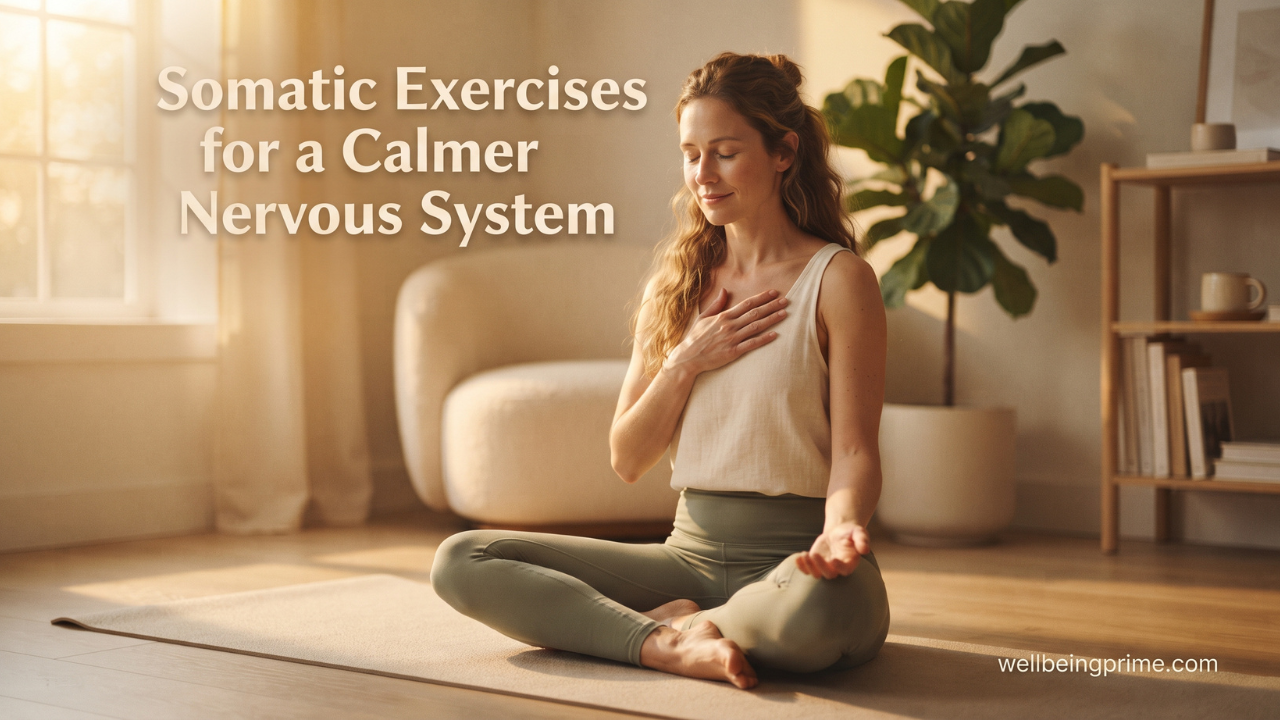
Somatic Exercises for Nervous System Regulation at Home: The Ultimate Authority Guide
A science-backed, body-first approach to calming anxiety, resetting stress hormones, and reclaiming a sense of safety — no studio, no equipment, no appointment required.
Somatic regulation begins the moment you bring attention back into the body.
Wellness Disclaimer: This article is for educational purposes only and does not constitute medical advice, diagnosis, or treatment. Somatic exercises are complementary practices and are not a substitute for professional mental health or medical care. If you are living with a diagnosed anxiety disorder, PTSD, cardiovascular condition, or are currently under psychiatric care, please consult a licensed healthcare provider before beginning any new nervous-system practice.
There is a particular kind of exhaustion that no amount of sleep seems to fix. It’s the exhaustion of a nervous system that has forgotten how to switch off — a body that scrolls through the day in a low hum of alertness, jaw clenched, shoulders climbing toward the ears, breath shallow and high in the chest. You are not imagining it, and you are not broken. Your nervous system is doing exactly what it was designed to do: protect you. This guide exists precisely because somatic exercises for nervous system regulation offer a direct, body-based way to interrupt that pattern.
This is where somatic exercises for nervous system regulation enter the conversation — not as another wellness trend, but as a return to something the body has always known how to do. The word “somatic,” from the Greek soma meaning “the living body,” points to a simple but often overlooked truth: regulation doesn’t start in the thinking mind. It starts in tissue, in breath, in the felt sense of the body itself. Long before we had language for stress, our bodies had mechanisms for releasing it — shaking, sighing, stretching, moving in waves. Somatic work is, in many ways, a rediscovery of an instinct we’ve been trained out of.
What makes this approach particularly compelling from a wellness science perspective is its accessibility. Unlike interventions that require specialized equipment, ongoing appointments, or a significant financial investment, somatic exercises require only a few square feet of floor space and a willingness to pay attention to sensation. This democratization of nervous system care matters — stress doesn’t discriminate by income or schedule, and neither should the tools available to address it. Whether you’re a shift worker with fragmented sleep, a parent stealing five minutes between responsibilities, or a professional navigating back-to-back video calls, these practices are designed to meet you exactly where you are.
In this Ultimate Authority Guide, we’re going to unpack the science of why your nervous system gets “stuck” in stress states, walk through five evidence-informed somatic exercises you can practice today in under fifteen minutes, and build a sustainable daily routine around them. We’ll also compare somatic practice to other popular stress-relief modalities so you can see exactly where it fits into a well-rounded self-care toolkit. Let’s begin at the root: understanding the nervous system itself.
The Historical Roots of Somatic Practice
Although “somatic exercise” has become a fashionable phrase in wellness media over the past decade, the underlying principles behind somatic exercises for nervous system regulation are far from new. Indigenous healing traditions across the world have long incorporated rhythmic movement, breath, chant, and touch as tools for processing collective and individual distress — from the trembling rituals of certain West African healing ceremonies to the slow, deliberate breathing patterns embedded in centuries-old yogic pranayama. What contemporary somatic science has done is not invent these practices, but rather build a physiological framework that explains, in the language of neuroscience, why they work.
The modern somatic movement, as it’s understood in Western wellness and clinical circles today, largely traces back to the mid-20th century. Wilhelm Reich, a psychoanalyst working in the 1930s and 1940s, was among the first to propose that unresolved emotional experience becomes literally “held” in the body as chronic muscular tension — a concept he called “body armoring.” While many of Reich’s specific theories have since been revised or discarded by mainstream science, his central premise — that psychological experience has a physical residue — laid important groundwork.
Decades later, dancer and movement therapist Thomas Hanna coined the term “somatics” itself in the 1970s, describing it as the study of the body as perceived from within, rather than observed from the outside as an object. Around the same period, biologist and trauma researcher Dr. Peter Levine began developing what would become Somatic Experiencing, drawing directly from his observations of wild animals — prey species that, after a predator encounter, visibly tremble and shake before returning to grazing, apparently discharging the survival energy mobilized during the chase. Levine’s core hypothesis, later expanded in his influential book Waking the Tiger, was that humans possess this same innate discharge mechanism but frequently override or suppress it due to social conditioning, leaving activation “stuck” in the body.
This lineage continued into contemporary trauma science through the work of psychiatrist Dr. Bessel van der Kolk, whose widely read book The Body Keeps the Score synthesized decades of research on how traumatic and chronic stress is stored physiologically, and how body-based interventions — including yoga, breathwork, and somatic movement — can be as effective as, or complementary to, traditional talk therapy in restoring nervous system flexibility. Understanding this lineage matters because it reframes somatic exercises for nervous system regulation not as a wellness fad, but as the modern articulation of an old, cross-cultural, and increasingly evidence-supported idea: the body is not just a passenger to our mental state — it is an active participant, and often the fastest route back to calm.
Understanding Your Nervous System: The Body’s Silent Command Center
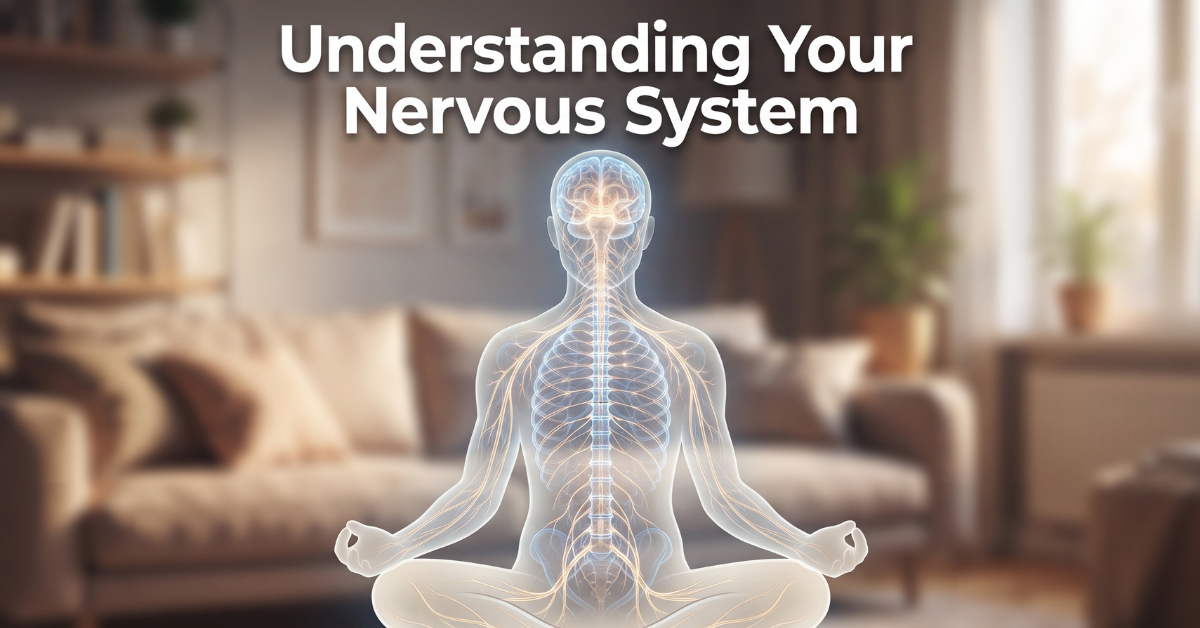
The autonomic nervous system runs in the background of every thought, mood, and reaction.
Your autonomic nervous system (ANS) is the part of your nervous system that operates without conscious instruction — it regulates heart rate, digestion, breathing rate, pupil dilation, and yes, your stress response. It has two primary branches that most people have at least heard of:
- The sympathetic nervous system (SNS): Often nicknamed “fight or flight,” this branch mobilizes the body for action. Heart rate increases, blood is redirected to the muscles, digestion slows, and cortisol and adrenaline flood the bloodstream.
- The parasympathetic nervous system (PNS): Often nicknamed “rest and digest,” this branch does the opposite — it slows the heart rate, supports digestion, and allows the body to repair, restore, and recover.
In a perfectly balanced system, these two branches work like a seesaw, shifting fluidly depending on what the moment requires. You encounter a stressor — a near-miss in traffic, a tense email from your boss — the sympathetic branch activates, you respond, the threat passes, and the parasympathetic branch brings you back to baseline. This is called autonomic flexibility, and it’s considered one of the strongest physiological markers of resilience.
The trouble is that modern life rarely gives the parasympathetic branch a clean opportunity to finish its job. We move from one low-grade stressor to the next without ever fully “completing” the stress cycle — a concept popularized by researchers Emily and Amelia Nagoski in their work on stress physiology. The body accumulates residual activation, and over time, this can present as chronic tension, disrupted sleep, digestive issues, a persistently racing mind, or an emotional reactivity that feels disproportionate to the trigger. This is often what people mean when they say they feel “wired but tired,” or that they are stuck in a state of hypervigilance even when, rationally, they know they are safe.
This is precisely the gap that somatic exercises are designed to close. Rather than trying to think your way out of a stress response — which is difficult, because the “thinking brain” (the prefrontal cortex) has limited influence over an activated survival system — somatic practice works from the bottom up. It uses breath, movement, touch, and vibration to send direct signals to the body that it is safe to downshift.
Top-Down vs. Bottom-Up: Why This Distinction Matters
In psychology and neuroscience, interventions are often described as either “top-down” or “bottom-up.” Top-down approaches — like cognitive behavioral therapy, journaling, or reframing negative thoughts — start with the conscious, thinking brain and work downward to influence emotional and physiological states. These approaches are powerful, but they depend on the prefrontal cortex being sufficiently “online” to engage in reflective thought, which is precisely the capacity that becomes impaired during acute stress or anxiety.
Bottom-up approaches, by contrast, start with the body — breath rate, muscular tension, posture, movement — and work upward to influence brain state and emotional experience. This is why, when someone is in the grip of a panic attack or an intense stress spiral, telling them to “just think positive” or “calm down” is rarely effective: the thinking brain isn’t fully in the driver’s seat at that moment. Slowing the breath, however, can work almost immediately, because it bypasses the need for cognitive reasoning altogether and speaks directly to the brainstem.
This is not to say one approach is superior to the other — in fact, research increasingly supports combining both. But for moments of acute physiological activation, somatic (bottom-up) tools tend to offer the fastest access point back to a regulated state, which is precisely why they’ve become such an essential addition to modern stress-management toolkits.
Your Window of Tolerance
A helpful concept for understanding your own nervous system is the “window of tolerance,” a term coined by psychiatrist Dr. Dan Siegel. This window represents the zone of arousal in which a person can think clearly, respond flexibly, and feel emotionally present — neither overwhelmed by sympathetic activation nor shut down in a dorsal vagal freeze. Life stressors, poor sleep, unresolved past experiences, and chronic overstimulation can all narrow this window over time, making a person more easily tipped into either hyperarousal (anxiety, irritability, racing thoughts) or hypoarousal (numbness, fatigue, disconnection).
The encouraging news is that this window is not fixed. Regular somatic practice appears to gradually widen it, giving a person more capacity to absorb stress without being knocked out of their regulated zone. Think of each somatic exercise not just as an immediate stress-relief tool, but as a small deposit into a long-term reserve of nervous system flexibility.
The Science of Calm: Vagal Tone, Polyvagal Theory, and Why Your Body Remembers
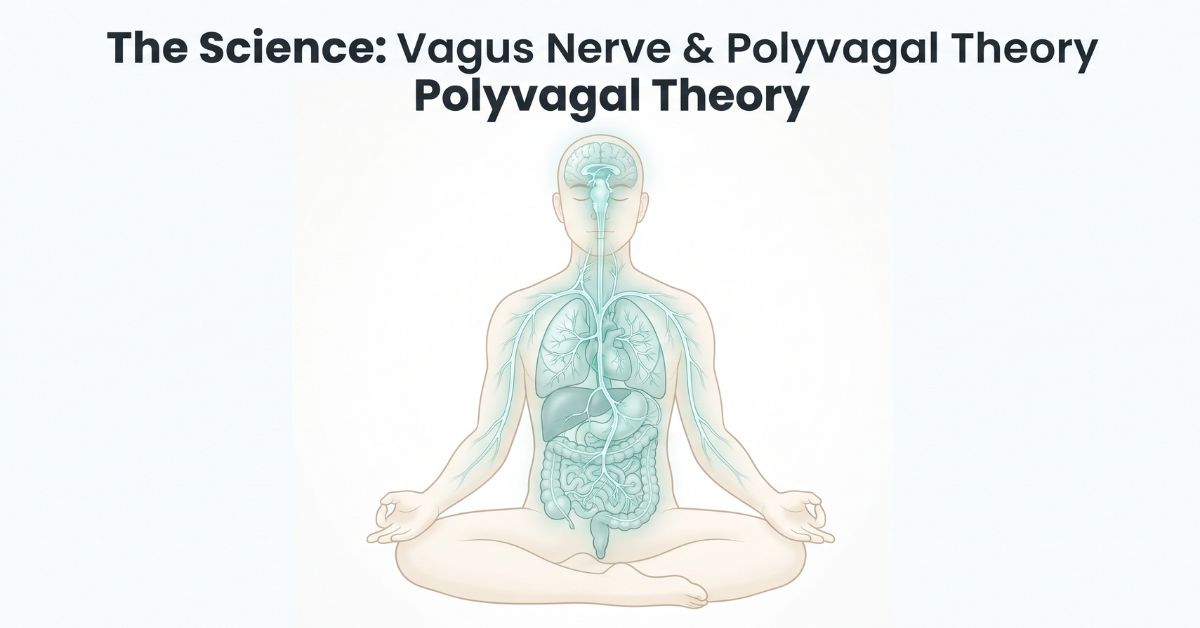
The vagus nerve is the longest cranial nerve in the body and the physiological anchor of somatic regulation.
At the center of nearly every serious conversation about somatic exercises for nervous system regulation is a single, remarkable structure: the vagus nerve. Latin for “wandering,” the vagus nerve winds from the brainstem down through the neck, chest, and abdomen, touching the heart, lungs, and digestive organs along the way. It is the primary highway of the parasympathetic nervous system, and its “tone” — essentially, how responsive and flexible it is — has become one of the most studied biomarkers in stress physiology.
Higher vagal tone, often measured through heart rate variability (HRV), is consistently associated with better emotional regulation, faster recovery from stress, and improved cardiovascular health. Research in behavioral physiology, including work published in journals such as Frontiers in Psychology and Biological Psychology, has repeatedly linked vagal tone to an individual’s capacity to self-soothe after a stressful event. The encouraging part of this research is that vagal tone is not fixed — it is trainable, much like a muscle, through consistent practice of breathing exercises, cold exposure, humming, and specific movement patterns.
Polyvagal Theory: A Map of Safety and Threat
No discussion of somatic regulation would be complete without referencing Polyvagal Theory, developed by neuroscientist Dr. Stephen Porges. This influential framework proposes that the autonomic nervous system isn’t just a simple on/off switch between “calm” and “stressed,” but operates across a hierarchy of three states:
- Ventral vagal state (safety and connection): The body feels calm, socially engaged, and capable of connection. This is the state most somatic exercises aim to restore.
- Sympathetic state (mobilization): The fight-or-flight response, useful for genuine threats but exhausting when chronically activated by everyday stress.
- Dorsal vagal state (shutdown): When a threat feels inescapable, the body can drop into a freeze or collapse response — numbness, fatigue, dissociation, a feeling of being “checked out.”
Porges’ central insight is that the body is constantly scanning the environment for cues of safety or danger — a process he termed neuroception — and it does this beneath conscious awareness. This explains why a person can logically know they are safe while their body still behaves as though it is under threat: the neuroceptive system has not received the message. Somatic exercises work directly at this neuroceptive level, offering the body concrete physical evidence — through breath rhythm, gentle touch, and grounded movement — that it can stand down.
This is also where thoughtful nutritional and lifestyle support can play a complementary role. Nervous system health depends partly on adequate mineral status, and magnesium in particular has been widely studied for its role in modulating the stress response and supporting relaxed muscle tone.
Heart Rate Variability: The Measurable Signature of Regulation
If vagal tone is the underlying capacity, heart rate variability (HRV) is one of the most accessible windows into measuring it. HRV refers to the natural variation in time between successive heartbeats — counterintuitively, a healthy, well-regulated heart does not beat like a metronome, but speeds up slightly on the inhale and slows on the exhale, a phenomenon known as respiratory sinus arrhythmia. Greater variability generally indicates a nervous system that can flexibly shift between sympathetic and parasympathetic states as needed, while lower variability has been associated in various studies with chronic stress, poor sleep quality, and reduced emotional resilience.
Many wearable devices now track HRV, which has turned it into a popular, if imperfect, proxy metric for tracking the effectiveness of a somatic practice over time. While we’d caution against becoming overly fixated on daily HRV numbers — stress physiology fluctuates for many reasons, including hydration, alcohol intake, and sleep — noticing an upward trend over weeks or months of consistent practice can be a motivating, tangible signal that your nervous system is building resilience.
Cortisol, Adrenaline, and the Cost of Chronic Activation
When the sympathetic nervous system activates, the adrenal glands release a cascade of stress hormones, chiefly adrenaline (epinephrine) for the immediate response, and cortisol to sustain alertness over a longer window. In short bursts, this system is adaptive and even lifesaving. Problems arise when cortisol remains chronically elevated — a state sometimes referred to as “cortisol dysregulation” — which has been associated in various bodies of research with disrupted sleep architecture, suppressed immune function, increased abdominal fat storage, and impaired memory consolidation.
Somatic exercises appear to help interrupt this cycle in two complementary ways: first, by directly engaging the parasympathetic “brake” through breath and movement, and second, by giving the body a concrete, physical experience of “completing” the stress response — much like Levine’s observation of animals shaking off activation after a threat passes. Rather than staying stuck in a loop of unresolved alertness, the nervous system receives clear physiological evidence that the perceived danger has passed.
🌿 Nutritional Support Spotlight
Many somatic practitioners pair their breathwork practice with a high-absorption magnesium supplement, since magnesium plays a documented role in muscular relaxation and nervous system signaling. If you’re curious, Doctor’s Best High Absorption Magnesium (Lysinate Glycinate Chelate) is a well-reviewed, bioavailable option worth discussing with your healthcare provider.
Somatic Exercises vs. Other Stress-Relief Methods: A Comparative Breakdown
One of the most common questions we receive is how somatic exercises for nervous system regulation compare to other well-known approaches to stress management. Here’s an honest, evidence-informed comparison:
It’s important to note upfront that none of these approaches exist in true isolation from one another in practice — the boundaries are more fluid than a comparison table might suggest. A well-designed mindfulness meditation session, for instance, often incorporates body-scanning techniques that overlap meaningfully with somatic principles. Similarly, many contemporary therapists trained in modalities like Somatic Experiencing or Sensorimotor Psychotherapy blend cognitive processing with body-based interventions within the same session, recognizing that thought and sensation are deeply interconnected rather than separate systems operating independently. The table below, then, should be read less as a set of rigid categories and more as a guide to relative strengths — a way of understanding which tool tends to be most efficient for which kind of moment, so you can build a more intentional, well-rounded toolkit rather than relying on a single method for every situation life presents.
| Method | Primary Mechanism | Time to Feel Effect | Best For |
|---|---|---|---|
| Somatic Exercises | Bottom-up nervous system signaling via breath, movement, touch | Minutes | Acute activation, body-held tension |
| Mindfulness Meditation | Top-down attention training | Weeks of practice | Rumination, present-moment awareness |
| Talk Therapy (CBT/psychotherapy) | Cognitive reframing, narrative processing | Weeks to months | Thought patterns, relational issues |
| Structured Exercise / Fitness | Endorphin release, cortisol metabolism | Same day | Energy, mood elevation, long-term resilience |
Importantly, these approaches are not competing — they’re complementary. Many people find that pairing a consistent movement or fitness practice with somatic regulation creates a powerful one-two punch: fitness builds long-term stress resilience, while somatic exercises offer an immediate reset in the moment tension arises.
A Composite Case Study: Maya’s Three-Week Shift
To illustrate how these principles play out in real life, consider the following composite scenario, drawn from patterns commonly described by wellness practitioners and reflected in stress-management case literature. “Maya” is a 34-year-old marketing manager who described feeling in a near-constant state of low-grade dread — waking at 4 a.m. with her mind racing, feeling unable to relax even during weekends, and noticing a tight band of tension across her upper back that no amount of massage seemed to permanently resolve.
In week one, Maya began with just the Grounding Breath exercise, practiced for two minutes upon waking and two minutes before bed. She reported no dramatic shift initially, but noticed she was yawning more during practice — a subtle sign of parasympathetic engagement. By week two, she added Shaking It Out after a particularly stressful client call, describing an unexpected wave of tension release through her shoulders, followed by a feeling she called “lighter, like I’d put something down.” By week three, having incorporated the full routine, Maya noted that her 4 a.m. wake-ups had become less frequent, and she found herself catching tension in her jaw and consciously softening it during the day — something she had never noticed she was doing before.
Maya’s experience mirrors a common pattern reported anecdotally in somatic practice: benefits often begin subtly (a yawn, a sigh, a moment of noticing) before becoming more overtly noticeable in sleep quality, emotional reactivity, or physical tension patterns. Her story is not a guarantee of identical results — individual experiences vary considerably — but it illustrates the gradual, cumulative nature of nervous system change that most practitioners describe.
The Cultural Shift Toward Body-Based Wellness
The growing popularity of somatic practice reflects a broader cultural recalibration in how we think about mental health and stress. For much of the last several decades, Western approaches to psychological wellbeing centered heavily on cognitive and verbal processing — talk therapy, journaling, cognitive restructuring. These remain valuable and well-supported tools. But there has been a noticeable shift, accelerated in part by a wider public familiarity with trauma-informed frameworks, toward recognizing that the body holds information, patterns, and residue that words alone don’t always reach.
This shift shows up in the mainstreaming of practices once considered niche: trauma-informed yoga classes, workplace wellness programs incorporating breathwork breaks, therapists increasingly trained in somatic modalities alongside traditional talk therapy, and a wellness media landscape that treats nervous system literacy as basic health knowledge rather than an alternative fringe interest. Somatic exercise, in this sense, isn’t just a personal practice — it’s part of a larger, ongoing evolution in how we collectively understand what it means to be well.
💪 Movement Meets Regulation
If you’re looking to build a consistent movement practice that complements your somatic routine, JustFit offers structured, low-impact home workout programs designed to support both physical conditioning and stress resilience.
Somatic Exercises for Specific Situations
While the five exercises in this guide form a strong general-purpose foundation, different life situations often call for slightly different applications. Below is a practical breakdown of how to adapt somatic practice to the moments people ask about most.
During a Panic Spike or Acute Anxiety Wave
In moments of acute panic, complex multi-step exercises can feel inaccessible — the thinking brain is offline, and long instructions are hard to follow. The most effective tools here are the simplest: extended exhale breathing (Exercise 1, simplified to just “breathe out longer than you breathe in”) and physical grounding through the five senses — naming five things you can see, four you can touch, three you can hear, two you can smell, and one you can taste. Pressing your feet firmly into the floor or your back against a wall can also provide an immediate proprioceptive anchor back into the present moment.
Before a High-Stakes Moment (Presentations, Interviews, Difficult Conversations)
Anticipatory stress before a known stressor responds particularly well to the Butterfly Hug (Exercise 3) combined with the Voo Breath (Exercise 5), practiced for two to three minutes immediately beforehand. This combination tends to lower the “activation ceiling” without sedating alertness entirely — you want to walk into the room calm, not drowsy.
Winding Down for Sleep
Insomnia driven by a racing mind or a “tired but wired” sensation often responds well to a slower-paced version of the full routine, with extra time spent on Grounding Breath and the Butterfly Hug, performed lying down in bed with the lights dimmed. Avoiding the more activating Shaking exercise close to bedtime is generally advisable, as it can feel energizing rather than settling for some people.
Midday Desk-Bound Stress
For those stuck at a desk with limited privacy, a discreet version of the routine works well: seated Grounding Breath, subtle seated spinal waves (a scaled-down Cat-Cow), and quiet Voo Breath practiced with the mouth mostly closed to minimize sound. Even ninety seconds of this discreet sequence between meetings can measurably lower perceived stress.
Emotional Overwhelm or Sudden Grief
In moments of intense emotion, the goal isn’t necessarily to “calm down” immediately, but to allow the emotion to move through the body without becoming stuck. Gentle rocking (side to side or forward and back), combined with slow exhale-focused breathing, can help the nervous system process intense feeling without suppressing it — an important distinction, since suppression itself can contribute to the very “stuck” activation somatic work aims to resolve.
Myths vs. Facts About Somatic Exercises for Nervous System Regulation
| Myth | Fact |
|---|---|
| “Somatic exercises are just stretching.” | While movement is involved, the mechanism is neurological, not muscular — the goal is nervous system signaling, not flexibility or strength gains. |
| “You need a trained therapist to benefit.” | Basic somatic exercises like those in this guide are safe for most people to practice independently; professional guidance is recommended primarily for trauma-focused deep work. |
| “If it doesn’t work immediately, it’s not for me.” | Like any nervous-system training, benefits often compound gradually over consistent practice rather than appearing dramatically after one session. |
| “Somatic work is only for people with trauma.” | Anyone with a nervous system — which is to say, everyone — can benefit, whether the goal is trauma recovery or simply everyday stress resilience. |
Signs Your Nervous System Is Beginning to Regulate
Progress with somatic exercises for nervous system regulation is often subtle before it’s obvious, and knowing what to look for can help you stay motivated during the early weeks of practice. Common early indicators include:
- Spontaneous sighing, yawning, or swallowing during or after practice — small physiological signs of parasympathetic activation.
- A gradual lengthening of your natural exhale, even outside of formal practice sessions.
- Noticing muscular tension (especially in the jaw, shoulders, and lower back) earlier in the day, before it builds to an uncomfortable level.
- Falling asleep more easily, or waking with a clearer, less foggy sense of mind.
- A slightly longer pause between a triggering event and your emotional reaction to it — the beginning of the “gap” that allows for more intentional responses.
- Improved digestion, as the parasympathetic “rest and digest” branch becomes more consistently accessible.
It’s worth emphasizing that regulation is not the same as never feeling stressed again — a flexible nervous system still activates appropriately in response to genuine stressors. The goal of somatic practice isn’t to eliminate the sympathetic nervous system, but to restore its natural partnership with the parasympathetic branch, so the body can mobilize when needed and recover fully afterward.
A Simple Weekly Self-Assessment
Because regulation unfolds gradually, it can help to check in with yourself on a weekly basis rather than expecting daily proof of progress from your somatic exercises for nervous system regulation. Consider jotting down brief answers to the following prompts in a journal each Sunday evening:
- How many nights this week did I fall asleep within 20-30 minutes of getting into bed?
- Did I notice myself catching and releasing tension (in the jaw, shoulders, or stomach) during the day, rather than only after the fact?
- How many times this week did I complete my somatic practice, even in a shortened form?
- On a scale of 1-10, how reactive did I feel this week compared to last week?
- Did I notice any spontaneous sighs, yawns, or moments of unprompted physical relaxation?
Over four to six weeks, patterns in these simple answers often reveal a clearer trajectory of change than trying to judge progress from any single day, which can be influenced by countless unrelated factors like poor sleep, illness, or an unusually demanding schedule.
The Core Practice: 5 Somatic Exercises You Can Do at Home Today
The following five exercises require no equipment, no prior experience, and less than fifteen minutes combined. Together, they form a complete toolkit of somatic exercises for nervous system regulation, sequenced deliberately — starting with breath (the fastest lever you have over your nervous system), moving into discharge (releasing stored activation), then into co-regulating touch, gentle mobility, and finally vocal toning.
Exercise 1: Grounding Breath (Diaphragmatic Breathing with Vagal Activation)
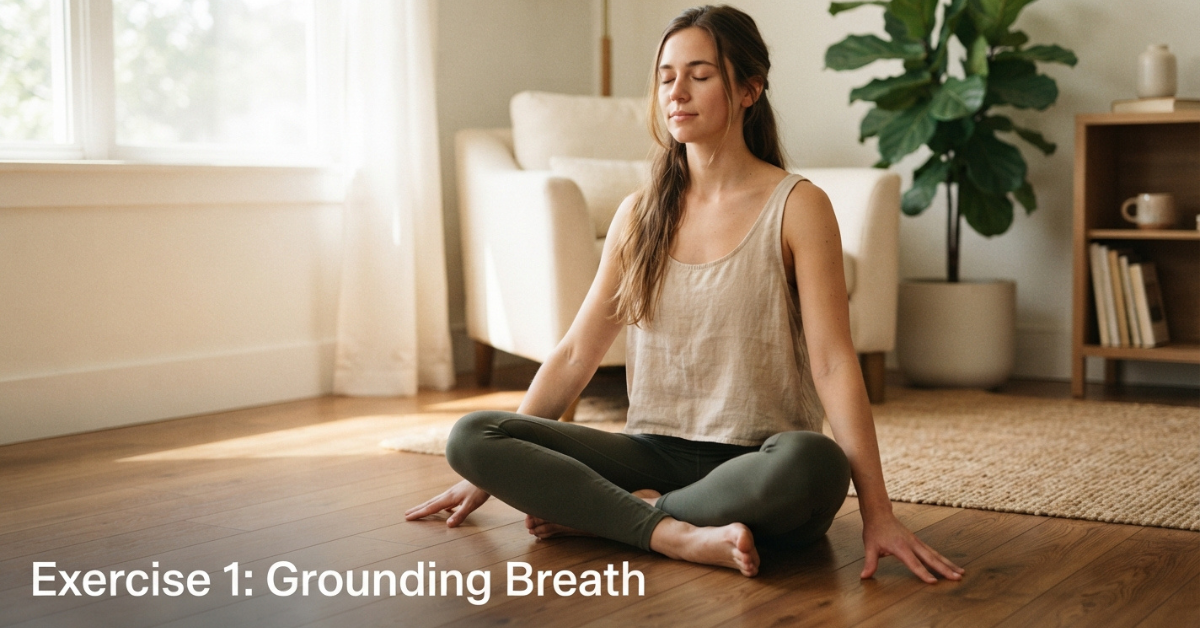
Why it works: Slow, diaphragmatic breathing directly stimulates the vagus nerve via mechanoreceptors in the diaphragm and lower lungs, sending a physiological “all clear” signal to the brainstem. Extending the exhale beyond the inhale specifically activates the parasympathetic branch.
How to practice it:
- Sit or lie down and place one palm on your chest and the other on your belly.
- Inhale slowly through your nose for a count of 4, feeling the belly hand rise more than the chest hand.
- Pause gently at the top of the breath for 1-2 counts.
- Exhale slowly through pursed lips or your nose for a count of 6-8 — longer than your inhale.
- Repeat for 8-10 full cycles, allowing your exhale to lengthen naturally over time.
Pro tip: If sitting still feels agitating rather than calming (common for those in a highly activated state), try this breath while walking slowly or with your feet firmly pressed into the floor — the physical contact reinforces the grounding cue.
Variations to try: Box breathing (equal counts of inhale, hold, exhale, hold — typically 4 seconds each) is a useful variation for those who find extended exhales challenging at first. Alternatively, “physiological sighs” — a double inhale through the nose followed by one long exhale through the mouth, a pattern studied by researchers at Stanford for its rapid calming effect — can be used for a quicker reset when time is limited.
Exercise 2: Shaking It Out (Neurogenic Tremor Release)
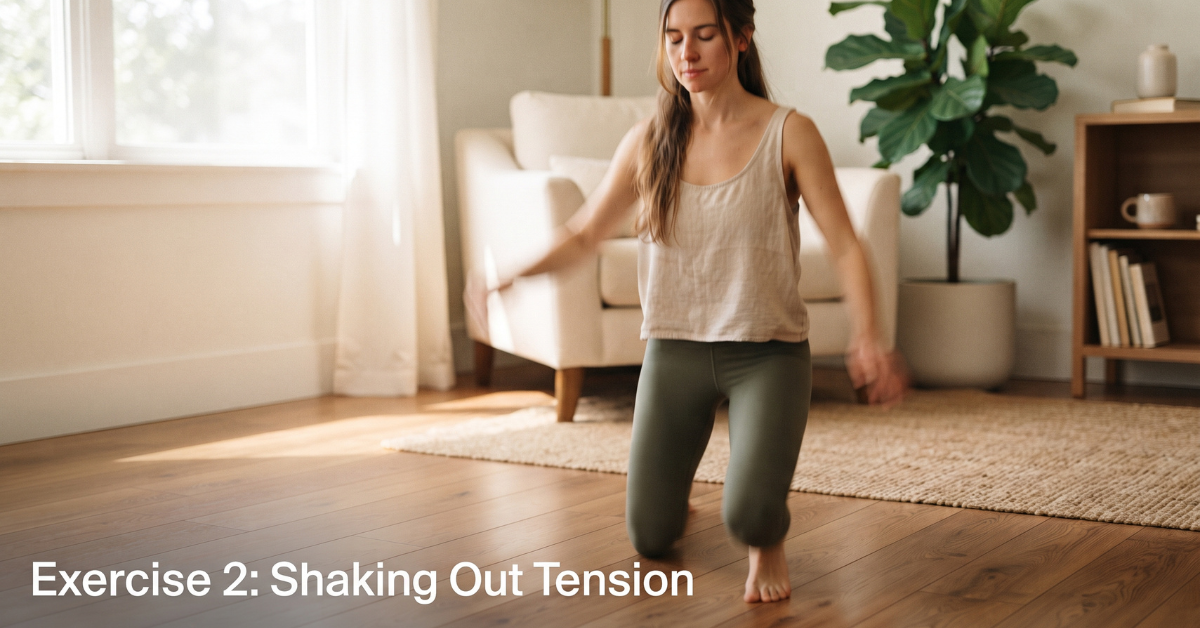
Why it works: Somatic Experiencing, developed by trauma researcher Dr. Peter Levine, draws heavily on the observation that animals in the wild physically shake or tremble after a threat passes, discharging built-up survival energy. Humans have the same instinct, but social conditioning often suppresses it. Deliberate shaking can help release chronically held muscular tension.
How to practice it:
- Stand with feet hip-width apart and knees soft (not locked).
- Begin gently bouncing your knees, letting the movement travel up through your hips, torso, and arms.
- Let your hands and arms shake loosely, as if shaking water off them.
- Allow sound to come out if it wants to — a sigh, a groan, even laughter is common and welcome.
- Continue for 60-90 seconds, then stop and stand still, noticing any sensations of warmth, tingling, or heaviness.
Pro tip: This exercise can feel silly at first — that’s normal, and often a sign that the body is releasing held tension around self-consciousness as well as physical stress.
Variations to try: If standing shaking feels too intense or is inaccessible, try a seated version: shake just your hands and forearms vigorously for 30-60 seconds, then rest them in your lap and notice the settling sensation. For a gentler entry point, gentle bouncing on the balls of the feet (like a light pogo motion) can build toward full-body shaking over several practice sessions.
Exercise 3: The Butterfly Hug (Bilateral Self-Soothing)
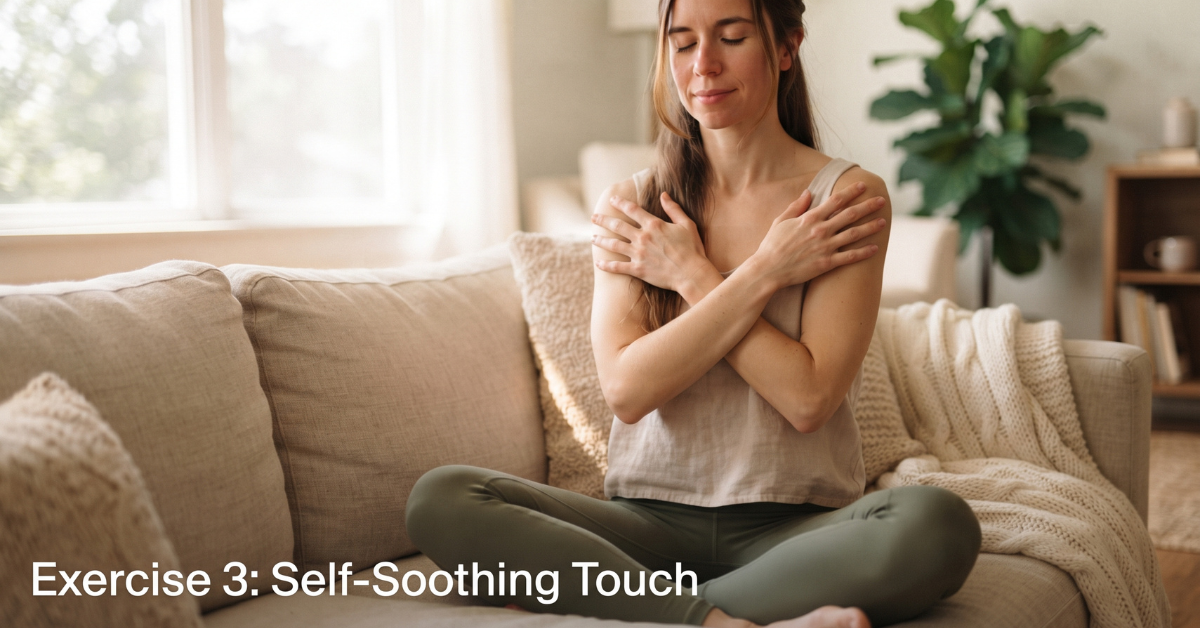
Why it works: The Butterfly Hug uses bilateral stimulation — alternating left-right tapping — a technique also used in trauma-informed modalities like EMDR. The self-touch itself activates the same soothing pathways engaged when a caregiver holds or rocks a distressed child, offering a felt sense of safety even when practiced alone.
How to practice it:
- Cross your arms over your chest so each hand rests on the opposite upper arm or shoulder.
- Close your eyes if comfortable, and begin gently, alternately tapping each hand — left, right, left, right — at a slow, steady pace.
- Take slow breaths as you continue tapping for 1-2 minutes.
- Notice any softening in the chest, shoulders, or jaw as you continue.
Pro tip: This exercise is particularly effective before sleep or during moments of acute overwhelm, such as before a difficult conversation or presentation.
Variations to try: Some practitioners prefer a “self-hug” variation — wrapping both arms fully around the torso in a firm, sustained hug for 30-60 seconds instead of tapping. Others find it soothing to add a soft internal phrase with each tap, such as silently repeating “I am safe” or “this will pass,” pairing the physical sensation with a gentle cognitive anchor.
Exercise 4: Gentle Movement Flow (Cat-Cow & Spinal Waves)
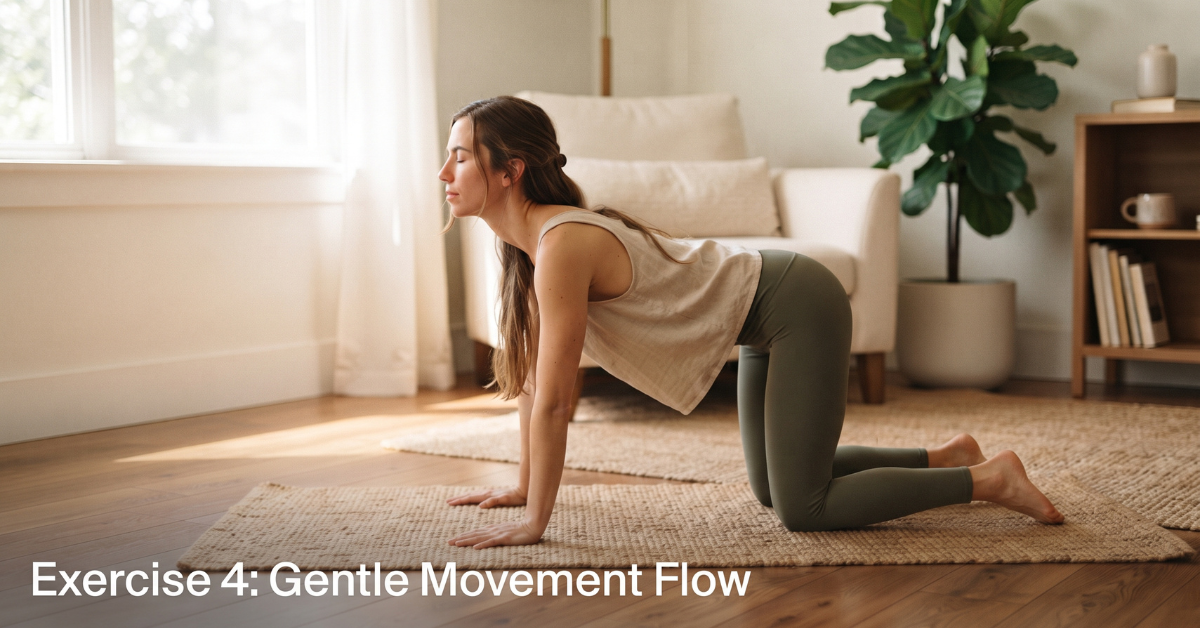
Why it works: Slow, wave-like spinal movement stimulates proprioceptors along the spine and mechanically massages the vagus nerve as it passes near the diaphragm and thoracic cavity. This kind of rhythmic, undulating movement is also deeply regulating because it mimics the fluid movement patterns associated with a relaxed, unguarded body.
How to practice it:
- Come onto hands and knees in a tabletop position.
- Inhale as you drop your belly and lift your chest and tailbone (cow position).
- Exhale as you round your spine, tucking your chin and tailbone (cat position).
- Move slowly and continuously between the two positions for 8-10 breath cycles, letting the movement feel like a wave traveling through your spine.
Pro tip: If kneeling isn’t accessible, this same wave-like spinal movement can be done seated in a chair.
Variations to try: A standing version — gently swaying side to side while letting your arms swing loosely like a rag doll — offers a similar wave-like proprioceptive input for those who prefer to remain upright. For a slower, more meditative variation, try synchronizing the movement with an audible sigh on each exhale, which further reinforces vagal engagement through the vocal cords.
🧘 Consistency Is the Real Medicine
If you enjoy structured, guided movement sessions to build this practice into a habit, JustFit’s gentle mobility programs are a natural complement to the somatic flow described above.
Exercise 5: The “Voo” Breath (Vagal Toning Through Vocalization)
Why it works: The vagus nerve travels directly through the vocal cords and throat muscles, which is why humming, chanting, and low vocal toning have measurable calming effects. This exercise, popular in somatic therapy circles, uses a specific low-pitched sound to create resonant vibration in the chest and throat.
How to practice it:
- Sit comfortably and take a full inhale.
- As you exhale, make a long, low “vooooo” sound (like a foghorn), letting the vibration resonate in your chest and belly.
- Repeat for 5-8 rounds, allowing the sound to get quieter and more effortless each time.
Pro tip: This is an excellent finishing exercise for the full routine, as it tends to leave people in a noticeably slower, more settled state.
Building Your 10-Minute Daily Nervous System Reset Routine
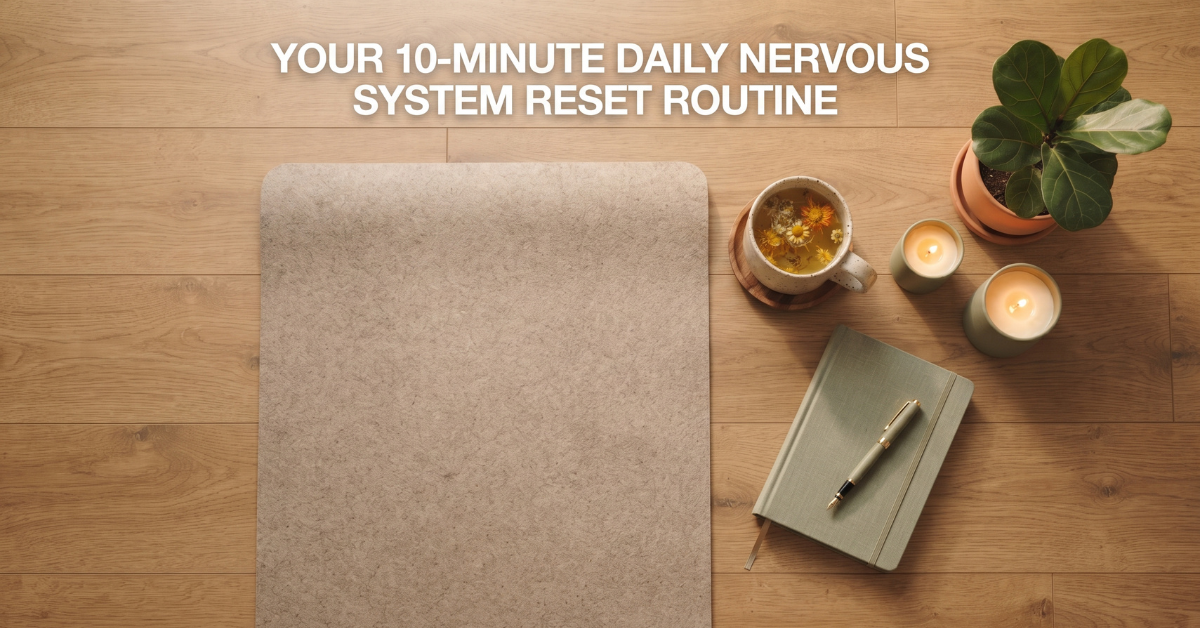
The real transformative power of somatic practice comes not from a single session, but from consistent, brief daily repetition. Much like strength training builds muscle over weeks, nervous system regulation builds capacity — often called “window of tolerance” — over consistent practice. Here is a simple, sustainable sequence you can do every morning or evening:
| Time | Exercise | Duration |
|---|---|---|
| Minute 0-2 | Grounding Breath | 2 min |
| Minute 2-4 | Shaking It Out | 2 min |
| Minute 4-6 | Gentle Movement Flow | 2 min |
| Minute 6-8 | Butterfly Hug | 2 min |
| Minute 8-10 | Voo Breath | 2 min |
Set the scene with a few simple props: a supportive mat for floor work (an acupressure mat can add an extra layer of grounding sensation), a warm beverage, and perhaps a notebook nearby to jot down any sensations or emotions that surface. Many practitioners find these two accessories useful for creating a dedicated ritual space:
- An Acupressure Mat and Pillow Set for Back Pain Relief and Stress Reduction — a supportive addition for floor-based breathing and movement work, with the added benefit of gentle pressure-point stimulation that some practitioners find enhances the relaxation response.
- The Polyvagal Theory Workbook or a Somatic Therapy Notebook for Nervous System Regulation — for tracking sensations, moods, and patterns over time, with guided prompts specifically designed around nervous system regulation concepts covered in this guide.
Tracking your practice — even briefly — helps reinforce the habit and gives you a tangible record of your progress. Many people notice improvements in sleep onset, reactivity, and general mood within two to three weeks of consistent daily practice.
Somatic Exercises for Nervous System Regulation: Your Daily Reset Routine
If you prefer a more structured on-ramp rather than diving straight into the full ten-minute sequence, consider this gradual four-week build:
| Week | Focus | Daily Commitment |
|---|---|---|
| Week 1 | Grounding Breath only, twice daily | 2-3 min per session |
| Week 2 | Add Shaking It Out after breathwork | 4-5 min per session |
| Week 3 | Add Gentle Movement Flow and Butterfly Hug | 7-8 min per session |
| Week 4 | Full 10-minute routine including Voo Breath | 10 min per session |
By week four, most practitioners find the full sequence feels natural and can be adapted intuitively — shortened on busy days, extended on days when stress feels particularly high, or reordered based on which exercise feels most needed in the moment. The structure exists to build the habit; once established, feel free to let your body’s own feedback guide the practice.
Creating an Environment That Supports Somatic Exercises for Nervous System Regulation
The physical environment in which you practice sends its own neuroceptive cues. Dim, warm lighting, a comfortable temperature, minimal background noise, and a consistent location (even a specific corner of a room) can all help signal safety to the nervous system before you even begin the exercises themselves. Some practitioners find it helpful to pair their practice with a consistent sensory anchor — a specific scent, a particular blanket, or the same instrumental playlist — which over time becomes associated with the calming state itself, a form of classical conditioning that can accelerate the settling response.
Weekday vs. Weekend Adjustments
Weekday mornings often call for a more streamlined version of the routine given time constraints — the two-minute Grounding Breath alone, practiced consistently, still offers meaningful benefit and is far better than skipping practice altogether on busy days. Weekends and lower-demand days offer a good opportunity to extend the practice: adding an extra round of Shaking It Out, spending longer in the Gentle Movement Flow, or combining the full routine with a short walk outdoors, which adds the additional regulating benefits of natural light exposure and rhythmic bilateral movement from walking itself. Building this kind of flexibility into your practice — rather than treating it as an all-or-nothing ten-minute commitment — tends to support far greater long-term consistency.
😴 Supporting Deeper Rest
Evening practitioners often pair this routine with additional calming support. MindSilence is a natural wellness formula designed to support calm, mental clarity, and restful sleep — a gentle complement to a wind-down somatic routine, particularly for those 45 and older navigating stress, sleep disruption, or sensory overwhelm.
Common Mistakes, Safety Considerations, and Who Should Be Cautious
As accessible as somatic exercises for nervous system regulation are, a few common pitfalls can reduce their effectiveness or, in some cases, cause discomfort:
1. Forcing Calm Instead of Allowing It
Somatic regulation is not about forcing relaxation through willpower — that approach can paradoxically increase tension. Instead, the goal is to create conditions (safety, rhythm, gentle repetition) that allow the nervous system to downshift on its own timeline.
2. Skipping the Body Scan
Many people rush straight into the exercises without first pausing to notice where tension lives in the body. Taking even 30 seconds to scan from head to toe before beginning meaningfully improves the effectiveness of the practice that follows.
3. Overriding Discomfort
If an exercise brings up strong emotion, dizziness, or distress, it’s appropriate to stop, ground yourself (feet on the floor, eyes open, naming five things you can see), and resume only when ready — or not at all that day. Somatic work should never feel forced or overwhelming.
Who Should Exercise Extra Caution With Somatic Exercises for Nervous System Regulation
Individuals with a history of trauma, PTSD, panic disorder, or dissociative conditions should ideally practice somatic exercises alongside guidance from a trauma-informed therapist, as body-based work can sometimes surface intense emotional material. Those with cardiovascular conditions should consult a physician before practicing breath-holding or intense breathwork variations.
4. Comparing Yourself to Others’ Timelines
Nervous system regulation is highly individual. Someone with a shorter history of chronic stress may notice shifts within days, while someone whose nervous system has adapted to years of high alert may need several months of consistent practice before noticing meaningful change. Both experiences are valid, and neither reflects “doing it wrong.”
5. Practicing Only When Already in Crisis
One of the most common mistakes is reserving somatic exercises exclusively for moments of acute distress. While these tools are indeed useful in the moment, their deepest benefit comes from regular practice during calmer periods, which builds the nervous system’s baseline capacity — much like it’s easier to learn to swim in calm water before attempting it in rough seas.
A Quick Glossary of Somatic Terms
Somatic and nervous system science comes with its own vocabulary, which can feel dense at first. Here’s a plain-language glossary of terms used throughout this guide:
- Autonomic Nervous System (ANS): The branch of the nervous system controlling involuntary functions like heart rate, digestion, and breathing.
- Vagal Tone: A measure of how responsive and flexible the vagus nerve is in regulating heart rate and the stress response.
- Neuroception: The nervous system’s unconscious process of scanning the environment for cues of safety or danger.
- Window of Tolerance: The optimal zone of nervous system arousal in which a person can think clearly and respond flexibly to stress.
- Dorsal Vagal Shutdown: A freeze-like state of the nervous system characterized by numbness, fatigue, or dissociation.
- Co-regulation: The process by which one nervous system helps settle another, such as a caregiver soothing a distressed child, or self-touch soothing one’s own system.
- Discharge: The physical release of stored survival energy, often through shaking, trembling, or deep exhalation.
The Stress-Skin Connection: Why Nervous System Health Shows Up on Your Face
It’s worth briefly addressing a question that comes up often in wellness circles: does nervous system regulation actually affect how your skin looks and behaves? For those already practicing somatic exercises for nervous system regulation, this connection matters — while sometimes overstated in marketing, it does have a genuine physiological basis. Chronic sympathetic activation elevates cortisol, and sustained cortisol elevation has been associated with increased sebum production, impaired skin barrier function, and slower wound healing — all of which can contribute to flare-ups in conditions like acne, eczema, and rosacea. This relationship is sometimes referred to as the “brain-skin axis,” reflecting the shared embryonic origin of neural and skin tissue and their ongoing bidirectional communication throughout life.
This doesn’t mean stress is the sole cause of any particular skin concern — genetics, diet, skincare routine, and environmental factors all play significant roles. But it does mean that a consistent nervous system regulation practice can be a meaningful complement to a topical skincare routine, rather than an either-or proposition. Many holistic skincare practitioners now recommend pairing external skin care with internal stress-management practices, recognizing that a calm, well-regulated nervous system supports the body’s natural repair processes — including those happening at the skin’s surface. In this sense, the five-minute somatic routine outlined in this guide may offer benefits that extend beyond how you feel internally, gradually supporting the outward signs of wellbeing as well.
Beyond the Mat: Protecting Your Digital Wellness Space
An often-overlooked piece of practicing somatic exercises for nervous system regulation is the environment in which we practice — including our digital environment. Many people now track their mood, journal, or follow guided wellness content online, and digital privacy has quietly become part of a holistic wellness routine. If you frequently browse wellness resources, stream guided sessions, or manage health data across devices, using a reliable VPN can add a layer of privacy and peace of mind to your digital wellness habits.
🔒 Digital Wellbeing Tip
Considering your online wellness habits deserve privacy too? Explore a trusted VPN option to keep your browsing and health-tracking activity more private and secure.
For those interested in exploring additional structured resources — including guided somatic and stress-resilience programs — this curated wellness resource offers a broader library worth browsing.
Conclusion: Your Path to Nervous System Resilience
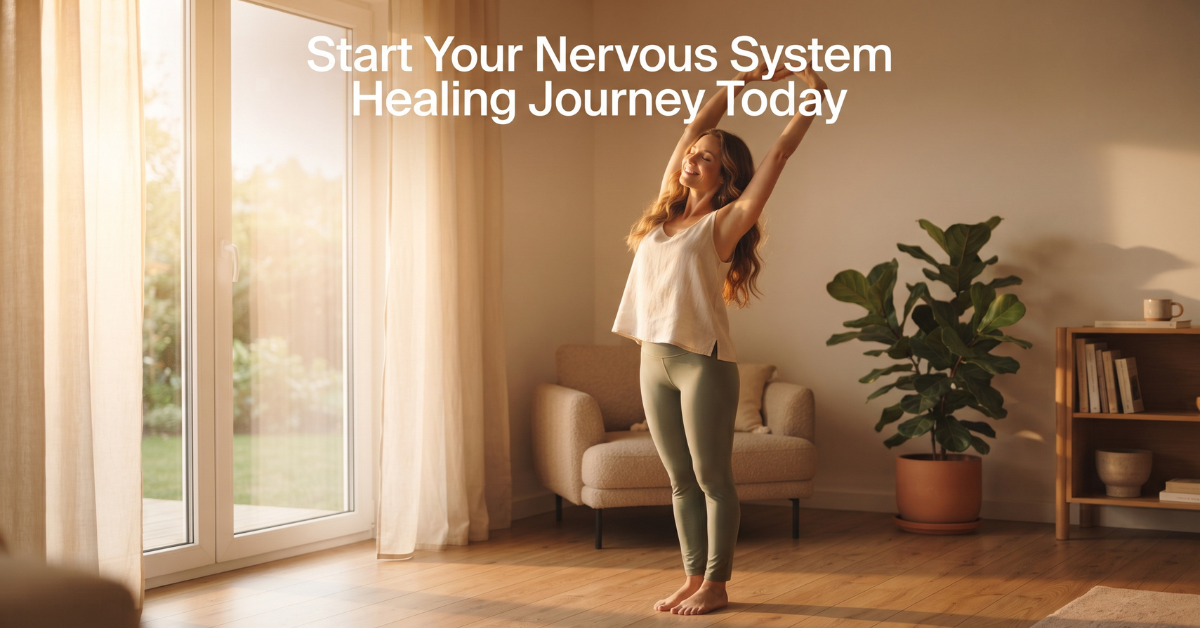
Nervous system regulation isn’t a destination you arrive at once and never revisit — it’s a practice, much like brushing your teeth or moving your body. Practicing somatic exercises for nervous system regulation consistently — the five exercises in this guide — grounding breath, shaking, the butterfly hug, gentle movement flow, and voo breath — are simple enough to fit into even the busiest day, yet powerful enough to meaningfully shift how your body experiences stress over time.
Start small. Choose just one exercise today. Notice what shifts — even subtly — in your breath, your shoulders, your jaw. That noticing is, itself, the beginning of regulation. Your nervous system has been carrying a great deal; give it the chance to remember what safety feels like.
It’s worth returning, one final time, to the central idea threaded throughout this guide: your body is not simply along for the ride during stressful periods of life — it is an active, intelligent participant with its own pathways back to calm. Somatic exercises don’t ask you to think your way to safety; they ask you to feel your way there, one breath, one gentle movement, one moment of self-contact at a time. This is not about achieving a permanent state of zen or eliminating stress altogether — that would be neither realistic nor even desirable, since a healthy sympathetic response is essential for meeting life’s genuine challenges. The goal, instead, is flexibility: a nervous system that can rise to meet a demand and then, just as importantly, know how to come back down.
As you build this practice, be patient with the process and compassionate with yourself on the days it feels harder to access calm. Nervous systems shaped by years — sometimes decades — of chronic activation don’t rewire overnight, but they do rewire. Each session, however brief, is a small vote for a different way of relating to stress: one rooted not in resistance or suppression, but in gentle, embodied attention.
If you take only one idea away from this guide, let it be this: you already possess the physiological tools required to shift your own state. No app, supplement, or external intervention can do this work for you — though thoughtfully chosen support can certainly complement it. The breath moving through your chest right now, the ground beneath your feet, the simple act of pausing to notice a sensation — these are not small or trivial resources. They are, quite literally, the same mechanisms your nervous system has relied on since long before either of you had a name for what regulation meant.
Further Reading and Resources
For readers who want to go deeper into the science and practice of somatic exercises for nervous system regulation, the following well-regarded resources offer excellent starting points: The Body Keeps the Score by Dr. Bessel van der Kolk for a comprehensive look at trauma and the body; Waking the Tiger by Dr. Peter Levine for a foundational introduction to Somatic Experiencing; and the published work of Dr. Stephen Porges on Polyvagal Theory for those interested in the underlying neuroscience. These texts are widely available through libraries and booksellers and pair well with the practical exercises outlined above.
Whatever path you take from here, know that returning to the body is rarely a wasted effort. Even five minutes, practiced with genuine attention, can be enough to remind your nervous system of something it has known all along: that safety, when given the chance, is always closer than it feels.
Stay dewy! 🌿 Bookmark WellbeingPrime.com for more evidence-based wellness guides.
Recommended Tags
somatic exercises, nervous system regulation, vagus nerve, polyvagal theory, stress relief at home
💡 Frequently Asked Questions (FAQ)
Q1: How long does it take to see results from somatic exercises for nervous system regulation?
Many people notice a subtle shift — slower breathing, softer shoulders — within a single session. More lasting changes to baseline stress reactivity typically emerge with 2-4 weeks of consistent daily practice.
Q2: Can somatic exercises replace therapy or medication?
No. Somatic exercises are a complementary self-care tool, not a replacement for professional mental health treatment. They can be practiced alongside therapy, medication, or other prescribed care, ideally with guidance from your provider.
Q3: Are there any side effects to somatic exercises?
For most people, side effects are minimal — occasional lightheadedness from breathwork or unexpected emotional release during shaking exercises. Those with trauma histories or cardiovascular conditions should practice with professional guidance.
Q4: What’s the best time of day to practice?
Morning practice can help regulate the day ahead, while evening practice supports wind-down and sleep onset. Many practitioners do a shortened version at both times.
Q5: Do I need any equipment to start?
No equipment is required. A mat and quiet space are helpful but optional — these exercises can be done seated at a desk or standing in a hallway.
Q6: How is somatic practice different from regular stretching?
Stretching primarily targets muscle length and flexibility. Somatic exercises share some movements with stretching but are performed with the explicit intent of engaging the nervous system — the focus is on internal sensation and breath rather than on achieving a specific range of motion.
Q7: I felt emotional during an exercise — is that normal?
Yes, this is a commonly reported experience. As the body releases held tension, previously suppressed emotion can surface. If this happens, allow yourself to pause, breathe, and only continue if it feels manageable. If strong emotional release happens frequently, working with a trauma-informed therapist is recommended.
Q8: Can children or older adults practice these exercises?
Most of these exercises are gentle enough for a wide age range, though movement intensity should always be adjusted to individual mobility and comfort. Older adults or those with balance concerns should perform standing exercises like Shaking It Out near a stable surface for support.
Q9: How do I know if I’m “doing it right”?
There is no single “correct” way to feel during somatic practice. Signs that a session was effective often include a sense of increased spaciousness, a spontaneous sigh or yawn, or simply a subtle sense of settling — rather than a dramatic shift.
Q10: Can somatic exercises help with stress-related skin issues?
Indirectly, yes. Chronic stress elevates cortisol, which can contribute to skin barrier dysfunction and flare-ups in some skin conditions. Somatic practice supports overall nervous system regulation, which may complement — though not replace — a dedicated skincare routine and professional dermatological care when needed.
Q11: How does somatic practice fit alongside a fitness routine?
The two are highly complementary. Structured fitness builds long-term physiological resilience and mood elevation through movement, while somatic exercises offer a targeted, in-the-moment tool for downshifting acute nervous system activation. Many practitioners use somatic breathing as a cooldown after workouts to support faster recovery.
🌿 Weekly wellness, health & beauty insights — straight to your inbox
Free subscription · Cancel anytime