
We all harbor a secret desire for financial abundance to be thrilling—a grand adventure filled with exotic investment vehicles, rapid expansion, and sudden windfalls. True prosperity, however, isn’t inherently exciting; it’s often wonderfully, understatedly boring. The deepest lesson I have learned about building real, enduring wealth is that it is rarely sexy. In fact, I’ve found that the more repetitive, predictable, and even dull my financial management feels, the clearer my mind becomes and the better I perform. Living in California, I’ve often felt the pressure of constant consumption and extreme wealth displays, but I learned that true holistic abundance resides in the understated, repetitive daily choices.
The connection between our financial state and our holistic wellbeing is undeniable. Money anxiety is a significant source of visual and emotional clutter, preventing us from accessing true presence. Today, I want to share with you ten of the most unexciting, repetitive, and decidedly ‘unsexy’ habits I cultivate daily to save serious money—tiny, almost unnoticeable daily practices that have delivered the single greatest returns on both my finances and my mental clarity. The beautiful truth is that they are not difficult to integrate; the only challenge lies in maintaining consistency.
The spiritual Aspect of Predictability in Nutrition
How we nourish ourselves is perhaps the most repetitive and profound interaction we have with the physical world daily. Chaos in our meal planning inevitably breeds chaos in our financial health.
The Ritual of the Weekly Menu
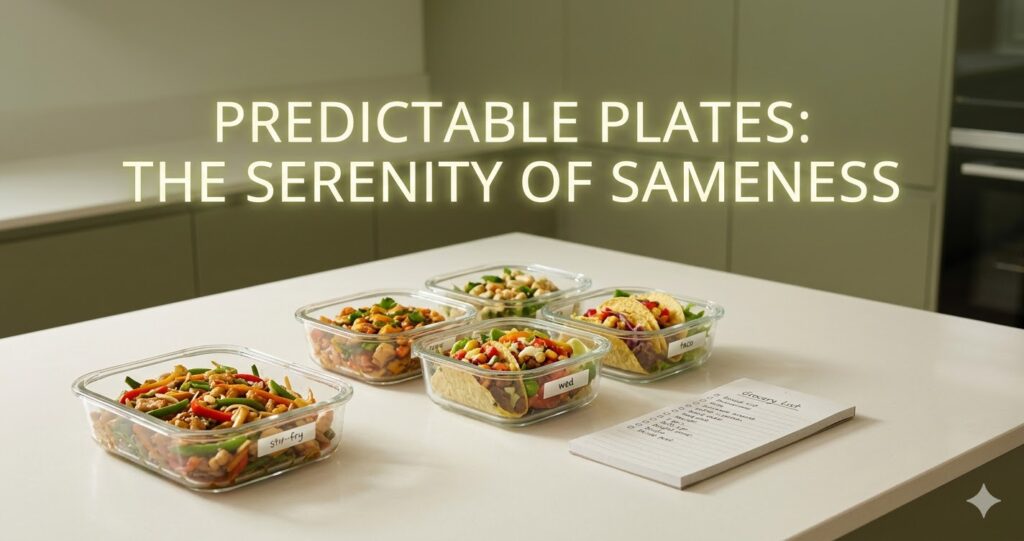
We often crave endless variety in our diet, driven by consumer fantasies. Yet, I’ve found immense freedom in a seemingly radical simplification: eating the same rotational menu every single week. This habit is shockingly effective at making my grocery bill perfectly predictable. We stick to the exact same grocery list every week, with the only variables being minor sales or grocery inflation. Surprisingly, this does not get boring at all. All you need to do is choose just four or five adaptable recipes you genuinely enjoy, rinsing and repeating them. You will never again stress about what’s for dinner. This ensures food gets made at home, eliminating impulse spending on rapid delivery services and mindless dining out, while creating significantly less food waste. To some, this might sound extreme or even ‘unhinged,’ but I assure you it works beautifully and cultivates deep mental space.
Gratitude in the ‘Use What You Have’ Week
In our consumption-driven society, our pantry often becomes a storage unit for ignored resources. A crucial part of our monthly routine involves a restock haul once a month (perhaps from a place like Costco for meat, dairy, and eggs). But before we go for that big restock, we empty everything in the fridge, freezer, and pantry. We consciously perform a ‘use what you have’ week. We eat our stock of frozen beef, frozen veggies, frozen fruits/berries for smoothies, salmon, chicken, cottage cheese, and eggs until they are gone. We rely on sauces (BBQ, various soy sauces, Sriracha, honey) to change up flavor profiles, then finally consume the last pasta and tuna. This isn’t just frugal; it’s an act of respect for resources and gratitude for the abundance we already possess. Every second spent cleaning out the fridge becomes a lesson in intentionality, preventing the mindless accumulation that clutters both our home and our spirit. grocery shopping less becomes very easy to actually eat what you bought instead of filling up your pantry accumulating things that you’re never going to eat. Speaking of eating everything that you buy, that’s where I also stopped buying everything in bulk.
selective Bulk Buying: respecting Freshness
I think some of the most common advice I heard to save money was to basically shop at Costco for everything. And I do think buying in bulk and shopping at Costco does save money in certain areas, but at other times it can be more expensive. Unless you are feeding a family of five, you do not need to buy everything in bulk. My partner and I eat significantly, but where we find value is strictly in select meats, fish, dairy, eggs, and maybe toilet paper. Almost everything else, especially for food that goes bad quickly, we buy fresh and individually. If we bought fresh items in bulk, they would simply go bad before we finished them. I cannot tell you how many times I tried buying those bags of avocados from Costco and we just couldn’t keep up with them before they went bad. Especially for food that goes bad, I’ll buy one or two of them and just focus on finishing that first because you can food shop for your fantasy self too, thinking you will eat something that you never get to.
The Meditative Act of Making Coffee at Home
Our relationship with simple daily indulgences often runs on autopilot, disconnected from true pleasure. This habit isn’t about extreme self-denial; it’s about restoring intentionality to a daily ritual. Living in California, where artisan coffee culture is almost a religion, I realized I needed a healthier, more intentional relationship with brewing.
Slowing Down with intentional Brewing
It is rarely the single, occasional takeout latte that causes financial imbalance; it’s the mindless daily spending on autopilot. My philosophy centers on this: I intentionally save cafe spending—that special coffee experience—either for socializing or when I’m working from home and need a reason to break up my day and leave the house. That is where I find the most genuine joy. When spending $6 adds to my life by providing an experience, it is an investment in my happiness.
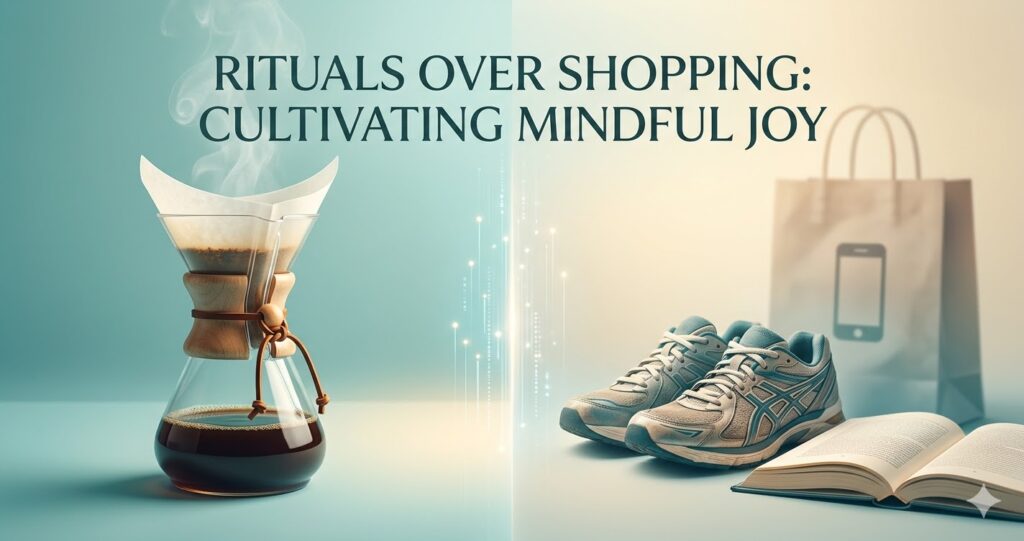
But for daily ‘survival coffee’—the requirement that keeps my system running—I turn it into a meditative home ritual. This forces me to slow down. I still romanticize the experience by buying good beans from my local cafe and making it in a sophisticated pourover system (like a Chemex) every single day. The methodical nature of brewing forces slow living and mindfulness in a world that demands speed. I wish you could smell the rich aroma; it is so good and genuinely grounds my day. This simple coffee montage from a 2016 nostalgia era is what keeps my money from dissolving on autopilot. I’m not saying don’t buy your coffee. Buy it if you want to. I just like to buy mine with intention.
Moving Beyond Consumerism: Curating Joy Outside the Shop
This next habit, stopping boredom shopping, has been a game changer in saving ridiculous amounts of money, but simply having a boring weekly routine. Ignorance is bliss: straight-up ignorance is the fastest path to significant savings. The truth is, the more you let yourself browse, the more you are guaranteed to find something to want, and the more that object will consume your attention and resources.
Stop Shopping to Kill Time
This habit was incredibly difficult for me, as I was a full-blown shopaholic for years. Shopping was the only downtime hobby I knew. I have replaced that tedious impulse with challenging and creative activities. For me, content creation became that substitute, but challenging hobbies like going to the gym, running a half marathon, walking in nature, or reading a good book are powerful alternatives. When you are not spending your downtime browsing, you will learn to spend your time doing other things that end up feeling more productive, more fun, more creative, even just like more wholesome in general. Things that you can do that make you feel proud and accomplished. It’s significantly healthier for you over time, too.
Setting Boundaries for Mindful Consumption
While I do still shop, I definitely set boundaries around it. For instance, I find first thing in the morning to be a very vulnerable time, so I am not allowed to buy anything then. I find setting boundaries and limits around shopping, like not buying unless I am on my laptop, not my phone, saves me significant cash. Setting limits and finding new ways to spend your time might not feel exciting initially, but it saves ridiculously amounts of money in the long run.
The Healing Power of a Structured Weekly Routine
We often underestimate the psychological comfort of a consistent routine. It protects your wallet because when I don’t have a routine is when I start to default to the other path of least resistance, which ultimately leads me to my phone scrolling social media and then finding something to buy that I didn’t even know existed in the first place. Having a boring, predictable week is a shield. It resists the pressure to keep up with exotic vacations and fancy dinners on social media. I roll with my structured and predictable routine because it keeps me moving in the direction I want to go. I love the boring life.
Simplifying Beauty and Skincare
Our visual presentation is a deeply holistic aspect of self-care. But in my pursuit of ‘that glow,’ I had to unlearn extreme overconsumption and embrace minimalism.

minimalist Skincare:Drugstore and Korean Beauty
When I was doing the most for my skin and spending the most money on it, it looked like this. But the moment that I simplified my skincare routine, narrowed it down to four or five products, the majority from the drugstore or Korean skincare, was when I started to get the skin I actually wanted. It’s affordable and effective. For example, my drugstore cleanser costs under $20 and has already lasted half the year with so much left to go. This entire routine morning and night is simple and leaves the skin feeling skinning. In this case, the more boring, the more simple, the better.
creating Novelty with a Project Pan
I think there is something to be said about simplifying your makeup routine, too. I feel like I had to learn the hard way as a recovering overconsumer that half of the key to saving money is using up what you bought, which for my makeup lovers out there means you got to do a project pan. aka just using up your makeup before you buy more.
I have been working on my current project pan since November of 2024. If I learned anything, it is that it takes forever to use up a makeup product. For instance, I have been working on this concealer for a year and a half and still have so much left to go. The thought of using what you have does feel boring; it is always more fun to buy the new thing, to try something else, to change things up. But I do think that instead of just being caught up in buying new stuff all the time, you can create that novelty within the things you already own. Fewer things are more satisfying than hitting pan on a product. I have never hit pan on a highlighter in my life. Look how beautiful that is. Like, that is exciting. This is the farthest thing from boring in my opinion.
Confidence through Outfit Repeating
A similar principle applies to your closet: simply wear your clothes. It sounds boring, but being an outfit repeater is going to save you a ton of money because every time that you wear something from your closet instead of buying something new, you’re lowering that cost per wear. A $300 sweater that you wear 30 times is going to be cheaper than a $30 sweater you wore once or not at all. And I would argue that the more you wear your clothes and even repeat your outfits, the more confident with yourself and your personal style that you’re going to become. In the long run, it is just going to help you shop smarter and buy less and better pieces because you know what you are actually going to wear. And it’s as simple as knowing what you like versus what you don’t. So as scary as outfit repeating sounds, I think it’s actually the key to finding your personal style and saving money while you’re at it.
budgeting as emotional self-Care
Budgeting is something almost nobody wants to do. But it has truly changed the course of my financial future and has saved me thousands and thousands of dollars over the years. Yes, it’s boring. Yes, it can feel tedious. Yes, it can even feel overwhelming and intimidating. But once you get it down, it is the number one key factor that is going to make you feel in control and confident about your finances. I have been budgeting pretty much every single day of my life since 2019, when I first committed to paying off over $120,000 of student loan debt and overcoming that shopping addiction that was keeping me broke.
But the whole point of budgeting is that it just keeps you on top of your money. It’s the only way that you’re going to get an idea of where your money’s going, by how much, and more importantly, why. I also track mood alongside spending in my budgeting template, just so I can unlock any patterns there, because I think it’s important to know your emotional state when you’re spending, too, and trying to spend less. I also track what purchases I feel like were impulsive versus intentional. So, boring, yes. Sexy, absolutely not. But it is the one key habit that I think is going to transform the course of your finances.
automated Abundance: Paying Your Future Self First
This final habit, automating abundance, is simply treating yourself like a bill—aka paying yourself first. I saw this on TikTok or somewhere: ‘You are a bill, so pay yourself like one.’ That has truly changed my life. Because here’s the thing: paying bills is boring. The last thing I want to do is pay my bills. I want to treat myself. I want to exhibit all of my use of free will on as much fun as I possibly can, but not before I do the very boring habit of paying myself first. Because for years, I was getting the process wrong. I would get paid and the first thing I would do is pay my rent, pay my bills, pay off my credit card, and then whatever was left over, you know, it’s like, okay, well, I worked really hard. I’m going to go out to dinner now. I’m going to go treat myself. I’m going to go shopping. And then I would say whatever is left over after that, that’s what I’m going to save and invest. But guess what? That never really ended up happening until I started treating myself like a bill and made sure that I paid myself.
I actually have this automated. So, I don’t actually see that money hit my checking account. It just goes right out into my savings and I watch it grow on autopilot. And yeah, paying your future self, it is boring. YOLO is always going to be so much more fun than thinking about your future, but it has to be done. And it’s really in the boring stuff that you’re going to find the most return. So those are the 10 boring habits that save me serious money. But this only truly works if your money is not a complete mess behind the scenes. Decluttering your money is Kind of the way you would declutter your home. Let’s make sure it is aligned.
💡 FAQ
Q1: How can eating the same food every week be healthy or sustainable for holistic wellness?
A1: The sustainability comes from simplicity, not deprivation. By rotating just 4-5 core, healthy recipes, you drastically reduce nutritional decision fatigue and environmental waste while ensuring constant nourishment. When you reduce chaos and stress, your mental wellbeing thrives, and by making the same, predictable grocery list every single week, your finances also stabilize, which is deeply aligned with holistic living.
Q2: I can’t imagine stopping my daily cafe coffee. How can home brewing truly provide that same slow-living joy?
A2: The core issue is the spending on autopilot. My philosophy centers on this: I save the cafe experience for socializing or intentional relaxation as an excuse to break up my day and leave the house—that is where I find the most genuine joy spending $6 on a latte that adds to my life. For daily ‘survival coffee,’ I turn it into a meditative home ritual, romanticizing the experience with high-quality beans and methodical pourover brewing (like a Chemex), which forces me to slow down and practice mindfulness.
Q3: Is a structured weekly routine really compatible with living fully in the ‘present’?
A3: I don’t live a very exciting life, but having a boring routine protects my wallet and my mental health. When I don’t have a routine is when I start to default to scrolling social media and finding something to buy that I didn’t even know existed. A structured routine is a sanctuary that resists the comparison pressure of exotic vacations or fancy dinners on social media. It resists constant disruption and keeps me consistent and moving in the direction I truly want to go. I love the boring life.
🌿 Weekly wellness, health & beauty insights — straight to your inbox
Free subscription · Cancel anytime