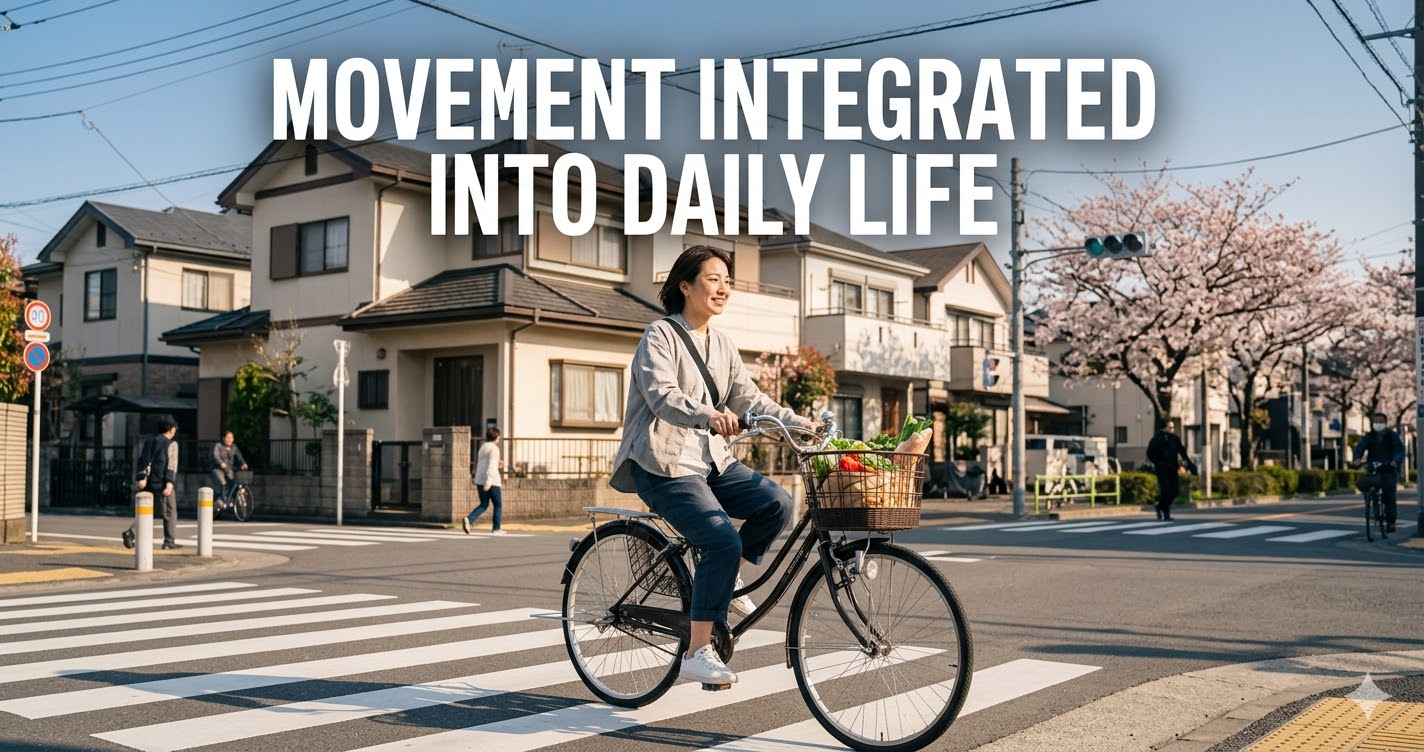
I was recently scrolling through photos of people in Tokyo, and it struck me how almost everyone looked naturally lean. Not ‘gym-obsessed’ lean, not starving, not fitness-influencer skinny—just healthy, comfortable, and naturally slim. They were eating huge bowls of ramen, plates of rice, and beautiful desserts, and yet, they seemed to effortlessly maintain their weight. It made me curious, so I started digging into the research.
The numbers are staggering. Japan has one of the lowest obesity rates in the developed world, oscillating around 4 to 5%. Meanwhile, in countries like the United States, that number is over 40%. This isn’t just a slight difference; it’s a completely different approach to lifestyle and prevention. Japan takes this so seriously that they even have a national health policy called the ‘Metabo Law’, where adults have their waistlines measured to catch metabolic disease risks early. It’s not about shaming; it’s about preventative care as a cultural standard.
If it’s not extreme dieting or daily intense workouts, what is it? After examining their culture, food systems, and daily routines, I found 10 simple Japanese habits that quietly keep them slim, offering a powerful blueprint for holistic living.
he Art of Mindful Eating and Balance
Hara Hachi Bu: The 80% Full Rule
One of the biggest nutritional secrets I discovered is called ‘Hara Hachi Bu’. It’s a Confucian teaching that many people grow up practicing, which means ‘eat until you are 80% full’. They stop eating when they are comfortably satisfied, not stuffed, not until their stomach hurts, and certainly not until they need a nap. Some of us are trained to stop eating only when the plate is empty, even if we were full five bites ago.
Here’s why Hara Hachi Bu works biologically: Your brain takes about 15 to 20 minutes to receive the signal from your stomach that you are full. So, if you eat until you feel ‘completely full’, you have likely already overdone it. Stopping at 80% allows that full-signal to catch up. The best part? This isn’t a restrictive diet. You aren’t calorie counting, you aren’t banning rice, and you aren’t starting a dramatic ‘new life’ on Monday. You can still eat noodles and enjoy desserts; you just stop before your body feels strained. It’s a quiet self-control that naturally reduces how much you eat every day without feeling deprived.
The Power of Eating Slowly and Mindfully
In Japan, kids are literally taught from a young age to slow down and actually focus on their food. This is the definition of mindful eating. Compare this to inhaling a sandwich while scrolling through TikTok or binging Netflix. When you eat too fast, you outrun your stomach’s capacity to send fullness signals. By the time you feel full, you have far exceeded your necessary intake.
Eating slowly gives your brain that necessary time to register satiety. You naturally stop earlier because you feel satisfied, not because you are physically unable to eat more. This simple mental shift changes the entire experience of a meal, moving it from a background activity to a focused act of nourishment.
Structural Habits: Small Plates and Starting with Soup
The Psychology of Small Plates
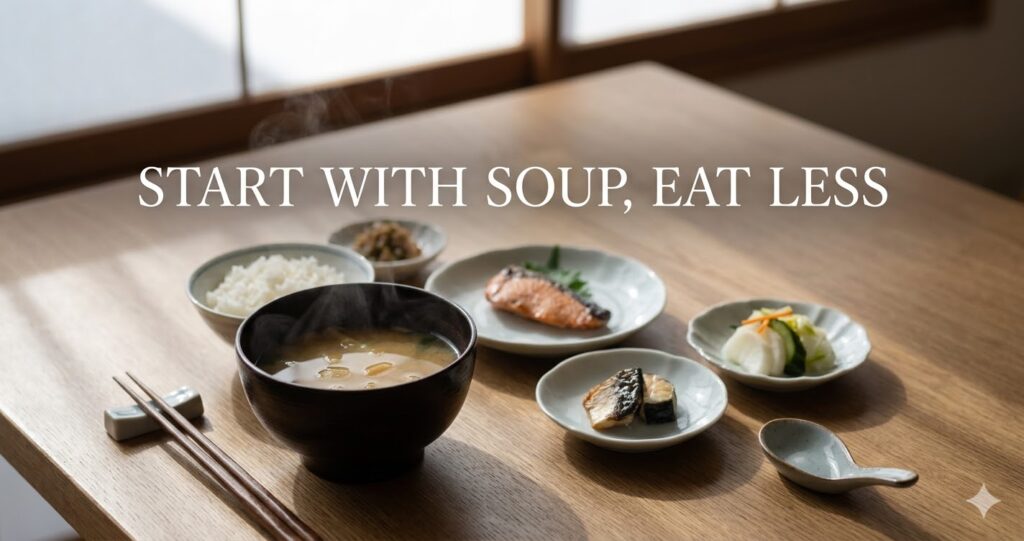
If you look at a traditional Japanese meal, you will notice something interesting: everything is served in separate, small bowls and plates. The rice is in a modest bowl, the fish is on its own small dish, and vegetables are in tiny, varied bowls. You get variety without overeating.
Using smaller plates naturally controls how much food you serve yourself. It’s psychology—visually, your plate or bowl looks completely full, which satisfies your brain. Meanwhile, if you use a massive dinner plate, even a normal portion looks tiny, and your brain signals ’empty’, tempting you to double it. Japanese meals are often divided into several small dishes instead of one oversized plate. It visually encourages variety and physically manages volume.
Why Soup First Helps Satiety
Another secret I found fascinating: nearly every Japanese meal, including breakfast, is accompanied by some kind of soup, usually miso soup or a light broth-based soup. This isn’t heavy or creamy; it’s simple and warm.
And here is the visual logic: Soup is low in calories but high in volume. It literally takes up physical space in your stomach before you have even touched the main dish. Your stomach signals, ‘Okay, we’re good, relax’. Broth-based soups also slow you down—you sip them, you can’t inhale them in three bites. By the time you finish your meal, you are satisfied, not in a food coma, not questioning your life decisions.
Dietary Cornerstones: Real Food, Green Tea, and Gut Health
Green Tea and Matcha as a Daily Replacement
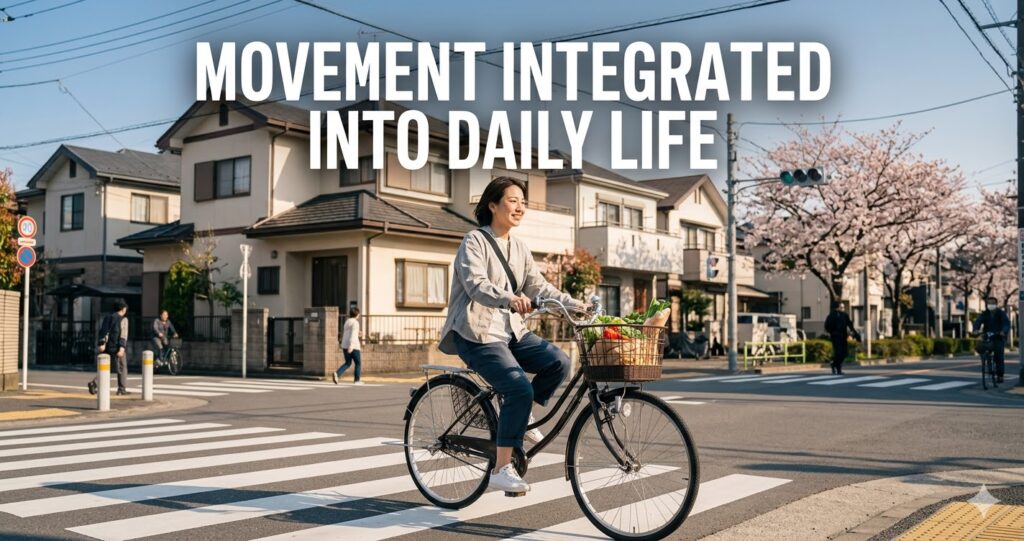
In Japan, green tea and matcha are part of daily life. They are not sugary milk teas; they are actual, strong, earthy green tea. These beverages are so common that they are served with meals for free and replace soda, juice, and other high-sugar drinks.
Green tea and matcha contain potent antioxidants called ‘catechins’, which may support metabolism and help the body burn fat more efficiently. Simply by cutting unnecessary sugary calories, you are creating a significant, natural reduction. They are also served hot, which helps with satiety and provides a mindful pause.
Fermented Foods for Healthy Gut Bacteria
Japanese cuisine is rich in fermented foods, including natto, pickled vegetables, and kimchi-style sides, which are full of probiotics. This isn’t for the aesthetic; it’s for gut health. A healthy gut is linked to improved metabolism, reduced bloating, and a body that processes food more efficiently.
These foods are also very flavor-forward, so you don’t need a massive portion to feel satisfied. A small serving goes a long way. Meanwhile, some of us feed our gut nothing but processed snacks and wonder why our body is fighting back. In Japan, fermented foods are a normal part of daily meals, not a once-a-year ‘gut reset’.
Active Lifestyle Integrated into Daily Routine
Sneaking Exercise into Life with NEAT
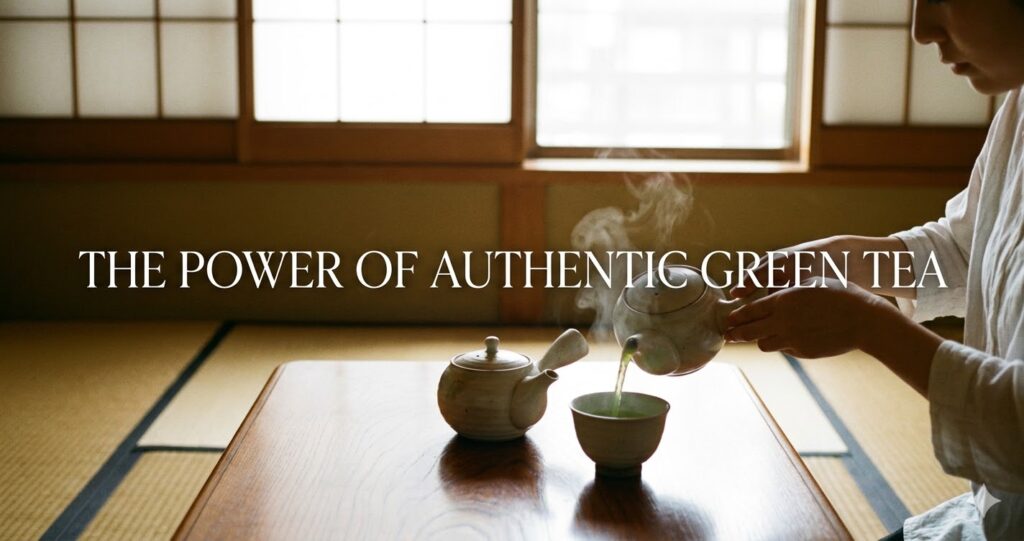
Perhaps the most important difference between Japanese life and Western life is how physical activity is viewed and integrated. Movement isn’t scheduled at 6:00 PM; it’s just normal life.
Consider transportation: walking is just part of life. Train stations, stairs, and running errands on foot are standard. Nobody thinks, ‘Oh, time for my cardio’. They just move because that’s how their day works. Similarly, cycling culture in Japan isn’t a fitness personality; bikes are transportation. People bike to the station, to the grocery store, to school, to work. Short daily consistent trips add up far more than one dramatic spin class you attend once a week and then dread for seven days.
This is sometimes called NEAT—Non-Exercise Activity Thermogenesis—and it is a quiet, powerful contributor to physical health and digestion, all without a gym membership or a single burpee.
The Hidden Benefit of Floor Sitting (Tatami Life)
Another low-key traditional secret: many Japanese homes still use tatami mats, and people sit, eat, and sometimes sleep closer to the ground. That means you are constantly getting up and down throughout the day. And guess what that is? Squats.
Not the gym kind with mirrors and protein shakes; the ‘I just stood up 15 times today without realizing it’ kind. Every time you stand up from the floor, your legs and core engage. Doing that daily for years is strength training disguised as culture.
Holistic Balance: Stress Reduction and Smart Treats
Hot Baths and Stress Reduction (Onsen and Sento)
In Japan, bathing isn’t a quick three-minute shower. It’s a full reset. You soak, you relax, you breathe. Japan has a deep-rooted culture of ‘onsen’ (hot springs) and ‘sento’ (public baths), and many Japanese people also take hot baths at home regularly.
While not directly burning fat, hot baths lower stress, which lowers cortisol. Cortisol is the stress hormone that is known to store fat, especially around your stomach. Daily hot baths help improve sleep quality, reduce inflammation, and put your body into a state of deep relaxation. It’s simplified, natural recovery.
A Healthier Approach to Desserts
Desserts do exist in Japan, and Japanese sweets (wagashi) are beautiful, delicate, and enjoyed regularly. But sweets are treats, not an everyday binge.
The main difference is portions and composition. Portions are smaller, and they are generally less sugary than the options we typically choose. It’s a mindset: treat desserts as a little treat, not the main event. You can have the same cake, but a smaller slice. No sugar coma. You enjoy it; you don’t overdo it. That’s how they stay slim without feeling deprived.
Building a Culture of Holistic Wellness
One last secret I have to mention: Japan’s school lunches (kyushoku) are structured and balanced. Kids don’t grow up on daily pizza slices and mystery nuggets. School meals are balanced, often featuring rice, fish or meat, vegetables, and soup, sometimes with a side of fruit and milk. It’s a foundational training for a balanced life.
So there it is: 10 Japanese secrets to effortless slimming without ever stepping foot in a gym. It’s not about crazy diets or endless workouts. It’s about simple daily habits—eating slowly, small portions, real food, walking everywhere, and yes, enjoying dessert without going overboard. The secret is in the lifestyle, not willpower. Slim without stress—that’s the goal.
💡 Frequently Asked Questions (FAQ)
Q1: How can I start incorporating Hara Hachi Bu into my life?
A1: Start by being more intentional with your eating. Use a smaller plate and serve yourself a portion that you think is 80% full. Eat slowly, and when you start to feel slightly full, stop. It’s better to leave a few bites on your plate than to eat until you feel uncomfortable. It’s a quiet self-control that naturally reduces how much you eat every day.
Q2: Is all fermented food good for gut health?
A2: Most fermented foods contain probiotics, which are beneficial for gut health. Look for fermented foods like natto, miso, and pickled vegetables. Be mindful of sodium content if that is a concern.
Q3: Can I really get fit just by walking and cycling more?
A3: Incorporating walking and cycling into your daily routine is a great way to increase your physical activity levels without needing a gym membership. It burns calories, keeps your legs toned, and helps digestion, all without any dramatic effort.
🌿 Weekly wellness, health & beauty insights — straight to your inbox
Free subscription · Cancel anytime