I’ve had a lengthy, complex, and often painful relationship with my own body and health over the last decade. My journey has taken me through the dark tunnels of chronic illness—diagnoses of hyperactive thyroid and inflammatory bowel disease (IBD), although I’ve thankfully learned to manage the latter well. I’ve lived with chronic nerve pain stemming from a deep, persistent dysregulation of my own nervous system. There were times when my relationship with food was entirely broken, when I struggled with being overweight, battled skin flare-ups, mood swings, and profound body image issues.
Looking back, I wasted an incredible amount of time jumping from one trend to another, desperate for a quick fix that would escape me. But I’ve learned—through suffering, through research, and through experimentation—that the answers aren’t always in the next shiny object.
I realized it’s time for a reality check in the wellness community. We all need to be a little more humble when it comes to trends. We need to remember where we came from and, quite frankly, what actually works for getting healthy and staying healthy. The truth is that many of these fundamental practices are no-cost or low-cost; we know they exist, but we often ignore them in favor of a complex routine that makes us feel like we are “doing the most.” My life changed when I brought myself back to reality, focused on the fundamentals, and finally, consistently cultivated the most healthy state I’ve ever known.
The Trap of Expensive Wellness Trends
Recently, one of my closest friends, a bright woman with beautiful skin and financial means, was trying to justify spending thousands on a massive, full-body LED red light therapy machine. She screenshotted its list of benefits—lowering inflammation, anti-aging, mood elevation—and was agonizing over the purchase, looking to me for validation. I was thinking, “Girl, you are 25. You are beautiful. You do not need to spend all this money and stress trying to fix yourself when you haven’t mastered the basics yet.”
It’s not to say that red light therapy doesn’t work—I even own a red light mask—but many of us are ignoring the fundamental pillars that Mother Nature provides for free. The rituals that honor the Earth, Mother Nature, and the intrinsic rhythms of your own life and body will always offer significantly more benefits than any trend, gadget, or restrictive diet. The stress we create trying to control every variable of our wellness actually adds to our illness. If you feel burnt out by your pursue of health, I invite you to start pulling back and rejecting the trend culture just a little.
Regulation is Everything: Healing the Nervous System
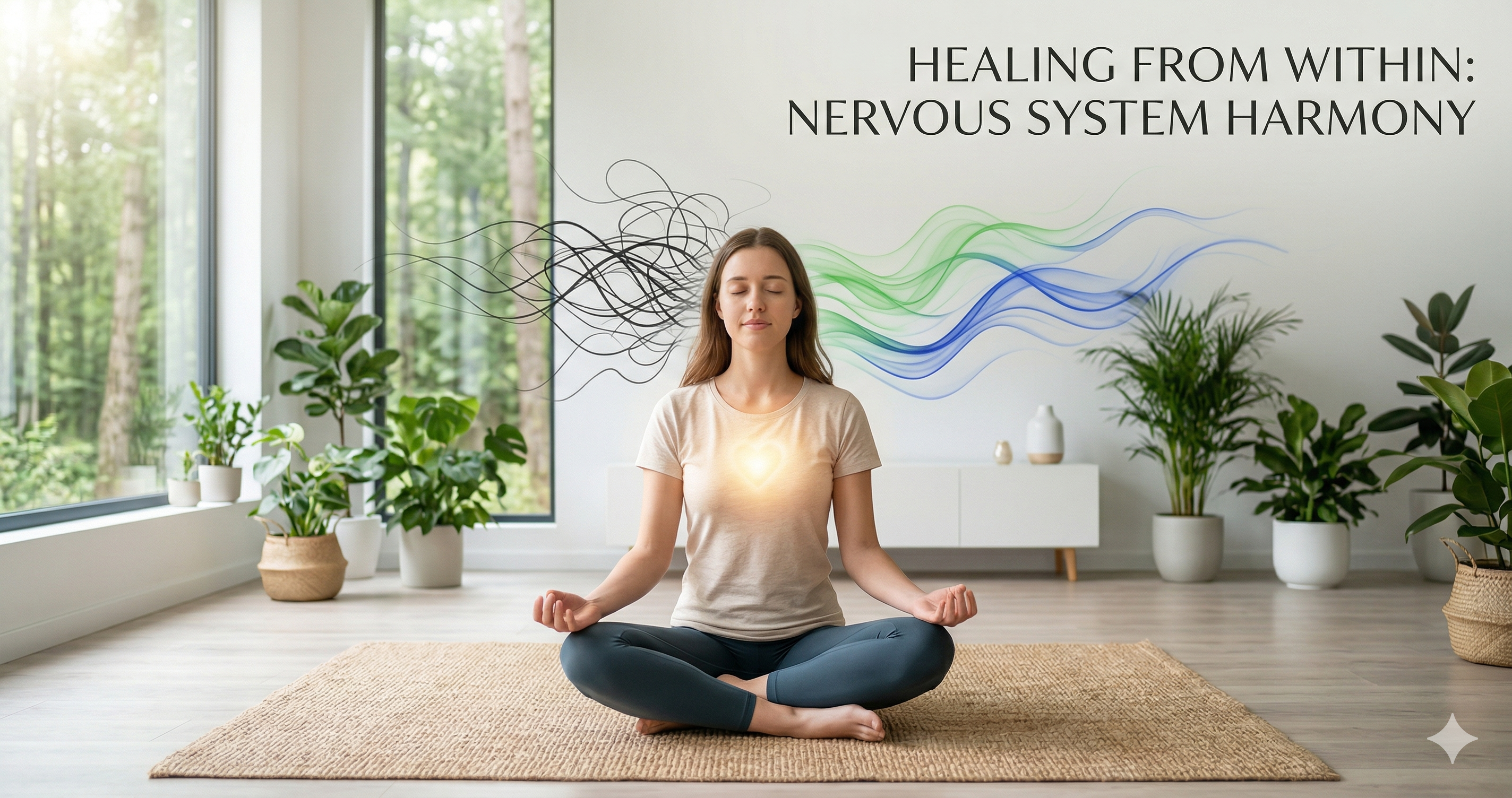
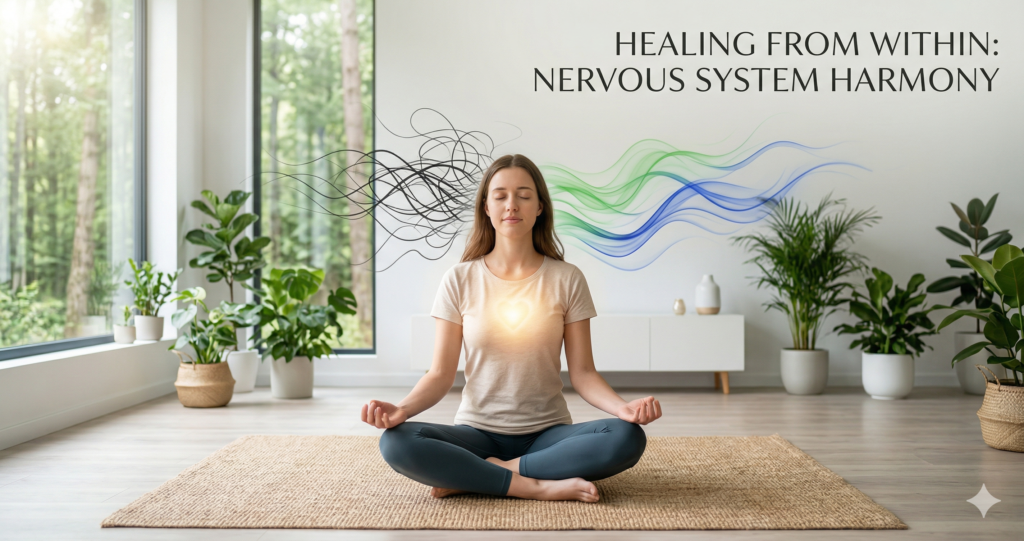
The true foundation of health is a regulated nervous system. This is the first, most crucial lesson I learned. When your nervous system is in a constant state of fight-or-flight (the sympathetic state)—where I lived my entire life due to childhood trauma and unsafe environments—your body simply cannot heal. You are constantly in control mode, stressing, trying to fix yourself.
In fight-or-flight, your body isn’t focused on digesting nutrients, balancing your hormones, growing healthy hair or skin, or achieving deep, restorative sleep. It is sending all resources to survive the “threat”—and in the modern world, those threats aren’t lions; they are social media comparison, toxic relationships, financial worry, and negative self-talk. Only when you signal to your body that it is safe enough to enter the rest-and-digest (parasympathetic) state can it begin to utilize minerals, utilize nutrients, and truly rebuild itself. It requires you to look deep into the parts of yourself controlled by stress, not externalize the solution with a fancy gadget.
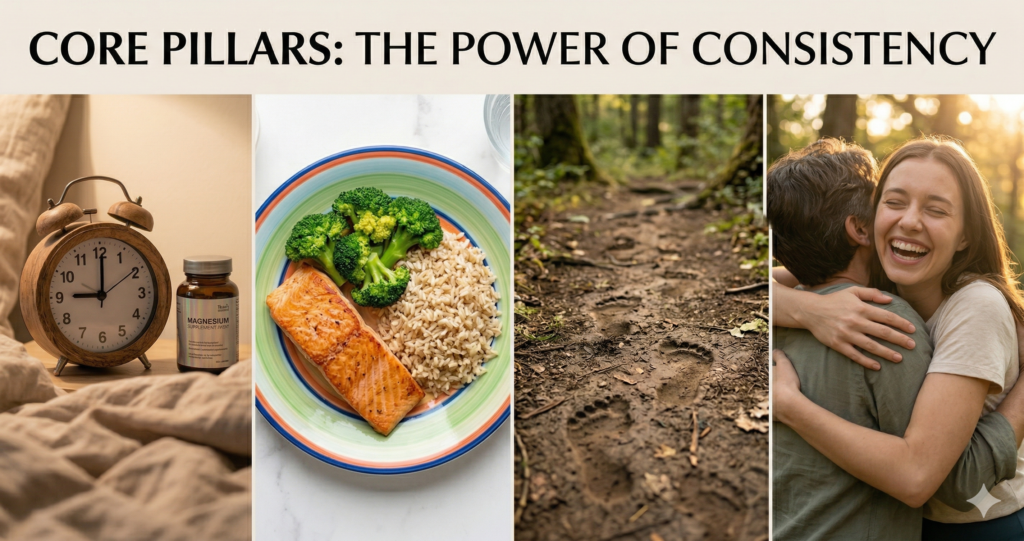
Five Free (or Low-Cost) Pillars of Holistic Wellness
I spent my early journey looking outside myself for that one supplement or book or skincare product that would solve everything. It almost never did. Here are the true fundamental things I have consistently worked on that contributed to a healthy, regulated nervous system and, in turn, allowed me to thrive.
1. Deep Mental Health and the Power of Social Systems
Mental health is an umbrella covering many things—how you speak to yourself, your self-beliefs, your mental toughness, and your capacity to allow yourself to feel your feelings instead of holding them in and suppressing them. However, under this umbrella, we must hone in on our social systems and relationships.
Our health is heavily influenced by our dysfunctional or functional environments. If you are in toxic relationships (whether with parents, partners, or friends) that keep you stressed, anxious, and constantly “on edge,” those systems are signalling to your nervous system that you are not safe to rest. Wellness routines won’t work if the social fabric of your life is on fire. I had to rebuild my entire life based on the cards I was dealt, leaving behind dynamic family trauma and building an emotionally unavailable landscape that I had repeated in my relationships with men and friends. If your social systems are dysfunctional, no amount of 6:00 a.m. routines or expensive tools will make you healthy.
2. Movement as Stagnant Energy Release (Not Prison)
Movement is essential for health, but it must not become a prison to your routine. For many, a new gym membership is great in theory, but some weeks you are exhausted or (for women) in your luteal phase. I had to learn not to be a perfectionist or a control freak about my movement routine. Just because I can’t lift heavy this week does not mean I won’t move at all.
Your body is not just a temple; it is an energy system. If you aren’t moving your stagnant, physical, and emotional energy—if you aren’t releasing it—you will be “frozen,” “stuck,” and “frozen,” contributing to digestion issues, anxiety, and weight retention. Instead of being tie down to one strict regimen, allow yourself to adapt. Sometimes, that means replacing the gym with slow movement: Pilates, gentle walks, or simply going outside. I focus first on am I moving consistently week after week, rather than worrying about the next complex wellness trend I am failing at because my movement schedule isn’t even consistent. Free resources are everywhere; you can find endless YouTube videos and take small breaks throughout your workday.
3. Radical Consistency in Nutrition
I have been sucked into every other diet under the sun—keto, high protein, low carb, everything. But from my personal experience and what I’ve seen in my community, the breakthrough came from abandoning restrictive diets and focusing on home-cooked, well-balanced meals consistently.
Are you actually trying to cook your meals from home, week after week after week? Are you consistently eating balanced meals with some protein, some fiber, some carbs, and some healthy fats? I am not talking about doing this one or two times out of the week and wondering why you aren’t shedding weight, improving your skin, or sleeping better. I mean making it your routine. Lower your sugar intake, yes, but don’t be strict and 100% restrictive, which only adds stress. The key is simply radical, boring, unsexy consistency in the kitchen.
4. Prioritizing Sleep and Recovery (The Honest Truth about Magnesium)
We know sleep is crucial in theory, but we do not practice this in wellness. It takes a damn while to cultivate a good sleep schedule. Because I lived a stressful life and used to reside in an unsafe environment, I was always hyper-alert, wide awake, and listening to sounds, meaning I never felt safe. Even now that I’m in a healthy environment, my body sometimes still thinks it’s not.
To signal safety, I use white noise (like rain sounds from YouTube) to block out noise. Sometimes, I turn on a guided meditation. Most importantly, I get into bed at least one hour before I actually intend to sleep, allowing my body to slow down and prepare to come down from that fight-or-flight state.
While I have spent so much money on naturopaths, tests, products, and regimens, I promise you with everything in my soul, magnesium has changed my deep sleep, and many women especially are depleted in it anyways. I do not take melatonin, as I don’t want to mess with my production, but magnesium co-creates with my body. While I use wearables like an Aura ring to track my sleep and steps, I know it won’t make me get my ass into bed at 9:00 p.m.; I still have to do the work. If your body is convinced that you are in danger, it will hold on to fat and refuse to heal because it don’t know when the next threat is coming, so prioritizing sleep is prioritizing survival.
5. Living in Sync with Seasonal and Hormonal Rhythms
The final fundamental practice is moving in the flow of life and nature. In the summer, I have more capacity, energy, and access to seasonal fruits and vegetables. I capitalize on my energy when it is high. In the winter time, I slow things down, get more rest, make soothing, warming foods, and allow myself to have more rest because that is typically what my body needs.
As a woman, I also cycle sync, moving in the rhythm of my hormonal cycle. When I need to slow down, I do; when I have energy, I work more productively. This prevents burnout and stress. All of these principles require you to be patient, loving, and process-driven—commitment, not quick fixes.
A Checklist for Wellness Humility: Back to the Basics
The problem I often see—and what I was guilty of—is feeling stressed that this supplement isn’t working, or that book isn’t changing things, when I wasn’t even consistent with the fundamental, non-negotiable status of my health. Before you start dabbling and feeling like you need more information or more tools, ask yourself these core questions:
- Am I getting consistent sleep?
- Am I moving my body consistently, or at least getting outside?
- Is my mental health okay when it comes to my relationships, social systems, or my own self-talk?
- Am I eating well-balanced meals, cooked from home most of the time?
If your core principles are not good and solid, spending loads of money on new trends or supplements is a complete waste because your body isn’t even capable of utilizing these things correctly. Come back home to yourself, slow it down, and say, “What do I need in this moment?” Maybe it is to finally let go of those relationships that are not serving you. Maybe it’s a little less time off your phone. Or maybe it’s time to focus on your dream life, focusing on things that actually light you up, giving you a greater capacity to show up for yourself.
A powerful Pinterest quote I found says it perfectly: Instead of asking, “How can I regulate my nervous system?” Ask yourself, “What do I need to feel connected, grounded, and safe in this moment?” Often, healing is about being still, laying in the sun, being present, listening to the sounds of nature, and letting your imagination run wild instead of more routine. The body needs less.
The next time you are super intrigued by a new wellness trend, bring yourself back to reality. Hold on. Ask yourself, “Am I doing all of these foundational things first?” Typically, you don’t need the thing; you just need to co-create with your body’s innate wisdom and get back to basics. If you are burned out and stressed, you are not supposed to be looking for a new trend to fix you; you need to restore your safety.
💡 FAQ: Wellness Fundamentals
Q1: Why are basic habits often more effective than advanced wellness trends for healing chronic conditions? A1: Advanced trends, while sometimes useful, often act as specialized tools, not the foundation. For your body to even utilize advanced treatments (like supplements or red light), your nervous system must be in a “rest-and-digest” state, signalling safety. Fundamental practices like consistent sleep, home-cooked balanced nutrition, adaptable movement, and healthy mental-social systems are the only things that cultivate this necessary, resilient base, allowing true healing to begin. Skipping them is like building a house without a foundation.
Q2: Is nature truly enough, or do I need specific K-Beauty supplements and tools for glowing health? A2: Nature is often sufficient for the core fundamentals—sunlight, fresh air, grounding, and quiet are free nervous system regulators. However, high-quality, targeted wellness tools or clean supplements (like magnesium, as discussed, or specialized traditional teas/adaptogens) can be beneficial “co-creators” once your foundational health is robust. They should accounted as accountability tools or excited additions to an already consistent routine, not as magical replacements for a stressful lifestyle.
Q3: How do I know if my wellness routine is adding stress (fight-or-flight) rather than helping me heal? A3: If your “wellness” routine feels like a rigid prison (e.g., agonizing over missing a workout, stressing about failing a restrictive diet, or obsessively tracking wearables), it is likely adding stress. A healing routine should be adaptable and intuitive—allowing you to shift from weightlifting to walking during your luteal phase, or to cook a simple meal instead of an elaborate “perfect” recipe. If you are constantly trying to control variables and fix yourself, your body is receiving “danger” signals, not “safe” ones.